A precision munition to the stern, a dead ship, a living crew: Washington's calibrated message to every vessel testing the reimposed blockade on Iranian ports.
Published 12 October 2026 · 06:00 GMT
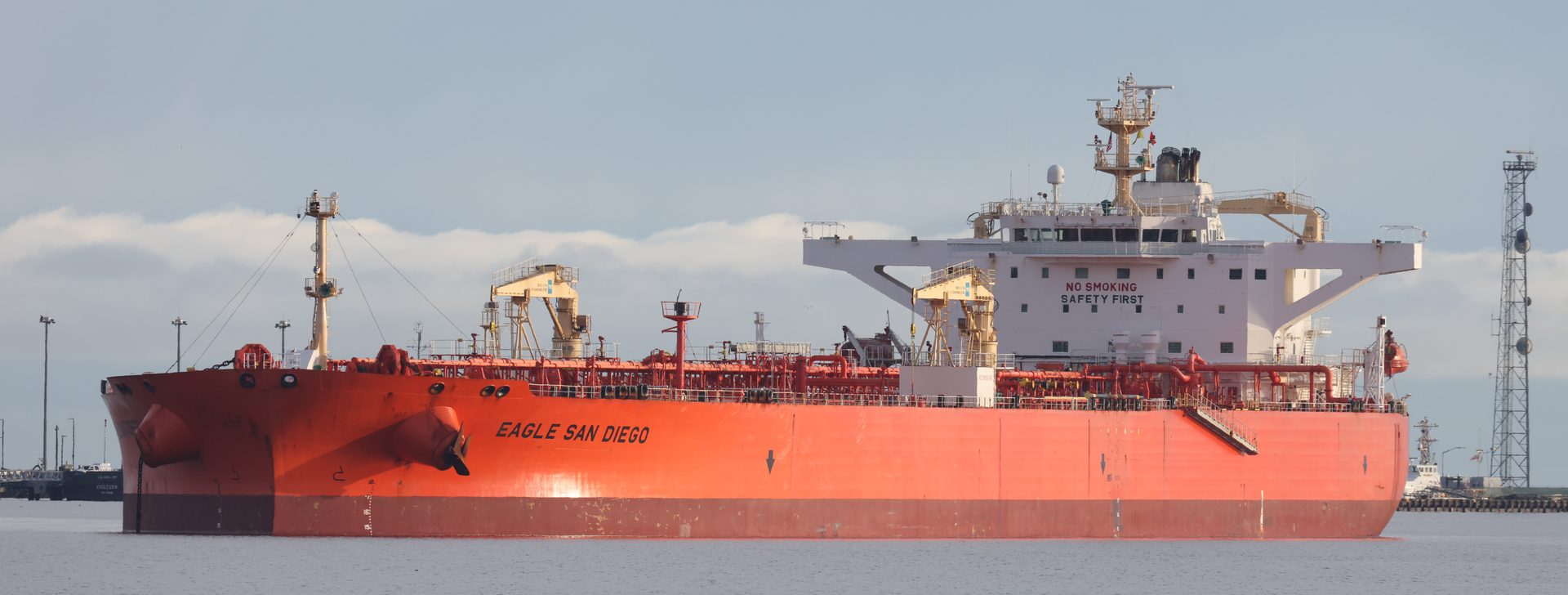
Saturday night in the Gulf of Oman, an American fighter jet drew a bead on the stern of a slow Panama-flagged cargo ship, released a single precision munition into her stern — and left the vessel dead in the water: engines killed, crew alive, and a message delivered to every captain watching.
Saturday night, in the dark water of the Gulf of Oman, an American fighter jet lined up on the stern of a slow-moving cargo vessel and fired. One precision munition struck the M/V Ocean Molica aft, and the ship — Panama-flagged, also sailing under the name Arika Sun — lost propulsion entirely. She did not sink. She did not burn. She simply stopped, dead in the water, her crew unharmed. In modern naval warfare, that is not an accident of aim. It is a sentence, punctuated.
The Pentagon announced the strike on Sunday, October 11, via U.S. Central Command's account on X: "A U.S. military fighter jet struck the stern of Panama-flagged M/V Ocean Molica (also known as the 'Arika Sun') with a precision munition, fully disabling the ship's propulsion without harming the crew." The ship had departed an Iranian port and ignored repeated warnings to turn back, according to the announcement. The type of jet and the munition used were not disclosed. The cargo the vessel carried was not disclosed either — Reuters reported it could not reach the ship's operator — and it should not be described as an oil tanker. What is known is the route: out of Iran, through waters the United States has declared closed.
Disabled, not sunk. The crew spared, the ship dead in the water — that is the message.
Those waters have been closed before, and recently. The American blockade on Iranian ports was first imposed, then lifted within minutes in June after Pakistan brokered a U.S.–Iran deal, then reimposed on July 14 after Iran attacked commercial ships on July 8. The blockade applies to all vessels entering or departing Iranian ports. In the three months since, Central Command counts 4 commercial ships disabled, 135 turned around, and 10 tankers linked to Iran's Islamic Revolutionary Guard Corps destroyed. The Ocean Molica is the latest entry in that ledger — and the first to be stopped with a jet-fired munition to the stern rather than a boarding or a warning shot across the bow.
Because the point was the message, not the wreck. Sinking a merchant vessel kills sailors, invites retaliation, and turns a policing action into a war crime debate. Disabling propulsion — one munition, carefully placed, crew untouched — demonstrates both capability and control: Washington can stop your ship whenever it chooses, and it chose to let your crew live. It is enforcement as theater, staged for every other captain weighing whether to run the blockade. Central Command underlined the script with a mariner's warning: heed the warnings, monitor the Notice to Mariners, and contact U.S. naval forces on bridge-to-bridge channel 16. The subtext needs no translation.
The same weekend showed how crowded — and how violent — these waters have become. The Revolutionary Guard struck the giant LPG carrier NV Sunshine, owned by NatWit, for attempting to transit via what Tehran called an "illegal route" south of the strait, and Iranian media carried the Guard's claim that it has "taken control of the administration of the strait" — an assertion, not an established fact. Separately, the United Kingdom Maritime Trade Operations agency reported a tanker struck on its port side by an unknown projectile inside the strait, catching fire with its crew reported safe, and another vessel hit by multiple projectiles about 94 kilometers (58 miles) north of Madinat ash Shamal, off Qatar, with casualties. The Guard also claimed an oil supertanker struck a naval mine and exploded while attempting to leave through an unauthorized route. Whether the mine claim and the projectile incidents describe the same vessels could not be independently verified, and casualty figures beyond the initial UKMTO report remain unconfirmed.
Behind the incidents sits a strait in collapse. Reuters reported on October 11 that traffic through Hormuz had fallen to its lowest in more than two months, while tanker attacks hit their highest weekly level since the U.S.–Israel war on Iran began in February. Kpler shipping data, reported by India's 7globe, counted only 7 commodity vessels transiting the strait on Tuesday, October 6 — the lowest since July 23. Before the war, the strait carried about 20 percent of the world's oil consumption. U.S. Energy Information Administration figures, carried by Spain's Demócrata, put the fall in crude and liquids flows through Hormuz from 21.6 million barrels per day in the last quarter of 2025 to 4.9 million in the second quarter of 2026. That is not a disruption. That is a shutdown in slow motion.
It costs money first, and the bill lands unevenly. With more than three-quarters of the strait's pre-war flow gone, every remaining barrel must travel farther, insured at war-risk premiums, on tankers whose owners now price the Gulf of Oman like a conflict zone. Importers feel it in pump prices and power bills; the coverage tells you who is watching the meter. India's 7globe tracks the vessel counts, Ghana's press tracks the disruption, Spain's Demócrata tracks the collapsing flow figures — the Global South reads this story as an energy tax levied by other people's wars. This is where the money bluntness applies: the blockade is, among other things, an economic instrument, and its costs are paid by households that never voted for any of it.
Washington's escalation ladder is visible in the Bureau's own recent coverage. The Pentagon has been readied for strikes on Iran alongside fresh sanctions, a third American carrier has joined the Middle East buildup, and the White House has signaled no strike on Iran before the midterms. The Ocean Molica fits that sequence: pressure short of war, calibrated to hurt Tehran's revenue without starting the war the carriers are postured for. For the country file behind the standoff, see our Iran factbook.
The geography deserves a pause. The Gulf of Oman, where the Ocean Molica was stopped, is the antechamber to the strait — international water where American power operates freely and where Oman, the quiet sultanate on the southern shore, has long played the region's discreet mediator. The same weekend's violence inside the strait itself, including the supertanker set ablaze amid the blockade, shows the confrontation migrating from warning to wreckage. Oman has brokered U.S.–Iran backchannels before; whether it still can, with tankers burning, is an open question.
Several things, and they matter. The vessel's cargo is undisclosed — speculation fills that vacuum fast, and it should be resisted. A partisan American blog circulated a conflicting claim that the USS Spruance seized an Iranian-flagged ship with Marines aboard; that is a separate, unconfirmed claim and should not be merged with the Ocean Molica incident. Iran's assertion of administrative control over the strait is Tehran's claim, not an internationally recognized fact. And the casualty reports from the waters off Qatar rest on a single initial UKMTO notice. In a week when both sides are narrating the same sea, the disciplined move is to hold what is verified — a disabled ship, an unharmed crew, a collapsing strait — and label the rest as what it is.
What to watch now: whether other blockade runners test the pattern the Ocean Molica set — warnings, then a munition to the stern; whether Tehran answers at sea or through its proxies; whether Hormuz traffic stabilizes at its new, strangled level or falls further; and whether the diplomacy that Pakistan brokered in June can be rebuilt before the carriers' posture turns from signal to action. The strait has carried the world's oil for half a century. It has never been this empty, or this dangerous, in living memory.
The Western telling of the Ocean Molica is a story of calibrated, lawful enforcement. Reuters and the defense press frame the strike through restraint: a precision munition, not a sinking; a disabled stern, not a hull breached below the waterline; a crew that lived to be debriefed. The three-month ledger — 4 ships disabled, 135 turned around, 10 IRGC-linked tankers destroyed — is presented as evidence of a blockade that works without having to kill anyone. The mariner warning, with its Notice to Mariners and bridge-to-bridge channel 16, completes the picture of a rules-based operation: the rules were published, the warnings were repeated, the ship chose to run.
Underneath sits the legal argument Washington wants accepted: that a blockade reimposed after Iranian attacks on commercial shipping is a legitimate instrument of pressure, and that disabling a runner is the minimum force consistent with that instrument. Whether international law agrees is contested — Tehran's counter-claim about administering the strait is the mirror image — but the Western lens treats the question as settled enough to act on. The story's moral, in this telling, is control: America can reach into the Gulf of Oman and switch off an engine at will.
The Eastern telling starts from illegitimacy. Through the Iranian and allied lens, the American blockade of Iranian ports is itself the unlawful act — an extraterritorial siege on a sovereign state's commerce — and the Ocean Molica was a merchant vessel exercising the freedom of navigation until an American jet committed an act of war against it. Tehran's claim to administer the Strait of Hormuz, dismissed in Western capitals as posturing, reads here as a coastal state asserting rights over a waterway the United States has no business policing from eight thousand miles away.
The NV Sunshine incident completes the symmetry: if Washington disables ships for running its blockade, Tehran strikes ships for running its rules — the “illegal route” south of the strait — and claims the same policing prerogative. The Eastern lens does not see restraint in the stern strike; it sees escalation dressed as procedure. And it notes the ledger with different arithmetic: 10 IRGC-linked tankers destroyed is not enforcement but attrition against Iran's fleet.
The Global South telling counts the cost. India's 7globe watches the vessel tally — 7 ships on October 6, the lowest since July 23 — because Indian refineries buy the crude that no longer flows. Ghana's press carries the disruption as a household story: fuel prices, transport costs, the price of everything that moves. Spain's Demócrata publishes the EIA's brutal arithmetic, 21.6 million barrels a day down to 4.9 million, as a European energy story with African and Asian consequences. Nobody in this lens is grading the legality of the stern strike; everybody is watching the meter.
There is also a quieter Southern note: the casualties. The UKMTO report of a vessel struck by multiple projectiles off Qatar, with casualties, lands differently where seafarers are neighbors and kin — Filipino, Indian, African crews work these routes. The blockade runners and the tankers alike are crewed by the Global South, which means the South pays the blockade's human price first. The Southern lens asks the question the others skip: who, exactly, is supposed to absorb all of this?
On October 10, 2026, a U.S. fighter jet struck the stern of the Panama-flagged cargo vessel M/V Ocean Molica — also known as the Arika Sun — in the Gulf of Oman with a precision munition, fully disabling its propulsion. The crew was unharmed. Central Command, which announced the strike October 11, said the ship had departed an Iranian port and ignored repeated warnings to turn back. Its cargo was not disclosed, and Reuters could not reach the vessel's operator.
The United States is enforcing a blockade against all ships entering or departing Iranian ports. It was first imposed earlier this year, lifted within minutes in June after Pakistan brokered a U.S.–Iran deal, and reimposed on July 14 after Iran attacked commercial ships on July 8. In the three months since reimposition, Central Command says it has disabled 4 commercial ships, turned around 135, and destroyed 10 tankers linked to Iran's Revolutionary Guard Corps.
Traffic through the strait has fallen to its lowest in more than two months, while tanker attacks hit their highest weekly level since the U.S.–Israel war on Iran began in February. Only 7 commodity vessels transited on October 6, per Kpler — the lowest since July 23. EIA figures show crude and liquids flows collapsing from 21.6 million barrels per day in late 2025 to 4.9 million in mid-2026. Pre-war, the strait carried about 20 percent of world oil consumption.
Washington frames it as lawful enforcement of a legitimate blockade, emphasizing restraint — the ship was disabled, not sunk, and the crew was spared after repeated warnings. Tehran calls the blockade itself illegitimate and asserts its own right to administer the Strait of Hormuz. International legal opinion is divided, and Iran's administrative claim is not internationally recognized. What is not disputed: the warnings were issued, the stern was struck, the crew lived, and the strait's traffic keeps falling.
