‘My life is buried here’: the Tehran man who lost 12 family members to a US-Israeli strike
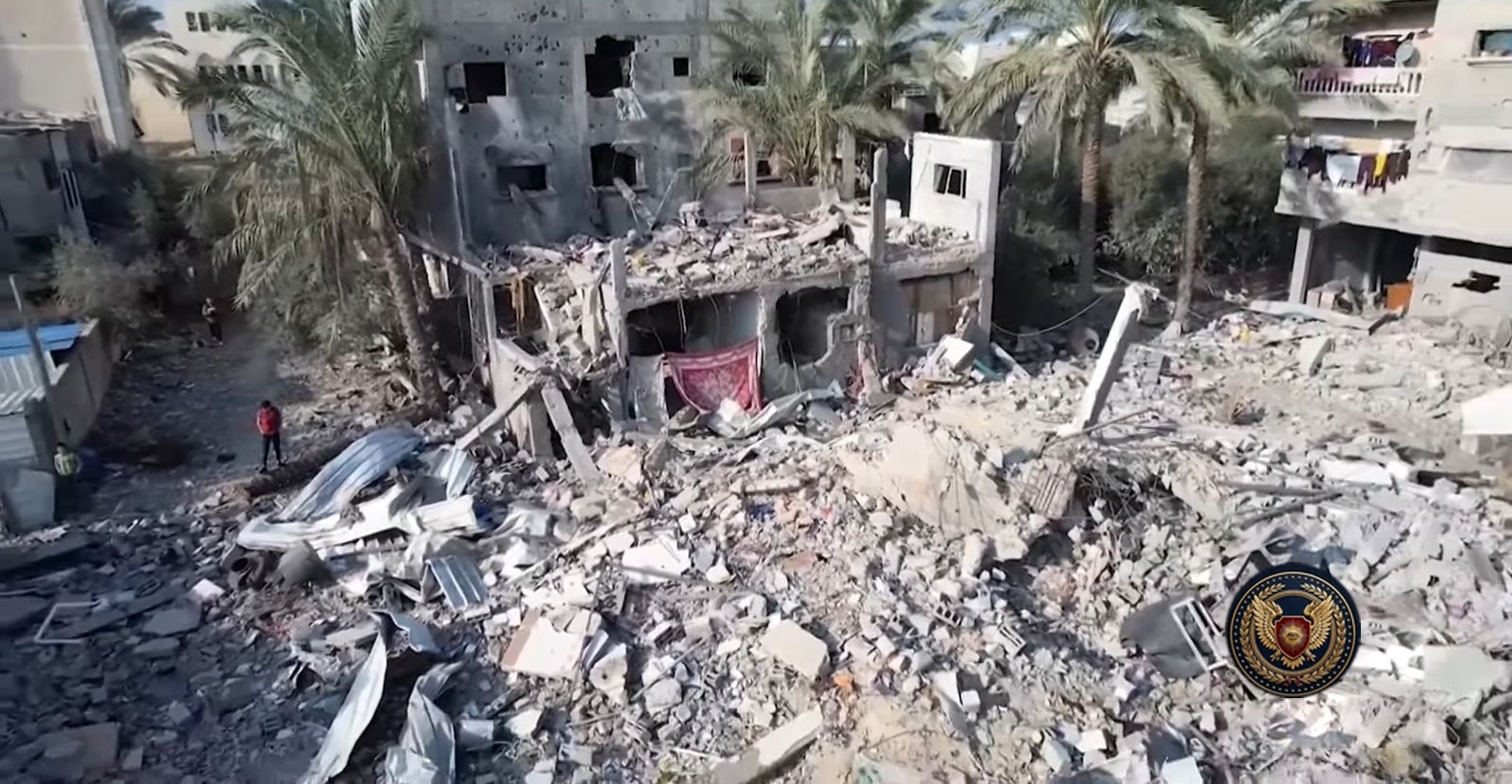
On March 9, 2026, six missiles flattened Hamed Mirzaei’s family home in Tehran’s Resalat neighbourhood, killing twelve members of his family; including his 26-year-old wife. Seven months on, as Washington warns the Gulf to prepare for a new post-midterms campaign, he returns to the ruins every day. His first-person account has become one of the war’s most-read testimonies.
Published 30 October 2026 · 09:29 GMT
The summary
Hamed Mirzaei lost twelve members of his family, including his 26-year-old wife Mohadeseh, when a US-Israeli attack destroyed their family home in Tehran on March 9, 2026, in a first-person account published by Al Jazeera on October 30, 2026. Amnesty International’s September 2026 investigation found that at least 16 civilians were killed in a strike on Tehran’s densely populated Resalat neighbourhood at around 2:30 pm local time on March 9, 2026.
The three lenses
- WestIn the West, the story is read through accountability and cost.
- EastThe East reads the same war through state wires and casualty arithmetic.
- Global SouthThe Global South is where the story lives loudest.
Key facts
- Hamed Mirzaei lost twelve members of his family, including his 26-year-old wife Mohadeseh, when a US-Israeli attack destroyed their family home in Tehran on March 9, 2026, in a first-person account published by Al Jazeera on October 30, 2026. He had left the house at about 1:00 pm; his wife texted him at 2:30 pm asking him to buy headache medicine. Five minutes from home, he heard a whistling sound. The first missile struck; five more hit their home. Al Jazeera (Oct 30, 2026)
- Amnesty International’s September 2026 investigation found that at least 16 civilians were killed in a strike on Tehran’s densely populated Resalat neighbourhood at around 2:30 pm local time on March 9, 2026. The attack hit a facility belonging to a Basij battalion of the IRGC on Jajroudi Street and damaged nearby residential buildings; verified through open-source evidence, eyewitness accounts, state media, Iranian officials and the Red Crescent. Israeli military live updates showed a sustained pattern of strikes on “Basij and Internal Security command centers” in Tehran that day; neither the US nor Israel has confirmed carrying out these specific attacks. Amnesty International (Sep 8, 2026) Amnesty briefing (PDF) (Sep 2026)
- UN Special Rapporteurs on human rights documented that the joint US-Israeli military campaign against Iran began on February 28, 2026; two 20-unit residential buildings in the Resalat area of eastern Tehran were struck on March 9, 2026, killing 40 civilians. They recorded 689 incidents involving damage to residential buildings, and the Iranian Red Crescent Society estimated that around 100,000 residential units were damaged during the conflict. UN OHCHR; AL USA 22/2026 (Aug 4, 2026) UN OHCHR; AL ISR 12/2026 (Aug 12, 2026)
- The war is in its eighth month and may be about to enter a new phase: the US has warned several Gulf Arab countries to be prepared for a short, intense military campaign after the November 3 midterm elections, the Wall Street Journal reported. The Pentagon told Congress the war has cost the US $47.1 billion through October 16; Vice President JD Vance has written to Iranian Security Council chief Mohsen Rezaei to revive peace talks; and Israel’s Benjamin Netanyahu has pressed for renewed strikes. The Indian Express (via WSJ) (Oct 29, 2026) Gulf News (Oct 23, 2026)
- Casualty figures vary by source: Amnesty cites official figures of at least 1,469 civilians killed in Iran between February 28 and July 24, 2026; Iran’s UN ambassador, quoting the Red Crescent, put the toll at 1,332 civilians including more than 180 children; the US-based Human Rights Activists News Agency counted 3,186 dead by March 20, including at least 1,394 civilians and 210 children. Xinhua (Daily World Briefing) (Mar 2026) Asia Business Daily (Mar 2026) OnlineKhabar (HRANA) (Mar 20, 2026)
The Monday the missiles came to Resalat
March 9 was a Monday. At about 1:00 in the afternoon, Hamed Mirzaei left his family home in Tehran to check in at work. At 2:30 pm, his wife Mohadeseh, 26, messaged him, asking him to buy her some headache medicine on his way back. He called to ask which medicine she wanted, but her phone was busy. Guests were expected that evening; the guest’s line was busy too.
Five minutes from home, he heard a whistling sound. The first missile had just struck; five more hit their home in the minutes that followed. The house, built by his grandfather and his father’s uncle, was flattened. Married a year earlier, Mirzaei had moved into one of its apartments with Mohadeseh; the young couple had been planning to start a family.
By nightfall, the Red Crescent had found no more survivors. Twelve members of his family were dead: his wife; his sister-in-law; his father and mother; his grandfather and grandmother; his aunt’s husband and her daughter; his uncle; his father’s cousin, his wife and their child. “Seven months have passed since the bombing,” he told Al Jazeera. “Every day, when I wake up, I come here to look at the ruins. I feel as though my life is buried here.”
What the investigators documented in eastern Tehran
The strike Mirzaei describes matches, in time and place, one of the most heavily documented attacks of the war’s first month. Amnesty International’s September 2026 briefing investigated three US-Israeli coalition attacks on densely populated Tehran neighbourhoods between March 1 and 13: Niloufar, Resalat and Javadieh. In Resalat, at least 16 civilians were killed at around 2:30 pm local time on March 9, when a strike on a Basij battalion facility of the IRGC on Jajroudi Street hit nearby residential buildings.
Israeli military live updates showed a sustained pattern of strikes on “Basij and Internal Security command centers” in Tehran that day; matching the target Amnesty identified. Neither country has confirmed this specific attack: both announced March 2026 strikes on “regime” targets, but neither confirmed the three attacks Amnesty investigated. The UN Special Rapporteurs’ August 2026 communications add scale: the joint campaign began February 28; two 20-unit residential buildings in Resalat were struck March 9, killing 40 civilians; 689 incidents damaged residential buildings; the Red Crescent estimated around 100,000 residential units damaged in total.
The wider toll is a ledger of competing counts: at least 1,469 civilians killed between February 28 and July 24, 2026, per official figures cited by Amnesty; 1,332, including more than 180 children, per Iran’s UN ambassador; 3,186 dead by March 20 per HRANA. Amnesty’s separate investigation of a strike on a Minab elementary school found 156 killed, including 120 children, by precision-guided munitions.
The questions no investigation has closed
The central question, who fired the missiles that killed Mirzaei’s family, remains unanswered. The strike could have been American or Israeli; the campaign was joint, and neither country has confirmed this specific attack. We do not know whether the family building was hit as collateral beside the Basij facility on Jajroudi Street, or struck in its own right.
The twelve dead are named only in Mirzaei’s account; no independent registry has been verified against his list, and the strike’s exact time, Amnesty’s “around 2:30 pm” against his wife’s 2:30 pm message, is a chilling convergence, not a confirmed fact. Nor do we know why this testimony surfaced now. Verification inside Iran remains effectively impossible: international organisations are routinely denied entry visas, leaving first-person accounts and verified open-source evidence as the only windows.
Seven months later, the war is about to resume
Mirzaei’s account lands at the most dangerous moment of the war since March. Four days before the November 3 US midterms, Washington has told several Gulf Arab countries to prepare for a short, intense military campaign after the vote, the Wall Street Journal reports. The Pentagon has moved a Patriot system from Texas, shifted troops from vulnerable bases, and is restocking munitions; roughly 20 warships already operate in the Middle East, with another carrier group on the way.
The war has run eight months and cost the US $47.1 billion through October 16, and it is unpopular at home, driven by sharply higher fuel prices. Trump says he will not attack before the midterms but has told crowds “we may do another little Epic Fury,” the military’s term for its war on Iran, and leans towards a large post-election attack. Vice President JD Vance has written to Iranian Security Council chief Mohsen Rezaei to revive peace talks, even as Tehran rejected a Qatari draft on Sunday and threatened Gulf undersea internet cables in retaliation. Netanyahu keeps pushing for resumed strikes. Read the context on Iran, the United States and Israel in the Magna Factbook.
That is why one family’s ledger matters. Any new campaign will be judged against the documented record of the last; the 1,469 dead, the 100,000 damaged homes, Amnesty’s war-crimes call. Mirzaei’s twelve names put faces to those numbers, at the exact moment the next round is being prepared.
Why the human ledger outruns the official one
Through the 5D lens, the Resalat strike captures the war’s defining contradiction: a joint campaign announced against “regime targets” but executed with wide-area explosive weapons in a densely populated neighbourhood of a capital of ten million. Amnesty found the evidence in verified footage; the Israeli military’s own live updates supplied the targeting pattern. Yet attribution for individual strikes remains a fog; no one confirms the missiles that killed twelve members of one family.
What does a “regime target” look like from the street?
Economically, the war is a $47.1 billion American ledger item, with fuel prices as its domestic transmission belt, the midterms are the timer on the next phase. Demographically: 3.2 million displaced inside Iran, per UNHCR, and around 100,000 homes damaged, a war on the built environment of ordinary life. Historically, the first wave’s reported killing of the Supreme Leader and the March 3 strike on the Assembly of Experts put the campaign in the register of decapitation strikes. Technologically, Minab, 156 dead, 120 of them children, by precision-guided munitions, is the counterpoint to every claim of surgical war. And temporally: the war runs on news cycles, but Mirzaei runs on a different clock; seven months of morning walks back to the ruins.
The ripples the ruins will send outward
The second-order effects are already priced in. Tehran’s threat to target Gulf undersea internet cables, and obstruct repairs, would disrupt banking, commerce and cloud computing across the Gulf, Reuters’ analysts warn. The naval blockade of Iran’s ports and the contest over Hormuz keep shipping insurance elevated and energy markets twitchy, with foreign ministers from France, Germany, Turkey and Saudi Arabia warning a new campaign could widen the conflict and spike global energy prices.
Who rebuilds 100,000 homes?
Inside Iran, the humanitarian arithmetic is brutal: the Red Crescent is stretched across 174 cities struck in the campaign’s early weeks, and international organisations are denied the visas that would let them work at scale. Politically, the October 27 Israeli election and the November 3 US midterms are the two clocks that decide whether Mirzaei’s ruins get company. And for every first-person account that surfaces, the documented pattern, Resalat, Niloufar, Javadieh, suggests hundreds of family stories from March that will never reach a newsroom. The uncounted dead are the war’s largest constituency.
The calendar that decides Tehran’s autumn
What happens next is dated. November 3: the US midterms, before which Trump says there will be no attack. After them: the window the Gulf states were warned to prepare for; a short, intense campaign that could target Iranian infrastructure, nuclear sites and missile capabilities, with Netanyahu expected to press for the heaviest version. The assets are moving now: Patriot batteries, munitions stockpiles, carrier groups.
The diplomatic track runs parallel and thinner: Vance’s letter to Rezaei, the rejected Qatari draft, Araghchi’s warning of “devastating economic impact.” If the campaign resumes, Iran has promised a “stronger response” on economic and civilian targets across the region; and the undersea cables are only the most novel item on that list. And in Tehran, whatever the calendars in Washington and Jerusalem say, Hamed Mirzaei will wake up tomorrow and walk back to the ruins of his family home. “I feel as though my life is buried here,” he said, “and I return every day, hoping I might find some piece of it. But there is nothing left.”
The three lenses
West Lens:
In the West, the story is read through accountability and cost. Amnesty’s investigation, citing Israeli military live updates against its own verified footage, is the evidentiary backbone of the war-crimes question, and the UN rapporteurs sharpen it into alleged violations of distinction and proportionality. Meanwhile the American debate is fiscal and electoral: $47.1 billion through mid-October, fuel prices punishing voters, Trump weighing whether to “finish it off, or just let it wither,” Vance reaching for the Rezaei letter while Netanyahu pushes for resumption.
East Lens:
The East reads the same war through state wires and casualty arithmetic. Xinhua carried the Red Crescent’s toll, 1,332 civilians, more than 180 of them children, via the UN ambassador, and tracked Trump’s interest in ground forces and the IRGC’s retaliatory strike on a Haifa refinery. South Korea’s Asia Business Daily, using Yonhap photographs and Hengaw’s figures, reported a toll nearing 1,500 with over 200 civilians; and the Minab school strike the White House acknowledged was likely caused by American munitions.
South Lens:
The Global South is where the story lives loudest. Al Jazeera platformed Mirzaei’s testimony in full, a first-person account, not a statistic, and its other dispatches track the war’s regional price: the Pentagon’s $47 billion bill, Vance’s letter, Trump’s warning to the Gulf to “prepare.” Gulf News, from the UAE, reports a region bracing for a resumed campaign while living the present one; an American blockade of Iran’s ports, Tehran’s grip on the Strait of Hormuz. For the region, Mirzaei’s twelve are not an anecdote; they are the war’s unit of account.
The consensus
- What we agree on
- We agree: Hamed Mirzaei lost twelve members of his family in the March 9, 2026 strike on his Tehran home. His first-person account, published by Al Jazeera, is corroborated in its time, place and pattern by Amnesty International’s independent investigation of the Resalat strikes and by the UN Special Rapporteurs’ communications on the US-Israeli campaign.
- What we don't agree on
- We agree: the US-Israeli air campaign against Iran has been devastating for civilians. Amnesty cites official figures of at least 1,469 civilians killed between late February and late July 2026; the UN rapporteurs documented 689 incidents of residential damage; and the Iranian Red Crescent estimated around 100,000 residential units damaged.
- What we know
- We disagree on: how to read the Resalat strike itself. Amnesty’s investigation found explosive weapons with wide-area effects used in a densely populated neighbourhood; and called for an independent war-crimes investigation. The US and Israel announced strikes on “regime” targets that day, but neither has confirmed carrying out this specific attack, and no independent on-the-ground verification has been possible.
- What we don't know yet
- We do not yet know: whether the war is about to enter a new phase. Washington has warned Gulf states to prepare for a short, intense post-midterms campaign; Trump says “we may do another little Epic Fury”; Vance has written to Iran’s security chief about talks; Tehran rejected a Qatari draft agreement and threatens retaliation against Gulf undersea cables.
- What we expect
- We expect: the human ledger to keep surfacing first in first-person accounts like Mirzaei’s. Formal investigations take months; and the documented pattern across Resalat, Niloufar and Javadieh suggests many more family stories from March remain untold as escalation looms.
Questions, answered
Who is Hamed Mirzaei?
Hamed Mirzaei is the Iranian man whose first-person account was published by Al Jazeera on October 30, 2026. He lost twelve members of his family, including his 26-year-old wife Mohadeseh, his parents and his grandparents, when a US-Israeli strike destroyed their family home in Tehran on March 9, 2026. Seven months later, he says he returns to the ruins every day: “my life is buried here.”
What did Amnesty International find about the Resalat strikes?
Amnesty’s September 2026 briefing investigated three US-Israeli attacks on Tehran neighbourhoods in early March 2026. In Resalat, it found at least 16 civilians killed around 2:30 pm on March 9, when a strike on a Basij battalion facility on Jajroudi Street damaged nearby residential buildings; verified through footage, eyewitnesses, state media, officials and the Red Crescent. Neither the US nor Israel has confirmed carrying out these specific attacks.
How much has the Iran war cost the United States?
The Pentagon told Congress the US-Israeli war on Iran has cost American taxpayers $47.1 billion through October 16, 2026; up from $37.5 billion previously cited by the Secretary of War. Independent trackers put the first six days alone at $11.3 billion. The cost, amplified by sharply higher fuel prices, has made the war a drag on the Republican Party ahead of the November 3 midterms.
Will the US strike Iran again?
The US has warned several Gulf states to prepare for a short, intense campaign after the November 3 midterms, the Wall Street Journal reports; with Patriot batteries, munitions and carrier groups moving into position. Vice President Vance has written to Iran’s security chief about reviving talks, and Trump says there will be no attack before the election. No final decision has been announced.
Sources
- Al Jazeera (Oct 30, 2026)
- Amnesty International (Sep 8, 2026)
- Amnesty briefing (PDF) (Sep 2026)
- UN OHCHR; AL USA 22/2026 (Aug 4, 2026)
- UN OHCHR; AL ISR 12/2026 (Aug 12, 2026)
- The Indian Express (via WSJ) (Oct 29, 2026)
- Gulf News (Oct 23, 2026)
- Xinhua (Daily World Briefing) (Mar 2026)
- Asia Business Daily (Mar 2026)
- OnlineKhabar (HRANA) (Mar 20, 2026)