 MAGNA BUREAU
The Wire
Morocco sends more officers to Gaza stabilisation force as the mission waits at the border
The Board of Peace says additional Royal Armed Forces officers have joined the International Stabilization Force, to work on medical operations and logistics; but the force has still not entered Gaza, and Israel has yet to authorise its deployment.
Key points
- The event: On Friday 20 November 2026 the Board of Peace announced on X that additional officers from Morocco’s Royal Armed Forces (FAR) had joined the International Stabilization Force (ISF) for Gaza, to strengthen its medical operations and logistical planning. 1
- The words: “The ISF welcomes additional officers from the Royal Moroccan Army. They’ll add capacity to medical operations and logistics planning. Important contributions,” the Board wrote. 3
- Where they are: Three Moroccan officers had reached Israel and were working on medical operations and logistics planning from the International Gaza Support Center in Kiryat Gat, in southern Israel. Small numbers of Moroccan, Albanian and Kosovar troops had also arrived. 2
- The buildup: A first contingent of FAR officers arrived in June 2026, and Morocco was among the first four countries to send officers, alongside Kosovo, Kazakhstan and Albania. In September the ISF commander said an advance force of 500 troops from Kosovo and Morocco had completed training and was ready. 3
- The stall: The Board’s report to the Security Council, dated 17 November 2026, states that “the ISF has yet to be deployed” and faults both Israel and Hamas for failing to meet their commitments. Hamas agreed in July to a roadmap to disarm and hand over governance; Israel rejected it. 5
ONE EVENT. THREE READINGS.
The West told the story as a deployment that has arrived and a mission that has not.
The Times of Israel’s reporting led with the officers at Kiryat Gat and the blunt caveat in the same breath: Israel has not given legal authorisation for the force to deploy in Gaza.
What this reading highlights: Haaretz, reading the Board’s report to the Security Council, stressed that Israel was preventing the technocratic committee and the stabilisation force from entering Gaza despite agreements signed with Morocco, Kosovo and Albania.
For the West, the question is whether the body Washington built can compel the decisions it needs. What this reading highlights: The gap between arrival and deployment is the story. Officers can be welcomed on X; a force enters Gaza only when a government signs.
Sources: The Times of Israel (2), Haaretz (1), Board of Peace report to the Security Council (S/2026/913) (1)
The announcement through the Board’s own report.
The Hindu, reporting on the second report to the Security Council, led with the finding that both Israel and Hamas are failing to meet their commitments; Hamas agreed in July to a roadmap to surrender its weapons and hand governance to a civilian authority, and Israel rejected it.
What this reading highlights: Defence Minister Israel Katz said on 18 November that Israel would not withdraw until Hamas was dismantled and Gaza demilitarised.
The East’s frame is structural: the architecture is set, Resolution 2803, the Board, the force, the committee, and implementation is hostage to decisions in Jerusalem and Gaza alike. What this reading highlights: The plan’s machinery exists; what is missing is consent. The East treats the Moroccan deployment as evidence the machinery is being assembled, not as proof it will run.
Sources: The Hindu (1)
The South told the story through Morocco.
Le360 and the North Africa Post led with the Kingdom’s expanding presence and the welcome from the Board, and set the announcement in a sequence that began in February with Bourita’s pledge in Washington and was formalised in Rabat in July.
What this reading highlights: The African outlet Vozia, reading the same Board report, led with the warning that the ceasefire risks collapse; and with the chain of blockages behind it: the interim administration not admitted, the stabilisation force delayed, withdrawal and reconstruction stalled behind them.
For the Global South, the fact is that a Southern state is doing the work while the great powers argue over the terms. What this reading highlights: The South reads Morocco’s deployment as a claim about who stabilises Gaza: not only the powers that designed the plan, but the region that will live with its outcome.
Sources: Le360 (1), The North Africa Post (1), Morocco World News (1), Vozia (1)
Sources by lens: 4 West, 1 East, 4 Global South. See every source
THE POINT OF CONVERGENCE
On the facts. On Friday 20 November 2026 the Board of Peace announced that additional officers from Morocco’s Royal Armed Forces had joined the International Stabilization Force for Gaza, to add capacity in medical operations and logistics planning. Three Moroccan officers had reached Israel and were working from the force’s support centre at Kiryat Gat, in southern Israel.
WHAT REMAINS CONTESTED
On what it means. Rabat and the Board present the deployment as proof the mission is advancing; the Board’s own report to the Security Council, dated 17 November, says the force “has yet to be deployed” and faults both Israel and Hamas for missed commitments. Whether this is momentum or a holding pattern depends on which document you read.
The story
A Friday announcement from the Board of Peace
On Friday 20 November 2026, the Board of Peace announced that additional officers from Morocco’s Royal Armed Forces had joined the International Stabilization Force for Gaza. The announcement, posted on the Board’s X account, was brief: “The ISF welcomes additional officers from the Royal Moroccan Army. They’ll add capacity to medical operations and logistics planning. Important contributions.”
The Times of Israel reported that three Moroccan officers had reached Israel and were working from the International Gaza Support Center in Kiryat Gat, in southern Israel, on medical operations and logistics planning. Small numbers of Moroccan, Albanian and Kosovar troops had arrived as well
The deployment builds on a first Moroccan contingent that arrived in June. Morocco was among the first four countries to send officers, alongside Kosovo, Kazakhstan and Albania, and in September the force’s commander, General Jasper Jeffers, said an advance force of 500 troops from Kosovo and Morocco had completed training and was ready. Yet the force itself has still not entered Gaza.
What exactly has Morocco committed to the force?
The commitment was made in public, in stages. In February 2026, Foreign Minister Nasser Bourita said Morocco was prepared to deploy police officers, train members of Gaza’s police force and integrate senior officers into the joint military command. On 15 July, in Rabat, Bourita and Abdeltif Loudyi, the minister delegate in charge of national defence administration, received Nickolay Mladenov, the Board’s High Representative for Gaza, and the ISF commander, and signed Morocco’s participation agreement
The package is broader than soldiers. It covers senior FAR officers assigned to the joint command, personnel from the Royal Gendarmerie and the General Directorate of National Security, and a field hospital. Moroccan gendarmes and police will train and help organise a new Palestinian police force. Morocco has also pledged to become the first country to contribute directly to the Board’s operating budget, and to launch a deradicalisation programme.
The force the Moroccans are joining is mandated by United Nations Security Council Resolution 2803, adopted on 17 November 2025, which endorsed the Comprehensive Plan to End the Gaza Conflict and authorised the deployment of the ISF and the creation of a technocratic, apolitical committee of Palestinians from the Strip to govern it in the interim.
The ISF welcomes additional officers from the Royal Moroccan Army. They’ll add capacity to medical operations and logistics planning. Important contributions.
How many, and when will they cross into Gaza?
The Board gave no number for the new deployment. The Times of Israel reported three Moroccan officers had reached Israel; that is the number that arrived, not necessarily the size of the contingent the Board welcomed. Neither Rabat nor the Board has published a total for Morocco’s contribution, nor a timetable for the larger deployment.
Nobody outside the negotiations knows when the force will be allowed to enter Gaza. Israel has not given legal authorisation for ISF forces to deploy in the Strip, and has refused to sign the Status of Forces Agreement the deployment requires. The Board’s own report, delivered to the Security Council on 17 November, states plainly that “the ISF has yet to be deployed”, and that the technocratic committee meant to govern Gaza has yet to enter it either.
The wider shape of the force is also unclear: when Indonesia’s expected large contingent will arrive, which other states will follow, and what the deradicalisation programme Morocco pledged will actually involve.
Why does a small deployment carry outsized weight?
Because the force is the linchpin of the entire Gaza plan. Under the roadmap the Security Council endorsed, the ISF is what makes everything else possible: Hamas handing over its weapons, Israeli troops withdrawing, reconstruction beginning. The Board’s report says the delay in deploying it has held up all three. Every officer who arrives makes the force more real; and makes the wait for authorisation harder to explain.
Because Morocco’s presence changes the force’s character. It is an Arab and African contributor, one of the first states to commit, in February, before the plan had a legal framework. A stabilisation force led only by distant powers would read as an imposition; one that includes Morocco reads as a mission the region itself is part of. That is the political value of Rabat’s contribution, alongside the medical and logistical work the officers will actually do.
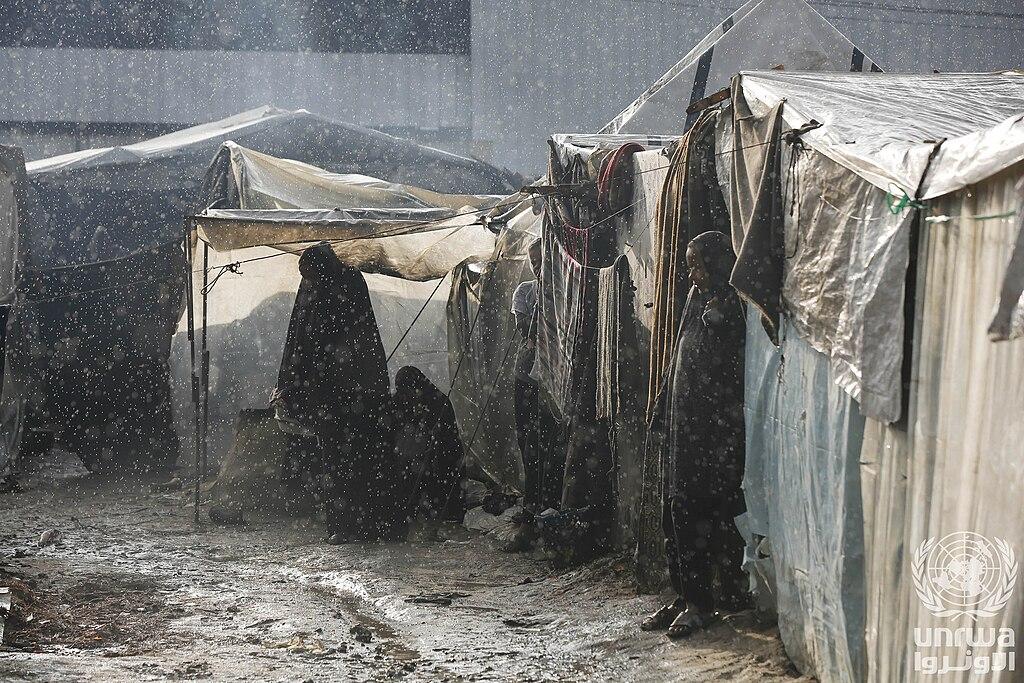
Because the humanitarian clock is running. Floods this month have destroyed more than 6,000 family shelters in Gaza and damaged 17,400 more, with more than 150,000 tents still waiting outside the territory. The field hospital and medical capacity Morocco is sending speak directly to that emergency
The announcement is real progress; and a measure of the stall
Read the announcement twice and it says two things at once. The first is that the mission is advancing: officers are arriving, a support centre is operating, a 500-strong advance force was declared ready in September, and a state that committed in February is still committing. The second is that the mission is stuck: the force it is joining has, by its own overseer’s account, “yet to be deployed”, and the officers welcomed on Friday are working from a base in southern Israel, not from Gaza.
That contradiction is the Board’s central problem, and its leverage is running out in public. Its senior adviser has now said openly that the body will hand the keys to the United Nations if Israel keeps blocking its work The warning was aimed at Jerusalem, but it also tells every contributor, Morocco included, that their officers are joining a mission whose mandate may change hands.
For Morocco, the calculation is different. Rabat’s contribution costs little in troops and buys much in standing: a visible role in the most watched stabilisation effort of the decade, at a moment when the Kingdom’s diplomacy is moving on several fronts at once; the same week brought a new judicial-cooperation declaration with France in Rabat. The reward is to be, when the force finally moves, the country that was there from the first weeks.
What this deployment unlocks; and what it risks
If the force deploys, the sequence the plan promises can finally start: the vetted Palestinian police leave for training in Egypt, the technocratic committee enters Gaza, Hamas hands over its weapons, Israeli troops withdraw in stages, and reconstruction, some $17 billion pledged, $280 million used in the preparatory phase, begins in earnest.
If it does not, the costs compound. The ceasefire, in force since October 2025, has halted major fighting but delivered little visible change, and the Board’s report warns that a ceasefire delivering nothing cannot be sustained indefinitely. Another winter in tents and rubble would deepen the humanitarian emergency: respiratory illness is already rising in Gaza as the cold arrives, and the small mercies; swimming lessons offering Gaza’s children an hour of relief; only underline how thin the margin has become.
For Morocco, a stalled mission still leaves something: the habits of a security contributor. The Kingdom is building a domestic defence industry; the “Morocco Offer” roadmap launched on 18 November aims for a national defence industry by 2035.
What happens next for the force waiting at the border?
The Board is expected to present its report’s findings to the Security Council before the end of November. Its warning, implement the plan or watch the ceasefire collapse, is addressed to both sides.
The decisions to watch are specific and few: whether Israel signs the Status of Forces Agreement; whether the technocratic committee is admitted to Gaza; whether the vetted Palestinian police are allowed out for training in Egypt and back in; and whether the larger contingents, Indonesia’s included, begin to arrive. Any one of those would be the first real movement since the advance force was declared ready in September.
The next announcement that matters will not be a welcome on X. It will be a date: the day the stabilisation force crosses into Gaza.
What we agree on, and what remains open
Established
- On the facts. On Friday 20 November 2026 the Board of Peace announced that additional officers from Morocco’s Royal Armed Forces had joined the International Stabilization Force for Gaza, to add capacity in medical operations and logistics planning. Three Moroccan officers had reached Israel and were working from the force’s support centre at Kiryat Gat, in southern Israel.
Contested
- On what it means. Rabat and the Board present the deployment as proof the mission is advancing.
- The Board’s own report to the Security Council, dated 17 November, says the force “has yet to be deployed” and faults both Israel and Hamas for missed commitments. Whether this is momentum or a holding pattern depends on which document you read.
Still open
- How many officers the new deployment comprises in total; the Board gave no number.
- When, or on what terms, the force will be allowed to enter Gaza.
- Whether Israel will sign the Status of Forces Agreement the deployment requires.
- When the technocratic committee meant to govern Gaza will take up its work.
- Or when the wider contingents, including Indonesia’s expected large one, will arrive.
What to watch
Questions, answered
On Friday 20 November 2026 the Board of Peace, the body overseeing the Gaza ceasefire plan, said on X that additional officers from Morocco’s Royal Armed Forces had joined the International Stabilization Force. The Board said they would “add capacity to medical operations and logistics planning” and described their contributions as “important”.
Not yet. The Times of Israel reported that three Moroccan officers had reached Israel and were working from the International Gaza Support Center at Kiryat Gat, in southern Israel. Israel has not given legal authorisation for the force to deploy inside Gaza, and the Board’s own report says the force “has yet to be deployed”.
Morocco’s package includes senior armed-forces officers in the force’s joint command, personnel from the Royal Gendarmerie and the General Directorate of National Security, and a field hospital. Moroccan gendarmes and police are also tasked with training, supporting and helping organise a new Palestinian police force for Gaza.
The force needs decisions only Israel can take: a Status of Forces Agreement authorising its entry, and the admission of the technocratic committee meant to govern Gaza. The Board’s 17 November report says those decisions have not been taken, and its senior adviser has warned the Board could hand the mandate back to the United Nations.
The Board is expected to present its report’s findings to the Security Council before the end of November. The immediate questions are whether Israel signs the authorisations, whether the technocratic committee enters Gaza, and whether the vetted Palestinian police leave for training in Egypt; the steps the whole plan is waiting on.