His Majesty King Mohammed VI approved Head of Government Fatima Ezzahra El Mansouri's request to relieve Madiha Khayr of the vocational training portfolio, two days after the historic government's swearing-in — a swift constitutional correction as the investiture approaches.
Published 21 October 2026 · 20:51 GMT
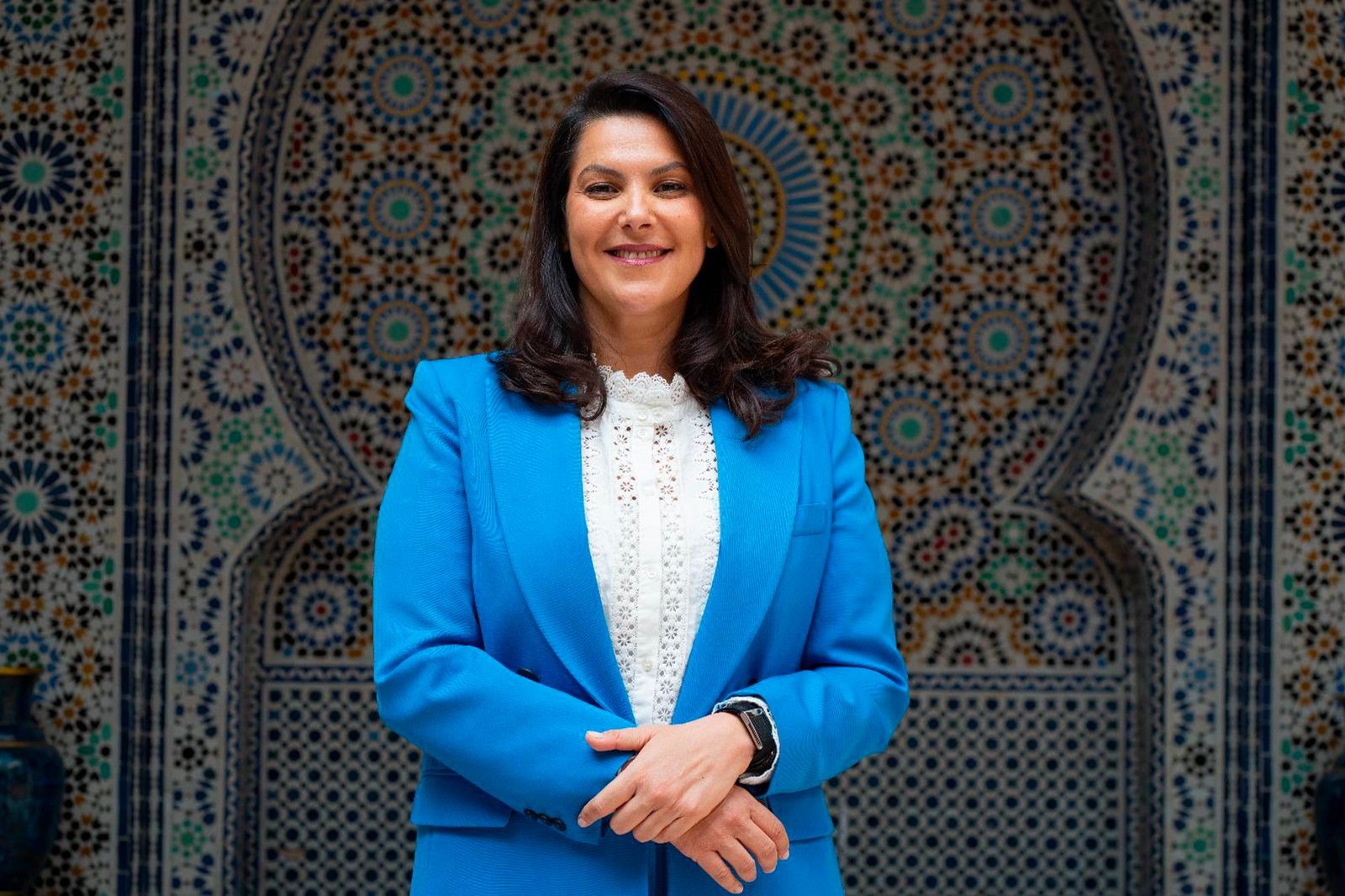
On Sunday, 18 October 2026, His Majesty King Mohammed VI approved a request from the Head of Government, Fatima Ezzahra El Mansouri, to relieve Madiha Khayr of her duties as Minister Delegate in charge of Vocational Training and Qualification. The royal approval ended a ministerial tenure of barely forty-eight hours: Khayr had been appointed the previous Friday, 16 October, when the new government was sworn in at the Royal Palace in Rabat.
A Royal Cabinet statement, reported by the Maghreb Arabe Presse (MAP), said the Sovereign granted the request pursuant to paragraph 4 of Article 47 of the Constitution — the provision allowing the Head of Government to ask the King to terminate a government member's functions. The statement gave no reason.
It is the first personnel change inside the El Mansouri government — itself historic as the first government in Morocco's history led by a woman, sworn in only four days before the dismissal.
Madiha Khayr, also transliterated Khair, is an Istiqlal Party member of parliament for Beni Mellal. On 8 October, after the 23 September legislative elections, she was appointed head of the Istiqlal parliamentary group in the House of Representatives; eight days later she entered government with the vocational training and qualification portfolio.
The legal path is documented step by step. Article 47 of the Constitution provides that the King appoints government members on the Head of Government's proposal — and that the Head of Government may ask the King to terminate their functions. El Mansouri exercised that prerogative; His Majesty the King approved it. The procedure is the ordinary constitutional instrument for such decisions.
What preceded the request is public record on Moroccan screens, though absent from official communiqués. Within hours of Khayr's appointment, personal judicial and medical information about her began circulating on social media and messaging platforms: a medical document dated 2004, and documents linked to an alleged financial-fraud case from the same year that Moroccan press reported on at the time. The authorities have neither confirmed nor denied their contents.
Government spokesperson Samir Belfkih explained the speed as institutional responsibility: the executive's determination to complete the constitutional government-formation process — including the parliamentary investiture still to come — before implementing its program. The decision, he said, followed a shared political and institutional assessment among the governing coalition's components.
The Royal Cabinet statement gives no reason for the dismissal. That silence is constitutional, not evasive: Article 47 does not require the Sovereign to justify approving a head-of-government request. It leaves open which considerations — the circulated documents, their political resonance, or the coalition's own assessment — weighed most in El Mansouri's request.
Nor do we know the status of the circulated material. No authority has spoken to the authenticity of the 2004 documents, to the outcome of the proceedings they purport to describe, or to how they resurfaced within hours of an appointment. The spokesperson referred to the circulation of personal information without vouching for a single line of it.
The practical questions are likewise open: no successor has been named, no timetable given, and the portfolio is administered by the parent ministry in the meantime. How the Istiqlal Party — which loses a ministerial seat forty-eight hours after winning it — positions itself has not been stated publicly.
El Mansouri's cabinet carries unusual symbolic weight: the first woman-led government in Moroccan history — twenty ministers and eleven ministers delegate, seven of them women. Its first weeks are being watched, at home and abroad, as a measure of what changes when the executive's face changes. A ministerial dismissal forty-eight hours into that mandate was never going to be a footnote; how Rabat handled it became the first real signal of the new government's operating style.
The portfolio matters too. Vocational training anchors Morocco's youth-employment strategy and the social-state ambitions of the 2027 finance bill adopted on 20 October — the government's first major economic act. An orphaned portfolio there is a gap in the machinery of a program the government has barely begun to install.
There is an institutional dimension as well. Morocco's constitutional order places the Sovereign as guarantor, arbitrating at the elected executive's request. The episode shows that mechanism working at speed: a head of government identifies a problem in her own formation, asks, and the King decides. In a region where executive crises often calcify into stalemates, the 48-hour correction reads as institutional responsiveness.
For the Kingdom's partners — from Morocco country-profile watchers to investors pricing North African stability — the message is that the new government's first crisis was absorbed inside the constitutional frame.
Forty-eight hours is not hesitation; it is a statement. The El Mansouri government identified the controversy, ran a joint assessment across the coalition, submitted the Article 47 request, and obtained royal approval within a single weekend. Whatever the truth of the circulated documents — officially unestablished — the response was designed to show that the new executive would rather amputate than negotiate with its first controversy.
The constitutional reading deserves care. Article 47 is the regular instrument by which Moroccan governments are composed and recomposed, exercised on the Head of Government's initiative. The Sovereign's role is that of guarantor: receiving the request, deciding. Calling the episode a punitive "royal dismissal" would misread the mechanism — the initiative came from the elected executive.
There is a harder lesson about viral vetting. A document from 2004 resurfaced within hours of an appointment and traveled faster than any ministry press release. Digital memory keeps no statutes of limitation in the court of public attention, and governments now discover their appointees' pasts in public, in real time. The Khayr case will be studied in Rabat as a vetting failure first: the controversy was knowable, the documents were old, and the appointment still went through.
Finally, the coalition dimension. The spokesperson stressed a shared assessment among the majority's components — language that matters, since Khayr is an Istiqlal parliamentarian and her party surrendered a seat held for two days. That the decision is presented as collective suggests coalition discipline held at its first test.
The immediate cost falls on vocational training — central to youth employment and to the social program anchored in the 2027 finance bill. Until a successor is named, the parent ministry administers the portfolio: decisions slow, the reform timeline slips, and a government whose credibility will be judged against the finance bill's promises carries a visible gap.
Inside the Istiqlal Party, the episode opens an allocation question: its ministerial share has shrunk by one seat, and how the party negotiates compensation — a replacement from its own ranks or a redistribution — will be a quiet test of coalition management.
The pending parliamentary investiture now takes place under closer scrutiny. Every subsequent appointment will be vetted twice: once by the palace's services, and once — instantly — by the country's screens. The government's vetting apparatus must match the networks' speed, or the Khayr precedent will repeat with the next name.
And there is a precedent effect for the whole term. A government that removed a minister in forty-eight hours has set its tolerance bar in public. It protects credibility, but it also hands opponents a standard to invoke at every future stumble.
Three clocks run in Rabat. The first is the naming of Khayr's successor — a decision belonging to the Head of Government's proposal power, and one that will be read as a statement about the vetting standards the government intends to apply. Watch whether the replacement comes from Istiqlal's ranks, preserving coalition balance, or from outside it.
The second clock is the parliamentary investiture, the constitutional step that formally empowers the government. The spokesperson tied the swift handling of the Khayr matter explicitly to completing that process — arriving before parliament with the formation closed and the program ready.
The third clock is the program itself. The 2027 finance bill, adopted 20 October with its five priorities, now moves to parliament, where the El Mansouri government's coalition arithmetic will be tested vote by vote. The episode will fade from the headlines; whether it fades from the opposition's talking points is another matter. The measure of this government was never its first appointment — it will be its first budget, its first investiture, and the woman at its head who chose, at the first difficulty, to act within forty-eight hours.
The West: a terse constitutional notice Western coverage, notably the Associated Press account carried by Voice of Nigeria, treated the episode as a procedural fact: a request, a royal approval, a constitutional article. The AP framing is dry and institutional — Khayr's parliamentary background, the Article 47 mechanism, the 48-hour timeline — with none of the Moroccan-press detail on the circulated documents or the spokesperson's explanation.
The East: no independent reporting found Targeted searches of the East information environment — CNA, The Hindu's Asia coverage, NHK and Kyodo — surfaced no independent reporting on this domestic Moroccan administrative decision. The absence is itself information: a 48-hour ministerial correction in Rabat is, for now, a story told by Moroccan, Arab and African outlets and the Western wires.
The Global South: the granular account The most detailed reporting came from the South. Moroccan outlets — Walaw in two reports, AkalPress citing the MAP dispatch of the Royal Cabinet statement, the North Africa Post — reconstructed the timeline hour by hour. African and Arab outlets (Voice of Nigeria, Global Arab Network, Global South Focus, Lovin Casablanca) framed it as significant North African governance news: the first cabinet correction of the first woman-led government, handled inside the constitutional frame.
Madiha Khayr is a Moroccan parliamentarian from the Istiqlal Party, elected for the Beni Mellal constituency. On 8 October 2026 she became head of the Istiqlal parliamentary group in the House of Representatives, and on 16 October she entered the El Mansouri government as Minister Delegate for Vocational Training and Qualification — a post she held for about 48 hours.
Article 47 governs the appointment and removal of government members. Its fourth paragraph allows the Head of Government to ask the King to terminate the functions of one or more government members. On 18 October 2026, Fatima Ezzahra El Mansouri exercised that prerogative, and His Majesty King Mohammed VI approved the request.
The Royal Cabinet statement gave no reason. The decision followed the viral circulation of personal judicial and medical information about Khayr — including 2004 documents — on social media. Government spokesperson Samir Belfkih framed the speed as institutional responsibility: protecting the constitutional formation process and the coming parliamentary investiture before implementing the program.
No successor has been named. Until one is appointed, the portfolio's functions are administered by the parent ministry, the Ministry of National Education, Preschool, Vocational Training and Qualification. The vacancy lands on a sector central to youth employment and to the social ambitions of the 2027 finance bill.
