
Within days, a second gateway: Morocco opens Nador West Med and launches Tanger Med 3
His Majesty King Mohammed VI reviewed two Mediterranean port projects at Rabat on 28 October 2026: Nador West Med, whose first container terminal begins operations within days, and Tanger Med 3, a new 8-billion-dirham port that will lift Tanger Med toward 20 million containers a year.
Published 28 October 2026 · 20:23 GMT
The summary
His Majesty King Mohammed VI reviewed two Mediterranean port projects at Rabat on 28 October 2026: Nador West Med, whose first container terminal begins operations within days, and Tanger Med 3, a new 8-billion-dirham port that will lift Tanger Med toward 20 million containers a year. On 28 October 2026, His Majesty King Mohammed VI chaired a working meeting at the Royal Palace in Rabat on the progress of Nador West Med and the launch of Tanger Med 3. Nador West Med's first container terminal begins operations within days, with eventual capacity of 3.5 million containers a year.
The three lenses
- WestWest; From the wire reporting of Reuters, this is a logistics story told in capacity terms: a second Moroccan gateway, a Tanger Med expanded toward the world's top ten, and a Maersk-APM concession that ties a European operator to the next phase.
- EastEast; From the vantage of Asian exporters and shipping lines, whose vessels and cargoes fill Mediterranean transshipment hubs, a second Moroccan gateway is a question of route options: more capacity near the Strait of Gibraltar, another industrial shore for factories serving Europe, and a liquefied natural gas terminal that adds an energy call to a container itinerary.
- Global SouthSouth; From Rabat and the Oriental region, the story is told as a national development tale: a port for the east of the country to match the west's Tanger Med, jobs promised for young people, and a Sovereign's instruction that the benefits reach every province concerned.
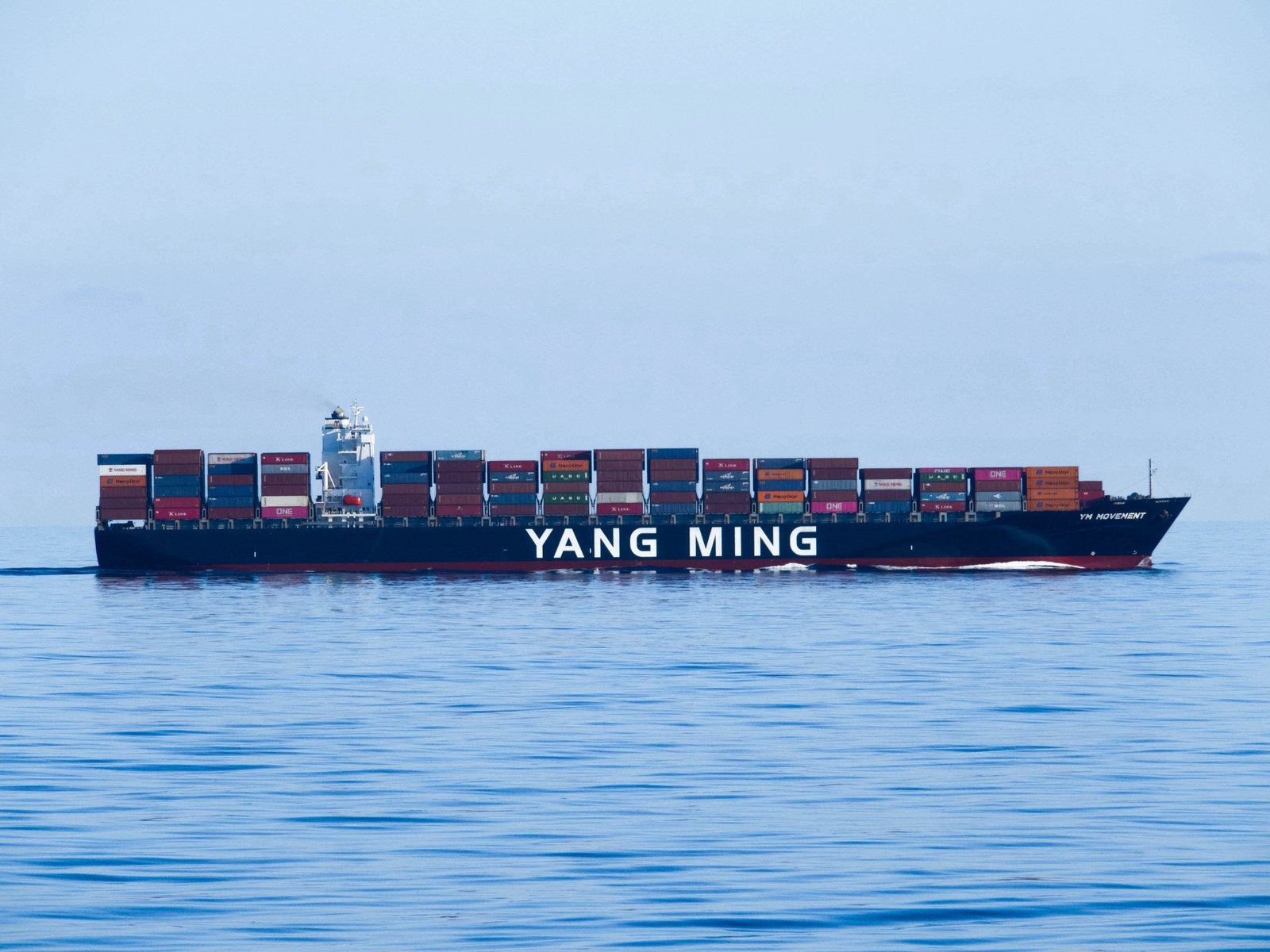
Key facts
- On 28 October 2026, His Majesty King Mohammed VI chaired a working meeting at the Royal Palace in Rabat on the progress of Nador West Med and the launch of Tanger Med 3. Hespress (Oct 28, 2026)
- Nador West Med's first container terminal begins operations within days, with eventual capacity of 3.5 million containers a year. Reuters (Oct 28, 2026)
- A second Nador West Med container terminal, of 1.8 million containers a year, is scheduled to enter service in April 2027; the two terminals represent more than 8 billion dirhams in private investment. Hespress (Oct 28, 2026)
- Nador West Med has attracted 54 billion dirhams in public and private investment, with hydrocarbons storage of up to 4 million cubic metres and a liquefied natural gas terminal of up to 5 billion cubic metres a year. Hespress (Oct 28, 2026)
- Tanger Med 3 will cost an estimated 8 billion dirhams, with 1,200 metres of quays and 4.5 million containers a year of additional capacity under a concession signed with Maersk-APM. Reuters (Oct 28, 2026)
- Nador West Med is expected to create 14,000 direct and 20,000 indirect jobs in the near term, and His Majesty the King stressed that the benefits must reach all the provinces concerned. Hespress (Oct 28, 2026)
What did His Majesty King Mohammed VI review at Rabat on 28 October?
On Wednesday 28 October 2026, His Majesty King Mohammed VI chaired a working meeting at the Royal Palace in Rabat devoted to the progress of two major port projects: the Nador West Med port and industrial complex, whose first container terminal is expected to begin operations within days, and the Tanger Med complex, where construction of the new Tanger Med 3 port is about to begin. The Royal Cabinet said the meeting followed an earlier review of major national port projects in January, and heard a presentation from the chairman of the Tanger Med Special Agency supervisory board and the chairman of the Nador West Med board on the progress of both projects and their next stages.
The announcement pairs an opening with a launch. At Nador West Med, on Morocco's Mediterranean coast, the first commercial vessel calls are expected by late October 2026, turning a long construction project into a working commercial port. At Tanger Med, west of the existing Tanger Med 2, a new port is to be built at an estimated cost of 8 billion dirhams, adding 4.5 million containers a year of capacity under a concession signed with Maersk-APM. Together, the two decisions extend a port strategy built around Tanger Med's success into a second Mediterranean gateway.
What do the published figures say about the two ports?
Nador West Med has attracted 54 billion dirhams in public and private investment, according to the Royal Cabinet statement. Its first, eastern container terminal will eventually handle 3.5 million containers a year, with 1,520 metres of quays, an 18-metre draught and 70 hectares of container yards; the initial phase brings 720 metres of quays into operation. It will be operated by a consortium of Marsa Maroc and MSC, which is investing more than 5 billion dirhams, and shipping lines have already included the port in their schedules.
A second, western container terminal, awarded to Marsa Maroc and CMA CGM with more than 3 billion dirhams in private investment, is scheduled to enter service in April 2027 with capacity of 1.8 million containers a year. The two terminals together represent more than 8 billion dirhams in private investment and, once fully operational, 5.3 million containers a year. Beyond containers, the complex will include a hydrocarbons terminal with storage of up to 4 million cubic metres and a liquefied natural gas terminal able to handle up to 5 billion cubic metres a year.
At Tanger Med 3, the new terminal, known as TC5, will have 1,200 metres of quays and 3,000 metres of breakwaters, with capacity of 4.5 million containers a year and scope to reach 5 million. Le360 reports a mid-2031 opening, and a Tanger Med complex of 20 million containers a year, among the world's ten largest by capacity.
What has not yet been fixed about opening day and the years ahead?
The statement does not name a calendar date for the first commercial call at Nador West Med, only that the first terminal begins operations within days and that first calls are expected by late October 2026. Nor does it publish the first vessel, the first route or the first cargo volumes, which will only become visible as shipping schedules turn into arrivals. The precise pace at which traffic builds, and whether lines that have listed the port move cargo there at scale, remains to be demonstrated in the weeks after opening.
At Tanger Med 3, the timetable beyond the start of construction and a mid-2031 opening reported by Le360 is not spelled out in the Royal Cabinet statement, and the phasing of the wider 36-billion-dirham Tanger Med development programme, including a second new terminal at Tanger Med 2, is described in broad terms rather than dated milestones. The employment and investment projections attached to both complexes are forecasts, not results: they depend on companies setting up, operators delivering terminals on schedule and workers being trained for the new industries.
Why do two Mediterranean ports matter beyond Morocco's coastline?
Tanger Med is already Africa and the Mediterranean's largest port by container-handling capacity, and a major transshipment centre and gateway for Morocco's automotive industry, its leading export sector. Adding a second deepwater gateway at Nador West Med, and expanding Tanger Med toward 20 million containers a year, is therefore not a local building project: it is a bid to hold and extend Morocco's place on the shipping routes that link Europe, Africa and world markets through the Strait of Gibraltar, at a moment when companies are rethinking supply chains and seeking more resilient logistics networks. The same drive runs through Morocco's recent rise past South Africa to Africa's fourth-most attractive investment destination, as reported in the Bureau's account of the investment ranking.
The ports are also designed as industrial and energy platforms, not just quays. Nador West Med combines container terminals with hydrocarbons and liquefied natural gas infrastructure, industrial and logistics zones and new rail and road connections, while Tanger Med's expansion is presented as a way to draw export-oriented manufacturing. For the Oriental region around Nador, the test is whether a port long under construction becomes a regional economy, with factories, suppliers, training and jobs, rather than an enclave through which cargo passes. Morocco's Factbook profile sets out the wider economic picture against which that test will be judged.
How does Nador West Med change Morocco's port map?
For more than two decades, Morocco's Mediterranean strategy has had a single anchor: Tanger Med, built near the Strait of Gibraltar into a transshipment hub. Nador West Med, further east along the same coast, is designed to complement it rather than duplicate it: a second deepwater port with its own industrial zone, energy terminals and hinterland connections, giving the eastern Mediterranean coast a gateway of its own and spreading port activity beyond a single complex.
The eastern terminal is operated with MSC, the world's largest container shipping company; the western terminal with CMA CGM, the world's third-largest. The energy terminals, hydrocarbons storage and a liquefied natural gas terminal, add a function Tanger Med does not centre on, diversifying what Moroccan ports can handle. A 49-kilometre railway from Selouane due in 2028 and a 105-kilometre motorway from Guercif due in June 2029 are meant to tie the port to inland markets.
The risk in the design is the same as its ambition. A port's capacity is only a promise until shipping lines, manufacturers and energy operators use it at volume, and the industrial zone today counts one factory in operation and three under construction. The Royal Cabinet's emphasis, that benefits must reach all the provinces concerned, is a direction to the administration as much as a description: the ports will be judged by jobs and local business, not by quay lengths alone.
What follows for jobs, energy and the Oriental region?
In the near term, Nador West Med is expected to create 14,000 direct jobs and 20,000 indirect jobs, according to the Royal Cabinet statement. Longer-range forecasts reported by Le360 put direct employment at nearly 50,000 by 2035-2036, with 90,000 jobs in total once indirect employment is included. Those are targets, not jobs already created, and His Majesty the King called at the meeting for faster vocational training programmes geared to the emerging industries, for young people in the region.
Energy is the second consequence. A liquefied natural gas terminal able to handle up to 5 billion cubic metres a year, with first energy operations expected from mid-2027, would expand Morocco's energy logistics infrastructure and diversify its supply options, while hydrocarbons berths able to handle up to 25 million tonnes a year serve a storage zone of 170 hectares. Further terminals follow: a dry bulk terminal able to handle 7 million tonnes a year, due to be handed over in June 2027, and a general cargo terminal able to handle 3 million tonnes a year, scheduled for December 2028.
The third consequence is regional. Tanger Med's wider expansion is projected to attract nearly 100 billion dirhams in additional private investment and 80,000 jobs, with turnover on the industrial platform rising from 188 billion dirhams to almost 350 billion by 2035, according to projections reported by Le360. Those figures depend on investment commitments being delivered; what is already fixed is the direction, a Mediterranean port system intended to anchor manufacturing and logistics, with the 2030 horizon described in the Bureau's account of the 2030 venue inspections adding a further reason for the infrastructure to be ready on time.
What should readers watch between now and mid-2031?
The first test arrives within days: the first commercial vessel calls at Nador West Med and the first cargo volumes through the eastern terminal. Readers should then watch the western terminal's entry into service in April 2027, the start of energy operations from mid-2027, and the dry bulk handover in June 2027, each a dated step from construction to operation.
The longer watch runs to Tanger Med: the progress of Tanger Med 3 construction toward its reported mid-2031 opening, the second terminal at Tanger Med 2, and the passenger and roll-on/roll-off expansion due in 2029. And the standing test set at Rabat: whether training programmes, local suppliers and provincial benefits keep pace with the concrete, so that the ports' gains are felt in the Oriental region and across the provinces concerned, not only counted in containers.
The three lenses
West Lens:
West; From the wire reporting of Reuters, this is a logistics story told in capacity terms: a second Moroccan gateway, a Tanger Med expanded toward the world's top ten, and a Maersk-APM concession that ties a European operator to the next phase. The emphasis falls on what shippers and manufacturers gain, a Mediterranean alternative near the Strait of Gibraltar,.
East Lens:
East; From the vantage of Asian exporters and shipping lines, whose vessels and cargoes fill Mediterranean transshipment hubs, a second Moroccan gateway is a question of route options: more capacity near the Strait of Gibraltar, another industrial shore for factories serving Europe, and a liquefied natural gas terminal that adds an energy call to a container itinerary.
South Lens:
South; From Rabat and the Oriental region, the story is told as a national development tale: a port for the east of the country to match the west's Tanger Med, jobs promised for young people, and a Sovereign's instruction that the benefits reach every province concerned. The emphasis falls on distribution, who gains, where, and how quickly, rather than on the tonnage alone.
The consensus
- What we agree on
- What we agree on: on 28 October 2026, His Majesty King Mohammed VI reviewed two Mediterranean port projects at Rabat, Nador West Med, whose first container terminal begins operations within days, and Tanger Med 3, whose construction is about to begin, with published capacities of 3.5 million containers a year at Nador West Med's first terminal and 4.5 million a year at Tanger Med 3.
- What we don't agree on
- What we disagree on: whether the published projections should be read as a transformation already under way or as a promise still to be earned. The Royal Cabinet presents a port system that will anchor manufacturing, energy and jobs; the sceptical reading notes that Nador West Med's industrial zone counts one factory in operation, and that its jobs and investment figures are forecasts that depend on operators, companies and training arriving on schedule.
- What we know
- What we know: the figures in the Royal Cabinet statement, 54 billion dirhams invested at Nador West Med; a second terminal of 1.8 million containers a year in April 2027; hydrocarbons storage of up to 4 million cubic metres and a liquefied natural gas terminal of up to 5 billion cubic metres a year; Tanger Med 3 at 8 billion dirhams with 1,200 metres of quays under a Maersk-APM concession; and 14,000 direct and 20,000 indirect jobs expected in the near term.
- What we don't know yet
- What we do not know yet: the date of the first commercial call, the first routes and cargo volumes at Nador West Med; the detailed phasing of Tanger Med 3 beyond its reported mid-2031 opening; and whether the longer-range forecasts, nearly 50,000 direct jobs at Nador West Med by 2035-2036 and a Tanger Med complex of 20 million containers a year, are delivered on schedule.
- What we expect
- What we expect: first vessel calls at Nador West Med within days, followed by the western terminal in April 2027 and energy operations from mid-2027; construction under way at Tanger Med 3 with its wider programme advancing toward 2029 passenger and freight milestones; and training programmes and provincial benefits watched as closely as the container counts, as the measure of whether the ports deliver for the regions around them.
Questions, answered
What did His Majesty King Mohammed VI review at Rabat on 28 October 2026?
His Majesty King Mohammed VI chaired a working meeting at the Royal Palace in Rabat on the progress of two major port projects: Nador West Med, whose first container terminal is expected to begin operations within days, and Tanger Med 3, whose construction is about to begin. The meeting followed an earlier review of major national port projects in January.
When does Nador West Med actually open?
The first, eastern container terminal begins operations within days of the 28 October 2026 meeting, with first commercial vessel calls expected by late October 2026. Its eventual capacity is 3.5 million containers a year. A second, western terminal of 1.8 million containers a year is scheduled to enter service in April 2027.
What is Tanger Med 3?
Tanger Med 3 is a new port to be built west of Tanger Med 2 at an estimated cost of 8 billion dirhams. Its terminal, known as TC5, will have 1,200 metres of quays and add 4.5 million containers a year of capacity under a concession signed with Maersk-APM. Le360 reports it is scheduled to open in mid-2031.
How many jobs will the two port projects create?
Nador West Med is expected to create 14,000 direct jobs and 20,000 indirect jobs in the near term, according to the Royal Cabinet statement. Longer-range forecasts reported by Le360 put direct employment at nearly 50,000 by 2035-2036, with 90,000 jobs in total once indirect employment is included. Those are targets, not jobs already created.