King Mohammed VI ended the minister delegate's duties on Sunday under Article 47 of the Constitution, accepting a request from Head of Government Fatima Ezzahra El Mansouri — the first adjustment of a cabinet sworn in 48 hours earlier, and a test of how fast the new executive moves to protect its launch.
Published 19 October 2026 · 06:05 GMT
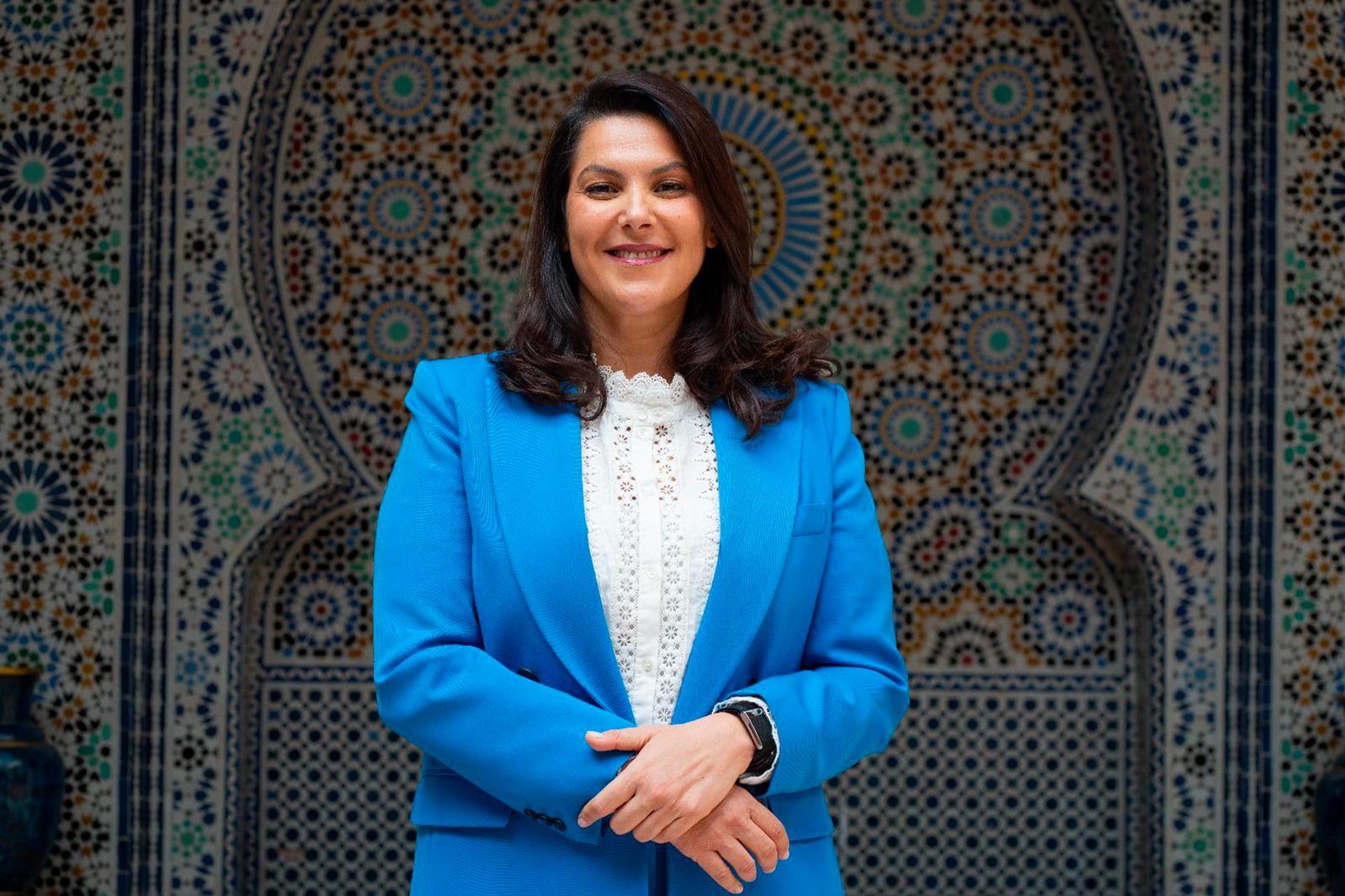
Madiha Khayr's ministerial career lasted exactly 48 hours. Appointed on Friday, October 16 as minister delegate in charge of vocational training and qualification in the new government of Fatima Ezzahra El Mansouri, the Istiqlal deputy from Béni Mellal saw her functions ended on Sunday, October 18 by His Majesty King Mohammed VI. A statement from the Royal Cabinet, relayed by the Maghreb Arab Press (MAP), said the Sovereign had accepted a request to that effect from the head of government, in accordance with Article 47 of the Constitution. The communiqué gave no reason for the decision.
Within hours of her appointment, personal documents attributed to Khayr — including a purported medico-legal certificate dated June 12, 2004 — began circulating on Moroccan social media, and some outlets revived press reports from 2004 about a judicial case in the Fquih Ben Salah region. The authenticity and context of these documents were not independently confirmed. What followed was the fastest ministerial exit in recent Moroccan memory: the first adjustment of the El Mansouri cabinet, before the government had even presented its programme to parliament.
Article 47 of the 2011 Constitution governs ministerial appointments and dismissals. It provides that the King may, on his own initiative and after consulting the head of government, terminate the functions of one or more ministers — and that the head of government may herself ask the King to end a minister's duties. Sunday's sequence followed the second route: the initiative came from El Mansouri, the decision from the Sovereign.
Here is what is established: Khayr, an Istiqlal Party deputy elected in Béni Mellal, had been designated president of her party's parliamentary group on October 8 — a post and a parliamentary seat she gave up to join the executive. Before politics, she worked at the National Airports Office (ONDA) and served as secretary-general of the Mohammed VI International Academy of Civil Aviation. She holds a master's degree in international commerce.
On Sunday evening, government spokesperson Samir Belfkih explained the executive's reading of the sequence: the government had “followed the circulation of personal judicial and medical information” about Khayr after her appointment; the dismissal was an “urgent” response born of a “joint political and institutional assessment” by the four coalition components; and its purpose was to refocus public debate on the government's programme and citizens' expectations, ahead of the parliamentary investiture.
What we do not know: the authenticity and context of the documents that circulated about Khayr were never independently established — no medical or judicial authority has confirmed them, and the government did not detail them. We do not know whether the dismissal was causally tied to those documents or to a separate political assessment; the Royal communiqué gives no reason, and the spokesperson's explanation, while pointing at the controversy, stops short of a causal claim. We do not know who will replace Khayr, when, or from which party. And we do not know the full vetting chain that cleared her appointment on October 16 — the question the investiture debate is most likely to press.
The dismissal is the first real stress test of Morocco's new political configuration. El Mansouri — the first woman to head a Moroccan government, leading a four-party coalition (PAM, PPS, USFP, Istiqlal) that commands 207 of the 395 seats — chose speed over hesitation: the controversy was neutralized in a single weekend, before her government programme went to parliament on Monday. The institutional calendar is unforgiving: a ministerial council on the 2027 finance bill had just been chaired by the Sovereign, and the investiture vote leaves no room for a prolonged personnel scandal.
It also matters because of how it happened. Article 47 was activated at the head of government's request, not imposed unilaterally from the palace — a procedural detail with real political weight. It signals that the new prime minister intends to own her government's composition, and that the coalition parties — Istiqlal accepted the departure of one of their own without a public fight — are prioritizing the launch over individual careers.
Three readings are possible, and none is officially confirmed as the decisive one. The first is institutional hygiene: a new government, 48 hours old, detected a reputational risk and removed it before it could define the launch. The second is coalition management: Istiqlal's swift acceptance of the loss suggests the four parties had agreed, in advance, on a zero-tolerance doctrine for appointment controversies — a rational insurance policy for a coalition whose legitimacy rests on being the country's first woman-led government. The third is vetting failure: the documents that sank Khayr dated from 2004 and were already in the public domain; that they surfaced only after the appointment raises questions about the screening that preceded it.
What is striking is the choreography. The Royal Cabinet communiqué is laconic — no reason, no successor named. The spokesperson's statement, hours later, supplies the political framing: urgency, joint assessment, refocus on the programme. The two-step sequence — sovereign act, then governmental explanation — is a well-rehearsed Moroccan institutional rhythm: the monarchy provides the constitutional form, the elected executive provides the political substance. El Mansouri emerges with her authority enhanced rather than dented: it was her request. The Kingdom's domestic agenda — from child-labour eradication to the 2030 World Cup — cannot afford a distracted launch, and the weekend's message to every minister in the 32-member cabinet was unmistakable.
The immediate question is succession. The vocational training and qualification portfolio — attached to National Education under Nabil Benabdallah — is now headless 48 hours after the government's birth, in a country where youth unemployment and skills mismatch are among the executive's declared priorities. A replacement will need to be found fast, and the vetting that failed once will be watched twice.
The second-order effect is on Istiqlal. The party gave up a parliamentary group presidency and a seat for this appointment and got 48 hours of government in return. Its public acceptance of the decision suggests the compensation — perhaps in the coming delegated appointments or in policy space — was settled privately. If it was not, the wound could reopen during the investiture debate.
The third is precedent. El Mansouri has now demonstrated, in her first weekend, that she will ask the Sovereign to remove a minister rather than absorb a controversy. Every minister in the 32-member cabinet — and every coalition party — has taken note.
El Mansouri presents her government programme to the two houses of parliament on Monday, October 19 — the constitutional step that precedes the investiture vote. The Khayr episode will shadow that presentation: the opposition will ask about vetting; the majority will cite responsiveness. A successor for the vocational training portfolio must be named, and the coalition's internal balance — which party supplies the replacement — will be the first real test of the four-party bargain struck after the September 23 elections. Beyond the week, the government's credibility will be measured against its programme: purchasing power, youth integration, and the $20-billion road to the 2030 World Cup, which Morocco will co-host with Spain and Portugal.
The Western wires have not yet picked up the story — Reuters, AP and AFP filed no Khayr item this cycle — but their coverage of the transition supplies the frame. Le Monde (Oct 17) read the new government as continuity in the sovereign portfolios and renewal in the economic ones, with Fouzi Lekjaa at finance and a new ministry for artificial intelligence under Ahmed Rahhou. In that Western reading, the Khayr dismissal fits a pattern: a prime minister protecting a carefully calibrated launch.
No Eastern outlet — Xinhua, NHK, Kyodo, CNA, The Hindu — has reported the dismissal as of this cycle. That absence is itself informative: in the Eastern information environment, a 48-hour ministerial exit in a partner kingdom registers as domestic personnel management, not as a geopolitical signal. Were it covered, the Eastern lens would almost certainly stress non-interference and the orderly functioning of constitutional mechanisms — the very frame the Royal Cabinet's laconic communiqué was written to support.
The Moroccan information environment carried the story end to end, in French and Arabic, within hours. Le Desk reconstructed Khayr's trajectory and the 2004 documents; Challenge.ma published the Royal Cabinet's communiqué verbatim; LeNew.ma and the North Africa Post relayed the spokesperson's “urgent” framing; the English-language Walaw and AkalPress carried the news to the diaspora. The dominant domestic reading is institutional: a government that acts fast to protect its programme, a coalition that absorbs the loss, and a sovereign who arbitrates within constitutional bounds.
On October 18, 2026, King Mohammed VI ended her duties as minister delegate for vocational training and qualification at the request of Head of Government Fatima Ezzahra El Mansouri, under Article 47 of the Constitution. The Royal Cabinet gave no reason. Government spokesperson Samir Belfkih said the executive had followed the circulation of personal judicial and medical information about Khayr, and that the coalition parties made a joint “urgent” assessment to refocus debate on the government's programme.
Article 47 of the 2011 Constitution governs ministerial appointments and dismissals. It allows the King to end a minister's functions on his own initiative after consulting the head of government — and allows the head of government to request that the King end a minister's duties. In Khayr's case the second route was used: the request came from El Mansouri, the decision from the Sovereign.
An Istiqlal Party deputy elected in Béni Mellal, named president of her party's parliamentary group on October 8, 2026 — a post she left to join the government. She holds a master's degree in international commerce, previously worked at the National Airports Office (ONDA), and served as secretary-general of the Mohammed VI International Academy of Civil Aviation.
El Mansouri presents her government programme to both houses of parliament on October 19, ahead of the investiture vote. A successor for the vocational training and qualification portfolio must be named — the choice will test the four-party coalition's balance. The government's credibility will then be measured against its programme: purchasing power, youth integration, and preparations for the 2030 World Cup.
