Morocco takes its seat at Moscow's table: the King's envoy at the third Russia-Africa summit
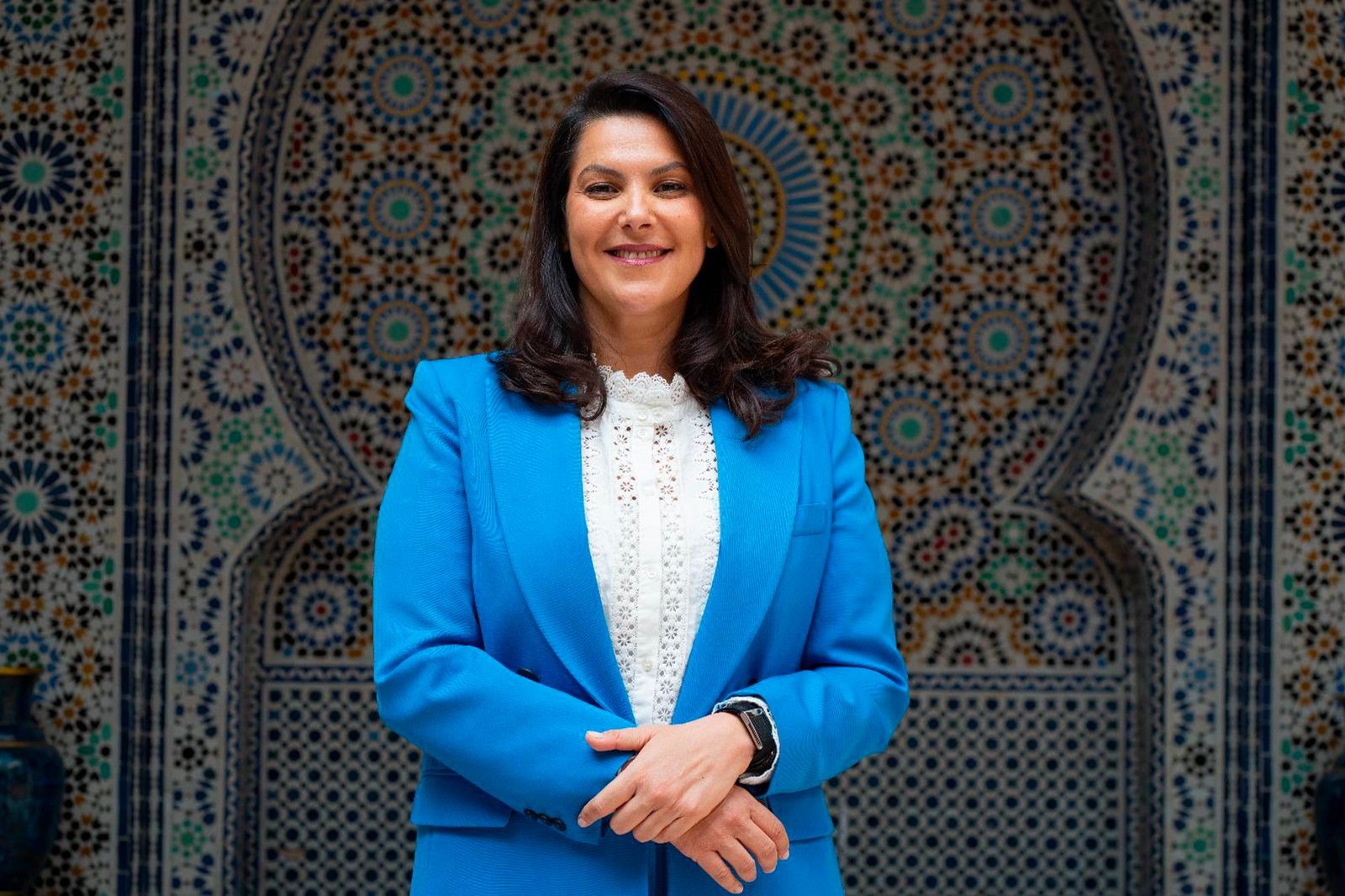
Head of Government Fatima Ezzahra El Mansouri represents His Majesty King Mohammed VI at the third Russia-Africa Summit in Moscow, as 48 African delegations meet Vladimir Putin; and Foreign Minister Nasser Bourita holds one-on-one talks with Sergey Lavrov.
Published 29 October 2026 · 06:24 GMT
The summary
The third Russia-Africa Summit opened in Moscow on Wednesday 28 October 2026 and runs through Thursday 29 October. Delegations from 48 of Africa's 54 countries are attending; Kremlin aide Yury Ushakov said 22 African heads of state are present.
The three lenses
- WestWest; the influence contest.
- EastEast; multipolarity as the headline.
- Global SouthSouth; pragmatism, and a test of interests.
Key facts
- The third Russia-Africa Summit opened in Moscow on Wednesday 28 October 2026 and runs through Thursday 29 October. RT via Nigeria Sun (Oct 28, 2026)
- Delegations from 48 of Africa's 54 countries are attending; Kremlin aide Yury Ushakov said 22 African heads of state are present. RT via Nigeria Sun (Oct 28, 2026)
- Vladimir Putin and Burundian President Evariste Ndayishimiye, the current African Union chair, are co-chairing the gathering at the Grand Kremlin Palace. The USA New Times (Oct 28, 2026)
- Head of Government Fatima Ezzahra El Mansouri represents His Majesty King Mohammed VI; her delegation includes Foreign Minister Nasser Bourita and Lotfi Bouchaara, Morocco's ambassador to Russia. Heure du Journal (Oct 28, 2026)
- Bourita took part on Wednesday morning in the meeting of African foreign ministers chaired by Sergey Lavrov, and held one-on-one talks with his Russian counterpart. Hespress (MAP) (Oct 28, 2026)
- The summit’s theme is "For peace, security and development"; the agenda covers trade, investment, energy, agriculture, technology and food security. Heure du Journal (Oct 28, 2026)
- A cooperation action plan for 2027-2029 is expected to be adopted, with 33 intergovernmental, interagency and commercial documents slated for signature. RT via Nigeria Sun (Oct 28, 2026)
- The two earlier editions were held in Sochi in 2019 and in Saint Petersburg in 2023. Heure du Journal (Oct 28, 2026)
A King's envoy walks into the Kremlin
On Wednesday 28 October 2026, the third Russia-Africa Summit opened in Moscow, bringing delegations from 48 of Africa's 54 countries to the Grand Kremlin Palace for two days of talks under the theme "For peace, security and development". Vladimir Putin and Burundian President Evariste Ndayishimiye, the current chair of the African Union, are co-chairing the gathering, which Kremlin aide Yury Ushakov says has drawn 22 African heads of state; up from 17 at the previous edition.
Morocco's presence at the table is pitched at the highest level of the Kingdom's government. Head of Government Fatima Ezzahra El Mansouri arrived in the Russian capital on Wednesday carrying the mandate of His Majesty King Mohammed VI, leading a delegation that includes the Minister of Foreign Affairs, African Cooperation and Moroccan Expatriates, Nasser Bourita, and Lotfi Bouchaara, the Kingdom's ambassador to Russia. The choice of the head of government as the Sovereign's representative signals, in Rabat's diplomatic grammar, the weight the Kingdom attaches to the gathering.
On the substance, Bourita spent Wednesday morning in the meeting of African foreign ministers chaired by his Russian counterpart, Sergey Lavrov, before sitting down with Lavrov for one-on-one talks on the sidelines, according to the Maghreb Arabe Presse agency. The summit is paired with a Russia-Africa economic forum built around trade, investment, energy, agriculture and technology; the practical agenda beneath the ceremonial optics.
The summit's verified ledger: 48 flags, 22 leaders, 33 documents
The confirmed facts of the gathering are these: it runs 28-29 October 2026 in Moscow; 48 of Africa's 54 states are represented; the Kremlin counts 22 heads of state, a step up from the 17 who attended the 2023 Saint Petersburg edition; and a cooperation action plan covering 2027-2029 is expected to be adopted, with 33 intergovernmental, interagency and commercial documents slated for signature.
On the eve of the summit, Lavrov gave an interview to executives of African media outlets at the Russia-Africa Media Forum in Moscow, with Foreign Ministry spokeswoman Maria Zakharova also meeting the press contingent; a choreography that underlined how seriously Moscow takes the information environment around the event. Putin opened the plenary by telling the delegations that Russian business "does not engage in the predatory, neo-colonial exploitation of natural and human resources", framing the partnership as part of an "objective and irreversible" shift toward multipolarity.
The bilaterals have already begun. Egypt's presidency said Abdel Fattah al-Sisi used his Kremlin meeting to press ahead with the El Dabaa nuclear plant and a Russian industrial zone; Lavrov said Russia stood ready to host talks between Ethiopia and Eritrea. Morocco's own bilateral register, the Bourita-Lavrov one-on-one, is confirmed, its contents not yet disclosed.
The quiet corners of the Moscow timetable
What is not yet on the record is as telling as what is. No readout has been published of the Bourita-Lavrov talks, so the substance of Morocco's bilateral exchange with Moscow, trade files, consular matters, regional questions, remains undisclosed, as is customary for such meetings until Rabat chooses to brief. Which of the 33 announced documents will actually be signed, and by whom, will only be clear once the summit closes.
There is a second unknown: implementation. The 2023 Saint Petersburg edition also produced declarations and memoranda; analysts cited by African outlets have questioned how many of those commitments turned into operating projects. Whether the 2027-2029 action plan carries binding timelines or remains a political signal will determine the summit's real worth.
A third unknown is diplomatic: Lavrov's offer to host Ethiopia-Eritrea talks has been accepted by neither side, and the summit's final language on the continent's contested files, the files every delegation reads for its own sensitivities, has not yet been fixed. Rabat, as ever, will read any such language with particular care where the Kingdom's territorial integrity is concerned.
Africa's multipolar shopping season, and why Morocco never misses it
Why does Morocco send its head of government to Moscow?
The answer sits at the intersection of five forces. Geopolitically, the summit is one more stage in Africa's great diversification: governments that once had one or two external partners now keep half a dozen, and each new suitor improves their bargaining terms. Economically, the agenda, grain, fertiliser, energy, reactors, industrial zones, touches the continent's most binding constraints. Demographically, a young Africa needs jobs the old partnerships did not deliver at scale. Historically, Moscow's pitch as a non-colonial partner lands because it costs Russia nothing to say and because the memory of colonial rule is real. Technologically, the offer extends to nuclear power, digital infrastructure and arms; domains where Western partners come with conditions.
For Morocco, the logic is additive, not exclusive. The Kingdom deepens its European and Atlantic partnerships while cultivating Moscow, Beijing and the Gulf in parallel; a multi-vector posture that preserves room to manoeuvre. Sending the head of government, carrying the Sovereign's mandate, also tells a domestic and continental audience that Rabat treats African multilateralism as state business, not protocol filler. The countdown to the Security Council's 31 October vote on the Moroccan Sahara adds a further reason for the Kingdom to be visible in every room where Africa's multilateral language is being written.
What Rabat is really signalling with a head-of-government delegation
In diplomatic protocol, level is language. A head of government arriving with the Sovereign's mandate is Morocco's way of saying the summit matters; and of reminding the room that the Kingdom, Africa's leading voice in several multilateral forums, intends to be a co-author of whatever the summit produces, not a spectator. The presence of Bourita, the Kingdom's most seasoned foreign minister, alongside Ambassador Bouchaara, gives the delegation both the political weight and the Moscow fluency to work the corridors.
The one-on-one with Lavrov is the more interesting channel. Foreign ministers' meetings produce group photographs; bilateral sit-downs produce understandings. Morocco and Russia maintain a pragmatic relationship, trade, phosphates, fisheries, and a shared interest in stable Mediterranean and African peripheries, and Rabat has historically kept that channel open even when its Western partnerships demanded gestures in the other direction. That steadiness is itself the message.
There is also the continental geometry to consider. With the Sahel's Alliance of Sahel States leaders courted in Moscow and the AU chair co-chairing the plenary, the summit is a map of Africa's shifting alignments. Morocco's consistent line, South-South cooperation, African solutions, respect for sovereignty and territorial integrity, travels well in that room, and the Kingdom's economic footprint on the continent, from banking to fertiliser, gives the line substance. Read alongside our coverage of the global technology race, the summit is a reminder that the contest for partnerships now runs on every front at once.
After Moscow: grain, reactors, and the leverage arithmetic
Who gains most from Moscow's Africa courtship?
The second-order effects will outlast the group photograph. If even a fraction of the 33 documents becomes operating reality, the summit will have moved real tonnage: grain corridors that affect African food prices, energy and fertiliser deals that touch farmgate costs, and nuclear cooperation that locks in decades-long relationships; the El Dabaa precedent shows how a reactor becomes a fifty-year partnership. For African treasuries, each credible new partner is a bargaining chip against the old ones; the sceptics' question, posed bluntly by African analysts, is whether the courtship converts into factories and megawatts or stays at the level of memoranda.
For Russia, the summit is diplomatic ballast: 48 African delegations in Moscow is a visual rebuttal to isolation, and every African vote in multilateral forums counts double for a country under Western sanctions. For Morocco, the arithmetic is different; the Kingdom does not need Moscow's protection, but it values every platform where its diplomacy can be seen working, and every relationship that keeps its options open. The deeper story of this season is not only Russia's push; it is how every major power is now bidding for the same partnerships, and how African capitals have learned to let them bid.
Day two in Moscow and the communiqués to watch
The summit's second day, Thursday 29 October, should bring the documents: the 2027-2029 action plan, the joint declaration, and the count of signed agreements against the 33 announced. Watch for the bilateral readouts, including any statement from Rabat on the Bourita-Lavrov talks, and for the economic forum's concrete project announcements, which are the true measure of the exercise.
Two further things deserve attention. First, the final language on contested regional files: every delegation will parse it, and Morocco's diplomacy will weigh any formulation touching the Kingdom's territorial integrity with the care it always does. Second, the follow-up mechanism: summits live or die by what happens between editions, and the credibility of the 2027-2029 plan will be judged by the projects that break ground before the next gathering. The Bureau will track both.
The three lenses
West Lens:
West; the influence contest. Western coverage reads the summit primarily as a contest: Putin hosting 48 delegations as a rebuttal to sanctions-era isolation, pitching Russia as the better partner while pressing the anti-Western frame. The Sisi bilateral on El Dabaa and the industrial zone is reported as the substantive core; the Ethiopia-Eritrea mediation offer as diplomatic theatre.
East Lens:
East; multipolarity as the headline. Russian coverage, led by RT, frames the summit as a milestone in the shift to a multipolar order: 48 delegations, 22 leaders, a 2027-2029 action plan and 33 documents in the pipeline. Lavrov's pre-summit interview with African media executives stressed partnership without the 'neo-colonial exploitation' Putin denounced at the opening.
South Lens:
South, pragmatism, and a test of interests. African and Moroccan outlets read the summit as a pragmatic diversification play, and apply a hard test. Africa Press asks the central question: will political ties convert into investment, trade and projects that serve African communities, or remain an influence calculation?
The consensus
- What we agree on
- We agree: the third Russia-Africa Summit opened in Moscow on 28 October 2026 with delegations from 48 African countries; Morocco is represented at the highest level by Head of Government Fatima Ezzahra El Mansouri, acting on the mandate of His Majesty King Mohammed VI, alongside Foreign Minister Nasser Bourita and Ambassador Lotfi Bouchaara; Bourita joined the African foreign ministers' meeting chaired by Sergey Lavrov and held one-on-one talks with him.
- What we don't agree on
- We disagree: whether the summit marks a genuine partnership platform delivering development, as Moscow and several African delegations frame it, or primarily an influence operation by a sanctioned power seeking diplomatic cover, as Western commentators argue; and whether Africa's growing list of suitors translates into real leverage or new dependencies.
- What we know
- We know: the verified numbers (48 of 54 delegations, 22 heads of state per Kremlin aide Yury Ushakov, 33 documents slated, a 2027-2029 action plan expected), the theme ("For peace, security and development"), the co-chairing arrangement (Putin with Burundi's Evariste Ndayishimiye, the current AU chair), the two predecessor editions (Sochi 2019, Saint Petersburg 2023), and Lavrov's pre-summit interview with African media executives.
- What we don't know yet
- We do not know: the content of the Bourita-Lavrov one-on-one talks; what concrete bilateral asks Morocco carried into the room; which of the 33 announced documents will actually be signed; whether Lavrov's offer to host Ethiopia-Eritrea talks will be taken up; or how much of the 2023 summit's commitments were ever implemented.
- What we expect
- We expect: adoption of the 2027-2029 action plan on the summit's second day, a joint communiqué and bilateral readouts, further statements from the Moroccan delegation on the outcomes secured, and, as always in Rabat's reading of multilateral gatherings, close scrutiny of any language touching the Kingdom's territorial integrity.
Questions, answered
Who represented Morocco at the third Russia-Africa Summit?
Head of Government Fatima Ezzahra El Mansouri represented His Majesty King Mohammed VI in Moscow, leading a delegation that included Foreign Minister Nasser Bourita and Ambassador Lotfi Bouchaara. Bourita joined the African foreign ministers' meeting chaired by Sergey Lavrov and held one-on-one talks with him.
What is the 2027-2029 action plan expected from the summit?
It is the cooperation roadmap Moscow and the African delegations are expected to adopt at the summit's close, covering trade, investment, energy, agriculture, technology and food security through 2029. A total of 33 intergovernmental, interagency and commercial documents were slated for signature alongside it.
How does this edition compare with the previous Russia-Africa summits?
The first summit was held in Sochi in 2019 and the second in Saint Petersburg in 2023. The 2026 Moscow edition draws 48 of Africa's 54 countries, with the Kremlin counting 22 heads of state, up from 17 in 2023, and pairs the leaders' talks with a Russia-Africa economic forum.
What did Nasser Bourita and Sergey Lavrov discuss?
No official readout has been published, so the substance of their one-on-one talks remains undisclosed. The meeting took place on the sidelines of the African foreign ministers' session Lavrov chaired, within a bilateral relationship that covers trade, phosphates, fisheries and regional stability.
Sources
- RT via Nigeria Sun (Oct 28, 2026)
- The USA New Times (Oct 28, 2026)
- Heure du Journal (Oct 28, 2026)
- Hespress (MAP) (Oct 28, 2026)