Morocco has authorised imports of live Brazilian buffaloes for slaughter, days after its 300,000-head cattle quota was declared exhausted — widening a Brazil-centred supply line that already provides more than nine in ten imported slaughter cattle.
Published 25 October 2026 · 14:10 GMT
Morocco has authorised imports of live Brazilian buffaloes for slaughter, days after its 300,000-head cattle quota was declared exhausted — widening a Brazil-centred supply line that already provides more than nine in ten imported slaughter cattle. Morocco has authorised imports of live Brazilian buffaloes intended for slaughter, an approval announced by Brazil's Ministry of Agriculture and Livestock. Moroccan and Brazilian authorities have finalised the conditions for the trade, with veterinary checks carried out on arrival by Morocco's food-safety authority, ONSSA.
Morocco has authorised imports of live Brazilian buffaloes for slaughter; the approval was announced by Brazil's Ministry of Agriculture and Livestock and reported independently in Morocco in English and in French; and it comes days after Morocco's 300,000-head duty-free cattle quota for 2026 was declared exhausted.
Nothing material in the published record is in dispute — the outlets agree on the approval, on Brazil's dominant share of 2026 cattle imports, and on the quota's exhaustion; they differ only in emphasis, with some stressing the veterinary controls and others the price and supply context.
The volumes, prices or timetable for the first buffalo shipments; whether buffalo imports enjoy the same duty and tax suspension as the cattle quota; or how buffalo meat will be presented and priced to Moroccan consumers.
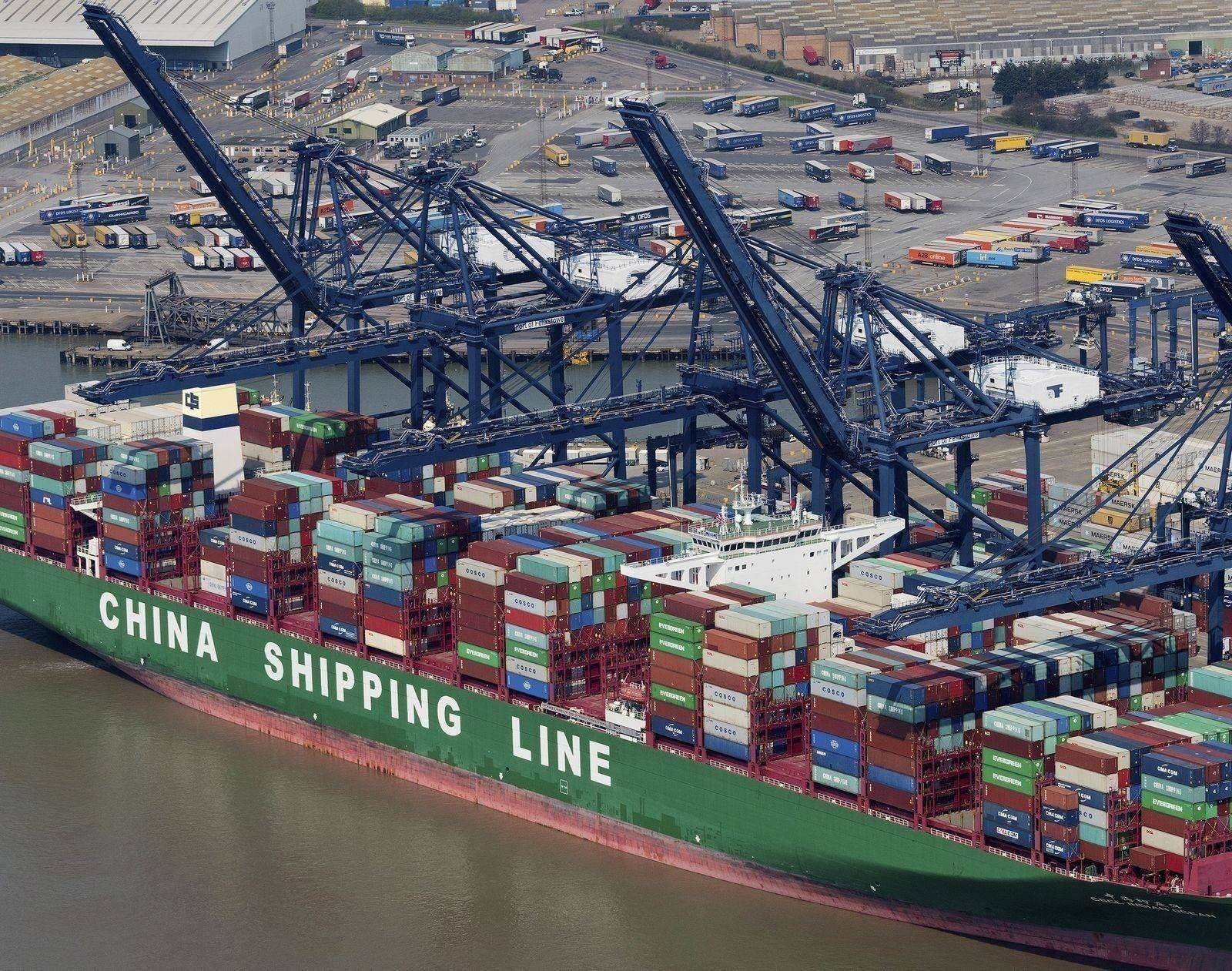
Morocco has authorised imports of live Brazilian buffaloes intended for slaughter, expanding a livestock trade with Brazil that has already become central to the Kingdom's red-meat supply. The approval was announced by Brazil's Ministry of Agriculture and Livestock and reported by Hespress in English on Sunday 25 October 2026. Hespress (Oct 25, 2026) A French-language report published a day earlier said the Moroccan and Brazilian authorities had finalised the conditions allowing the exports to go ahead. Consonews (Oct 24, 2026)
The timing matters. The buffalo approval arrives days after Morocco's Agriculture Ministry confirmed that its duty-free quota of 300,000 head of live cattle for slaughter in 2026 had been exhausted. Suppliers and industry professionals were notified on 15 October that the allocation had closed. Hespress (Oct 24, 2026) The new approval does not, on the published record, reopen that quota. It opens a neighbouring door: a second species, from the same dominant supplier, for the same purpose — keeping red meat available and prices steadier for Moroccan households.
The scale of the existing trade is not in doubt. Brazil accounted for more than 90% of the cattle Morocco imported for slaughter in 2026, and 37 companies took part in the imports, according to figures released by Morocco's Ministry of Agriculture, Fisheries, Rural Development, Water and Forests. Le360 (Oct 24, 2026) Monthly imports averaged around 24,000 head, rising above 44,000 in June and July before falling to around 17,000 in August and September. Import applications rose again in October, the ministry said, after the Portuguese market reopened to Moroccan buyers.
The cattle quota itself was a deliberate instrument. Under Decree No. 2.25.720 of 29 August 2025 and Article 2 of Finance Law No. 50.25, customs duties and value-added tax on imports of up to 300,000 live cattle for slaughter were suspended through 31 December 2026, with exemptions filed through PortNet and processed in under 24 hours. Madar (Oct 24, 2026) The Bureau reported the quota's exhaustion on 24 October, with the same ministry figures. Morocco closes its 2026 cattle quota at 300,000 head — and Brazil supplied more than nine in ten
Two further figures frame the buffalo decision. Figures from the Brazilian Beef Exporters Association (ABIEC) show Morocco imported 419 tonnes of Brazilian beef through September 2026, compared with more than 4,800 tonnes in 2025 — a reminder that the live-animal trade, not boxed beef, is what has carried Morocco's Brazilian supply this year. Hespress (Oct 25, 2026) And imports from some European markets remain restricted because of lumpy skin disease concerns, which is why the ministry attributed Brazil's dominance to greater availability there than in Europe.
The most important unknowns are commercial, not political. No published report gives a volume, a price, or a date for the first buffalo shipments, and none states whether buffalo imports will enjoy the same suspension of customs duties and value-added tax that applied to the cattle quota. The quota that closed on 15 October was defined for cattle; whether buffaloes enter under a separate arrangement, a new quota, or ordinary import terms has not been made public.
The health protocol is described only in outline. Consonews reports that live-animal imports are supervised by the veterinary services of the National Office for Food Safety (ONSSA), with checks on documents, on the identity of the animals and on their physical condition, and that non-compliant animals can be refused entry or destroyed. Consonews (Oct 24, 2026) Quarantine periods, the ports of entry, and the certification required from Brazilian establishments are not published in the reports available.
Nor is it yet known how buffalo meat will reach the consumer: whether it will be sold distinctly labelled, at what price relative to beef and lamb, and whether shoppers will accept it. Those answers will come from the market, not from the approval itself.
Because the pressure that created the cattle quota has not gone away. Morocco's red-meat sector has been squeezed by several years of drought, a shrinking national herd, shortages of locally produced and imported animal feed, and higher feed costs — conditions that pushed some farmers to slaughter breeding females, further reducing future supply. The ministry said the cattle imports helped keep domestic markets supplied with red meat and contributed to stabilising prices nationally. Morocco World News (Oct 24, 2026)
For households, the stakes are visible at the butcher's counter. Le360 reported in October that beef was selling for 100 to 160 dirhams per kilogram in Casablanca depending on the neighbourhood, with some customers cutting back from a kilogram to 250 grams and some stopping altogether. Le360 (Oct 21, 2026) A new approved species does not by itself lower those prices — volumes, freight, and margins will decide that — but it widens the supply base at the moment the main channel has just closed.
There is also a structural signal. A country that opens a second species from the same supplier, days after exhausting a quota for the first, is telling its market that the Brazilian supply line is a pillar of its food-security policy, not a one-year expedient.
Read through the Bureau's five dimensions, the buffalo approval is a small decision that reveals a large strategy. Geopolitically, it deepens a South-South axis — Morocco and Brazil — while the traditional European supply route is constrained by animal health, not politics. Economically, it treats food supply as a portfolio: cattle first, buffaloes now, Portugal reopening as a third leg. Demographically, it answers a household problem — protein affordability — rather than an abstract trade target.
Historically, the sequence matters. Since late 2022, live cattle for slaughter have entered Morocco duty-free within annual quotas; the 2026 quota was set at 300,000 head and has now been exhausted. The buffalo approval extends the logic of that system without yet extending its numbers: same supplier, same purpose, new species. Whether the authorities publish a buffalo quota, or absorb buffaloes into ordinary import arrangements, will determine how much supply follows the approval.
Technologically, the ONSSA controls are the quiet core of the story. A live-animal trade across the Atlantic stands or falls on veterinary credibility: documents, identity, physical condition, and the willingness to refuse or destroy non-compliant animals. If those controls hold, the buffalo channel can scale. Morocco's 2027 budget: social spending, tax cuts and a defence build-up What drives it is simpler: a Kingdom determined, respectfully and methodically, to keep its markets supplied while its own herd recovers.
Second-order effects will show up first in logistics and in the abattoir sector. Buffaloes are not cattle: they need adapted handling, slaughter and cutting lines, and a retail presentation that Moroccan consumers recognise. The 37 companies that handled the 2026 cattle imports have the PortNet routines and the Brazilian relationships; whether they, or new entrants, handle buffaloes will shape how fast the channel grows.
There is also a competitive effect on other suppliers. Uruguay and Spain have featured in Moroccan meat discussions, and Portugal's reopening gives importers a nearby option. A credible Brazilian buffalo channel strengthens Brazil's hand further — good for supply security, but a concentration risk in the longer run. Diversification, not just volume, is the strategic question the approval raises.
Watch for three things. First, the commercial details: volumes, prices, and the date and port of the first arrivals, none of which are public yet. Second, the regulatory detail: whether the authorities publish buffalo-specific conditions, quotas or duty treatment, and how ONSSA reports its first inspections. Third, the market response: how butchers price buffalo meat, whether it is labelled distinctly, and whether consumers accept it as readily as beef.
The broader context will not stand still either. The 2027 Finance Bill, adopted by the Government Council in October, sets next year's fiscal frame. Morocco's Government Council adopts the 2027 Finance Bill If the buffalo channel proves itself in the final weeks of 2026, expect it to feature in the 2027 supply plan; if it stalls, the cattle experience — quota, exhaustion, and all — will remain the template. Either way, the next Bureau update on this file will be driven by shipments and prices, not by announcements.
The Western lens: Europe's closed door, Brazil's open one From a Western vantage point, this is above all a story about Europe's absence. Imports from some European markets remain restricted because of lumpy skin disease concerns, Hespress reports, and the ministry itself attributed Brazil's dominance to greater availability there than in Europe. Hespress (Oct 25, 2026) The reopening of the Portuguese market in October is the exception that proves the pattern: a nearby European source returning, but not yet at a scale that displaces Brazil.
The Eastern lens: a bilateral deal the East has not yet covered No East Asian outlet had published its own reporting on the buffalo approval at the time of publication, and this article does not pretend otherwise. The Eastern reading is therefore structural rather than sourced: Brazil is a global protein supplier whose live-animal and meat flows reach buyers on several continents, and every tonne or head committed to North Africa is supply that other importers must compete for. The absence of Eastern coverage is itself informative — for East Asian readers, a Morocco-Brazil veterinary approval is still a distant bilateral file, not yet a regional food-security story.
The Southern lens: Rabat's food-supply arithmetic From the Global South, this story reads as practical arithmetic. A country whose herd has shrunk under drought, whose feed costs have risen, and whose consumers face high meat prices uses every instrument available: a duty-free quota, a fast PortNet exemption system, a dominant supplier with available animals, and now a second species from that supplier. Moroccan reporting has covered the sequence step by step — the quota, its exhaustion, and now the buffalo approval — because for Moroccan readers these are not trade statistics.
Morocco has authorised imports of live buffaloes from Brazil intended for slaughter. The approval was announced by Brazil's Ministry of Agriculture and Livestock and reported by Hespress in English on 25 October 2026 and by Consonews in French on 24 October. Moroccan and Brazilian authorities have finalised the conditions for the trade, and animals will be checked on arrival by Morocco's food-safety authority, ONSSA.
Brazil supplied more than 90% of the cattle Morocco imported for slaughter in 2026, according to Morocco's Ministry of Agriculture, with 37 companies taking part. The ministry attributed Brazil's dominance to greater availability of cattle there than in European markets, where imports remain restricted over lumpy skin disease concerns. Monthly cattle imports averaged around 24,000 head during 2026.
Nothing in the published record says so. The 300,000-head quota covered live cattle for slaughter in 2026, and the ministry said it was exhausted, counting animals already imported and those covered by valid exemptions still being processed. Suppliers were notified on 15 October 2026 that it had closed. Whether buffaloes fall under the same duty and tax suspension has not been stated publicly.
According to Consonews, live-animal imports are supervised by the veterinary services of Morocco's National Office for Food Safety, ONSSA. Checks cover the animals' documents, their identity and their physical condition. Animals that do not comply can be refused entry or destroyed. The report does not publish the full health protocol, quarantine periods or the ports through which the first shipments would arrive.
