The Office des Changes says Morocco’s merchandise deficit widened 25.4% in the first eight months of 2026, to 282.6 billion dirhams, as imports grew twice as fast as exports and the energy bill jumped by a third.
Published 9 October 2026 · 06:00 GMT
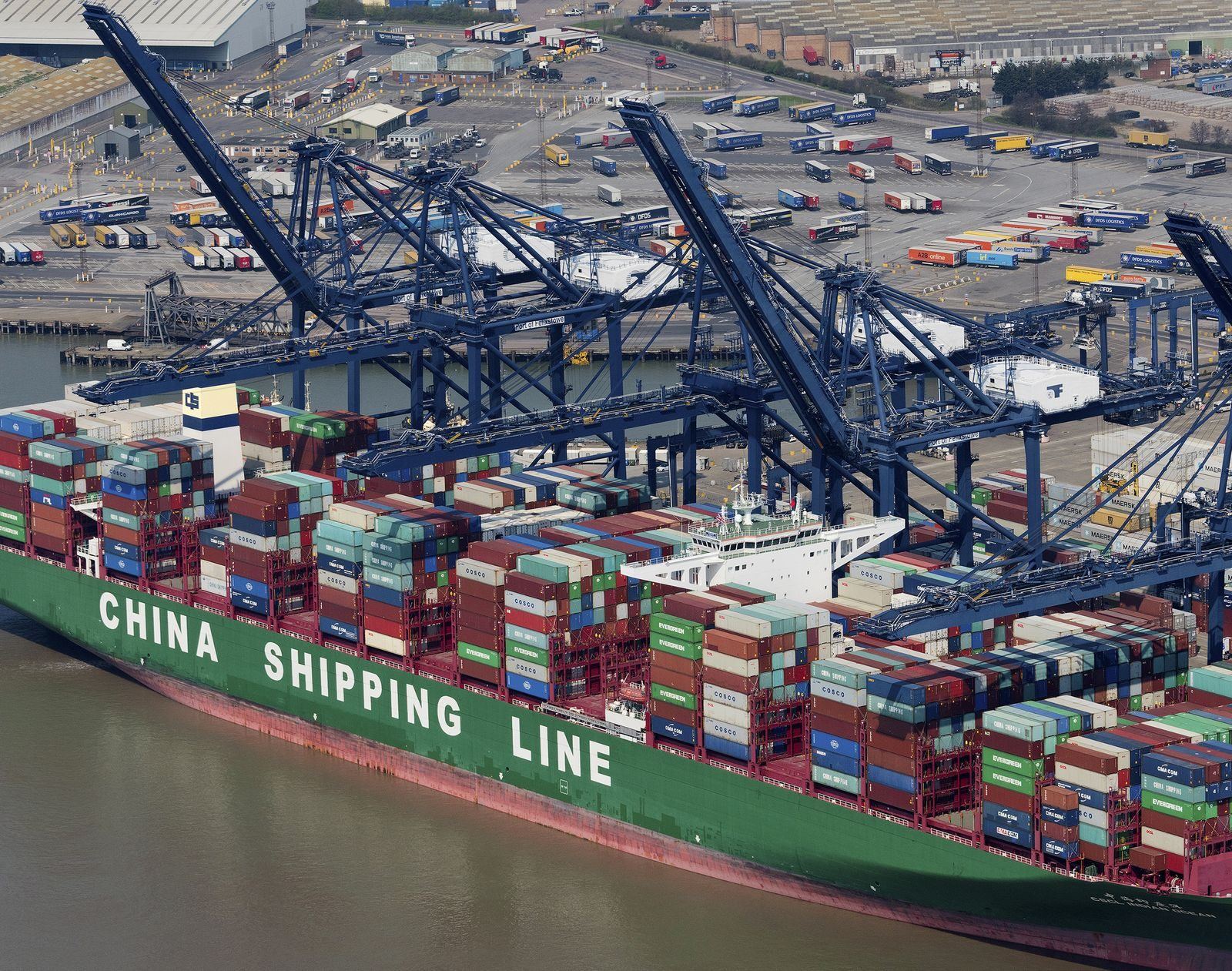
Rabat has a number it cannot ignore: 282.6 billion dirhams. That is the width of Morocco’s trade deficit in the first eight months of 2026, up 25.4 percent on the year, according to the Office des Changes. Imports surged 15.8 percent to 617.5 billion dirhams while exports managed 8.7 percent to 334.9 billion, and the coverage ratio slipped to 54.2 percent. The kingdom now funds barely 54 dirhams of exports for every 100 dirhams of imports. The story is not collapse: cars, planes and harvests are holding. The story is arithmetic. Energy and sulfur alone ate most of the export gains, and the question hanging over Casablanca’s floors is whether the World Cup investment boom can outrun its bill.
The figures landed in the first days of October, published by the Office des Changes, and they are blunt. Between the end of August 2025 and the end of August 2026, Morocco’s merchandise imports jumped from 533.2 to 617.5 billion dirhams, a rise of 15.8 percent that added 84.3 billion dirhams to the bill in a single year. Exports grew too, but at barely half the pace: up 8.7 percent to 334.9 billion dirhams. The arithmetic of that mismatch is a trade deficit of 282.6 billion dirhams, 57.3 billion wider than a year earlier, an aggravation of 25.4 percent and an imbalance the kingdom had not seen since 2022. The coverage ratio, the share of imports paid for by exports, fell 3.5 points to 54.2 percent, drifting further from the 60 percent zone touched in 2024. Put plainly: for every 100 dirhams Morocco spends abroad, it now earns back barely 54.
Three forces drove the import surge, and the first is energy. Morocco paid 96.4 billion dirhams for fuel from abroad, up 32.6 percent, as diesel and fuel oil prices climbed on a Middle East conflict that keeps a war premium in every barrel. Gas oil and fuel oil purchases alone surged 44.9 percent. Brent crude touched nearly $132 a barrel on September 15 and still stood near $116 on September 22, up roughly 70 percent since early July. The second force is sulfur, the unglamorous raw material that turns Moroccan phosphate rock into fertilizer. Imports nearly tripled to 27.2 billion dirhams even though imported volumes fell 9 percent: the entire increase is a price effect, the signature of a commodity market running white hot. Raw product imports as a whole soared 63.3 percent to 45.9 billion dirhams. The third force is the investment cycle itself. Capital goods imports rose 19.3 percent to 148.7 billion dirhams, led by aircraft parts, utility vehicles and aircraft acquisitions, while consumer goods imports climbed 10.1 percent to 143.5 billion. An economy building for 2030, and consuming while it builds.
Morocco is not suffering a collapse; it is paying the entry ticket for 2030, in energy and sulfur, one import at a time.
The export side of the ledger is genuinely strong, which is what makes the deficit politically awkward rather than alarming. Automotive exports reached 116.1 billion dirhams, up 14.5 percent, confirming the industry built around the Stellantis and Renault plants as the kingdom’s leading export engine and its best shock absorber. Within the sector, the construction segment rose 19 percent to 44.7 billion dirhams, wiring 13.9 percent to 44.8 billion, and exterior equipment 43.6 percent to 3.8 billion. Aerospace exports jumped 21.5 percent to 23 billion dirhams, with assembly up 26.9 percent. Agriculture and agri-food advanced 8.3 percent to 65.1 billion dirhams. But two historic pillars are wobbling: exports of phosphates and derivatives fell 6 percent to 61 billion dirhams, and textiles and leather dropped 5.6 percent. Total exports still grew 8.7 percent to 334.9 billion dirhams. They simply grew at half the speed of what the country bought.
Because imports are expanding at double the speed of exports, and the difference between those two speeds is the deficit. Morocco is living through an investment boom with a deadline. The government has committed more than 190 billion dirhams to rail, roads, airports, stadiums and urban infrastructure ahead of the 2030 World Cup, which the kingdom will co-host with Spain and Portugal. Tourism Minister Fatim-Zahra Ammor has called the tournament “an accelerator, not an end in itself,” and the budget numbers show the acceleration: general-budget investment spending reached 75.7 billion dirhams by the end of August, up 11.4 percent, imports of capital goods climbed 20.8 percent, and loans for equipment investment rose 30.8 percent. Domestic demand is doing its part too. Consumer lending grew 4.5 percent, transfers from Moroccans abroad rose, and consumer goods imports advanced 10.1 percent. None of this is a crisis of competitiveness; it is the cost of building. The risk is timing. If the export machine, cars and planes first, cannot keep compounding at double-digit rates while the energy and sulfur bills stay elevated, the coverage ratio keeps sliding, and every point it loses makes the next external shock more expensive to absorb. The Morocco factbook tracks how this investment cycle is reshaping the economy’s structure.
Morocco holds the world’s largest phosphate reserves, and the paradox of 2026 is that the country feeding the world’s farms is being squeezed by the cost of feeding its own fertilizer plants. Sulfur imports nearly tripled to 27.2 billion dirhams while volumes fell 9 percent, which means OCP and its peers are paying roughly three times more for slightly less raw material. Between January and July, sulfur purchases reached 20.2 billion dirhams against 7.9 billion a year earlier. Over the same stretch, exports of phosphates and derivatives fell 7.8 percent to 51 billion dirhams, and the mining sector’s production index dropped 28.8 percent in the second quarter. OCP brought forward maintenance originally scheduled for the second half of the year, a move that cut production by 30 percent. The company still contributed 4.1 billion dirhams to the state’s non-tax revenues, alongside 4.4 billion from Bank Al-Maghrib. The question is whether the sulfur price spike is a cyclical squeeze or a structural tax on the fertilizer model. If input costs stay elevated while phosphate prices soften, the kingdom’s most strategic industry earns less on every tonne it ships, and the trade balance loses the one export that used to offset the energy bill.
Geopolitics first. The energy bill is not a Moroccan failure; it is the local price of a global conflict. Brent’s 70 percent climb since early July tracks the Middle East confrontation and the contest over Hormuz, and Morocco, which imports virtually all its hydrocarbons, pays the shock in full through the import ledger rather than the inflation index. Consumer prices rose just 0.3 percent through August, a shield bought by an exceptional harvest, but the external account absorbed the blow instead. Macroeconomics second. The fundamentals are not deteriorating everywhere: the budget deficit narrowed 1.6 percent to 58.6 billion dirhams by end-August, ordinary revenues grew 10 percent, and Bank Al-Maghrib held its benchmark rate at 2.25 percent on September 22, citing exceptionally high uncertainty. The pressure is concentrated exactly where a hydrocarbon importer with a fixed investment deadline would feel it: the external balance. Demographics third. The diaspora remains the quiet pillar of the external accounts: remittances reached 89 billion dirhams over the eight months, up 9 percent, and consumer demand at home, fed by those transfers and a 4.5 percent rise in consumer lending, keeps the import machine humming. History fourth. The 2022 parallel is instructive: that imbalance was also an energy shock layered over drought. This time the harvest, 90 million quintals of cereals against 43.1 million a year earlier, with dams at 66.1 percent of capacity versus 32.8 percent, turned wheat from a burden into a relief, cutting wheat imports 18.4 percent to 9.3 billion dirhams, a turnaround chronicled in our harvest coverage. Structural trends fifth. The export mix is being remade in real time: cars and aircraft now carry the ledger while phosphates and textiles fade, a decade-long industrial bet paying off precisely as the old rentier model wobbles. The 2030 deadline compresses that transition into a sprint, with the import bill as the entry ticket.
Morocco’s hard-currency machine is working, and that is the good news the deficit numbers tend to bury. Travel receipts reached 79 billion dirhams in the first seven months, up 13.4 percent, and 97 billion over eight months, up 9.7 percent, a performance dissected in our tourism machine coverage. Transfers from Moroccans abroad added 74.8 billion dirhams through July, 89 billion over eight months, up 9 percent. The services surplus improved 13.4 percent to 118.3 billion dirhams, with service exports up 12.6 percent to 229.6 billion. Foreign direct investment rose 17 percent to 47.3 billion dirhams. But here is the turn: together, tourism and remittances covered 62.9 percent of the merchandise deficit, down from 71.8 percent a year earlier. The cover is still generous by any standard, yet it is thinning at the exact moment the gap is widening, which means the external accounts are becoming more dependent on the two most sentiment-sensitive inflows in the economy, travel and diaspora transfers, precisely when global uncertainty is at its highest. The cushion is real. It is simply no longer growing as fast as the hole.
Four tripwires. First, Bank Al-Maghrib’s next rate decision: the 2.25 percent hold on September 22 was explicitly about uncertainty, and a central bank that will not move while the external gap widens is betting the harvest shield holds through winter. Second, the oil price: every $10 on Brent is a direct levy on the import bill, and the Middle East premium is not fading. Third, OCP’s fourth quarter: once the brought-forward maintenance ends, phosphate volumes and fertilizer prices will decide whether the sulfur squeeze was a one-year margin event or a structural repricing. Fourth, the full-year trajectory: the deficit already stands at 282.6 billion dirhams with four months to go, within sight of the entire 2023 shortfall of 286 billion. If the current pace holds, 2026 closes as the widest trade gap in the kingdom’s modern history, and the 2027 debate will not be whether the World Cup boom was worth it, but how quickly the export machine can outgrow its own construction bill.
From Washington, London and Frankfurt, the reading is balance-sheet first. A 25.4 percent widening in eight months is the kind of number that makes IMF Article IV missions reach for their red pens, and the diagnosis writes itself: a hydrocarbon importer running an investment boom into an energy shock. Western analysts will note the mitigants, record automotive exports, tourism receipts up 9.7 percent, a budget deficit that actually narrowed, but the coverage ratio at 54.2 percent is the figure that travels. For Europe the stakes are direct: Morocco’s car plants, run by Stellantis and Renault, feed European supply chains, and a widening external gap in Rabat is a supply-chain question for their customers across the Mediterranean.
The western prescription is equally predictable: let the exchange rate absorb what it must, keep Bank Al-Maghrib’s hard-won credibility intact, and make sure the 2030 capital program converts into export capacity rather than monuments. The quiet western bet is that the automotive and aerospace trajectory bails Morocco out, as it has every year since the pandemic. The quiet western fear is sulfur: if the fertilizer margin squeeze proves structural rather than cyclical, the West loses its favorite Maghreb hedge, the country that was supposed to industrialize its way out of commodity dependence.
No Chinese or Russian outlet covered the Office des Changes release in the sources reviewed for this article, so this lens is analytical rather than reported. From Beijing, the Moroccan deficit would most likely be read through the fertilizer prism: China is a major buyer in the phosphate and fertilizer markets where Morocco is a pivotal supplier, and a sulfur price spike that squeezes OCP’s margins is a food-security input cost for the entire Global South. A weaker Moroccan fertilizer export machine means tighter markets and higher prices for buyers from São Paulo to New Delhi.
From Moscow, the reading would be energy schadenfreude with a commercial edge: every percentage point added to Morocco’s 96.4-billion-dirham fuel bill is revenue for hydrocarbon exporters, and a kingdom forced to buy expensive diesel is a reminder of the leverage energy exporters hold over importers. Neither capital has an interest in seeing Morocco’s deficit narrow quickly, and neither is likely to offer sympathy. The eastern lesson drawn would be that industrialization without energy sovereignty leaves even the best-run emerging economy exposed to somebody else’s war premium.
From Dakar, Cairo and Johannesburg, Morocco’s deficit looks familiar: the classic emerging-market arithmetic of building faster than you earn. The southern reading is sympathetic rather than alarmed, because the drivers are legible. Remittances up 9 percent to 89 billion dirhams are the diaspora doing what diasporas do, and the 90-million-quintal harvest that cut wheat imports by 18.4 percent is the climate lottery paying out for once. African analysts will note what the deficit is buying: ports, rails, factories, the infrastructure of the continent’s most consistent industrializer.
The southern worry is the sulfur bill. Morocco is not just any exporter; through OCP it is the fertilizer supplier of last resort for much of Africa, and a margin squeeze in Rabat eventually becomes a price signal in African fields. If the phosphate crown earns less per tonne while energy stays dear, the continent’s food import bill feels it twice. The southern verdict: Morocco’s industrial bet remains the model, but the model now needs cheaper energy and calmer commodity markets to keep compounding.
Imports grew nearly twice as fast as exports: up 15.8% to 617.5 billion dirhams against export growth of 8.7% to 334.9 billion. The energy bill jumped 32.6% to 96.4 billion dirhams on higher diesel and fuel oil prices, sulfur imports nearly tripled to 27.2 billion, and capital goods imports rose 19.3% as the 2030 World Cup investment cycle accelerated. The coverage ratio fell to 54.2%.
The automotive industry leads at 116.1 billion dirhams, up 14.5%, built around the Stellantis and Renault plants, with wiring, construction and exterior equipment segments all growing. Aerospace exports jumped 21.5% to 23 billion dirhams, and agriculture and agri-food rose 8.3% to 65.1 billion. Together they offset falling phosphate and textile sales, though total exports still grew at only half the pace of imports.
It is a price squeeze, not a volume story. Sulfur import volumes fell 9% but the bill nearly tripled to 27.2 billion dirhams, a pure price effect. Meanwhile OCP brought forward maintenance work, cutting production 30%, the mining production index fell 28.8% in the second quarter, and phosphate and derivative exports dropped 6% to 61 billion dirhams. Morocco pays record prices for the input that turns its phosphate rock into fertilizer.
Yes, but the cover is thinning. Travel receipts reached 97 billion dirhams over eight months, up 9.7%, and diaspora remittances hit 89 billion, up 9%. Together with the services surplus, up 13.4% to 118.3 billion dirhams, they financed 62.9% of the merchandise deficit, down from 71.8% a year earlier. The hard-currency machine works; it is simply growing more slowly than the hole it has to fill.
