It is not Jair Bolsonaro on the ballot — the former president is under house arrest — but his eldest son, and the polls point to a dead-heat runoff on October 25.
Published 4 October 2026 · 06:00 GMT
SÃO PAULO — This is not the rematch Brazil expected. When more than 150 million voters go to the polls on Sunday, the name on the ballot against Luiz Inácio Lula da Silva will not be Jair Bolsonaro's — the former president is under house arrest, convicted of plotting to overturn his 2022 defeat — but his eldest son's. Senator Flávio Bolsonaro, 45, has inherited the name, the anger and the machine of bolsonarismo, and the polls say he has turned the race into a coin toss: Lula leads the first round at roughly 43 to 38 percent, according to the final CNT/MDA survey, but neither man is likely to clear the 50-percent threshold of valid votes. The October 25 runoff looks like a dead heat — and with it, the direction of the hemisphere's largest economy.
The final rallies told two different stories of power. On Saturday, Lula closed his re-election campaign with a march through São Paulo that organisers called the largest of his career: 150,000 supporters, they said, filling two kilometres of Augusta Street between Avenida Paulista and Roosevelt Square. From a campaign vehicle, the 80-year-old called Sunday's vote a choice between “democracy and barbarism”.
Two hundred kilometres north, in Santa Bárbara d'Oeste and Americana, Senator Flávio Bolsonaro closed with a motorcycle caravan through the interior of São Paulo state, then a rally in Rio de Janeiro, brandishing a placard with his father's face. “Everything is in place for us to win in the first round,” he told supporters — though every poll says the first round will settle nothing.
This is not Jair Bolsonaro's rematch. It is his inheritance — and Brazil must decide whether the name on the ballot is a son or a surrogate.
The final CNT/MDA survey, published Saturday, put Lula at 43.1 percent against 38.0 for Flávio Bolsonaro, with Augusto Cury at 3.2, Ronaldo Caiado at 3.0 and Renan Santos at 1.5. On valid votes alone, Lula would reach 47.8 against 42.1 — short of the outright majority that avoids a runoff. A simulated second round is tighter still: 47.3 for Lula, 43.1 for the senator. AtlasIntel, polling September 23–28, had it 47.7 to 47.6 — a statistical tie.
Underneath the national numbers, the country is splitting in two. Quaest showed Lula at 56 percent in the Northeast, his historic stronghold, against 24 for Bolsonaro — while the senator took 41 percent in the South and 41 across the Centre-West and North. In the Southeast, where the election will be decided, Bolsonaro led narrowly, 35 to 33. Rejection runs high on both sides: 56 percent would never vote Flávio, 55 percent never Lula.
São Paulo state is the hinge of the contest: roughly a fifth of the national vote, and the region where the divide is narrowest. Neither candidate has a firewall; both closed their campaigns on its soil. Whoever carries the Southeast on October 25 almost certainly carries the country.
The stakes extend well beyond one presidency. The winner will name as many as four of the eleven Supreme Court justices — the tribunal that convicted Jair Bolsonaro — and will set the economic model: Lula's interventionist state with expanded social spending, or Flávio's Milei-style austerity. The Amazon's fate is on the ballot too.
The economy is the ground on which Lula claims victory and his rival claims ruin. Between 2022 and 2025 Brazil's economy grew a cumulative 8.9 percent, outpacing every other major South American economy, while unemployment fell from 9.3 to 5.4 percent and poverty from 31.6 to 23.1 percent, per the Center for Economic and Policy Research. But the tailwind is fading: growth slowed to 2.3 percent in 2025, the central bank projects 1.8 for 2026, the Selic rate sits at 13.75 percent, and a record soybean harvest carried the second quarter while services sagged. Flávio promises Milei-style spending cuts.
The answer starts in a courtroom. Jair Bolsonaro, 70, was convicted of attempting to overturn his 2022 defeat and sentenced to 27 years; he is under house arrest and ineligible. Barred from running, he anointed his eldest son as the Liberal Party's standard-bearer — and the campaign has leaned on the father's ghost, using AI-generated videos to put his voice beside the heir.
Flávio Bolsonaro, 45, is a lawyer who has represented Rio de Janeiro in parliament for more than twenty years. He campaigns as a “more moderate Bolsonaro”: his father remains his “compass”, but he courts voters put off by the old man's excesses. Analysts say the substance is unchanged — he praises El Salvador's Nayib Bukele and his no-limits crime crackdown, he faces a corruption probe linked to financing a film glorifying his father, and analyst Thomas Traumann told AFP he is “more affable and sociable… but that does not mean he is not ideologically far-right”. His promises: free his father, fight drug gangs with Washington, favour Western firms in mining.
Lula, seeking an unprecedented fourth term at 80, justifies his candidacy as a mission to keep the far right from “destroying” the country. Twenty-three years after his first arrival in power, he insists he does not want to be “only the president of Bolsa Família” — but the corruption scandals of his camp still feed rejection. “When you look at Lula, you don't see a future,” Flávio retorts: the generational argument of a dynasty.
Geopolitics. The United States has become an unusually visible actor. Flávio promises closer alignment with Trump — his brother Eduardo lives in the U.S., where he has urged action against the justices who tried their father, and Trump cited that trial to hike tariffs on Brazil by 40 percent. Lula negotiated some tariffs down but calls judicial independence non-negotiable, and warned at the UN on September 22 against “hegemonic ambitions” in Latin America: do not interfere in Brazil's elections.
Macroeconomics. Whoever wins inherits a slowing engine: 1.8 percent growth projected for 2026, punishing rates even after five cuts, fading commodity tailwinds. Lula answered with a 15 percent rise in social benefits and a consumer-debt programme — spending that could push borrowing costs back up. The choice is that fiscal path or the chainsaw, as the U.S. economy wobbles and the dollar shapes every budget in the hemisphere.
Demographics. The map is the story: a Northeast that votes with its stomach for the man who fed it, against a South and Centre-West that votes with its wallet. Youth unemployment fell 40 percent under Lula, but the electorate of 150 million-plus includes the Amazon's Indigenous nations — the Javari Valley alone has seven voting centres for 1,655 voters, reached by a 1,000-mile round trip. Both frontrunners carry rejection near 50 percent; the middle decides.
Historical patterns. Brazil has done this before: 2018, 2022, and now 2026, each duel darker than the last. The Workers' Party chief, Edinho Silva, claimed the closing march proved a different regional tide: “Unlike other Latin American countries, where we saw a right-wing wave at the end, here in Brazil we're seeing a wave in our favor.” The polarisation is the country's permanent weather — and it has never produced a gracious loser.
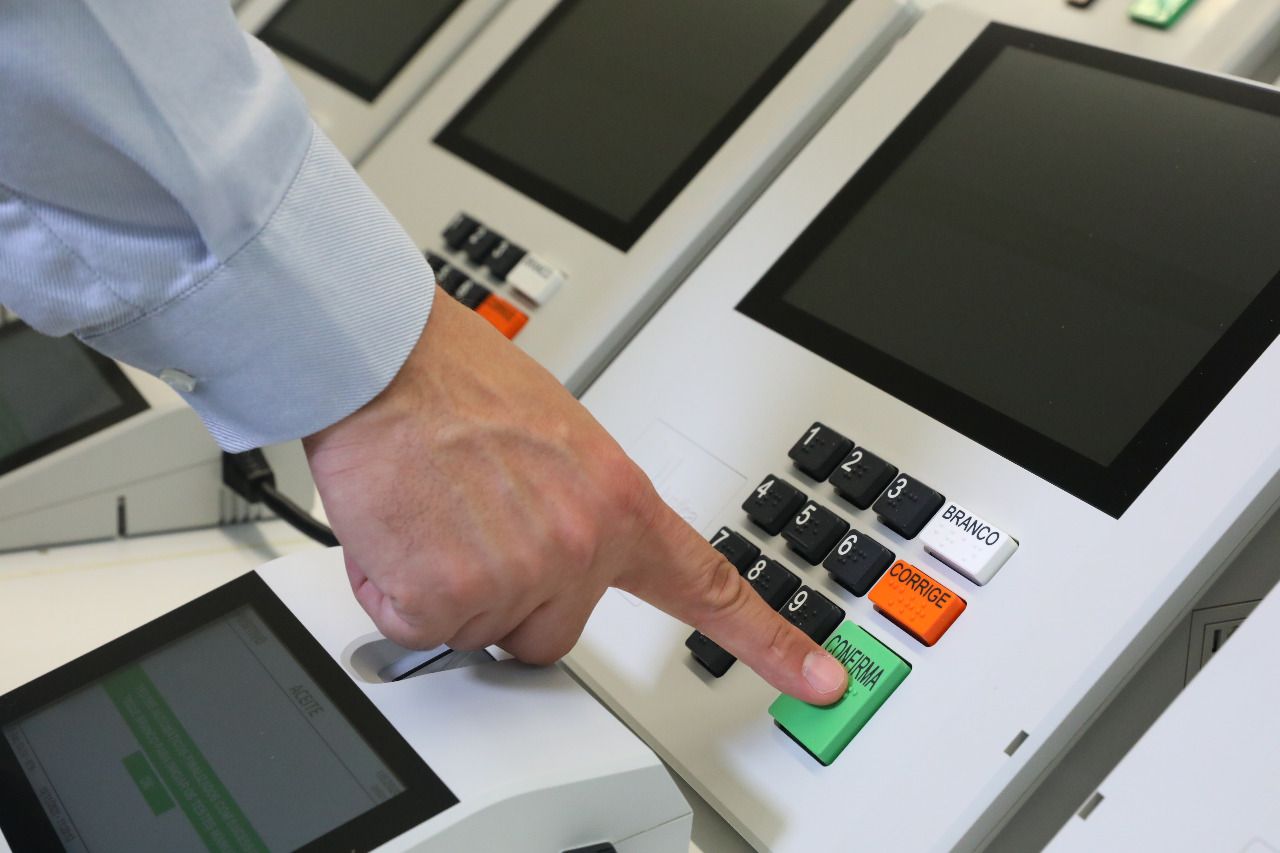
Structural and technological. Brazil votes on electronic machines used since 1996 — admired abroad, contested at home. On October 3 the electoral courts ran their public integrity test in Brasília. Meanwhile the campaign has moved into the digital underbrush: AI stand-ins for a banned patriarch, internet reaching villages a week by boat from Manaus. The machines count the votes; the networks decide whether the result is believed.
If, as every poll suggests, no one clears 50 percent of valid votes on Sunday, the two frontrunners advance to a runoff on October 25 — three more weeks at maximum temperature. The twelve other candidates become kingmakers; the Southeast becomes the only battlefield.
One contest is already over: the logistics race. Ballot boxes reached remote Indigenous communities by boat and plane, including the Javari Valley on the Peruvian border, where one voting machine for the village of Vida Nova means flying Manaus to Cruzeiro do Sul, then a helicopter. In a democracy of 150 million, 327 rainforest voters get the same machinery as São Paulo — and this year the forest is on the ballot: Lula pledges net-zero deforestation, Flávio vows to scrap environmental rules.
From Mexico City, the vantage point is continental. Mexico and Brazil are the hemisphere's two economic giants, and each has spent the decade watching the other for a preview of its own future: a leftist incumbent defending a social model against a Trump-aligned challenger running on family, order and a pardon. A Flávio win puts Brasília in Washington's column as Mexico navigates its own tariff standoff; a Lula win anchors a southern pole of autonomy.
The Western press reads this as democracy's stress test: a convicted caudillo's heir, Trump tariffs as a campaign weapon, and electronic voting machines that half the country is primed to distrust. The story is framed as the far right's second act versus the left's last stand.
Coverage in Europe and North America dwells on the institutional stakes — four Supreme Court seats, the integrity of the electronic vote, and whether Brazil's democratic guardrails hold if the runoff is decided by a whisker.
The interference row gets top billing: Abin briefing French and German intelligence on alleged U.S. and Russian meddling turns a national election into a chapter of great-power competition.
From Beijing and Moscow's vantage, the election is a question of alignment, not ideology. Lula's strategic autonomy keeps the BRICS door open and soy flowing east; a Bolsonaro restoration would swing Brasília back into Washington's orbit and complicate commodity partnerships.
Chinese state-linked commentary frames the race as Washington's hemisphere to lose: tariffs, visa denials and public endorsements are read as the same pressure toolkit used across the Global South.
The Russian angle is quieter but present — Abin's briefing cited alleged Russian interference too, and Moscow's denial fits its standard posture of watching Western democracies argue about meddling among themselves.
Across Latin America, the election is a mirror. Mexico, Colombia and Chile watch a leftist incumbent defending a social model against a Trump-aligned challenger — the same script, with local variations, playing on every stage of the continent.
The Global South press centres the sovereignty question: Lula's “colony” framing and the UN speech land as a familiar vocabulary — the region has heard foreign-powers-will-decide before, and it never liked the ending.
For the Amazon's Indigenous nations, this is not geopolitics but survival: the ballot that arrives by boat in the Javari Valley is a vote on whether the forest gets a ministry or a chainsaw.
The former president was convicted of attempting to overturn his 2022 defeat to Lula and sentenced to 27 years; he is under house arrest and legally ineligible to run. He anointed his eldest son, Senator Flávio Bolsonaro, as the Liberal Party's standard-bearer instead.
If no candidate wins more than 50 percent of valid votes — blank and null ballots excluded — in the October 4 first round, the two frontrunners advance to a runoff on October 25. Every final poll points to Lula and Flávio Bolsonaro meeting again then.
Jair Bolsonaro's 45-year-old eldest son, a lawyer and senator for Rio de Janeiro for over twenty years. He campaigns as a softer-spoken Bolsonaro, praises El Salvador-style hardline crime policies, pledges Milei-like spending cuts, promises to free his father — and carries a voter rejection rate around 56 percent.
It holds roughly a fifth of Brazil's national vote, and it is where the regional divide is narrowest: the latest Quaest poll had Bolsonaro at 35 percent in the Southeast against 33 for Lula. Both candidates closed their campaigns there because whoever carries the Southeast on October 25 likely carries the country.
Brazil says so and Washington denies it. Lula accused the Trump administration of meddling after a planned July visit by two State Department officials; Brazil's Abin spy agency briefed French and German officials on alleged US and Russian interference; the State Department calls the claims a “baseless lie”.
The contrast is sharp: Lula promises net-zero deforestation and points to his record — his earlier terms cut deforestation dramatically — while Flávio Bolsonaro promises to sweep aside environmental regulations. Indigenous communities, whose ballots arrived by boat this week, are voting on their own survival.
