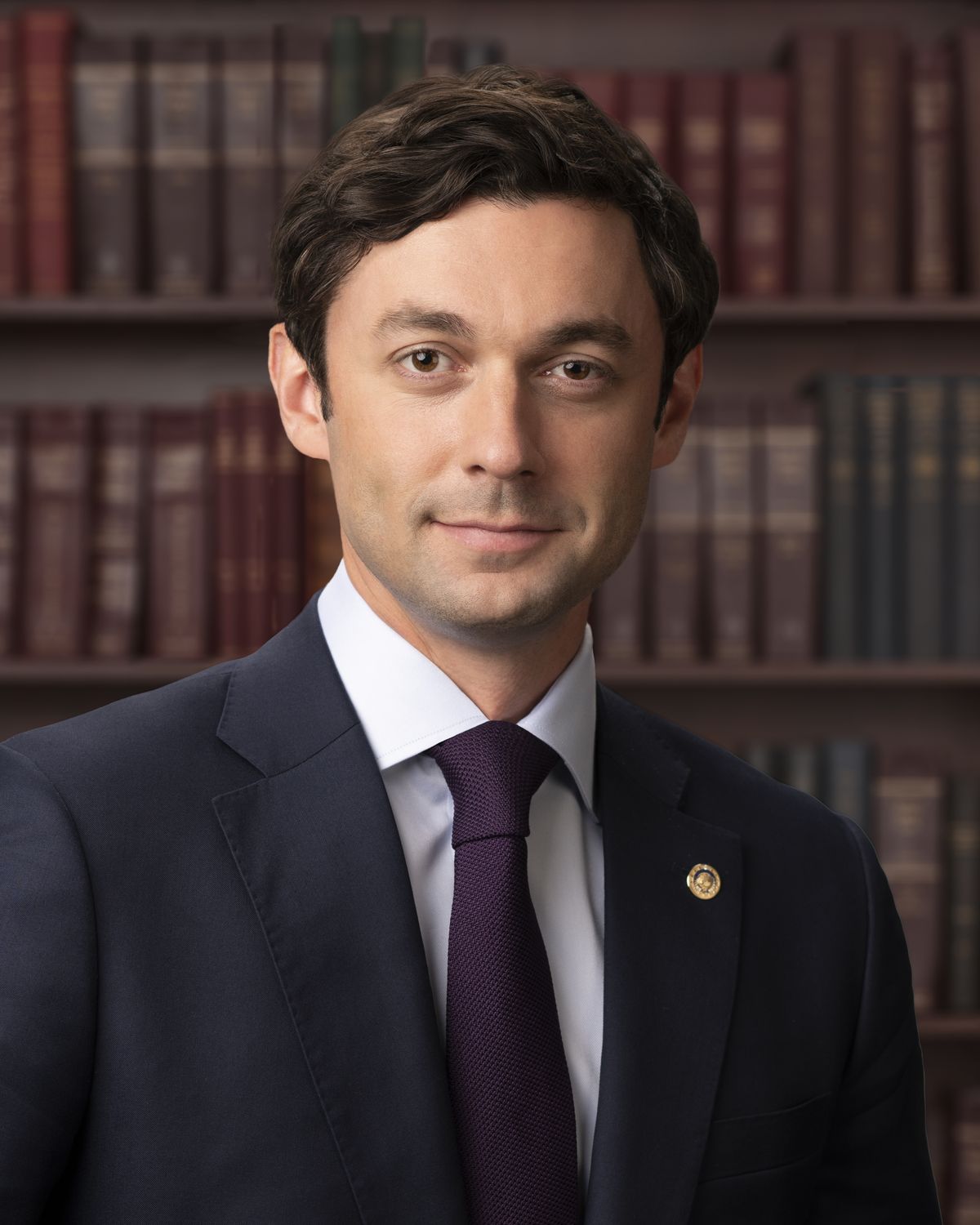
Who is Jon Ossoff, the senator the betting markets already crown for 2028?
Georgia’s 39-year-old senator won a second term by 18 points in a state Donald Trump carried; and within 48 hours the prediction markets made him the favourite for the Democratic nomination in 2028, a race he insists he will not enter.
Published 7 November 2026 · 20:09 GMT
The summary
Tuesday 3 November 2026: Jon Ossoff wins re-election to the US Senate in Georgia, defeating Republican Mike Collins, with the Associated Press calling the race at 7:55 p.m. 39 years old: Ossoff, the Senate’s youngest member, was first elected in 2021 as the youngest US senator since 1980.
The three lenses
- WestThe Western coverage takes Ossoff’s denial seriously and records the speculation anyway.
- EastThe East reads the story first as a profile in restraint.
- Global SouthThe Global South tells this story through the verdict it delivers on the president.
Key facts
- Tuesday 3 November 2026: Jon Ossoff wins re-election to the US Senate in Georgia, defeating Republican Mike Collins, with the Associated Press calling the race at 7:55 p.m. EST. Associated Press
- 39 years old: Ossoff, the Senate’s youngest member, was first elected in 2021 as the youngest US senator since 1980. Associated Press
- About 59% to 41%: Ossoff’s margin in near-complete returns, an 18-point win in a state Donald Trump carried by about two points in 2024. Reuters
- $126 million: the sum Ossoff raised during the 2026 cycle, dwarfing Collins’s war chest. Reuters
- Wednesday 5 November 2026: prediction markets make Ossoff the favourite for the 2028 Democratic presidential nomination, at about 26%; ahead of Gavin Newsom and Alexandria Ocasio-Cortez. Oddschecker
- 13 October 2026: in debate with Collins, Ossoff says he has “zero interest” in running for president and pledges to serve his full six-year Senate term. The Federal
What did Georgia hand Ossoff on Tuesday night?
Georgia’s voters handed Jon Ossoff a second term in the United States Senate on Tuesday 3 November 2026, and they handed him something else besides: a question he cannot escape. The Associated Press called the race at 7:55 p.m. Eastern, barely half an hour after the polls closed, and the margin was not close. Ossoff, the 39-year-old Democrat, defeated Republican Representative Mike Collins by about 18 points in near-complete returns, roughly 59% to 41%, in a state Donald Trump carried by about two points in 2024.
The result made Ossoff the only incumbent Senate Democrat to defend a seat in a state Trump won, and the most conspicuous winner of the midterm night. He campaigned on affordability, healthcare and government accountability; Collins ran on the president’s agenda, immigration enforcement and shrinking the government. Within 48 hours of the call, the prediction markets had made Ossoff the favourite for the Democratic presidential nomination in 2028; a race he insists he will not enter.
Who is the 39-year-old the markets already crown?
Ossoff was 33 when he was sworn into the Senate in January 2021, the youngest senator since 1980, and he is still the chamber’s youngest member at 39. Before politics he ran Insight: The World Investigates, a London-based investigative television production company, as its managing director and chief executive; a past The Hindu’s profile says gives him “something of an investigative journalist” about him. He first won his seat in the January 2021 runoff against Republican David Perdue, and he is Georgia’s first Jewish senator.
His 2026 campaign was built on corruption and the cost of living: rising food prices, unaffordable fuel, and an attack on what he calls the depravity and corruption of the Trump administration. It was also the most expensive Senate race of the cycle for a Democrat; Reuters reports he raised about $126 million, dwarfing Collins, who was backed by $18 million in outside spending.
And then there is the denial, repeated so often it has become part of the story. “I have zero interest in running for president. I’m not running for president. I’m running for re-election to the Senate,” he said in his 13 October debate with Collins. He told CNN in June that he was not running in 2028, and he has pledged to serve his full six-year term, which runs through January 2033.
What remains unanswered about the 2028 question?
The first unknown is whether the denial holds. History offers a cautionary parallel that the American press has already seized on: in October 2006, Barack Obama, then a first-term Democratic senator, insisted he had no plans to run for president; four months later he announced his candidacy. The media has been quick to spot similarities between the two men, above all in speech delivery, and Ossoff has taken an even firmer public position than Obama did.
The second unknown is whether he is building anything at all. Reporting before the midterms indicated he was not undertaking the organisational preparations normally associated with an imminent White House campaign; no shadow staff, no early-state groundwork. A promise is not a plan, but neither is a denial proof of one.
The third unknown is what the betting numbers actually mean. Ossoff’s lead rests on thin trading: about $6.5 million has been wagered on him, against about $18.3 million on Vice President JD Vance, and polling still favours Vance as Trump’s successor. The fourth unknown is the field itself: no major candidate from either party has formally launched a presidential campaign, and more than two dozen Democrats are said to be considering a run.
Why does one Georgia seat change the Democratic map?
Georgia is the state that decides whether the Democratic Party can win where it is hardest to win. Trump carried it in 2024 after losing it to Joe Biden in 2020, and Republicans went into the midterms holding a 53–47 Senate majority, with Democrats needing a net gain of four seats to take control. Holding Georgia was the precondition for everything else, and Ossoff held it by 18 points; a margin that turns a defensive win into a national argument.
The argument is about the party’s future, and it is why the 2028 talk started before the confetti settled. The Democratic field for the next presidential race is wide open: no major candidate has formally launched, and the names in circulation, Gavin Newsom and Alexandria Ocasio-Cortez, have no obvious frontrunner. Into that vacuum stepped a 39-year-old who has now won statewide twice in a battleground and raises money at presidential scale.
There is a second reason it matters, and it is the one Ossoff himself keeps naming: the win was a verdict on the president. “In sweeping and decisive victories the American people have rebuked the depravity, corruption and incompetence of the failed lame duck President Donald J Trump,” he said on election night. The Bureau’s account of the Democratic breakthrough on Tuesday night tells the wider story of that verdict. Whether the man who delivered it wants the next job is now the party’s most awkward question.
Why is the refusal itself the asset?
The paradox of Jon Ossoff is that the denial is the campaign. Every “zero interest” makes the market move a little higher, because refusal is the one quality a party exhausted by ambition recognises as presidential. It worked for Obama in 2006, when the refusal was the proof of seriousness, and it is working for Ossoff now, when the Democratic Party’s loudest problem is that it looks like it wants the job too much.
There is substance behind the pose. Ossoff’s lane is distinct: the investigative journalist turned senator who built his re-election on corruption, on prices, on the argument that government has been bought by big money. That is a message that travels beyond Georgia, and it is the message the party’s next standard-bearer will need in a country where the cost of living is the first question at every door. It is also why the president has taken to mocking him, Trump has dismissed him as a “Pee-wee Herman lookalike”, and why the mockery has not worked.
The risk is the label. “The next Obama” is a coronation no one survives, and Ossoff’s caution, the refusal, the focus on Georgia, is his defence against it.
What happens if the man who says no changes his mind?
If Ossoff runs, Georgia’s Senate seat opens in the middle of the cycle, the Democratic primary reshuffles around a frontrunner who did not want the job, and the Obama precedent becomes the template rather than the warning. His fundraising machine, $126 million in a Senate race, would translate overnight into the best-funded Democratic campaign in the field.
If he stays, the markets will move on, the AtlasIntel lead will fade, and his leverage inside the Senate will grow: the man who could have run, and chose not to, carries a weight with colleagues that no ambition can buy. Either way, the 2028 field now orbits a senator who says no; and the longer he says it, the more expensive the yes becomes. The speakership fight on the other side of the Capitol, where Hakeem Jeffries must hold his own party together, shows what happens when a leader’s authority is tested the moment he takes the gavel.
What should we watch before the 2028 field takes shape?
Watch the money first: whether Ossoff keeps raising at presidential scale now that the Senate race is over, and whether a leadership PAC or a national tour follows. Watch the map: a visit to Iowa or New Hampshire, or a surrogate operation in either, would say more than any denial. Watch the polls: the AtlasIntel lead over Ocasio-Cortez was less than a point, and the next round will show whether the midterm bounce holds or fades.
Watch, too, what he does with the win. A senator handed an 18-point mandate in a Trump state has a platform, and the way he uses it, investigations, affordability legislation, or the national stage, will tell the party whether the refusal is a principle or a pause. The 2028 field takes shape in the next twelve months; the man at the top of it says he is not in it.
The three lenses
West Lens:
The Western coverage takes Ossoff’s denial seriously and records the speculation anyway. The Associated Press stresses the arithmetic of the win: the only incumbent Senate Democrat defending a seat in a state Trump carried, the Senate’s youngest member, now at the forefront of his party’s national stars.
East Lens:
The East reads the story first as a profile in restraint. The Hindu, in the portrait that frames this week, “Ambition without ambition”, presents a politician whose entire method is focus: focused on his state, focused on corruption, focused on Trump and his family, while the headlines scream that he looks presidential.
South Lens:
The Global South tells this story through the verdict it delivers on the president. Al Jazeera’s account of election night leads with the win and lingers on Ossoff’s words: the American people, he said, had “rebuked the depravity, corruption and incompetence of the failed lame duck President Donald J Trump”.
The consensus
- What we agree on
- What we agree on: Jon Ossoff, 39, won re-election to the United States Senate in Georgia on Tuesday 3 November 2026, defeating Republican Representative Mike Collins by about 18 points in near-complete returns, and he is the only incumbent Senate Democrat to have defended a seat in a state Donald Trump carried in 2024.
- What we don't agree on
- What we disagree on: whether Ossoff will run for the Democratic presidential nomination in 2028; whether his repeated denials, “zero interest”, a pledge to serve his full six-year term, should be taken at face value; and whether a prediction-market lead built on thin trading says anything real about his chances.
- What we know
- What we know: Ossoff was first elected to the Senate in January 2021, the youngest senator since 1980; he previously ran Insight: The World Investigates, a London-based investigative television production company; he raised about $126 million in the 2026 cycle; and he has repeatedly and publicly denied any interest in a 2028 presidential run.
- What we don't know yet
- What we don't know: whether his denial will hold as the 2028 field takes shape; whether he is making any organisational preparations for a national campaign; what the final certified margin in Georgia will be; and whether the prediction-market lead reflects real support or simply the attention of the week.
- What we expect
- What we expect: Ossoff to serve in the Senate and to be courted, publicly and privately, as a 2028 contender; the prediction markets to keep him near the top of the Democratic field until he gives a final answer; and the “next Obama” comparison to follow him for as long as the speculation lasts.
Questions, answered
Who is Jon Ossoff, and why is everyone talking about 2028?
Ossoff, 39, is Georgia’s Democratic senator, re-elected on 3 November 2026 by about 18 points in a state Donald Trump carried in 2024. Within 48 hours, prediction markets made him the favourite for the Democratic presidential nomination in 2028, ahead of Gavin Newsom and Alexandria Ocasio-Cortez; a race he insists, repeatedly, that he will not enter.
Did Ossoff really say he will not run for president?
Yes, emphatically. In his 13 October debate with Mike Collins he said he had “zero interest” in running for president and pledged to serve his full six-year Senate term, which runs through January 2033. He told CNN in June that he was not running in 2028. The cautionary precedent is Barack Obama, who said the same in 2006 and announced his candidacy four months later.
Why does a Georgia Senate race matter for 2028?
Georgia is a battleground that backed Joe Biden in 2020 and Donald Trump in 2024, and Ossoff’s 18-point win there makes him the Democrat with the freshest statewide victory in a swing state. He also raised about $126 million, a presidential-scale war chest, and leads the early 2028 polls and prediction markets; which is why the speculation follows him despite his denials.
Sources
- Associated Press (3 Nov 2026); the call, the youngest member of the Senate, and the only Democrat defending a Trump-won state
- Reuters (3 Nov 2026); the $126 million, the 53–47 Senate, the Trump-backed challenger, and the 2028 contender framing
- Oddschecker (5 Nov 2026); the 26% nomination price, ahead of Newsom and Ocasio-Cortez, and the repeated denials
- The Federal (5 Nov 2026); the “next Obama” framing, the “zero interest” quote, and the October debate pledge