Israelis are voting on Tuesday in the first national election since the Hamas-led attacks of 7 October 2023, in a contest framed as a referendum on Benjamin Netanyahu after 19 years in office, with final polls pointing to a close race and no bloc holding a clear path to 61 seats.
Published 27 October 2026 · 05:00 GMT
Israelis are voting on Tuesday in the first national election since the Hamas-led attacks of 7 October 2023, in a contest framed as a referendum on Benjamin Netanyahu after 19 years in office, with final polls pointing to a close race and no bloc holding a clear path to 61 seats. Israelis are voting on Tuesday, 27 October 2026, in the first national election since the Hamas-led attacks of 7 October 2023, choosing the 120 members of the Knesset.
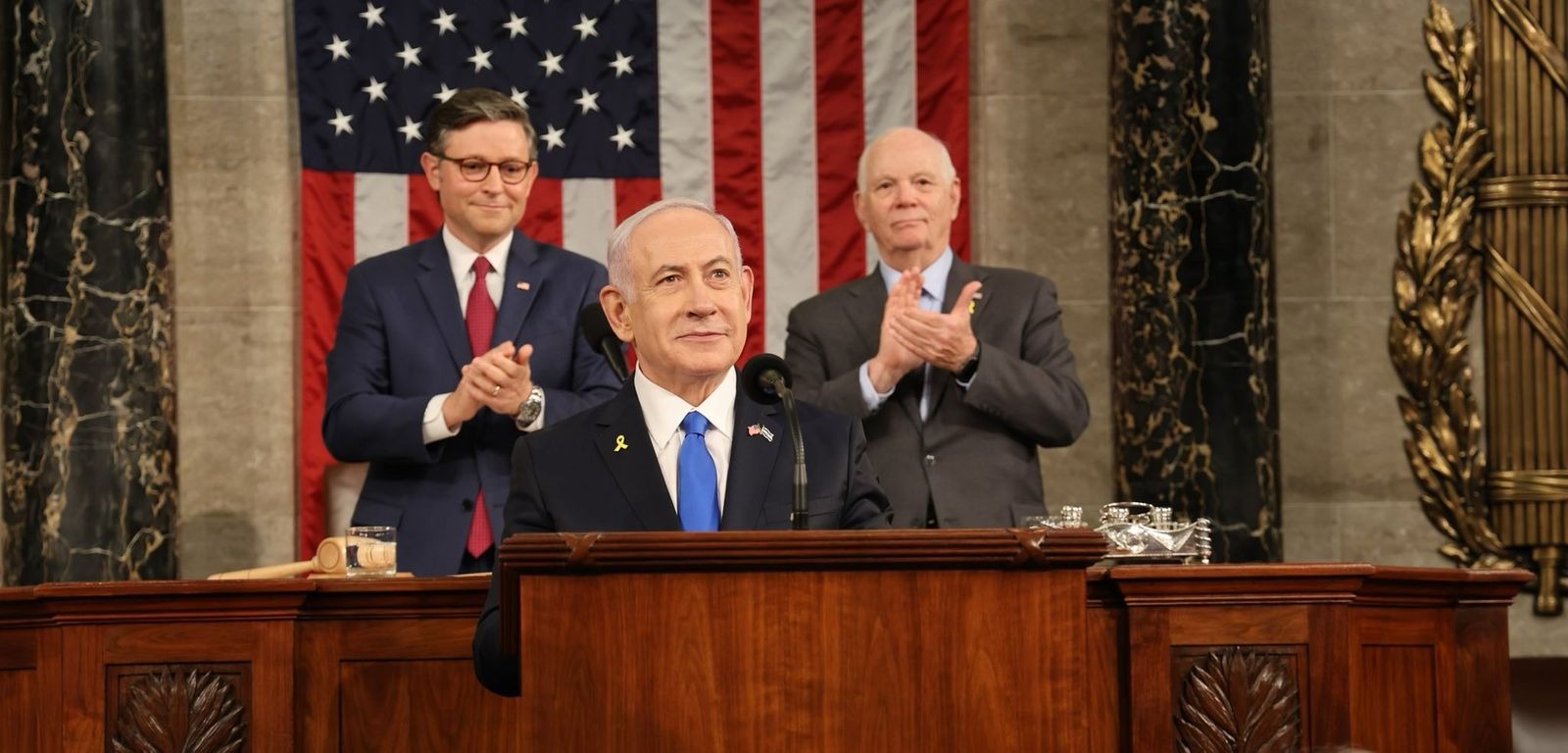
Israelis are voting on Tuesday, 27 October 2026, in the first national election since the Hamas-led attacks of 7 October 2023, choosing the 120 members of the Knesset in a contest widely described as a referendum on Prime Minister Benjamin Netanyahu. Polls opened at 7 a.m. local time and close at 10 p.m., when television exit polls will give the first indication of the result. More than 7.3 million people are eligible to vote.
Netanyahu, Israel's longest-serving prime minister with 19 years in office in total, is seeking to stay in power at the head of Likud and its right-wing and religious allies. His principal challenger is Gadi Eisenkot, a former military chief of staff who leads the Yashar party and heads a rival alliance that also includes Naftali Bennett, Avigdor Lieberman and Yair Golan. Al Jazeera's live coverage on election day billed the vote as widely seen as the most consequential in Israel's history.
The final television polls published before the vote pointed in the same direction and stopped short of a decisive answer. Three surveys each put Netanyahu's bloc on exactly 50 seats in the 120-seat Knesset, with the main opposition bloc ahead on 52 to 56 seats, while a fourth survey, from Channel 14, gave Netanyahu's bloc 62 seats and a majority. In the three television polls, Eisenkot's Yashar was the largest single party, on 22 to 23 seats, against 19 to 21 for Likud.
The arithmetic explains why the party ranking is only half the story. A government needs 61 seats. Neither bloc reaches that line in most surveys, and Arab parties, counted outside both blocs, are projected at 14 to 16 seats. About a dozen lists are thought capable of clearing the 3.25 percent threshold for entering the Knesset, so a list that falls just short can still change the balance by removing its votes from the seat calculation.
No poll can settle who will actually be able to form a government, because that question depends on negotiations that have not happened and on voters who have not yet been counted. Turnout among Arab citizens of Israel, who are Palestinian by heritage and Israeli by citizenship, is one open variable: a high turnout could shift the arithmetic in Eisenkot's favour, even though Eisenkot has ruled out partnering with Arab parties. Analysts have also raised the possibility that Arab parties prop up a minority government led by Eisenkot in order to remove Netanyahu, a scenario that would test every party's stated red lines.
The polls also cannot resolve the central dispute of the campaign. Netanyahu's supporters credit him with managing the wars that followed October 7, while his opponents hold him responsible for the security failures that allowed the attack and demand a state inquiry, which he has resisted. Both claims will be tested at the ballot box, but neither will be proved by a seat total alone.
The election matters beyond Israel because it will decide who speaks for Israel in its dealings with the United States, Iran and the Palestinians, at a moment when a Gaza ceasefire remains fragile and Israel's international standing is under strain. Netanyahu has campaigned on his wartime leadership and on his alliance with United States President Donald Trump, who has endorsed him and joined Israel in waging war on Iran. Netanyahu said on Sunday that Trump was prepared to act again to remove the Iranian threat, but only if Netanyahu remained in power.
Eisenkot has answered that Trump would work in full cooperation with any leader chosen by the people, and has accused Netanyahu of relying on fear-mongering, lies and threats. The exchange captures a wider question: whether Israel's security policy changes with its prime minister, or whether the next government, whoever leads it, will keep the same hard line on Iran and on Hamas while changing its tone, its partners and its approach to the occupied West Bank.
Israel's proportional system rewards blocs, not single parties, and that is why Eisenkot can lead the party standings and still struggle to govern. Yashar's lead over Likud matters for prestige and for the first claim on forming a government, but the president will consult party leaders and tap the candidate he believes has the best chance of assembling 61 seats. A party with 22 seats that cannot find 39 more is in a weaker position than a party with 20 seats whose allies are already counted.
Netanyahu's position illustrates the other side of the same arithmetic. His coalition of right-wing, far-right and ultra-Orthodox parties has held together for a full four-year term, the first parliament since 1988 to do so, according to CGTN, after five elections between 2019 and 2022. That durability is an asset in negotiations, because his partners know each other and have governed together. It is also a constraint: he may again depend on far-right leaders Itamar Ben-Gvir and Bezalel Smotrich, both of whom have faced sanctions from some Western countries over accusations of inciting violence against Palestinians, and whose presence narrows his room to broaden the coalition.
A change of prime minister would probably change Israel's domestic politics more than its security doctrine. Like nearly all Jewish-led parties in Israel, Eisenkot opposes a two-state solution, and he has said Israel's next government must prevent Iran from acquiring a military nuclear capability, by force or through a United States-backed arrangement. Where he differs from Netanyahu is on the West Bank: he has criticised settler violence against Palestinians, which has surged since 2023, and he opposes Netanyahu's far-right partners. A Netanyahu-led government reliant on those partners could instead accelerate settlement construction and deepen Israeli control over occupied territory, as CGTN's pre-election analysis noted in its survey of the regional consequences of the war with Iran.
Domestically, the sharpest second-order question is conscription. The dispute over mandatory military service for ultra-Orthodox Jewish men has grown more acute after years of war and repeated reserve deployments, and the arrest of at least 40 ultra-Orthodox men suspected of evading conscription at Ben Gurion Airport on 20 October brought it back into the headlines days before the vote. An opposition-led government would face pressure to broaden enlistment; a Netanyahu-led government would face pressure from Shas and United Torah Judaism to protect the exemption. Either way, the coalition arithmetic will decide how far the next government can go.
Exit polls at 10 p.m. on Tuesday will give the first indication, but they will not name a government. The final tally is expected by 30 October and official results are formally published on 4 November. After that, President Isaac Herzog will consult party leaders and tap the candidate he believes has the best chance of forming a government, who will have up to 42 days to try. If the nominee fails, others can get a chance, and if no government emerges, another election is called and the present cabinet stays on as caretaker.
That timetable is why Tuesday is best read as the start of a negotiation, not its end. The possible outcomes after the polls close range from a narrow Netanyahu coalition, to a broad opposition government, to a unity or minority arrangement, to a caretaker government and another election next year. Voters will have spoken by Tuesday night; the parties will spend the following weeks deciding what their words can actually build.
From Europe and the United States, the story reads as a test of democratic accountability after a security catastrophe. The Western lens asks whether a leader in office for 19 years, facing a long-running corruption trial he denies, can still claim a mandate after the deadliest day in Israel's history, and whether the election will restore the institutional checks, including a state inquiry and an independent judiciary, that his critics say have been weakened.
From China and the wider Asian press, the story reads as a study in continuity under pressure. CGTN's pre-election analysis stressed that the vote follows a full four-year parliamentary term, a rarity in recent Israeli politics, and that neither camp has a clear path to 61 seats. The Eastern lens asks less who wins the largest party prize and more whether any government can hold together long enough to manage the wars, the economy and the conscription dispute at the same time.
From the Global South, the story reads through Gaza and the West Bank, where the cost of the wars since October 7 is counted in Palestinian lives and in the future of any peace process. Al Jazeera's live coverage framed the vote as the most consequential in Israel's history, while Reuters reporting carried in South Africa recorded both the Hamas-led attacks that killed 1,200 people and took 251 hostage and Gaza health authorities' figure of 74,000 Palestinians killed in the Israeli offensive that followed. The Southern lens asks whether a new government would change anything for Palestinians, or only change who explains the same policy.
Israelis vote on Tuesday, 27 October 2026, with polls open from 7 a.m. to 10 p.m. local time. Television exit polls are due at closing and will give the first indication. The final tally is expected by 30 October, official results are published on 4 November, and the candidate tapped to form a government then has up to 42 days to try.
Prime Minister Benjamin Netanyahu leads Likud and its right-wing and religious allies, seeking to stay in power after 19 years in office in total. His principal challenger is Gadi Eisenkot, a former military chief of staff who leads Yashar and heads a rival alliance including Naftali Bennett, Avigdor Lieberman and Yair Golan. Neither bloc is projected to win 61 seats alone.
Three final television polls each put Netanyahu's bloc on exactly 50 seats in the 120-seat Knesset, with the main opposition bloc on 52 to 56 seats. A fourth poll, from Channel 14, gave Netanyahu's bloc 62 seats and a majority. Because a government needs 61 seats, the polls point to a close race followed by coalition negotiations, not a decisive majority.
The campaign has turned on accountability for the security failures of 7 October 2023 and whether there should be a state inquiry, on mandatory military service for ultra-Orthodox Jewish men, on the cost of living after years of war, on Iran and the wars in Gaza and Lebanon, and on Israel's standing abroad. Netanyahu also faces a long-running corruption trial, which he denies.
