Israelis elect all 120 Knesset seats on Tuesday 27 October, the first vote since the 7 October 2023 attacks. Final polls put the opposition bloc at 52 to 56 seats and Benjamin Netanyahu's coalition at 50, leaving the Arab-led parties, projected at about 14, holding the arithmetic neither bloc can ignore.
Published 25 October 2026 · 08:03 GMT
Israelis elect all 120 Knesset seats on Tuesday 27 October, the first vote since the 7 October 2023 attacks. Final polls put the opposition bloc at 52 to 56 seats and Benjamin Netanyahu's coalition at 50, leaving the Arab-led parties, projected at about 14, holding the arithmetic neither bloc can ignore. Israelis vote on Tuesday 27 October 2026 for all 120 seats in the Knesset, the first general election since the Hamas-led attacks of 7 October 2023 and the war in Gaza that followed.
Israel votes on Tuesday 27 October 2026 for all 120 Knesset seats, the first election since the 7 October 2023 attacks; final polls published before the blackout put neither major bloc near the 61 seats needed for a majority; and the Arab-led parties hold about 14 seats between them.
The exact size of the gap. Kan puts the opposition bloc at 52 seats and Netanyahu's coalition at 50; Channel 12 puts them at 56 and 50; Channel 13 at 54 and 50.
Whether the Arab-led parties will be brought into a government, propping one up from outside, or shut out entirely; whether the ultra-Orthodox parties return to Netanyahu or bargain elsewhere; and whether the final seat counts survive the threshold, which has already swallowed several small parties in the polls.
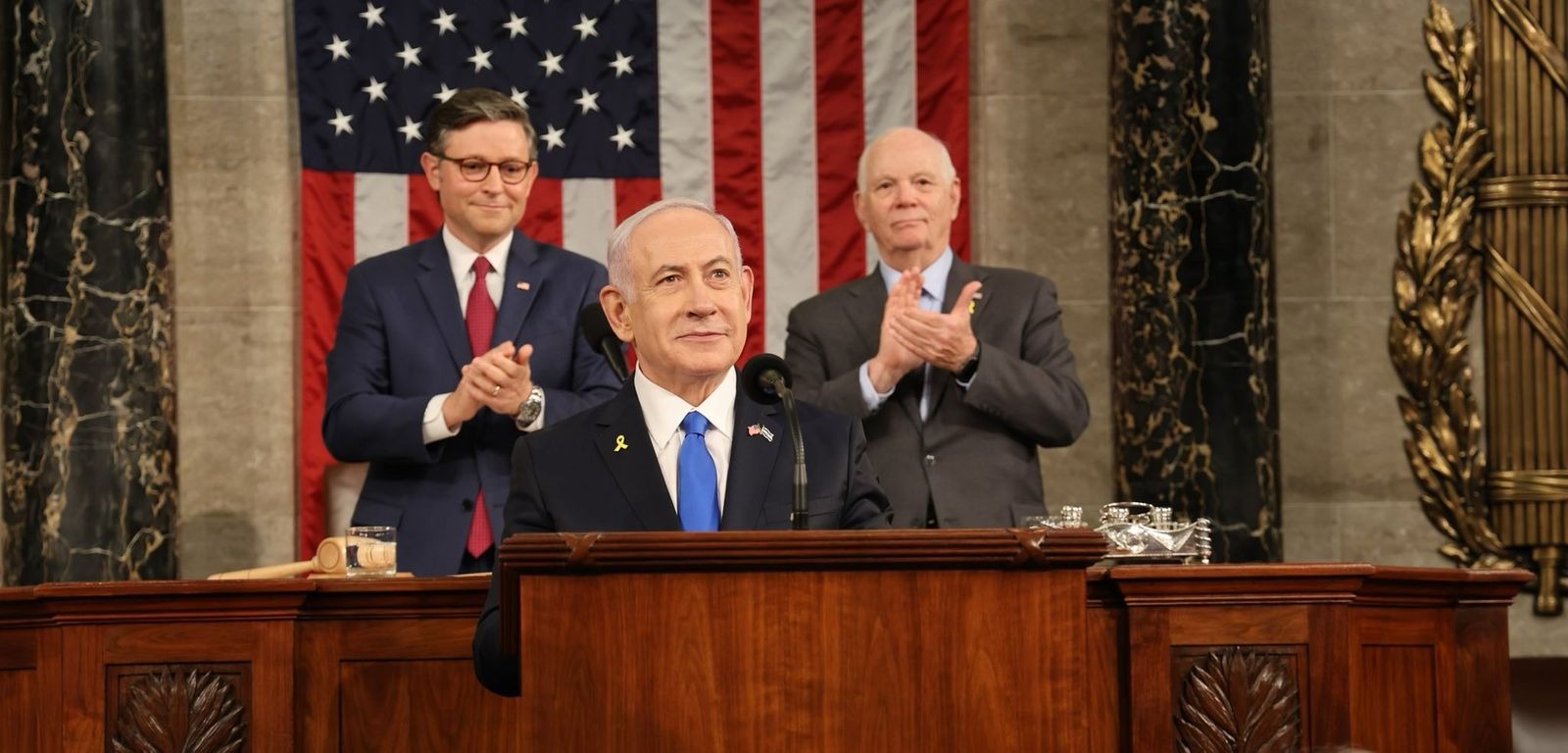
Israel is heading to the polls on Tuesday 27 October in an election that could end Prime Minister Benjamin Netanyahu's long grip on power. The vote for all 120 seats in the Knesset is the first since the Hamas-led attacks of 7 October 2023, the onset of the war in Gaza. It is, by every account, a referendum on Netanyahu himself — and the final numbers suggest the referendum will not settle anything on its own.
The last polls published before the blackout on new polling, which took effect on Friday night, tell the same story in three slightly different dialects. Kan put Eisenkot's opposition bloc at 52 seats and Netanyahu's coalition at 50, with the Arab-led parties at 14 and the Reservists at 4. Channel 12 put the opposition at 56, the coalition at 50 and the Arab-led parties at 14. Channel 13 put the blocs at 54 and 50, with 16 seats for the Arab-led parties. Nobody is near 61.
Three days before the vote, thousands gathered in Tel Aviv on Saturday for an anti-government demonstration organised by the October Council, families of victims and hostages taken on 7 October 2023, demanding accountability and a state commission of inquiry; opposition leaders took part, and Eisenkot received a warm reception.
Start with the shape, not the noise. In two of the three final surveys, Eisenkot's Yashar party emerges as the largest single faction, ahead of Netanyahu's Likud: Kan gives Yashar 22 seats to Likud's 20, and Channel 12 gives Yashar 23 to Likud's 21. Bennett and Lapid's Together list takes 14 to 15 seats, the centre-left Democrats 8 to 10, Lieberman's Yisrael Beytenu 8, and the Arab-led Joint List 9. On Netanyahu's side, Ben-Gvir's Otzma Yehudit takes 7 to 8, Shas 7 to 8, United Torah Judaism 7 to 8, and Smotrich's Religious Zionism 6 to 7. Ra'am takes 5.
Because Israel's proportional representation system has never delivered a single-party majority: no party has ever won 61 seats on its own, so every government is a negotiation. A bloc at 52 or even 56 still needs nine or five more seats from somewhere, and the only somewhere left is parties it has spent the campaign ruling out. That is why the final polls are less a prediction than a map of the bargaining to come. The pact framing the opposition's bid was signed in late September by four parties — Yashar, the Democrats, Yisrael Beytenu and Together — pledging to work together to unseat Netanyahu. The bloc has named no future leader, but Eisenkot is seen as its most likely prime ministerial candidate.
The central unknown is the Arab-led parties, and it comes in two parts. The first is Ra'am. Its leader, Mansour Abbas, has signalled a willingness to repeat the arrangement of 2021, when Ra'am became the first Arab-led party to join an Israeli governing coalition, under Bennett. But most opposition leaders, including Eisenkot, have ruled out such an alliance this time, and Bennett himself has ruled out repeating the 2021 partnership. The second is the Joint List, which includes the Hadash, Ta'al and Balad factions. It has said it could provide a so-called safety net to an anti-Netanyahu coalition — agreeing not to vote against it in a confidence vote without joining the government — in return for conditions including a path to Palestinian statehood and action against organised crime.
Then Israel enters the repertoire it knows best. A coalition short of 61 could seek outside parliamentary support, as a minority government, leaving it vulnerable to defections and disputes over major policies. The parties could agree on a rotating premiership, as Netanyahu and Benny Gantz did in 2020 and Bennett and Lapid did in 2021. Or, if no leader can assemble support, the country could face another election, with Netanyahu remaining caretaker prime minister until a new administration takes office. We also do not know what the ultra-Orthodox parties will do: Shas and United Torah Judaism have joined Netanyahu's coalitions multiple times but also walked away, most recently in 2025.
This election matters beyond Israel because it will decide who speaks for a country still at war, still holding hostages' families in the streets, and still arguing with itself about who failed on 7 October 2023. The opposition's central promise is institutional: a state commission of inquiry, term limits, a constitution, an end to what it presents as the personalisation of power. Netanyahu's claim is the opposite: only his camp can hold the security line. The polls say both claims can be half true at once.
It matters, too, because the arithmetic exposes a structural fact the campaign rhetoric obscures. Palestinian citizens of Israel make up about 20 percent of the population, and their parties are projected to hold about a tenth of the Knesset. A system that counts them in the electorate but excludes them from the coalition conversation produces exactly the deadlock the polls describe. For the region, the stakes run through the same door, from the Cypriot debate over Israeli money and property to its gas export architecture and its defence deals in the Eastern Mediterranean: the election decides who holds them.
Read the 26 September pact for what it is: a non-aggression agreement between parties that disagree about almost everything except Netanyahu. Eisenkot's Yashar is a new centrist party built on professional governance and expanded military service. Bennett's Together list pairs two former prime ministers with assertive security policies. Lieberman's Yisrael Beytenu is a secular right-wing party committed to universal conscription and civil marriage. The Democrats, formed from the merger of Labor and Meretz, are the centre-left anchor. Their common ground is procedural — an inquiry, term limits, a constitution — and the pact postpones who leads until after the vote.
That postponement is both the pact's strength and its risk. It let five leaders campaign without tearing each other apart, and kept the opposition ahead of Netanyahu in every final poll. But a coalition negotiated after the election, among partners who have not agreed on a prime minister, a programme or the Arab parties, must answer in days the questions the campaign avoided for months. Through the Bureau's 5D lens, the dimensions converge: geopolitically, the vote follows a war that redrew Israel's security perimeter; demographically, a fifth of the electorate is Palestinian and conscription divides the Jewish majority itself; historically, five elections between 2019 and 2022 came from exactly this failure to convert pluralities into governments.
The second-order effects begin the morning after the vote, whatever it says. A prolonged coalition negotiation leaves Israel governed by a caretaker or a fragile minority, at a moment when decisions on Gaza's administration, the hostages' families' demands and the regional confrontation cannot wait for a perfect government. Allies and adversaries read a hung Knesset as a signal: its commitments carry a discount until a government forms.
Inside Israel, a hung result also reopens the conscription fight that helped break the last coalition: the opposition's promise of equal sharing of service duties collides directly with the ultra-Orthodox parties' conditions for joining any government. For Palestinian citizens of Israel, the effect is quieter and more consequential. If Ra'am and the Joint List are again treated as arithmetic rather than partners — counted in the polls, excluded from the coalition — the election will have confirmed that a fifth of the electorate can determine who governs without ever being allowed to govern.
The sequence from here is fixed. Polling stations close on Tuesday evening, exit polls are expected at 22:00, and the first seat counts will show whether the final polls' shape — opposition ahead, nobody near 61 — survives contact with the ballot box. The President will then task the candidate with the best chance of assembling a majority.
Longer than the campaign admits. The opposition must first agree on a prime minister it could not name before the vote, then on whether the Arab-led parties are partners, props or pariahs. Netanyahu must first hold his 50, then persuade Shas and United Torah Judaism to return, then find seats his bloc does not have. Watch three markers: which small parties fall short of the threshold; the first public word from Shas and United Torah Judaism after the count; and the language the opposition uses about Ra'am and the Joint List in the first 48 hours. If none of the eight outcomes closes, Israel will know the feeling well: a caretaker prime minister, a hung Knesset, and the long road back to the ballot box.
The Western lens: a deadlock measured to the seat Western and Israeli reporting, led by The Times of Israel's account of the final polls, has treated this election as an arithmetic problem with a political consequence: the seat counts, the threshold, the blackout, the 61-seat rule. The western reading is unsentimental about the opposition's pact — a coordination device, not a government — and about Netanyahu's position: trailing in the polls, but never more than a coalition bargain from survival.
The Eastern lens: a referendum watched from the region's edge Eastern reporting, led by Singapore's CNA from Tel Aviv, has framed the vote through the street and the region: the thousands who marched on Saturday, the families demanding an inquiry, the gag period that froze the polls. From East Asian capitals, Israel's election arrives as a regional event — a vote in a country whose wars, gas fields and defence deals touch Asian energy routes and Asian diplomacy.
The Southern lens: the question the polls cannot ask Southern reporting, led by Al Jazeera's explainer, has put the election's unasked question at the centre: what happens to the Palestinian citizens of Israel, a fifth of the population, whose parties hold the seats neither bloc can do without and whose leaders neither bloc will embrace. From the Global South, the deadlock is not a technicality: it is a democracy that counts a fifth of its people in the electorate and discounts them in the government.
Israelis vote on Tuesday 27 October 2026 for all 120 seats in the Knesset. The election is the first since the Hamas-led attacks of 7 October 2023 and the war in Gaza that followed. No party has ever won an outright majority, so the vote decides the balance between blocs, and the government is then formed by coalition negotiation after the count.
Because the vote is split three ways. Kan's final poll gave the opposition bloc 52 seats and Netanyahu's coalition 50, Channel 12 gave 56 and 50, and the Arab-led parties took about 14 in both. A government needs 61 seats, so even the leading bloc is five to nine seats short, and the missing seats belong to parties each bloc has ruled out.
Yes, on the final polls they hold the balance. Ra'am, led by Mansour Abbas, has signalled openness to joining a government, as it did in 2021, but most opposition leaders, including Gadi Eisenkot, have ruled that out. The Joint List has offered a safety net instead: not joining a government, but agreeing not to vote against it in a confidence vote, in return for conditions.
Israel has a repertoire for that, used five times between 2019 and 2022. A minority government can seek outside support, rivals can agree a rotating premiership, parties can settle on a different prime minister from the same camp, or, if no leader assembles 61 seats, the country heads for another election with Netanyahu remaining as caretaker prime minister.
