Trump says the US will end its $4 billion in annual military aid to Israel by the end of 2026
The announcement, made on the morning of the midterm elections, lands as Democrats sweep Congress and Israel's deadlocked parliament searches for a government; and neither capital has yet shown a plan for what replaces the grants.
Published 11 November 2026 · 08:21 GMT
The summary
On Tuesday 3 November 2026, President Donald Trump said on Fox News that the United States would end about $4 billion in annual military aid to Israel by the end of 2026, claiming he and Prime Minister Benjamin Netanyahu had agreed the step months earlier. The current memorandum of understanding, signed in 2016, provides $3.8 billion a year, $3.3 billion in Foreign Military Financing and about $500 million for missile defence, for fiscal years 2019 to 2028, a total of $38 billion.
The three lenses
- WestThe West reads a rupture; or a renegotiation by announcement Haaretz called the announcement a reflection of the deterioration of Israel's strategic situation, noting Trump gave Netanyahu less than two months where he had asked for ten years.
- EastAsia reads the numbers first, and the election second The Indian Express, in a careful explainer, kept the focus on the mechanics: the agreement runs to September 2028, Congress appropriates the funds each year, and Trump offered no details on how the cutoff would be implemented.
- Global SouthThe South reads a structural shift, not a single phone call Al Jazeera's analysis, published on Wednesday, argues the shift is structural rather than personal: the three pillars that carried American support for Israel, sympathy after the Holocaust, shared democratic values, and Israel's value as a military ally, are all weakening at once, and replacing Netanyahu would salvage only some of what has been lost.
Key facts
- On Tuesday 3 November 2026, President Donald Trump said on Fox News that the United States would end about $4 billion in annual military aid to Israel by the end of 2026, claiming he and Prime Minister Benjamin Netanyahu had agreed the step months earlier. Haaretz
- The current memorandum of understanding, signed in 2016, provides $3.8 billion a year, $3.3 billion in Foreign Military Financing and about $500 million for missile defence, for fiscal years 2019 to 2028, a total of $38 billion. Indian Express
- Netanyahu told The Economist in January 2026 that he wanted to taper American military aid to zero over a decade; formal talks on a new security framework began in May. Haaretz
- On Friday 6 November, Netanyahu's office did not deny Trump's account, posting that the move “from aid to partnership” showed the strength of the relationship. Times of Israel
- The Democrats won the House and the Senate in the 3 November midterm elections, flipping at least seven Republican-held Senate seats; the new Congress convenes in January 2027. Nikkei Asia
- Israel's general election of 27 October was deadlocked: Netanyahu's bloc won 53 of the Knesset's 120 seats and Gadi Eisenkot's alliance 48; the parliament was sworn in on 10 November with no government formed. Reuters
The morning of the midterms, a phone call to Fox News
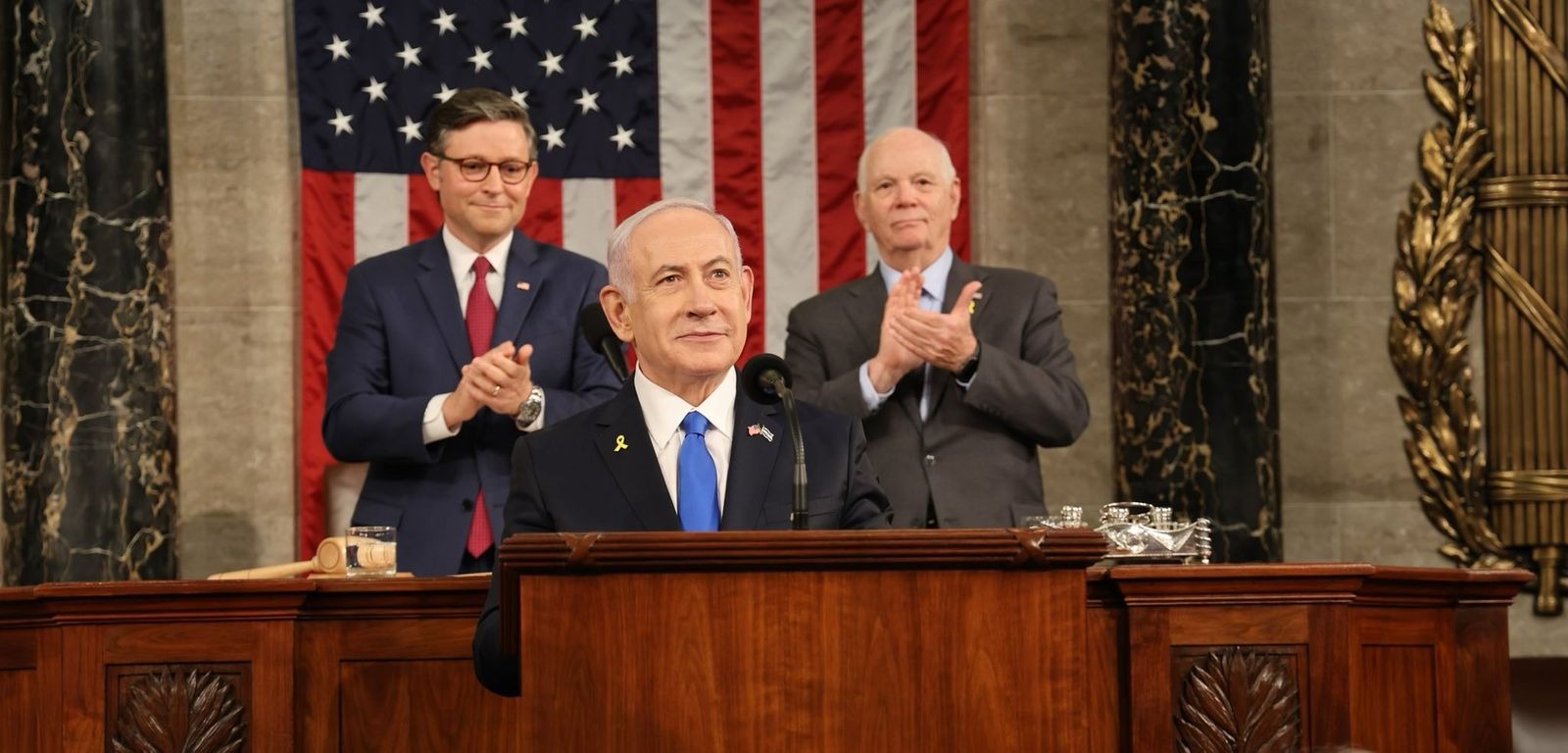
On the morning Americans voted in the midterm elections, Tuesday 3 November, President Donald Trump telephoned Fox News's “Fox & Friends” and said the United States would stop paying Israel about $4 billion a year in military aid by the end of 2026. “As far as paying Israel, Bibi Netanyahu and I have made a deal, we give Israel $4 billion a year, we made a deal months ago that we're stopping,” Trump said. “They're fine with it because they've become a very successful country. They don't need it. And we won't be paying anymore, Israel.” He added one qualifier: “We'll help Israel if they need it.” Weapons sales would continue, he said; the grants would end. The timing was impossible to miss: Democrats had spent months attacking the aid as misplaced priorities, and his party was about to lose Congress.
The $3.8 billion agreement that runs to 2028
The money Trump described is governed by a memorandum signed in 2016 under Barack Obama: $38 billion over fiscal years 2019–2028; $3.8 billion a year, $3.3 billion in Foreign Military Financing and about $500 million for missile defence. Congress appropriates the funds annually, and the agreement does not expire until the end of September 2028. Netanyahu had raised ending the grants himself, on a very different timetable: in January 2026 he told The Economist he wanted to taper American aid to zero over a decade, and repeated it to CBS in May. Formal talks on a replacement framework began that month, centred on joint development and co-production rather than grants. What Netanyahu proposed was a transition; what Trump announced was a halt in under two months.
In Jerusalem, the announcement landed without warning. Finance Ministry officials told the Walla news site they were surprised, and no formal document had been submitted by the Prime Minister's Office. Three days later, on Friday 6 November, Netanyahu's office answered without denying Trump's account, posting that the move “from aid to partnership shows the strength and sophistication of our relationship”. President Isaac Herzog said the news had hit him “like a bolt out of the blue”. The US ambassador, Mike Huckabee, told Channel 12 he did not know whether funding would end at the close of 2026 or the end of 2028. Netanyahu, meanwhile, governs as caretaker after a deadlocked election stripped his bloc of its majority, as Magna Bureau reported when the new Knesset was sworn in. The Wall Street Journal reported a State Department letter to Congress putting about $10 billion still needed after 2028 for weapons orders already placed. In July, 103 House Democrats backed a failed measure from Republican Thomas Massie to cut off the aid entirely.
Is the cutoff real, and who pays for the orders already placed?
The largest unknown is whether the cutoff is a decision or a declaration. Trump offered no implementation plan, no timetable beyond “by the end of this year”, and no document; Netanyahu's office has published nothing formal. Nobody has said what happens to the roughly $10 billion in weapons orders already placed, or whether that money would come from loans, from Israel's own budget, or from a new arrangement. A second unknown is what “partnership” means in practice, joint weapons development, trade deals, intelligence sharing, which the two governments have not defined. A third is Congress. The memorandum runs to 2028, but Congress votes the money each year, and the Democrats taking both chambers in January have campaigned on conditioning or cutting the aid. Whether they legislate the cutoff, restore the money, or attach conditions is entirely open.
When the cheque stops, the leverage changes hands
The sums are not abstract. The United States supplied about 68 percent of Israel's imported major arms in 2021–25, according to the Stockholm International Peace Research Institute, with Germany supplying most of the rest. The $3.8 billion a year is worth roughly 12 billion shekels inside Israel's defence budget, and most of it is spent in the United States, on American-made weapons built by American workers. Ending it would not only cut Israel's budget; it would remove the instrument Washington has used for decades to shape Israeli decisions; the grants that bought a say in when wars start and how they are fought, and the diplomatic cover that came with them. For the United States, the announcement marks the moment a question once confined to the margins became a majority position, opposed now by the progressive wing of the Democrats and the America First wing of the Republicans alike. For the region, the message is that the most durable assumption in Middle Eastern security, that American money for Israel is automatic, no longer holds.
Two elections, one announcement, and a decade of drift
What makes 3 November different is that two elections arrived at once. In the United States, voters handed both chambers of Congress to a Democratic Party whose left flank had made the aid a campaign issue; and whose Michigan Senate candidate, Abdul El-Sayed, won his seat days after Trump singled him out by name over the $4 billion. In Israel, voters took away Netanyahu's majority six days earlier, leaving him a caretaker negotiating his survival while rival Gadi Eisenkot tries to build a government before 6 December. Trump spoke into that double vacuum, and the midterm defeat is already reshaping Washington: three top Justice Department officials resigned within two days of the vote. The announcement also has a history: Netanyahu's January proposal, the talks that began in May, and the slow accumulation of grievances, the Gaza war, the settlements, the war with Iran, that turned a bipartisan consensus into a contested question. A ten-year transition can be negotiated, budgeted and reversed. A two-month halt cannot, and the gap between the two timetables is where the confusion of the past week lives.
The builders, the buyers, and the neighbours are already recalculating
The first recalculation is industrial. Most of the $3.8 billion is spent in the United States, so American weapons makers have as much at stake as Israel's defence ministry, and a shift from grants to purchases would move the cost onto Israel's budget while keeping the orders in American factories. The second is Israeli: a state that builds some of the world's most advanced weapons will be pressed to do more of it alone, faster, and to find new suppliers, Germany, supplier of about 31 percent of its imported major arms in 2021–25, is the obvious first call. The third is regional. The Gulf states agreed a joint military command in Kuwait as the war with Iran redrew their defence maps, and Iran's threats have already pushed senior American officials onto military bases, as the Treasury chief's move to a base showed. The picture is a region arming itself for a world in which American guarantees are negotiable. And the fourth is political: a Democratic Congress with subpoena power arrives in January, and the aid question will be among its first tests.
What should we watch before the money actually stops?
Four dates will tell whether the announcement becomes policy. The first is 6 December, Eisenkot's deadline to form a government in Israel, extendable by two weeks, and whether Netanyahu survives as caretaker or is replaced. The second is the turn of the year, when the first payments under the memorandum fall due and the absence of a formal document becomes a decision in itself. The third is January 2027, when the new Democratic Congress takes its seats and decides whether to appropriate the money, condition it, or cut it. The fourth is the quiet one: the State Department's accounting of the roughly $10 billion in orders already placed, and whether anyone plans to pay for them. Until one of those dates produces a document, the $4 billion question remains what it was on 3 November; a sentence spoken on television, waiting for two governments to catch up with it.
The three lenses
West Lens:
The West reads a rupture; or a renegotiation by announcement Haaretz called the announcement a reflection of the deterioration of Israel's strategic situation, noting Trump gave Netanyahu less than two months where he had asked for ten years. The Times of Israel reported Israeli security and financial officials caught off guard, the declaration sitting uneasily against a memorandum running to 2028. The Jewish Telegraphic Agency found Israelis alarmed at aid ending within months, while Ambassador Huckabee argued the opposite; that cutting the grants would secure the relationship by turning it into trade.
East Lens:
Asia reads the numbers first, and the election second The Indian Express, in a careful explainer, kept the focus on the mechanics: the agreement runs to September 2028, Congress appropriates the funds each year, and Trump offered no details on how the cutoff would be implemented. Nikkei Asia read the midterms as a verdict on the cost of living, tariffs and the war with Iran, reporting the Democratic sweep of both chambers within hours of the polls closing. The Asian reading treats the aid announcement as inseparable from the election around it; a president under pressure from voters, using a foreign-policy announcement to answer a domestic argument, with the institutional facts still standing in the way of the words.
South Lens:
The South reads a structural shift, not a single phone call Al Jazeera's analysis, published on Wednesday, argues the shift is structural rather than personal: the three pillars that carried American support for Israel, sympathy after the Holocaust, shared democratic values, and Israel's value as a military ally, are all weakening at once, and replacing Netanyahu would salvage only some of what has been lost. Arab News, reporting from Pakistan, found Arab American leaders questioning whether the cutoff was a genuine policy shift or an election-day gesture, noting scrutiny has only sharpened since the Democrats swept the midterms. The Southern reading is the most sceptical of the announcement as an event, and the most convinced the relationship has already changed underneath it.
The consensus
- What we agree on
- What we agree on: on Tuesday 3 November, President Donald Trump said on Fox News that the United States would end about $4 billion in annual military aid to Israel by the end of 2026, claiming he and Prime Minister Benjamin Netanyahu had agreed the step months earlier; the current memorandum of understanding provides $3.8 billion a year through September 2028; the Democrats won both chambers of Congress in the midterm elections held the same day; and Israel's general election of 27 October left no party or bloc with a majority.
- What we don't agree on
- What we disagree on: whether the cutoff is a genuine policy shift or an election-day gesture; whether Netanyahu agreed to a halt by the end of 2026 or only to a taper spread over a decade; and whether ending the grants will strengthen the US-Israeli partnership by turning it into trade, or expose Israel at a moment of regional war.
- What we know
- What we know: the memorandum's figures; $38 billion over ten years, $3.3 billion in Foreign Military Financing plus about $500 million for missile defence each year; Netanyahu's January 2026 proposal for a decade-long taper and the formal talks that began in May; the Prime Minister's Office's non-denial of 6 November; the midterm results, with at least seven Senate seats flipping; and the Knesset arithmetic, 53 seats for Netanyahu's bloc against 48 for Eisenkot's, with 61 needed for a majority.
- What we don't know yet
- What we do not know yet: whether any implementation plan or formal document exists; what happens to the roughly $10 billion in weapons orders already placed; what the promised “partnership” would consist of in practice; whether Congress will appropriate the 2027 funds; and who will form Israel's next government.
- What we expect
- What we expect: clarification fights in Washington and Jerusalem before the year ends; the incoming Democratic Congress to scrutinise, condition or cut the aid when it takes its seats in January; and a negotiated transition rather than a clean cutoff on 31 December; though the announcement itself has already changed what is politically possible to say about the relationship.
Questions, answered
Why did Trump say the US will end military aid to Israel?
Trump said on Fox News on the morning of the 3 November midterm elections that he and Prime Minister Benjamin Netanyahu had agreed months earlier to end the roughly $4 billion in annual grants by the end of 2026, arguing that Israel had become a prosperous country that no longer needed the money. He called the aid a “bad talking point” for Democrats and singled out Michigan Senate candidate Abdul El-Sayed. He offered no implementation plan.
How much military aid does the US give Israel each year?
Under the 2016 memorandum of understanding, Israel receives $3.8 billion a year, $3.3 billion in Foreign Military Financing and about $500 million for cooperative missile defence, as part of a $38 billion, ten-year package covering fiscal years 2019 to 2028. Most of the money is spent in the United States on American-made weapons, and the agreement does not expire until the end of September 2028.
Did Netanyahu agree to end the aid?
Netanyahu had proposed ending the grants, but over a decade rather than two months: he told The Economist in January 2026 that he wanted to taper the aid to zero over ten years, and formal talks on a replacement framework began in May. His office did not deny Trump's claim of a year-end cutoff on 6 November, calling the move a shift “from aid to partnership”, but it has published no formal document.
What happens next for US aid to Israel?
Four dates matter: 6 December, the deadline for Gadi Eisenkot to form a government in Israel; the turn of the year, when the first payments would fall due; January 2027, when the new Democratic Congress takes its seats and decides whether to appropriate, condition or cut the money; and the State Department's accounting of roughly $10 billion in weapons orders already placed. Until one of them produces a document, the cutoff remains an announcement, not a policy.
Sources
- Haaretz (3 Nov 2026); Trump's Fox & Friends remarks; the memorandum; Netanyahu's decade-long taper
- Indian Express (5 Nov 2026); the explainer: the memorandum to 2028, Congress's role, and the absence of implementation details
- Times of Israel (3 Nov 2026); the announcement; Israeli officials caught off guard; the Finance Ministry's surprise
- Nikkei Asia (4 Nov 2026); the Democrats' sweep of both chambers, on Associated Press projections
- Reuters (10 Nov 2026); the Knesset sworn in after the deadlocked 27 October vote; 53 seats against 48; Eisenkot's 6 December deadline