Two days after Donald Trump floated “another little Epic Fury”, Iran’s foreign minister answered from Tehran: war or no war, Iran’s policies stay put — and the Strait of Hormuz, he warned, will never be managed as before.
Published 25 October 2026 · 11:12 GMT
Two days after Donald Trump floated “another little Epic Fury”, Iran’s foreign minister answered from Tehran: war or no war, Iran’s policies stay put — and the Strait of Hormuz, he warned, will never be managed as before. On Sunday 25 October 2026, Iranian Foreign Minister Abbas Araghchi said a potential resumption of war with Israel and the United States would not change Iran’s positions. Araghchi said he was “already thinking about the post-war period”, adding: “Whether there is war or not, our policies remain the same.”
Araghchi said on 25 October that a renewed war would not change Iran’s policies; Trump said on 23 October that the US might mount “another little Epic Fury”; an 8 April ceasefire ended the heaviest fighting while sporadic Hormuz exchanges continued; and a June memorandum of understanding on a settlement has unravelled.
Whether a new strike is actually coming. Trump floated a fresh campaign at a Florida rally, yet also said he was unaware of any strike plan and that the US would not attack before the 3 November midterm elections; the US envoy had suggested a strike could come as soon as this weekend.
Which two past operations Araghchi meant by “they have already done so twice”; what “our policies remain the same” covers in concrete terms; what new Hormuz “management” Tehran intends; or whether any strike order exists at all.
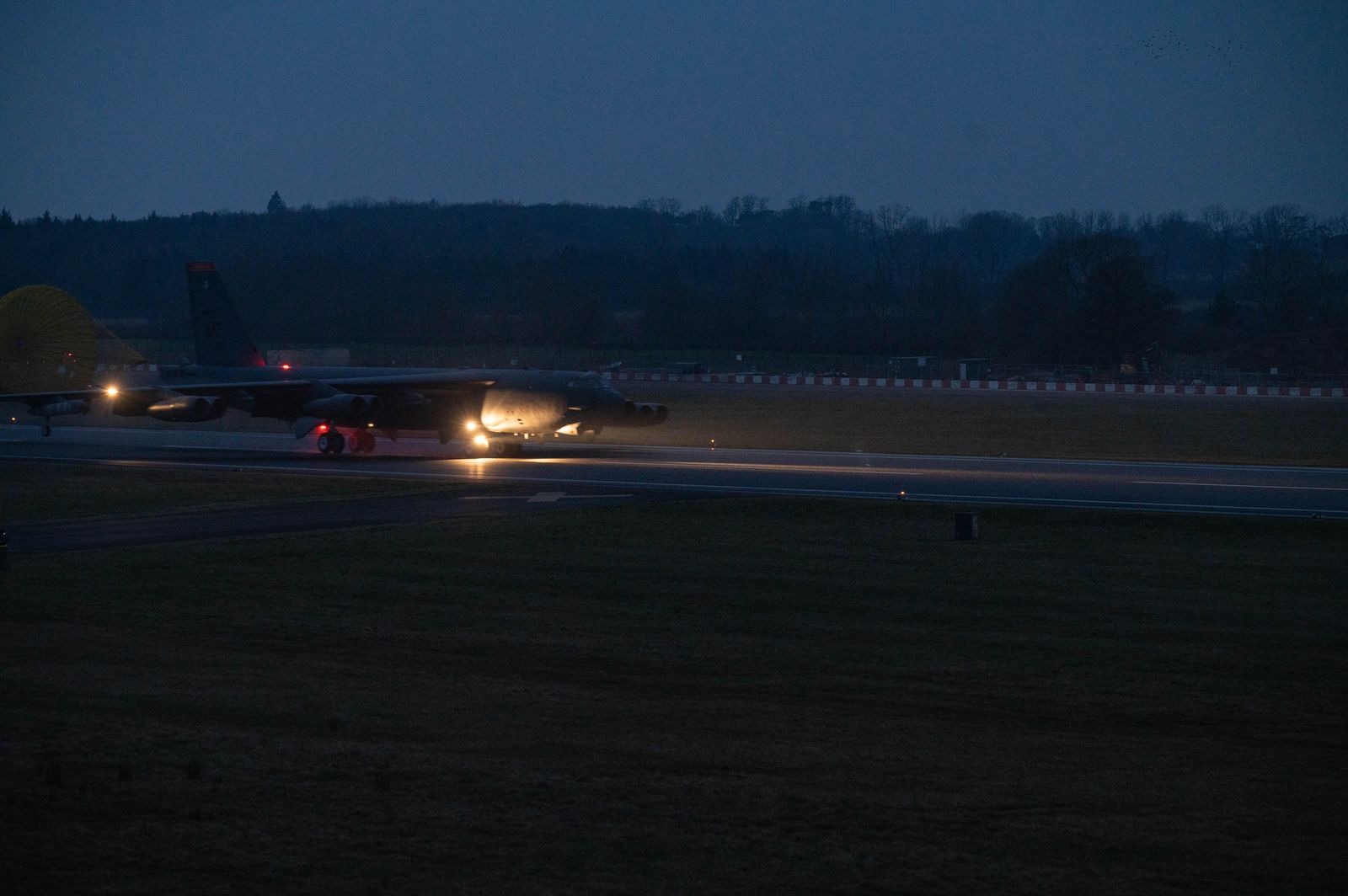
Iran’s foreign minister chose his timing deliberately. On Sunday 25 October 2026, at a televised event in Tehran, Abbas Araghchi said a potential resumption of war with Israel and the United States would not change his country’s positions — two days after President Donald Trump, at a Florida rally on 23 October, said Washington “may do another little Epic Fury”, invoking the US-Israeli campaign against Iran that began on 28 February. The Hindu (Oct 25, 2026)
“Recently, there has been talk of a new war, but I am already thinking about the post-war period. Whether there is war or not, our policies remain the same,” Araghchi said. “They have already done so twice and have seen the results. If they want to try again, they know they will achieve no different outcome from those of the past.” Arab News (Oct 25, 2026)
He went further on the waterway at the centre of the confrontation. “The current war has changed everything. We must accept that new realities are taking hold. Shipping routes through the Strait of Hormuz will no longer be the same, and the management of the strait will no longer be the same,” he said, adding: “To achieve peace and stability, our region must move towards the complete absence of foreign forces.” Dawn (Oct 25, 2026)
The statement is distinct from the warning Tehran issued a day earlier, when Iran vowed an “apocalyptic war” if the United States strikes again. Where that warning threatened consequences, Araghchi’s message denies the premise: that another round of war could compel Iran to change course at all. That earlier warning is covered here: Iran vows ‘apocalyptic war’ if US strikes again.
First, the sourcing, stated plainly. The Tehran quotes reach the world through a single wire dispatch from the French news agency AFP, carried in near-identical form by The Hindu, Arab News, Dawn and Malaysia’s The Sun. Five outlets repeating one dispatch are one evidence chain, not five confirmations. What is independently corroborated is the other half of the exchange: Trump’s 23 October rally remark is confirmed by Al Jazeera’s own live reporting and by The Hindu’s separate 24 October report on the US intelligence warning. Al Jazeera (Oct 23, 2026) The Hindu (Oct 24, 2026)
Second, the factual spine behind the rhetoric. An 8 April ceasefire ended the most intense fighting, apart from sporadic exchanges in and around the strategic Strait of Hormuz, a key route for global energy supplies, and those flare-ups have lulled in recent weeks. Iran has claimed control over the strait since the outbreak of the war and has regularly targeted vessels crossing without its authorisation; in response, the United States has maintained a naval counter-blockade on Iranian ports. The Hindu (Oct 25, 2026)
Third, the diplomatic record Araghchi is invoking. In June, Iran agreed with the United States to a memorandum of understanding on a pathway to a permanent settlement, only for the deal to unravel as each side accused the other of violating it; Tehran has since called for a return to the accord, as reported here: Iran blames Washington for the deal that failed — and still says: go back and conclude it. Indian Express desk reporting adds one detail beyond the wire: Araghchi spoke to a group of diplomats in Tehran, suggesting the audience was as much foreign capitals as the domestic public. Indian Express (Oct 25, 2026)
Araghchi’s sentences are precise about resolve and vague about content, and the gaps matter. He did not specify which two past operations he meant by “they have already done so twice”, nor enumerate which policies “remain the same” — the nuclear file, Hormuz control, regional posture, or all three. Until Tehran publishes a fuller transcript, the claim is a posture, not a programme.
Nor is it established that a strike is actually coming. The public signals contradict each other: the US envoy suggested a strike could take place as soon as this weekend, Trump said he was unaware of any strike plan, and Trump has also said the United States will not attack Iran before the midterm elections on 3 November. That tension is recorded in our earlier coverage: US envoy says America could strike Iran this weekend. No strike order has been publicly confirmed.
Two claims circulating alongside Sunday’s statement should be handled as unverified. Indian Express reports, citing Iran’s semi-official Tasnim news agency, that Iran’s air defences shot down a US drone over Bandar Abbas on Sunday — a single-source claim from one side’s media, not a confirmed incident. Likewise, what Tehran means in practice by new Hormuz “management” has not been spelled out in any published document. Indian Express (Oct 25, 2026)
A statement that nothing will change is not empty rhetoric; it is a negotiating position with three audiences. To Washington, it says coercion has a poor record: two attempts, in Araghchi’s telling, produced no different outcome. To the Gulf Arab states, it says the post-war order in the strait will be written in the region, not imposed from outside. To energy markets, it says the Hormuz disruption is not a temporary wartime exception but a new normal.
There is also what the statement concedes by implication. By talking about a “post-war period” while a ceasefire holds only unevenly, Araghchi treats the war as an event that has already rewritten the region’s facts — above all, who controls passage through Hormuz. If shippers, insurers and neighbouring capitals accept that reading, Tehran gains ground without firing a shot; if not, the next strait incident will test it. The broader arc is set out here: Eight months after the February strikes: the US-Iran war, then and now.
Read as strategy rather than bluster, Araghchi’s framing denies his adversary the initiative. A threat works by making the other side imagine a worse future and concede to avoid it. By declaring himself “already thinking about the post-war period”, Araghchi refuses that imagination — the future, in his telling, is already priced in, and it ends with Iranian policies intact. The performance of unflinching is itself the deterrent.
The weakness in the framing is equally visible. A claim that policies “remain the same” is unfalsifiable until tested, and Tehran’s leverage depends on others believing the test would fail. The counter-blockade continues, the June memorandum lies unimplemented, and the “lull” in flare-ups is a pause, not a peace. Araghchi’s answer is best read as a bid to set the terms on which the next round — diplomatic or military — will be judged.
The second-order effects run through energy first. The Strait of Hormuz is a key route for global energy supplies, and any durable change in how it is managed — permits, inspections, delays, risk premiums — would show up in shipping insurance, tanker scheduling and, eventually, fuel prices far from the Gulf. Asian importers, who take a large share of Gulf crude through the strait, have the most direct exposure.
The regional politics run second. Gulf Arab capitals sit between an American security umbrella and an Iranian neighbour asserting a permanent say over their export route; a “complete absence of foreign forces” flatters regional pride while threatening the arrangements those capitals rely on. And the great-power layer moves in parallel: Araghchi met his Russian counterpart Sergey Lavrov in Tehran on 19 October, with a meeting between the Iranian and Russian presidents planned in Moscow in the coming week, according to Al Jazeera’s live reporting. Al Jazeera (Oct 23, 2026)
The sharpest risk is miscalculation inside a lull. Sporadic exchanges have quieted, not stopped; threats are issued at rallies and answered at televised events; elections in Israel and the United States compress decision-making into campaign timetables. In that setting, a single incident — a detained tanker, a downed-drone claim, a strike nobody ordered — can convert rhetoric into a round nobody planned.
Three dates will do more than any statement to confirm or puncture Sunday’s message. The first is 27 October, when Israel votes; the outcome will shape how far Jerusalem pushes a harder line on Iran. The second is the planned Moscow meeting between the Iranian and Russian presidents in the coming week. The third is 3 November, the US midterm elections, past which Trump’s stated no-attack window expires.
Between those dates, watch for concrete indicators: any published text of the June memorandum or a successor accord; any incident involving a vessel in or near the Strait of Hormuz; any movement in the US naval posture in the Gulf; and whether the current lull holds or breaks. If the strait stays quiet and Moscow produces a diplomatic track, Araghchi’s “post-war” framing will look prescient. If a tanker is stopped or a strike launched, the question will no longer be whether Iran’s policies change, but whether anyone’s do.
The Western lens: threats as leverage, answered as defiance Western coverage frames the exchange as a bargaining sequence: Trump’s rally threat is meant to force Tehran to “get down to business”, and Araghchi’s answer is read as a refusal to be bargained with under fire. The same reporting carries the counter-evidence — the intelligence warning on Iranian targeting of Americans, the departure of non-essential US embassy staff from Saudi Arabia, and the envoy’s weekend-strike suggestion. The Hindu (Oct 24, 2026)
The Eastern lens: the strait as a lifeline, the statement as a shipping risk Eastern coverage of this statement has so far travelled through the wire rather than original reporting from Tehran — Malaysia’s The Sun carried the dispatch within hours. For importers dependent on Gulf crude passing through Hormuz, the operative sentence is about routes and management that “will no longer be the same”. The Sun (Oct 25, 2026)
The Southern lens: a region told its waterway will be run differently Southern reporting carried this story closest to the ground where its consequences land. South Asian and Gulf papers — The Hindu, Dawn, Arab News — and Al Jazeera’s live coverage gave the statement its fullest airing, because their readers live with the strait’s consequences: fuel prices, shipping delays, and the shadow of a war fought over their export route. Arab News (Oct 25, 2026)
Speaking at a televised event in Tehran on Sunday 25 October, Foreign Minister Abbas Araghchi said a potential resumption of war with Israel and the United States would not change Iran’s positions. He added that he was already thinking about the post-war period, that “whether there is war or not, our policies remain the same”, and that two previous attempts had produced no different outcome for those who tried them.
It is the name President Donald Trump used for the US-Israeli campaign against Iran that began on 28 February 2026. Speaking at a campaign rally in Florida on Friday 23 October, Trump said Washington “may do another little Epic Fury” if Tehran does not agree to US demands, while also urging Iranian officials to “get down to business” and reach a deal.
An 8 April ceasefire ended the most intense fighting, apart from sporadic exchanges of fire in and around the strategic Strait of Hormuz, and those flare-ups have lulled in recent weeks. In June, Iran and the United States agreed a memorandum of understanding laying out a pathway to a permanent settlement, but the deal later unravelled as each side accused the other of violating it, and Tehran has since called for a return to the accord.
That is unresolved, and the public signals point in different directions. Trump has said the United States will not attack Iran before the midterm elections on 3 November, and that he was unaware of any strike plan, even as the US envoy suggested a strike could come as soon as this weekend. No strike order has been publicly confirmed, so the threat remains a stated possibility rather than an established plan.
