Athens agreed to spend up to $4 billion on F-16 Viper upgrades and advanced U.S. missiles, a day after Secretary of State Marco Rubio's visit sealed a joint counterterrorism plan.
Published 8 October 2026 · 18:00 GMT
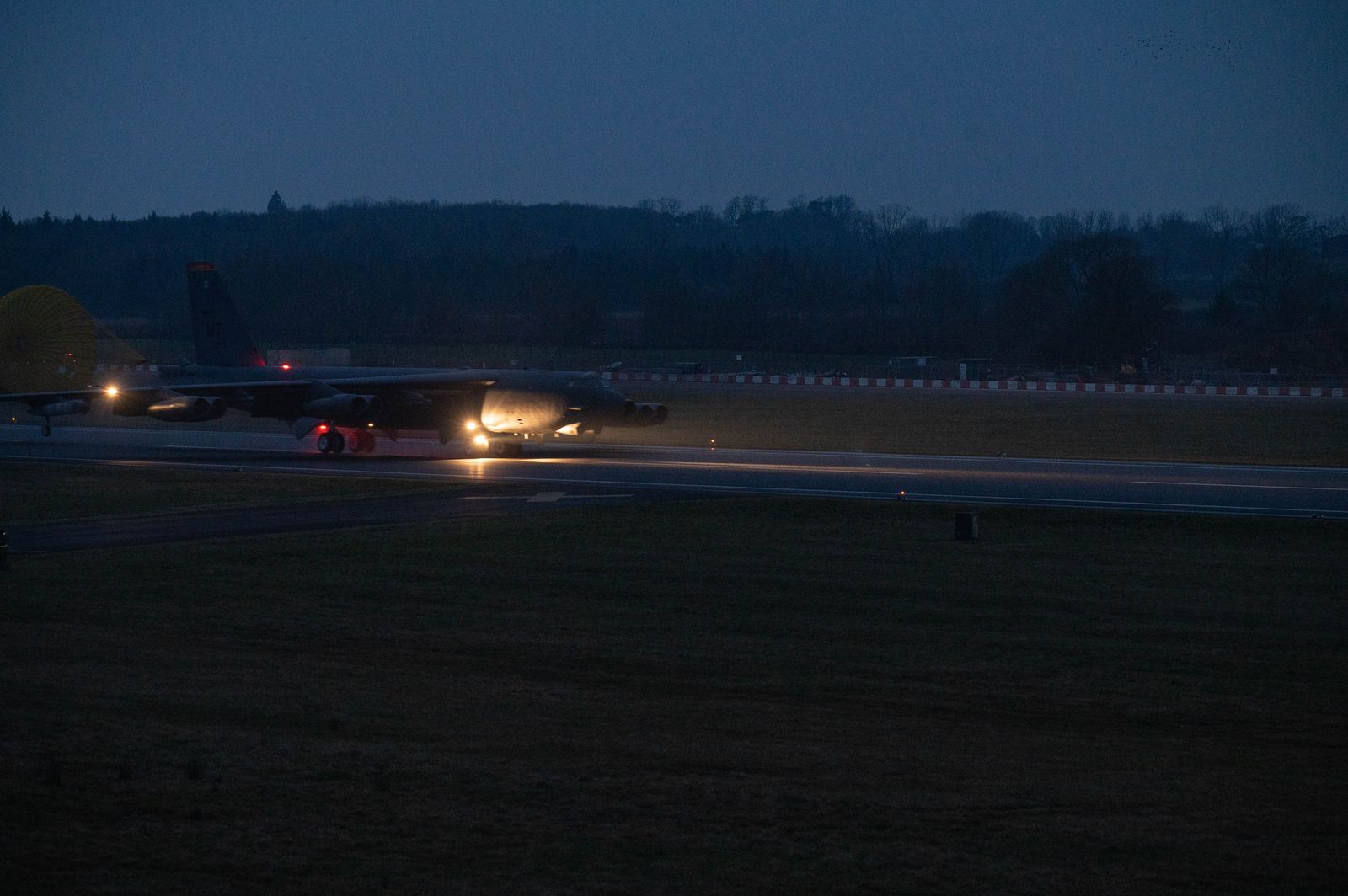
Greece agreed on Thursday to spend up to $4 billion upgrading more of its F-16 fighter jets and buying advanced missiles from the United States, two senior sources told Reuters, a day after Secretary of State Marco Rubio visited Athens. The package covers new advanced missiles and bombs for F-16 Viper and F-35 fighter jets and Black Hawk helicopters, plus the upgrade of older F-16s to the Viper standard. Most of the spending was already written into the government's multi-year defense plan and will be spread over several years, officials said, so it adds no new pressure to the country's finances. The deal lands as Athens accelerates one of Europe's most ambitious rearmament drives, anchored by the planned “Achilles Shield,” a multi-layer anti-ballistic and anti-aircraft system, and by a defense budget worth nearly 3.5 percent of GDP.
The money was the headline, but the choreography was the story. On Wednesday, Secretary of State Marco Rubio stood in Athens and announced that the United States and Greece, two NATO allies, had agreed on a joint security plan for counterterrorism information sharing between their law enforcement agencies. On Thursday, two senior sources told Reuters that Athens had agreed to spend up to $4 billion on American weapons: new advanced missiles and bombs for its F-16 Viper and F-35 fighter jets and its Black Hawk helicopters, plus the upgrade of older F-16s to the Viper version. In the arms trade, visits like Rubio's do not cause deals. They bless them.
A senior Greek defense ministry official filled in the contours for Reuters. The agreement covers advanced missiles and bombs across the fleet, the F-16 Vipers, the F-35s on order, the Black Hawks, and the modernization of aging F-16s to the Viper standard, the most advanced version of a fighter jet Greece has flown for decades. Crucially, officials stressed that most of the procurements were already included in the government's multi-year defense plan. The cost will be spread over several years and, in their telling, puts no additional pressure on the country's finances. This is not an impulse purchase. It is the next installment of a shopping list written years ago.
In the arms trade, visits like Rubio's do not cause deals. They bless them.
The fleet numbers tell the scale of the ambition. Athens agreed in 2024 to buy 20 Lockheed Martin F-35 fighter jets and 35 Sikorsky UH-60M Black Hawk helicopters. It is upgrading about 82 of its F-16s to the Viper version and wants to upgrade 37 more Block 50s to Vipers at a cost of about $1 billion. For a country of 10 million people still living in the fiscal shadow of the 2009-18 debt crisis, this is an extraordinary military buildup, and it is being paid for, officials insist, inside the existing plan. The Viper upgrade matters operationally: it gives Greece's workhorse fighters modern radars, avionics and weapons compatibility, effectively a new aircraft inside an old airframe, at a fraction of the cost of buying new.
The joint counterterrorism plan announced on Wednesday fits the same frame. Information sharing between law enforcement agencies sounds bureaucratic, but in a region where migration routes, smuggling networks and militant cells overlap, it is the unglamorous plumbing of security cooperation. Rubio's Athens stop was, in effect, a two-day demonstration: the public doctrine of national power on the Pnyx, the practical machinery of allied security in the ministries, and the commercial seal of a $4 billion arms package the morning after. Each element reinforces the others, and each is aimed as much at audiences in Washington and Brussels as in Athens.
That is the paradox Washington has learned to live with: arming one NATO ally to deter another NATO ally, while insisting the alliance is stronger for it. The United States sells advanced weapons to both Athens and Ankara, calibrating each sale against the other, and presents the whole arrangement as burden-sharing. For Greece, the American weapons are not only about capability. They are about coupling: the tighter the military-industrial bond with Washington, the harder it is for any future crisis in the Aegean to be treated as a local quarrel the great powers can ignore.
Europe is rearming, and Greece is ahead of the curve. Across the continent, defense budgets that barely moved for a generation are now climbing, driven by the war in Ukraine and by Washington's blunt insistence that allies pay more. Greece needed no convincing: it has been spending at wartime levels in peacetime for decades because of the Aegean. What is new is the shopping list's direction, away from legacy platforms and toward layered air defense, fifth-generation fighters and precision munitions, the toolkit of the drone-and-missile age. The Achilles Shield is the clearest expression of that shift, a bet that the next crisis will arrive from the sky, fast and in swarms, and that only overlapping layers of interceptors can meet it. In that sense Thursday's $4 billion is less a purchase than a down payment on a doctrine.
The fiscal question will not go away, whatever officials say. Greece is modernizing its armed forces while still emerging from a debt crisis that defined a generation, and €28 billion by 2036 is a vast commitment for an economy of its size. The government's answer is that the spending was planned, phased and affordable, and that security is the precondition of everything else, investment, tourism, sovereignty. The opposition's answer, when it comes, will be that guns have crowded out butter before in Greek history, and that American arms deals have a way of expanding beyond their original price tags. Both answers will be argued in parliament. Neither will change the trajectory: the Vipers are being upgraded, the missiles are on order, and the Achilles Shield is rising, layer by layer, over the Aegean.
From the Western reading, Greece is the alliance working as designed. A frontline NATO state spends 3.5 percent of GDP on defense, buys interoperable American systems, hosts the U.S. secretary of state, and signs a counterterrorism pact, all in 48 hours. Washington's message to the rest of Europe is unmistakable: this is what burden-sharing looks like, and the reward is the deepest possible American commitment. The Achilles Shield, built with Israeli technology, is read as the eastern Mediterranean growing its own version of layered deterrence.
The Western caveat is the Aegean itself. Arming Greece while also arming Turkey is a balancing act the United States has performed for decades, and every cycle tightens the spring a little more. Western diplomats privately worry that deterrence between two allies can drift into an arms race neither capital fully controls, with Washington as the arms dealer to both sides of a standoff it claims to manage.
From the Eastern reading, the Athens choreography is American alliance management as theater. Moscow reads the $4 billion as another brick in the wall of NATO's eastern buildup and notes, dryly, that the “threat” justifying it is another NATO member. The Achilles Shield's Israeli components add a second layer of meaning: Russian analysts see a Mediterranean air-defense architecture taking shape that could, in a wider confrontation, complicate Russian and allied operations across the region.
Ankara's reading matters more than Moscow's. Turkey maintains ties with both Russia and the West and will measure every Greek F-16 upgrade against its own air force modernization. Turkish strategists are likely to frame the deal as Athens locking in American backing for Aegean disputes, which hardens Ankara's own incentive to shop for leverage elsewhere, including in Moscow and Beijing. The Eastern view: Washington's sale does not settle the Aegean. It prices it.
From the Global South, the Greek deal is a study in the price of sovereignty. €28 billion by 2036 for a country of 10 million people is an astonishing figure in capitals where defense budgets are measured in hundreds of millions, and it prompts an uncomfortable question: how much security does money actually buy when the adversary is an ally in the same alliance? Southern analysts note that Greece's buildup has not resolved a single Aegean dispute in decades of spending.
There is also a development lens. The debt crisis of 2009-18 is within living memory, and the Global South knows what externally imposed austerity feels like. That Athens can now fund a €28 billion rearmament inside its existing plan is read two ways: as proof of genuine fiscal recovery, or as evidence that when the great powers want weapons bought, the money is always found. The South's quiet question is which social budgets would have been declared unaffordable for a tenth of the price.
The Viper, formally the F-16V, is the most advanced version of the F-16, with a modern AESA radar, upgraded avionics, new mission computers and compatibility with the latest weapons. Upgrading an existing airframe costs a fraction of buying a new fighter while delivering most of the capability. Greece is modernizing about 82 F-16s to this standard and wants 37 more.
It is Greece's planned multi-layer air-defense system, designed to intercept threats at every altitude, from ballistic missiles down to drones, using Israeli-made weapons alongside other systems. Named for the mythic warrior, it is the centerpiece of Athens' €28 billion rearmament plan through 2036 and a direct response to the missile and drone threats reshaping the region's wars.
The driver is the long-standing dispute with Turkey, a fellow NATO member, over airspace, maritime boundaries and Aegean islets. At nearly 3.5 percent of GDP, Greek defense spending far exceeds the old NATO 2 percent benchmark. The buildup accelerated as Athens emerged from the 2009-18 debt crisis with a deliberate strategy: modernize the forces, deepen the U.S. alliance, and deter through capability.
Officials say no. They stress the procurements were already in the multi-year defense plan, the cost is spread over several years, and no new budgetary pressure results. Skeptics note that arms programs have a history of cost overruns everywhere, and €28 billion by 2036 remains a vast commitment for a 10-million-person economy still marked by the debt crisis. Parliament will have the final argument.
