Sixty-five years to the day after French police drowned Algerian demonstrators in the Seine, France commemorated the dead — and then watched a town hall burn. 17 October 2026 fused colonial memory and cost-of-living revolt into a single, combustible date.
Published 22 October 2026 · 10:03 GMT
Sixty-five years to the day after French police drowned Algerian demonstrators in the Seine, France commemorated the dead — and then watched a town hall burn. 17 October 2026 fused colonial memory and cost-of-living revolt into a single, combustible date. On 17 October 1961, between 30,000 and 40,000 Algerians marched peacefully through Paris against a discriminatory curfew imposed twelve days earlier by police prefect Maurice Papon; his police attacked the march — beatings, shootings, bodies thrown into the Seine.
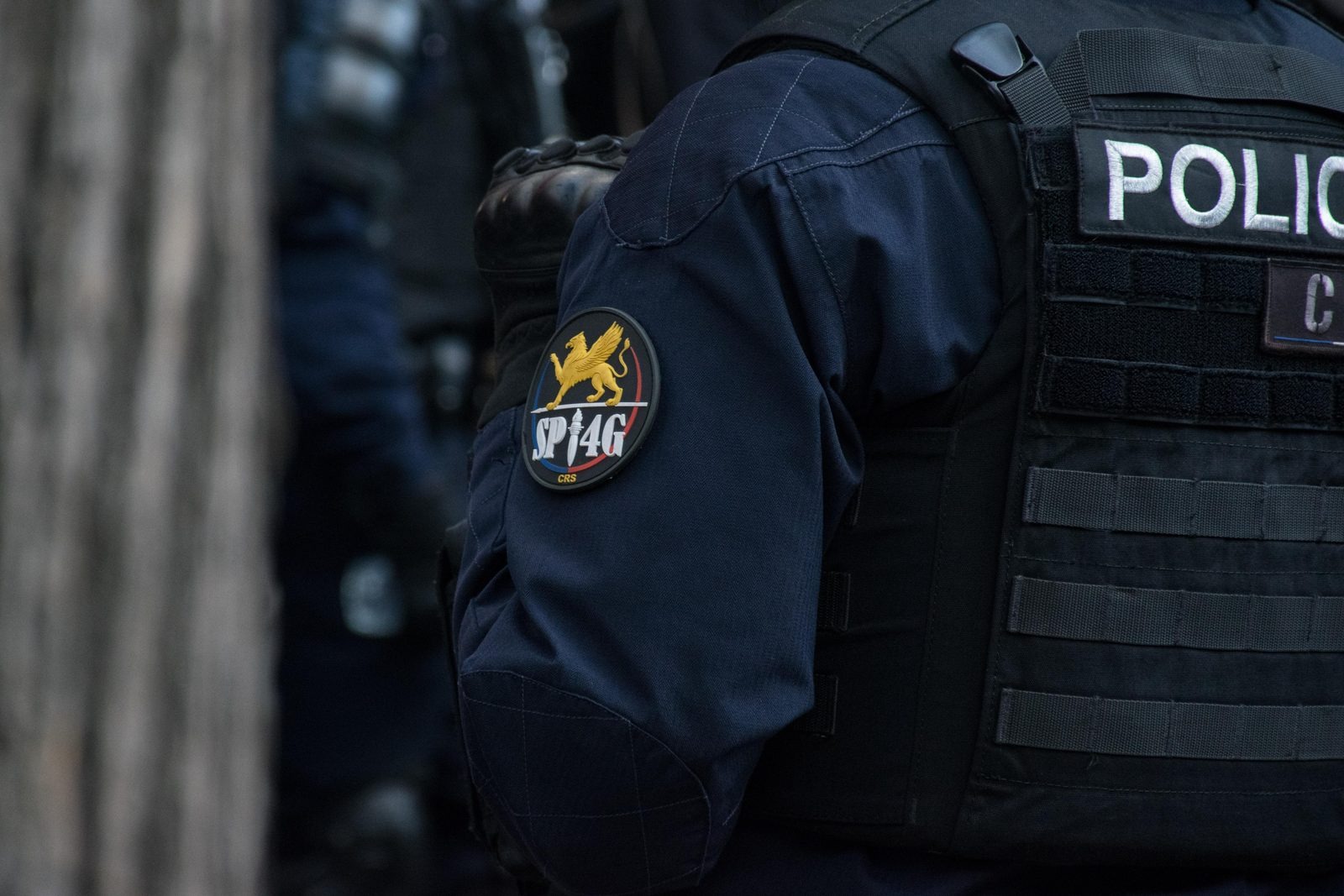
On Saturday 17 October 2026, France lived two histories at once. In Paris, crowds stopped before the steel plaque on the Pont Saint-Michel commemorating the Algerians killed by French police on the night of 17 October 1961. In Algiers and at Algerian embassies abroad, a minute of silence marked what Algeria has observed since 2021 as National Emigration Day. And in more than a hundred French cities, the largest day yet of the autumn protest wave unfolded: hundreds of thousands against the cost of living and crumbling public services, tipping into some of the worst violence France has seen in decades.
Sixty-five years to the day after police prefect Maurice Papon's forces drowned Algerian demonstrators in the Seine, the 143-year-old Limoges town hall went up in flames, as masked attackers torched a police car, smashed the windows and set the ground floor alight. At Paris's Place de la République, riot police fired tear gas into a crowd that included the 400 musicians of the Orchestre du Nouveau Monde. The Interior Ministry counted 550,000 marchers nationwide; the CGT union said 800,000. By evening, nearly 400 people had been arrested.
For how France reached this point, and Algeria's long reckoning with the colonial past, see our coverage of the 29 September strike wave.
Turnout and arrests. Around 140 demonstrations took place nationwide. The Interior Ministry put turnout at 550,000, including 110,000 in Paris; organisers claimed 800,000. Interior Minister Laurent Nuñez reported about 400 arrests by Saturday evening and 60 injured officers, two taken to hospital unconscious. later revised to 1,200 (Lecornu).
Paris. At the Place de la République, masked demonstrators hurled fireworks and paving stones; police answered with tear gas and water cannon. Looters smashed a cosmetics shop and a phone store, ransacked a Lacoste boutique, vandalised banks and tried to force the Galeries Lafayette. Mayor Emmanuel Grégoire said whole streets had been "devastated". At noon, the 400-strong Orchestre du Nouveau Monde — which had declared its performance to the prefecture — was targeted by tear-gas grenades, Le Monde reported.
Limoges. At the end of a 5,500-strong march, a masked group torched a police car in front of the town hall around 6 p.m., broke in and started a fire that engulfed the roof within three hours. Inaugurated in 1883 and a listed historic monument since 1975, the building was "largely lost", prefect Maurice Barate told AFP: two-thirds of the exterior destroyed, "a catastrophe for heritage". More than 15 people were taken into custody; on Sunday, 7,000 residents rallied to condemn the violence.
Elsewhere. In Marseille, protesters briefly forced the town hall door and spray-painted an anarchist "A" inside; a Hermès boutique was vandalised. In Lyon, the tourist office was torched; in Lille, looters broke into an Apple Store. An attempted attack on a police station in Brest was also reported. The movement's earlier clashes are covered in our report on the stun-grenade controversy.
The first unsettled ledger belongs to 1961. After nearly four decades of official denial, the French government acknowledged 40 deaths in 1998; historians put the real figure between 100 and 300, some as high as 400. No official count beyond those 40 has ever been issued, and the partially opened archives have never yielded a definitive number. The dead of the Seine remain uncounted.
The second ledger belongs to 17 October 2026 and is still being written. Arrest figures moved from roughly 400 on Saturday evening to 1,200 in the prime minister's later accounting; the final tallies for arrests and injuries are not yet stable. In Saint-Étienne, a young protester lost a hand — the injury is confirmed, the reported cause is not, and the circumstances are under investigation. One protester died after collapsing on the day; the cause has not been established. Suspects are in custody over the Limoges arson, but who planned it — and with what motive — has not been made public.
Dates are neutral until politics loads them, and 17 October is now one of the most loaded dates in the French calendar. For the far right, 17 October 2026 is meant to signify a republic overwhelmed — by immigrants, by "ultra-left anarchists", by chaos — That is exactly the narrative South African author Marita Van der Vyver warned against in the essay behind this story: do not let the far right tell you what France is, she wrote, because France is never just one thing at any specific moment.
For the left and for Algeria, the date means 1961 — and the unfinished business of naming it. Paris mayor Emmanuel Grégoire used the 65th anniversary to demand full recognition of the massacre as a "state crime" and an official national day of remembrance. In 2012, President François Hollande acknowledged a "bloody repression"; in March 2024, the National Assembly passed a non-binding resolution calling for a remembrance day. That day still does not exist. Algeria, meanwhile, has institutionalised the date since 2021 with a minute of silence across the country and its embassies, this year under the slogan "From Deep Memory to Future Horizons".
Read through the 5D lens, 17 October 2026 is five stories braided into one. Geopolitically, it is a chapter in France's unfinished decolonisation — a variable in the Algeria relationship, in the banlieues, and in Paris's standing before a Global South that watches how France treats its own history. Economically, the substrate is material: the cost of living, school budgets, the overseas territories where the movement began with leaking roofs and missing teachers. Historically, it fits the French pattern — 1961, 2005, the 2018 gilets jaunes, the 2023 Nahel riots, now 2026: the street as France's veto player, each generation rediscovering the same squares. Technologically, the terrain has changed: Le Monde counted 45 million views on protest footage. The battle over the day's meaning is fought frame by frame — and the algorithm, not the editor, decides which image the world keeps.
Partly logistics — a Saturday, a coalition of student unions, Yellow Vest groups and the CGT, weeks of momentum — and partly gravity. The date concentrates meaning: activists call it "Red October", the anniversary of the colony striking back. The images of 2026 now sit beside those of 1961, permanently.
Through the question of who the police are for. The through-line from Papon's prefecture to the CRS tear-gassing a permitted orchestra at noon is not that the two violences are equal — they are not — but that the Republic keeps answering its streets with force first and accounting later. Until the accounting for 1961 is complete, every new confrontation inherits the old suspicion.
The most immediate second-order effect is electoral. Every burned town hall and looted shop is campaign material for the far right, which has spent years arguing that France is ungovernable without a harder hand. The government's own language feeds it: Nuñez blamed "extremely violent, radical far-left groups" before any judicial finding.
The second effect is institutional. Nuñez conceded the state had been "caught off guard", then admitted police had "lost control" on 17 October; the curfews that followed — the République esplanade from 11 p.m. to 6 a.m., minors barred from central Nice, curfews in Lille, Douai, Wattignies, Denain and central Lyon — are the visible price of that admission. A government that rules its squares by curfew is negotiating from weakness.
The calendar now points to 5 November, when the FO education federation has called a nationwide multi-union day of action. Student unions vow to keep protesting through the holidays. The judicial track runs in parallel: the Limoges arson investigation, the Saint-Étienne injury inquiry, and the prosecutions Macron promised for the "sowers of chaos". On the memory track, Grégoire's campaign for an official remembrance day — and the "state crime" designation — will test whether the Republic can name 1961 plainly.
Materially, perhaps little: no reparations framework exists, and the dead cannot be recounted. Politically, everything: a state-crime designation would rewrite textbooks, open archives by right rather than by favour, and deny the far right its favourite erasure. Recognition is not about the past. It is about who gets to write the next 17 October.
The West: order first, memory second Western coverage read 17 October primarily as a public-order emergency with a memory subplot. Le Monde held both registers — grief at the Limoges "catastrophe for heritage", alongside documentation of police tear-gassing a permitted orchestra at noon. American outlets split by temperament: the New York Post framed "far-left rioters" torching a landmark, while Truthout's Paris dispatch centred police brutality against declared demonstrators.
The East: the rich world's broken promise, reported at scale Eastern outlets gave the French uprising big, straight play. The Indian Express, Hindustan Times, The Week and the Economic Times all led with the burning town hall, the half-million marchers and Macron's vow to prosecute, and India reads France as a warning about the rich world's broken promise to its young. The framing is economic before it is ideological: a student-led movement over schools and prices, met with tear gas.
The South: a colonial date, not a French domestic one The Global South read 17 October as its own date. The Daily Maverick's French Letter warned explicitly against letting the far right narrate France: the violence of 17 October has a long backstory, and the backstory is colonial. Al Quds, from Palestine, centred Grégoire's demand to recognise 1961 as a state crime.
Between 30,000 and 40,000 Algerians marched peacefully through Paris to protest a discriminatory curfew imposed on them twelve days earlier by police prefect Maurice Papon. Police attacked the demonstration with extreme violence — beatings, shootings, and bodies thrown into the Seine. France denied the scale for nearly four decades, acknowledging 40 deaths only in 1998; historians estimate 100 to 300 dead.
Partly logistics: a Saturday, a broad coalition of student unions, Yellow Vest groups and the CGT, and weeks of momentum since the September high-school blockades. Partly gravity: the date concentrates meaning. Whether or not organisers chose it deliberately, the 65th anniversary of the 1961 massacre framed every image of the 2026 unrest — and the far right and the left are now fighting over which story the date tells.
No one knows exactly, and that is the scandal. The French state acknowledged only 40 deaths in 1998 after 37 years of denial and press censorship; historians working from survivor testimony, FLN records and the partially opened police archives estimate 100 to 300, some up to 400. Paris mayor Emmanuel Grégoire is now demanding full recognition of the massacre as a “state crime”, which would open the archives by right.
A nationwide multi-union day of action is called for 5 November, and student unions vow to keep protesting through the autumn holidays. Judicially, the Limoges arson investigation and the inquiries into protest injuries — including a teenager who lost a hand in Saint-Étienne — will run for months. Politically, the fight is over the meaning of 17 October itself: remembrance day, or warning.
