Sixteen ballistic missiles in waves at Kyiv and more than 200 drones across Ukraine damaged energy facilities in 11 regions and cut power to at least 550,000 households overnight — and Kyiv says its partners sent no warning before the first strike, opening a public rupture with Washington over intelligence, interceptors and sanctions relief for Moscow.
Published 19 October 2026 · 15:20 GMT
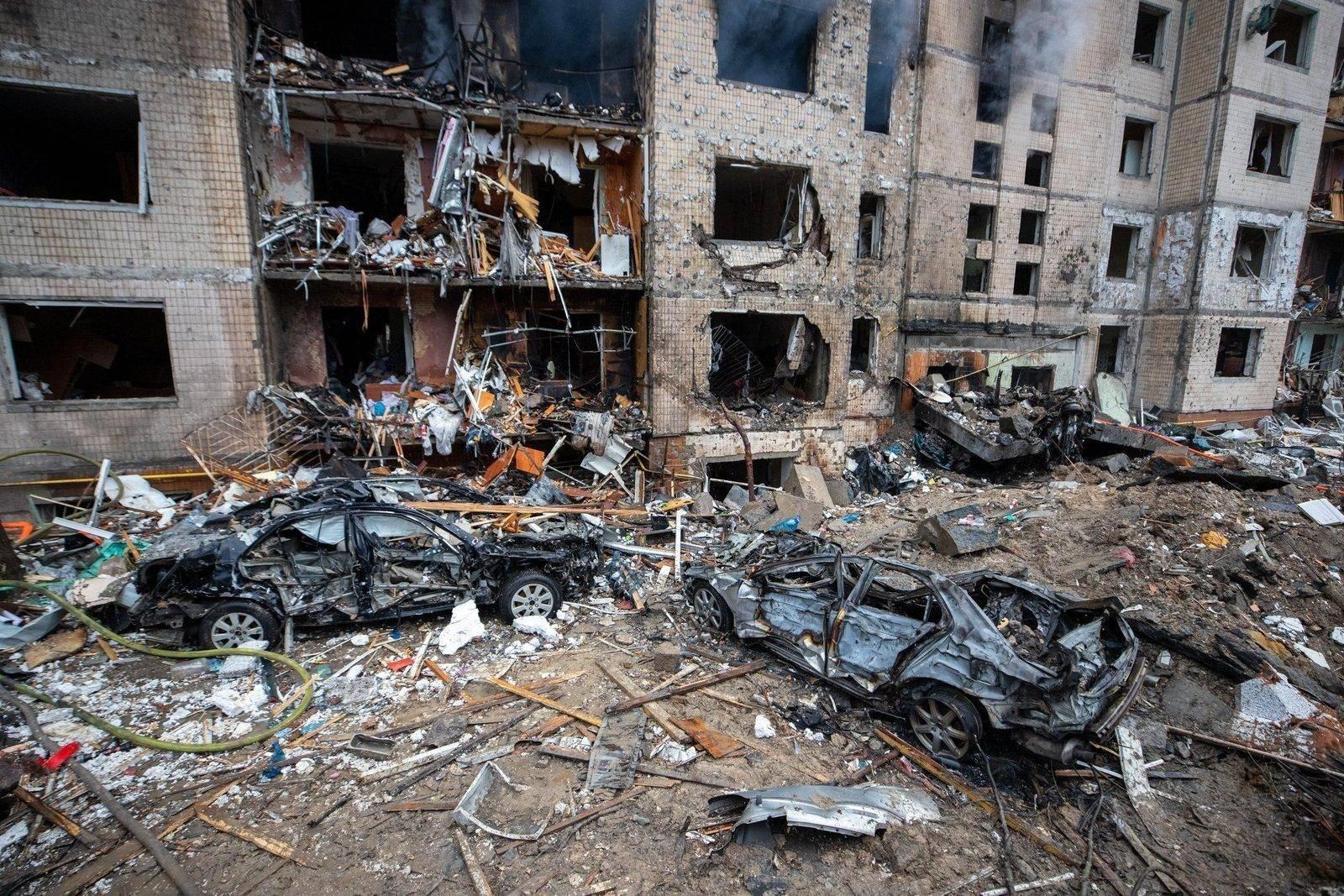
Russia fired 16 ballistic missiles in several waves at Kyiv and its region overnight into Monday, October 19, 2026, plus 200+ drones — including jet-powered Shaheds — from Kharkiv and Dnipro in the east to Odesa in the south and Volyn and Rivne in the west, Zelenskyy said, in one of Moscow's broadest air assaults in months.
The main target was the power grid: 10+ energy facilities damaged across eleven regions — Vinnytsia, Volyn, Kirovohrad, Kyiv, Mykolaiv, Zhytomyr, Khmelnytskyi, Kharkiv, Ternopil, Odesa, Rivne — at least 550,000 households losing electricity, heat and water cut in places. Repair crews worked through the morning.
"Another Russian ballistic missile attack came in several waves overnight, and once again, there was no early warning from our partners," Zelenskyy wrote on Telegram. A clinic, a school, a metro station and homes were damaged in the capital; officials said a 21-year-old woman was killed in Kyiv and two more people died in Kryvyi Rih.
Russia's Defence Ministry said its forces had carried out a "massive strike" on what it called military-industrial targets: a data centre, a drone-component logistics hub, a drone-parts plant and a missile depot.
Two independent wires and Ukraine's own air force establish the scale: Zelenskyy's 16 ballistic missiles and 200+ drones, the air force's tally of 269 drones (Kyiv Post). Reuters from Kyiv and the Associated Press describe the same geography and casualty outline.
Air force spokesman Yurii Ihnat gave the warning gap its precise shape: no warning before the first ballistic strike, information before a second. "For some reason, no information was received the first time, a matter our experts are investigating together with our partners, as this is not the first time," he told Ukrainian television. The Sun reported a US warning did arrive — around 3am, too late to matter.
Zelenskyy framed the missing warning as part of a wider pattern of faltering support. "When deliveries of missiles for Ukraine's air defence are blocked while Russia is granted relief or delays in sanctions, this is, unfortunately, a denial of reality on the part of our partners," he wrote. Reuters reported he also accused the US of slowing vital supplies at Defense Department level, with political air-defence agreements unimplemented at working level.
Washington's reply was flat: Trump says US intelligence to Kyiv never stopped; Rubio, in Uzbekistan on Monday, said "There has been no pause," claimed no knowledge of the night's attack, and told Zelenskyy to "focus" on ending the war. Ukraine's foreign minister, in Warsaw, suggested new Russian weaponry may explain the detection failure.
The AP-documented backdrop is a fraying support architecture: waived US sanctions on Moscow plus a Russian diesel import deal; military-grade Starlink limits choking Ukrainian drone ops; and a severe Patriot shortage. Western intelligence sharing has helped Ukraine counter Russian ballistic missiles for over four and a half years.
Why the warning did not arrive is the central unknown, and the public evidence does not settle it: a technical detection failure possibly linked to new Russian weaponry; a late warning, consistent with the reported 3am American alert; or a deliberate pause, which Washington denies. Nothing public establishes deliberate withholding.
Casualty and damage figures are consolidating. Reuters: a woman killed in Kyiv, two dead in Kryvyi Rih. The Kyiv Post: two dead in Kyiv and the nearby region plus two in Kryvyi Rih, eight injured in the capital. A later Ukrainian update put 28 substations and energy sites hit against the initial "more than 10 facilities" — and 550,000 households was an initial count, not a verified tally of homes still disconnected.
Whether Trump's failed energy ceasefire can be revived, or the reported Putin proposal for a Trump–Xi summit will materialize, is unknown. The sanctions waiver that angered Congress and the stalled Patriot deliveries will be decided in Washington, not Kyiv.
Read through the 5D lens, the strike matters less as a single night's damage than as a stress test of the architecture that keeps Ukraine alive. Geopolitically, the early-warning pipeline is the load-bearing trust mechanism between Kyiv and Washington: Ukraine has relied on American intelligence to detect ballistic launches for nearly the entire war. Whatever caused the gap, it is now a political fact — Zelenskyy has made it one publicly, and Kyiv had already complained of a missing American warning last week.
Economically, the target set is the point: Russia's winter grid campaign is designed to deny Ukrainians power, heat and water and wear down public support. Each strike degrades the repair base itself — crews, spares, the calendar — with winter approaching. A US deal to import Russian diesel while Ukrainian cities go dark feeds Kyiv's "denial of reality" charge.
Structurally, the night exposed two hard constraints at once: the warning pipeline and the interceptor pipeline. Early warning without Patriots buys minutes without the means to use them; Patriots without warning buy hardware without the cueing to fire. Zelenskyy's complaint links both deliberately — blocked missile deliveries and missing warnings as a single failure of partnership. Our reporting has tracked Russia's earlier major assaults on the energy system and the American-demanded energy ceasefire that was supposed to stop them.
Three hypotheses. Technical: Ukraine's foreign minister blamed new Russian weaponry, and previous Kyiv strikes saw explosions before air-raid alerts sounded. Late warning: best documented — a US alert arrived around 3am, too late to matter, suggesting friction, not shutoff. Deliberate pause: denied outright by Washington ("there has been no pause") with no public evidence; the FT's earlier reporting on threats to curb sharing over refinery strikes was leverage in a previous dispute, not proof about this night.
The honest verdict: the cause is undetermined, and the political effect won't wait for the technical answer. Zelenskyy has turned an intelligence question into a public indictment, fusing the missing warning with blocked interceptors and sanctions relief in one charge — to make the gap cost Washington enough that the pipeline gets fixed.
Ballistic missiles compress defence into minutes, and minutes are all early warning buys. Without cueing, even a stocked Patriot battery fires blind; with cueing and no interceptors, the warning is a siren with nothing behind it. Ukraine is now short on both — warning pipeline publicly disputed, interceptor pipeline throttled at Pentagon level, drone war choked by military-grade Starlink restrictions.
First, the grid math compounds: 550,000 households was the initial count, and each strike lands on a system with fewer spares and less repair time before winter. Russia's campaign is attritional by design — it need not destroy the grid in a night, only keep it from recovering between nights.
Second, the Washington blowback is bipartisan fuel. The sanctions waiver and diesel deal had already angered Congress; a public Ukrainian accusation of failed American warnings — answered by the Secretary of State telling Zelenskyy to "focus" on ending the war — turns a policy disagreement into a televised rupture.
Third, the mirror image: Ukraine's deep strikes on Russian energy — St. Petersburg's oil terminal ablaze, 1,000+ drones in a weekend (tracked in our reporting). Moscow calls its strikes military-industrial; Kyiv lists clinics, schools, metro stations. Both sides now trade energy infrastructure for leverage.
The immediate race is the repair race, and the testable question is whether the next Russian strike arrives with a warning or without one — the most honest indicator of whether October 19 was a glitch, a delay, or a decision.
Diplomatically, the energy ceasefire is the open file. Trump's demanded truce failed; whether Washington tries to revive it — and what it offers or withholds for Moscow's signature — will shape the winter. The reported Putin proposal for a Trump–Xi summit adds a variable, though it remains a report, not a scheduled meeting.
And in Washington, the sanctions waiver and slowed air-defence deliveries are now linked in public debate to a night when half a million Ukrainian households went dark. What the administration does with the waiver — and the Pentagon-level holds Zelenskyy described — will be read in Kyiv as the answer to his Telegram question: is the partnership still real, or only described as real?
The Western wires frame the night as a military event and a diplomatic rupture at once. The Associated Press leads with the assault's breadth and the "no early warning" charge, then widens to the Washington context — the sanctions waiver, the diesel deal, the Starlink limits, the Patriot shortage. Reuters, from Kyiv, adds the Pentagon-level detail: slowed vital supplies, unimplemented air-defence agreements.
In the East Asian information environment, the strike arrived first as a wire, not as original reporting: Malaysia's Media Selangor carried the Reuters dispatch within hours. Searches of CNA, NHK, Kyodo News, the South China Morning Post and the Straits Times found no independent East Asian original reporting at publication time. The eastern stake is structural — what the Black Sea energy war signals about escalation management and American guarantees.
The Global South reported with its own newsrooms. India's The Hindu published a full original account; Al Jazeera had Audrey MacAlpine reporting from Kyiv on the missing American warning; Nigeria's Naija Times carried the AFP wire (Rubio's denial came from Uzbekistan); India's 7globe framed a Zelenskyy-versus-Rubio standoff. The southern reading is unsentimental: another night in which a smaller country's grid absorbs the shock of great-power bargaining.
On Telegram on October 19, 2026, Zelenskyy wrote: 'Another Russian ballistic missile attack came in several waves overnight, and once again, there was no early warning from our partners.' Air force spokesman Yurii Ihnat added precision: no warning before the first ballistic strike, but information before a second attack — a gap Ukrainian and American specialists are now jointly investigating.
Russia fired 16 ballistic missiles at Kyiv and the surrounding region and more than 200 drones — 269 by the Ukrainian Air Force's count — from Kharkiv and Dnipro in the east to Odesa in the south and Volyn and Rivne in the west. More than 10 energy facilities were damaged across 11 regions, cutting electricity to at least 550,000 households, with heat and water interrupted in places.
Russia's Defence Ministry described a 'massive strike' on military-industrial targets in the Kyiv region: a data centre, a logistics hub storing drone and cruise-missile components, a drone-parts plant, and a locomotive depot where missiles are stored. Ukraine's damage ledger differs: energy infrastructure plus a medical clinic, a school, a metro station and residential buildings.
President Donald Trump says the United States has not stopped providing intelligence to Kyiv. Secretary of State Marco Rubio, speaking in Uzbekistan on October 19, said 'There has been no pause,' added that he had no information about the previous night's attack, and told Zelenskyy to 'focus' on ending the war. Ukraine's foreign minister, in Warsaw, suggested new Russian weaponry may explain the detection failure.
Russia's grid campaign is attritional: each strike degrades substations, repair crews and spare stocks with winter approaching, and the 550,000-household outage was only the initial count. The deeper damage is to the support architecture — the warning pipeline publicly disputed, Patriot interceptors throttled, Starlink restricted — the compound shortage making the next strike harder to blunt.
