Serhii “Flash” Beskrestnov told the BBC that Ukrainians have died because Kyiv is no longer reliably receiving American warnings of incoming Russian strikes — and suggested Washington may be using the disruption as leverage. The White House denies any change; Marco Rubio denies any pause.
Published 19 October 2026 · 19:14 GMT
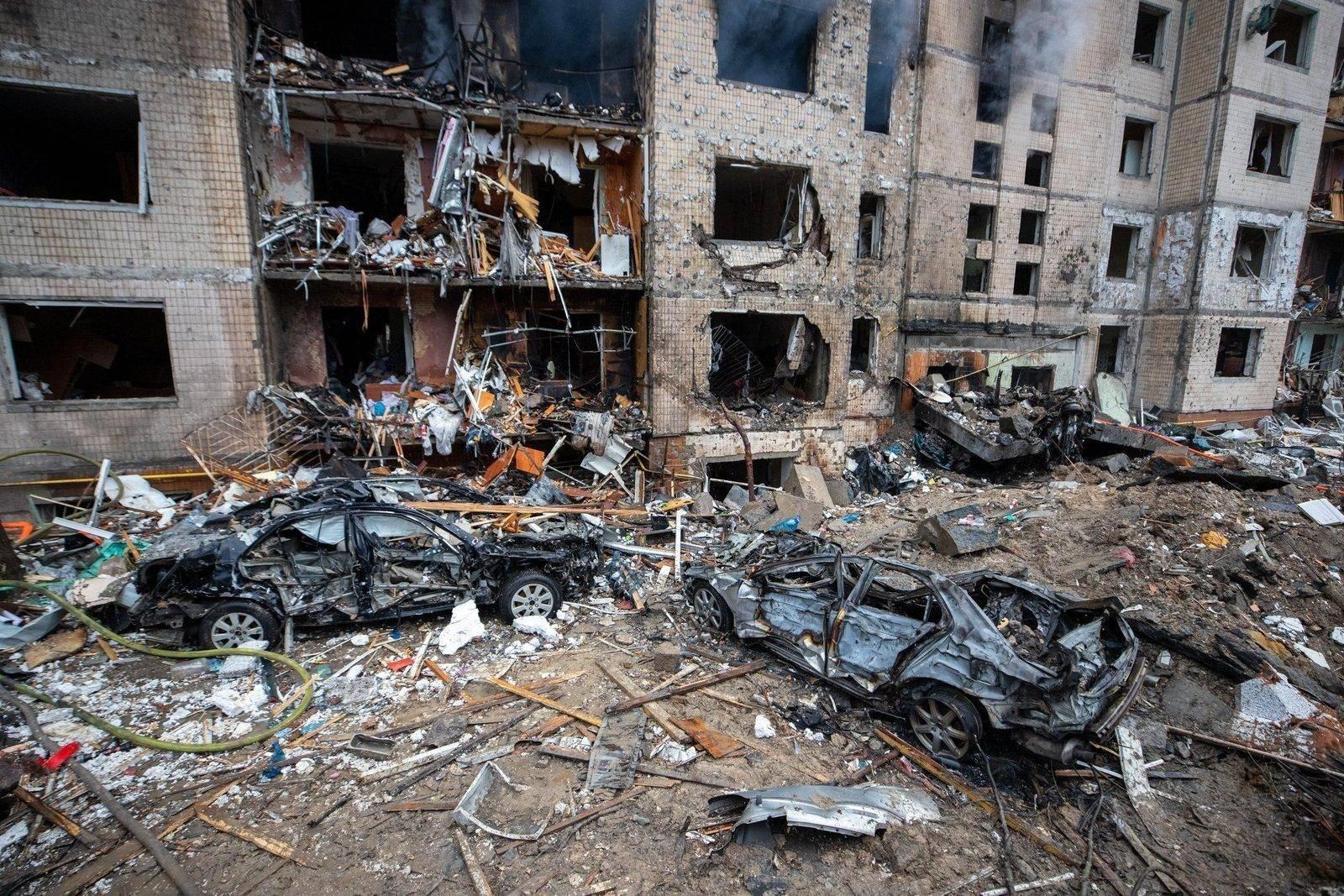
Ukrainians have died because Kyiv is still not receiving reliable American warnings of incoming Russian attacks, a key adviser to President Volodymyr Zelenskyy has told the BBC — the bluntest claim yet in a dispute that has sunk US-Ukraine relations to a new low. Serhii “Flash” Beskrestnov, who advises Zelenskyy on military technology, said lives had been lost for lack of time to warn citizens of ballistic missile strikes. “It's dangerous… I think it's really very bad… People [have] already died,” he said in the interview, published on Monday, October 19, 2026.
The accusation lands one day after Zelenskyy himself told NBC's Meet the Press that American intelligence sharing had been restored after a three-day interruption — “We are very thankful for this,” he said. “Only [the] United States has this unique intelligence to tell our side when Russia uses ballistic missiles.” Beskrestnov's account undercuts that reassurance: American intelligence, he told the BBC, continued to be incomplete and inconsistent. “Sometimes we receive this information before the attack, another time we [do] not,” he said.
The interview followed another violent night. On Monday morning Zelenskyy wrote on social media that overnight, two ballistic missile attacks had been reported on the capital — “one without warning, the second with only minimal time to take shelter.” The Hindu, carrying AFP reporting, put the wave at 16 ballistic missiles on the Kyiv region and more than 200 drones nationwide.
The reporting establishes this much. Beskrestnov gave the BBC an on-the-record interview published October 19 in which he said Ukrainians had died for lack of timely warnings, and that the American feed stayed unreliable after Zelenskyy's restoration announcement. His most striking detail: “And for example, last night we received it, but… one minute before the attack.” He added a careful qualifier of his own: “Intelligence data keeps flowing, and the issue is solely with the air raid alert component.”
On the American side, the denials are categorical. The White House said there had been no changes to intelligence sharing with Ukraine. Secretary of State Marco Rubio said Monday there had been no “pause” — “I don't know where [Zelenskyy is] getting these things” — while mentioning “a software problem involving their early warning system” a few nights earlier. A White House official, speaking on background, said there were no changes to intelligence-sharing operations and that the US has provided more aid to Ukraine than any other country.
The parallel dispute over satellite communications is independently documented. Last week Starshield, the military version of Starlink, capped mobile Ukrainian units at 100mph (160km/h), curbing drone interceptions and mid-range drone strikes. Elon Musk said last week that the US government ultimately controls access to Starshield, which was designed for the Pentagon; Donald Trump has denied involvement. Ukraine's charge d'affaires in Washington, Denys Sienik, confirmed “speed restrictions” on moving Starlink terminals to RFE/RL; two officials said the cap remained in place.
The central unknown is intent. Beskrestnov told the BBC the simultaneous disruption of intelligence warnings and Starlink connectivity was “probably” deliberate American pressure — Washington telling Kyiv, as he put it, to “have the conversation, negotiation with Russia.” Washington denies any deliberate action, and Rubio's “software problem” offers a third possibility — a technical failure. None of the three accounts has been independently proven.
We also do not know whether Beskrestnov's casualty claim can be tied to specific strikes. He did not name the dead, and the BBC did not independently verify the attribution. What is documented is that people are dying: Kyiv's mayor said a 21-year-old woman was killed in the Desnianskyi District in the overnight wave, and two more died in Kryvyi Rih. Whether earlier warnings would have saved them is, for now, the adviser's assertion — not an established fact.
Finally, the current state of the feed is contested. Zelenskyy said on October 18 that sharing had been “de-blocked” and that “now it works.” Beskrestnov said on October 19 that it arrives inconsistently, sometimes a minute before impact. Both men speak for the same government, 24 hours apart — and their accounts do not fully agree.
Ballistic missiles are the threat for which minutes matter most. They travel at extreme speed, leaving defenders a narrow window between launch detection and impact — the precise window American satellite intelligence is built to provide. Zelenskyy says only the United States holds this warning capability, and European partners cannot fully replace it. If the feed is unreliable, cities lose the one input that turns a ballistic strike from surprise into survivable event: the siren sounding in time.
The stakes go beyond one night's attacks. The dispute sits inside a wider rupture: a row over Washington's arrangement to import Russian oil, Ukraine's strikes on Russian refineries, and an American demand that Kyiv halt them. When intelligence becomes — or is perceived to become — an instrument of pressure rather than a standing commitment, every US security partner on earth recalculates. That is why Beskrestnov's “probably deliberate” matters more than the casualty claim: it is an ally publicly accusing Washington of converting protection into leverage, in real time, under missile fire.
Strip away denials and outrage and three facts remain. First, the warning pipeline narrowed exactly when Washington wanted something from Kyiv — a halt to refinery strikes — widened once Kyiv complied for three days, then narrowed again when Kyiv resumed. Coincidence is possible; the pattern is doing heavy work. Second, the pressure — if it is pressure — runs through irreplaceable infrastructure: satellite early warning and Starshield are American proprietary systems, and Beskrestnov concedes Ukraine's own radars give only limited warning. Third, the leverage is deniable by design — a “software problem,” an inconsistency, a minute-before-impact warning that technically counts as sharing.
The 5D picture: geopolitically, Washington shows its support has terms — demonstrated on Ukrainian cities; economically, the trigger is the refinery campaign and the oil-price politics behind it; demographically, the cost lands on Kyiv civilians, not negotiators; historically, it echoes past episodes of metered intelligence to steer a client — except this one is narrated live, by the client, to the BBC; technologically, it exposes the single-point-of-failure risk of a war effort built on another country's satellites. Beskrestnov's answer — seeking “an alternative for Starlink, not only for air defence” — is a country pricing in abandonment.
The second-order effects are already moving. Ukraine is accelerating alternative communications and leaning on European intelligence that Zelenskyy admits cannot fully substitute for the American feed — diversification that, if it works, permanently shrinks Washington's leverage. The Congressional Ukraine Caucus's warning that restrictions endangering civilians “will not be accepted by Congress” opens a domestic American front: the White House may face legislation constraining its ability to throttle support. For other US partners — from Taipei to Warsaw — the episode is a live demonstration that American intelligence sharing can be conditioned on political compliance, and defence planners will price that risk into every future procurement decision. And inside Ukraine, the public split between the president's “now it works” and his adviser's “one minute before the attack” feeds the domestic narrative, already visible after the October 12–13 strikes, that Kyiv is being asked to absorb costs for a negotiation it did not choose.
Zelenskyy hopes for direct US talks this week and has floated a trilateral with Vladimir Putin on US soil at December's G20 — a measure of how far Kyiv will go to stabilise the relationship. Rubio acknowledged the Starlink restrictions are “under discussion” with Kyiv, suggesting a technical fix is negotiable even as the intelligence question festers. Watch three things: whether the early-warning feed stabilises into something Kyiv calls reliable; whether the Starshield speed limit is lifted or merely eased; and whether Russia, reading the same disarray, intensifies the energy campaign — the overnight wave into October 19 and the Starshield cutoff suggest Moscow already understands the leverage dynamic. If the warnings keep arriving a minute before impact, Beskrestnov's “probably deliberate” will harden from suspicion into doctrine — in Kyiv, and in every capital watching.
Western wires treated the interview as a credibility crisis inside the alliance: the president thanking Washington for a restored feed on Sunday, his adviser describing a still-broken one on Monday. American coverage centred on the denials — Rubio's “no pause,” the White House's “no changes” — and on the bipartisan Congressional Ukraine Caucus, alarmed by the Starlink curbs as “unconscionable” where they endanger civilians. The through-line in London and Washington: an ally's trust in American word is now itself the story, and Congress may not let the White House leave it there.
Eastern coverage read the episode as the latest turn in an energy war. Poland's Centre for Eastern Studies traced it to October 12–13 — Kyiv's TEC-4 plant hit with no partner warning — and to October 14, when Zelenskyy revealed Washington had threatened an intelligence suspension unless refinery strikes stopped. Bangladesh's TBS News , carrying Reuters, foregrounded the restoration — “now it works” — while Ukrainian outlets stressed what had not changed: the refinery-strike ban lifted, the Starlink limits persisting, Kyiv openly seeking alternative communications.
The Global South's reading, carried by India's The Hindu via AFP, is stripped of alliance sentimentality: 16 ballistic missiles, 200-plus drones, energy sites burning across 11 regions — and a patron whose help arrives on political conditions. For audiences in New Delhi, Dhaka and beyond, the dispute vindicates an old scepticism: American security guarantees are extended, and can be throttled, at Washington's discretion. Notably, no Global South outlet covered the Beskrestnov interview itself — the South watches the missiles and the leverage, not the BBC studio.
Serhii “Flash” Beskrestnov, who advises Ukraine's president on military technology, told the BBC on October 19 that Ukrainians have died because Kyiv is not reliably receiving US warnings of incoming Russian strikes. He said the feed was incomplete and inconsistent — “sometimes we receive this information before the attack, another time we [do] not” — and that one recent warning arrived “one minute before the attack.” He also suggested the disruption was “probably” deliberate American pressure.
It depends who you ask. Zelenskyy told NBC on October 18 that sharing was interrupted for three days and then “de-blocked,” adding “now it works.” But his own adviser told the BBC the next day that warnings remained unreliable. The White House says there were no changes at all, and Secretary of State Marco Rubio said Monday there was no “pause,” while mentioning a “software problem” in the early-warning system. The facts are disputed.
Last week, Starshield — the military version of Starlink, provided to Ukraine under a US Defense Department contract — limited mobile terminals to 100mph (160km/h), disrupting drone interceptions and long-range missions. Elon Musk said the US government controls Starshield access; Donald Trump denied involvement. Ukraine's charge d'affaires in Washington confirmed “speed restrictions” to RFE/RL, and Rubio acknowledged the limits are under discussion with Kyiv.
Zelenskyy has said only the United States has the satellite intelligence to give advance warning of Russian ballistic missile launches, which travel too fast for conventional radar to catch in time. European and other partners provide intelligence, but Kyiv says their capabilities cannot fully replace the American feed. Without it, air-raid sirens may sound only after — or minutes before — impact, which is why Beskrestnov links the gap to deaths.
