French police arrested a 34-year-old ultra-left activist already on the fiche S watchlist in a dawn RAID raid at Val d'Issoire on Tuesday, naming him the principal suspect in the October 17 arson that destroyed Limoges's 1883 town hall — as the counter-terrorism sub-directorate takes up an investigation now testing the line between riot and insurrection.
Published 21 October 2026 · 04:49 GMT
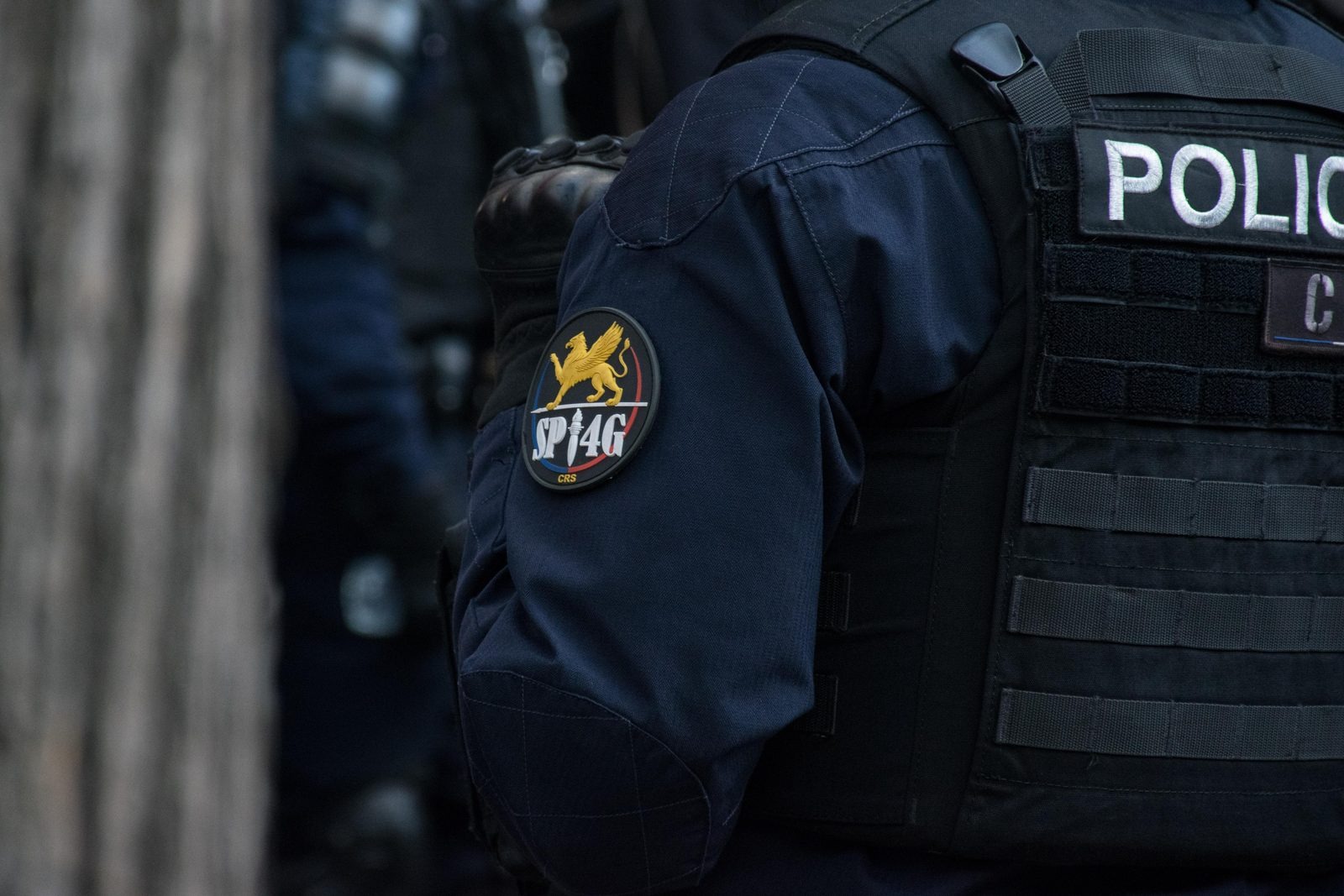
At about 6:15 on the morning of Tuesday, October 20, 2026, officers of the Bordeaux branch of RAID, the national police's elite intervention unit, arrested the man investigators call the principal suspect in the arson that gutted Limoges town hall three days earlier, during the nationwide protest wave of October 17. The arrest took place at his parents' home in Val d'Issoire, a small Haute-Vienne commune some 50 kilometres from Limoges. Limoges prosecutor Émilie Abrantes confirmed it.
The suspect, identified by the press as Hodei C.D., 34, had been pinpointed by France's territorial intelligence services. Police sources describe him as an ultra-left activist already on the fiche S security watchlist, previously known to the authorities for violence against persons exercising public authority. He was placed in police custody for questioning.
The arrest came 72 hours after masked groups broke into the 19th-century hôtel de ville on the margins of a demonstration that drew some 5,000 to 5,500 people to Limoges — and turned a republican symbol into a burning shell.
The suspect is 34, from the neighbouring Creuse, arrested at his parents' home. He is described as an ultra-left militant already fiché S, previously known for alleged violence against police and public officials. Neighbours, speaking anonymously, described a temporary construction worker engaged in environmental activism — a profile matching the radical-ecology currents the intelligence services have been watching in the region.
The fire's path is documented. On Saturday evening, as the demonstration thinned, organised groups smashed the town hall's windows, forced entry through the cellars and started the blaze there. Flames reached the roof timbers of the listed monument inaugurated in 1883; the roof was destroyed and the 43-metre campanile collapsed. Haute-Vienne prefect Maurice Barate called it a "heritage catastrophe". Limoges mayor Guillaume Guérin told the Populaire du Centre the suspect was "probably the mastermind of this operation" — language the evidence will now have to support.
The investigation runs on two tracks: Limoges prosecutors opened a case for "destruction of property by dangerous means as part of an organized group", carrying up to twenty years' imprisonment — and the file was also seized by the counter-terrorism sub-directorate (SDAT), jointly with the Limoges organized-crime division. Justice Minister Gérald Darmanin said the National Anti-Terrorism Prosecutor's Office was weighing a full takeover.
An arrest is not a verdict, and the file is full of open doors. First: did he act alone? One prosecuting source said it was unlikely — the cellar entry, the timing and the scale of the blaze all suggest coordination — but no accomplice has been named and no network has been publicly identified. Second: was the town hall a chosen target or an opportunistic escalation as the demonstration broke apart? The SDAT's involvement is designed to answer exactly that.
Third: the suspect has made no public statement, and no motive beyond the milieu attribution has been released. Fourth: the prosecutor's choice — whether the National Anti-Terrorism Prosecutor's Office takes over — is pending, and with it the legal character of the whole affair. One caution on the record: early wires put the suspect's age at 40; the consolidated AFP, Le Figaro and Times reporting settles on 34, and the authorities have released only the initial Hodei C.D. — the full identity remains officially unconfirmed.
The Limoges town hall was no ordinary building: a listed neo-renaissance monument inaugurated in 1883, the seat of republican local power for 143 years through two world wars. Its burning, filmed as the campanile toppled into the flames, became the defining image of the October 17 unrest — France's worst street violence in years, an escalation the Bureau has tracked since school buildings went up in flames.
The scale of that Saturday explains the state's answer. Roughly 2,400 people were arrested nationwide and about 1,000 police and gendarmes were injured. President Emmanuel Macron, in an October 18 televised address, spoke of "anger and shame" and promised rioters would "pay", while separating legitimate protesters from "those who destroyed, smashed, and looted". Targeted curfews followed in Paris's Place de la République and Les Halles, in Lille, in central Nice, in Bordeaux; demonstrations were banned in parts of Marseille. Prime Minister Sébastien Lecornu, who has not ruled out a state of emergency, said the curfews had delivered "a night of calm".
The true significance is this: the anti-terrorism apparatus has been switched on for a town-hall arson. France's post-2015 legal reflexes applied to domestic political violence — the ultra-left milieu rather than jihadist networks — marks a threshold. Whether the courts sustain that framing will shape the state's posture toward every militant fringe of the protest movement now gathering for the next rounds.
The SDAT does not investigate graffiti. Its seizure of the Limoges file is a legal and political signal at once. The charge — destruction by dangerous means in an organized group — already carries twenty years; the anti-terrorism overlay adds investigative powers and, crucially, reclassifies the act: from criminal damage with political coloration to an attack on the state's foundations. A town hall is the house of the commune, the republic's smallest unit; burning it reads, to the institutions, as an attack on republican architecture rather than property.
The political signal travels further. The French debate over the ultra-left has swung between dismissal and alarm, and the Millevaches plateau is cast by the right as a sanctuary of radical ecology. With a restive street and a presidential calendar approaching, the government has every incentive to let the SDAT's involvement speak: the state is hunting a conspiracy, not policing a riot. The risk is the mirror image: each application of the post-2015 apparatus to domestic political violence stretches the definition of terrorism a little further — a ratchet civil-liberties lawyers have warned about since 2015.
The aftershocks are already priced in. Rebuilding the town hall will take years — the mayor speaks of a "Notre Dame-style" reconstruction and has threatened to resign if the state does not fund it, turning a heritage disaster into a fiscal negotiation between commune and state. The weekend's looting left thousands of businesses damaged. The curfew regime — Paris, Lille, Nice, Bordeaux, Marseille — is designed to break the rhythm of weekend escalation without the political cost of a full state of emergency.
The deeper effect is electoral: student anger over schools, union and cost-of-living grievances, the yellow-vest remnant — a coalition of the disaffected every presidential camp now courts or condemns. And the street has its calendar: further protests are called for Saturday, the first test of whether curfews, convictions and the Limoges arrest restored deterrence — or merely postponed the next fire. The Bureau has tracked this movement from its schoolyard origins through the suspension of stun grenades to the interior minister's near-resignation; the arc is still rising.
Three clocks are now running. The custody clock: up to 96 hours in organized-crime and terrorism cases, giving investigators until the weekend to question the suspect on accomplices and motive. The prosecutor's choice: whether the National Anti-Terrorism Prosecutor's Office formally takes over — the decision that will fix the charges, the court, and the case's political meaning. And the street's calendar: Saturday's planned demonstrations will show whether the state's show of force — curfews, convictions, a dawn raid on the fiche S milieu — has re-established the boundary, or whether Limoges was a prelude. Watch the prefectures' Friday-evening orders; they will tell you what the state expects.
The Western lens Western coverage reads the arrest as order reasserting itself . Le Figaro and Le Parisien reconstruct the manhunt in procedural detail — the intelligence identification, the 6:15 raid, the fiche S status — framing the SDAT seizure as the logical answer to an attack on a republican symbol. The Times widens the aperture to the show of force: curfews, 149 people already convicted and sentenced for weekend violence, Lecornu not ruling out emergency powers.
The Eastern lens From the East, the story arrived as India's The Hindu carried it — the AFP wire repackaged for a developing-world readership as a governance story : a rich democracy struggling to police its own streets. The Eastern interest is state capacity , not the suspect's ideology. For East Asian capitals, a France deploying RAID and its anti-terror directorate against domestic arsonists is a data point on European stability : the eurozone's second economy, its bond spreads, its political line ahead of its own electoral calendar.
The Global South lens From the South, Al Jazeera 's Paris reporting keeps its eye on the movement, not the manhunt — tracing the unrest to the school blockades where teenagers demanded teachers who show up and buildings that are not falling apart, a grievance that widened into a national cost-of-living revolt. From this vantage, the burning town hall carries a colonial echo the French state cannot escape: a policing apparatus built for the banlieues, now turned on metropolitan France itself. The southern question is the one Macron's speech left unanswered — whether "anger and shame" at the violence will be matched by an answer to the anger that filled the streets first .
French police arrested Hodei C.D., 34, at his parents' home in Val d'Issoire on the morning of October 20, 2026, in a RAID operation. Identified by the territorial intelligence services, he is described as an ultra-left activist already on France's fiche S security watchlist and previously known for violence against persons exercising public authority. He is the principal suspect in the October 17 arson, not a convicted perpetrator.
The investigation, opened for destruction of property by dangerous means as part of an organized group, was seized by the counter-terrorism sub-directorate (SDAT) alongside the Limoges organized-crime division. A town hall is a republican symbol, and the organized, dangerous-means character of the attack meets the threshold for anti-terrorism tools — extended custody, surveillance, intelligence pooling. The National Anti-Terrorism Prosecutor's Office is considering taking the case over entirely.
On the evening of October 17, 2026, intruders smashed the windows of the listed 19th-century hôtel de ville — inaugurated in 1883 — forced entry through the cellars and started a fire there during the nationwide cost-of-living protests. The flames spread to the roof timbers; the roof was destroyed and the 43-metre campanile collapsed. The prefect called it a heritage catastrophe, and the mayor speaks of a Notre Dame-style reconstruction.
The suspect's police custody can run up to 96 hours in organized-crime and terrorism cases, giving investigators until the weekend to question him on accomplices and motive. The key decision is whether the National Anti-Terrorism Prosecutor's Office formally takes over, which would fix the charges and the trial court. Meanwhile, further protests are planned for Saturday — the first test of the curfews, the convictions, and the deterrent effect of the arrest.
