The French president rejected Interior Minister Laurent Nunez's offer to step down over the weekend's violent protests, acknowledging failures in intelligence and preparation while ordering new security methods. The decision keeps the embattled minister in charge of restoring order as France faces some of its worst urban violence in years.
Published 19 October 2026 · 07:05 GMT
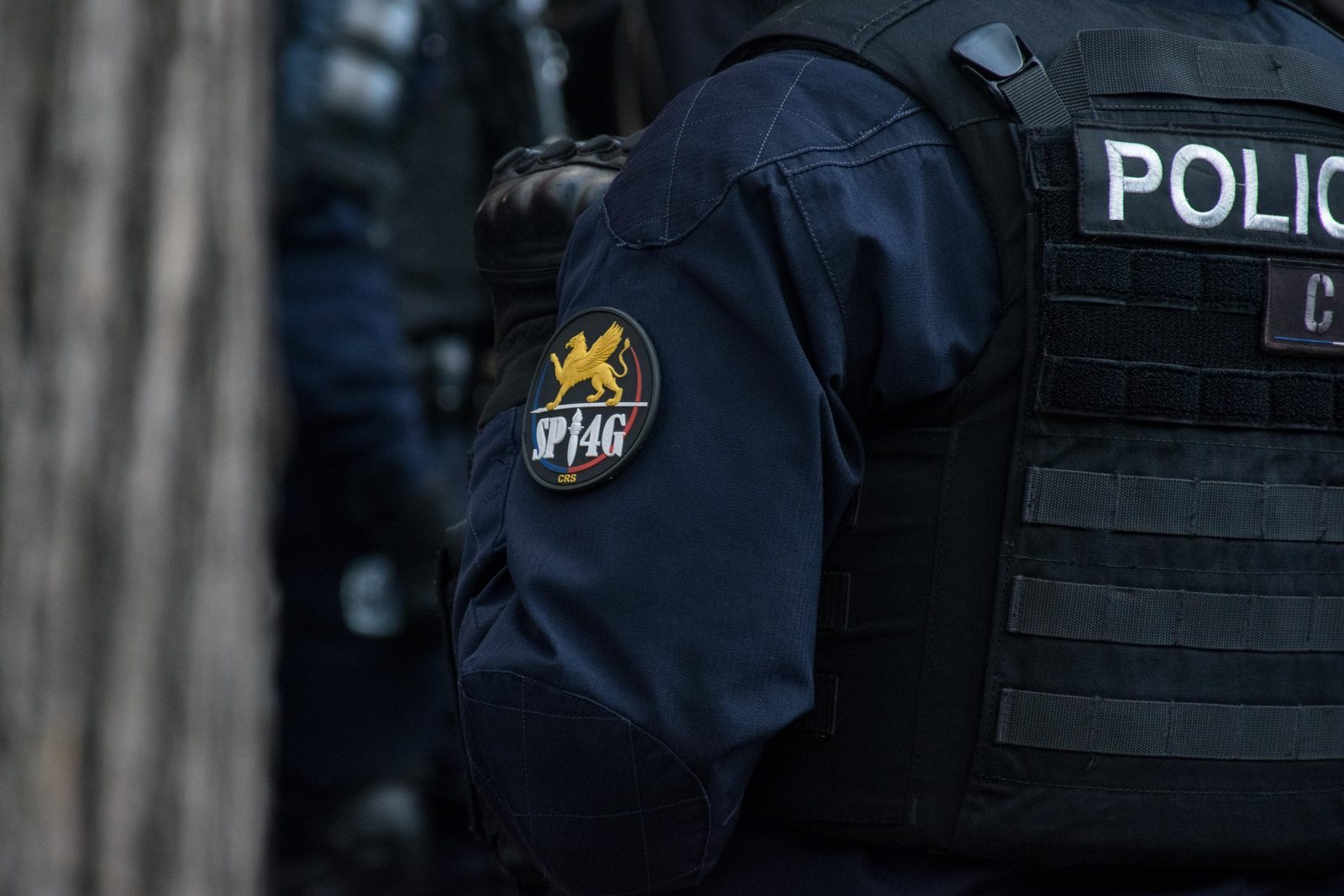
French President Emmanuel Macron has refused the resignation of Interior Minister Laurent Nunez after a weekend of violent protests over the cost of living, the Elysee palace announced on Monday, October 19, 2026.
"The interior minister submitted his resignation to the president on Sunday," the statement said. "Given the necessity for continued leadership of law enforcement at this time, the president refused."
Macron said Nunez should stay on to preserve the chain of command within the police and security forces, and ordered him to "put in place new operational methods for security forces" to handle the crisis — including new approaches to deal with looters as quickly as possible.
Saturday's protests, called by labour unions, student organisations and activists seeking to revive the "yellow vest" spirit of 2018, descended into some of the worst urban violence France has seen in years. Town halls were torched, shops looted and buildings covered in graffiti as violent groups clashed with police. The interior ministry said nearly 2,400 people were arrested on Saturday and almost 1,000 police and gendarmes were injured. More clashes broke out in Paris and Marseille on Sunday, where riot police intervened to prevent attempts to ransack businesses. In Limoges, the historic 19th-century city hall was set on fire; its roof and tower collapsed in flames.
Nunez offered his resignation on Sunday, October 18, after admitting that police had "lost control" in some cities during the weekend unrest. In a France Inter interview he said there had been a "lack of anticipation" in preparations and that he had tendered his resignation "because I felt responsible for everything that happened."
The Elysee confirmed the sequence on Monday morning: the resignation was submitted, and the president refused it, citing the necessity of continued leadership of law enforcement during the crisis.
Macron attached conditions to the refusal. Nunez has been ordered to "take all necessary steps to ensure transparency over the failures in planning and intelligence that led to the violence" and to set up new operational methods for the security forces. The president also acknowledged publicly what the Elysee statement implies: there were "failures in anticipation and intelligence" that allowed Saturday's largely peaceful marches — estimated at around 550,000 people by authorities and 800,000 by organisers — to be hijacked by violent groups.
In his Sunday address, Macron said he felt "anger" and "shame" at the rioting and looting, blamed much of the violence on far-left activists, and promised an examination of the police response. He ordered a review of intelligence gathering and police preparedness, said prefects and mayors will be able to ban certain gatherings where necessary, and promised "exemplary" legal consequences.
We do not know the full findings of the promised review of intelligence and preparedness — who failed, where, and whether the "lack of anticipation" was a resource problem, a doctrine problem or a political one. We do not know whether the 2,400 arrests will translate into the "exemplary" prosecutions Macron promised, or into the usual attrition of dropped cases. We do not know the content of the economic measures beyond the mention of fuel prices, nor whether the week's roundtable will produce anything the unions and student organisations consider worth the name. And we do not know whether Saturday's violence was the peak of this wave or its beginning — the answer to that question will decide whether Nunez's reprieve becomes a footnote or a prelude.
Refusing a resignation is rarer and more revealing than accepting one. By keeping Nunez, Macron is betting that continuity in the security chain of command matters more than the political release valve a sacrificial departure would provide. Opposition politicians have called for Nunez's sacking; accepting the resignation would have been the conventional crisis-management move.
The calculation is twofold. First, operational: replacing the interior minister in the middle of a violent weekend would have decapitated the very command structure managing the response. By refusing the resignation while publicly assigning the blame to "failures in anticipation and intelligence," Macron keeps the minister on probation — useful, accountable, and disposable later if order is not restored.
The deeper stakes lie in what the violence revealed. The protests themselves were about purchasing power, public services and schools — the slow-burn grievances that also fuelled the parliamentary revolt over the 2027 budget and the market anxiety over France's public finances. That a mainstream mobilisation could be captured so quickly by organised violent groups is the intelligence failure Macron must now explain — and why Nunez's "loss of control" admission carries such weight.
Three layers of this story deserve to be separated, because each points to a different French pathology.
The first is policing doctrine. France's approach to demonstrations has swung between under-resourced anticipation and over-forceful reaction for a decade. The Elysee's demand for "new operational methods" is an implicit admission that the current doctrine cannot handle protests that mutate from marches into urban riots within hours.
The second is the intelligence picture. Macron's phrase — "failures in anticipation and intelligence" — is unusually blunt for a presidential statement and points at the services' ability to track organised violent networks riding on the back of lawful demonstrations. The October 6 student protests had already shown how quickly schoolyard mobilisations could harden; the failure to read Saturday's trajectory from that precedent is precisely what the promised review must explain.
The third is political timing. France is simultaneously fighting a fiscal battle in parliament and on bond markets, a school system in open revolt, and now street violence on a scale not seen for years. Whether the sequencing holds depends on the coming nights. A quiet week makes the refusal look like statesmanship; a second violent weekend makes it look like stubbornness, and the resignation question will return with interest.
A note on evidence: the core of this story is a single primary source — the Elysee statement — echoed across outlets. Reuters, CNA, The Hindu, Riviera Radio and Virgin Radio Dubai all orbit the same communique: one evidence chain with wide distribution, not five independent confirmations.
The immediate second-order effect is inside the security apparatus. A public presidential demand for "transparency over the failures in planning and intelligence" is a signal to prefects, police directors and intelligence chiefs that heads may roll below the ministerial level.
The second effect is on the protest calendar. The roundtable Macron promised — students, teachers, lawmakers, unions, business leaders — is meant to drain the legitimate grievances (fuel prices, schools, purchasing power) away from the violent fringe. If it produces tangible measures, the October mobilisation wave may crest; if it produces communiques, the yellow-vest veterans who helped organise Saturday will read it as contempt, and the next national day of action will be angrier.
The third is fiscal. France is already under market pressure over its public finances. A government that must simultaneously fund new security methods, compensate looted businesses and deliver cost-of-living measures is a government whose budget arithmetic gets harder.
The short answer: he survives on probation. The Elysee's formulation makes his continued tenure conditional on results — the new operational methods, the transparency exercise, and above all the maintenance of order in the coming days. A calm week consolidates him; another weekend of burning town halls ends him.
Watch three things. First, the intelligence review: who conducts it, and whether it names names below the minister. Second, the legal aftermath: Macron promised it would be "exemplary," and the speed and scale of prosecutions will signal whether the firmness side of his two-step is real.
Beyond the personnel question, watch the prefects. The new power to ban gatherings where necessary is the most concrete institutional change announced so far — and the most likely to be tested in court and on the streets. How it is used in the next fortnight will define the balance between order and liberty that this crisis has forced back onto the French agenda.
Western coverage, led by Reuters' original Paris reporting and picked up across European outlets, frames the refusal as crisis management under pressure: a president holding the line on security command while conceding intelligence failure. Riviera Radio's France-based reporting adds the domestic political texture — the opposition's demand for a sacking, the televised address, the Limoges fire as the image of the weekend. The Western lens reads this as a governance test: can the French state maintain order without conceding the streets to violent minorities, and can Macron's presidency absorb another "shame and anger" moment without a cabinet casualty?
CNA's Singapore-based reporting and The Hindu's India-facing version present the story through the same Elysee statement but with a cooler distance: this is a European governance failure being watched, not a European tragedy being mourned. CNA's write-up stresses the operational facts — the "lost control" admission, the 2,400 arrests, the 1,000 injured officers — and Macron's demand for new anti-looting methods. The subtext familiar to Asian readers: a Western democracy publicly acknowledging intelligence failure over domestic unrest, a spectacle that inverts the usual direction of governance lectures.
Virgin Radio Dubai's Gulf-based coverage frames the episode around Macron's Sunday address and its dual message — condemnation and concession. For Middle Eastern and Global South audiences, the telling detail is the president's promise of "concrete proposals" from a roundtable of students, unions and business leaders: even Paris, the story implies, must now negotiate with its streets. The south lens also notes what Western coverage downplays — that prefects and mayors gaining the power to ban gatherings is a further centralisation of order-keeping, a measure that would draw scrutiny anywhere else.
Macron said France needs continued leadership of law enforcement during the crisis, and that Nunez must keep a chain of command within the police and security forces. Rather than change the interior minister in the middle of the unrest, the president ordered him to ensure transparency over the planning and intelligence failures and to put new operational methods in place quickly.
Nationwide demonstrations over rising living costs, faltering public services and the state of schools — called by unions, student organisations and activists reviving the yellow-vest spirit of 2018 — turned violent on Saturday. Town halls were torched, shops looted and buildings covered in graffiti as violent groups clashed with police, in some of the worst urban violence France has seen in years.
According to the interior ministry, nearly 2,400 people were arrested on Saturday and almost 1,000 police and gendarmes were injured as clashes between police and protesters, mass looting and fires erupted nationwide. More clashes broke out in Paris and Marseille on Sunday, where riot police intervened to prevent attempts to ransack businesses.
In a televised address on Sunday evening, Macron condemned the destruction, saying nothing justifies, explains or excuses it. He ordered a review of intelligence gathering and police preparedness, said prefects and mayors will be able to ban certain gatherings where necessary, promised exemplary legal consequences for looters and vandals, and announced measures to address economic grievances including fuel prices.
