International Energy Agency chief Fatih Birol told a London summit he sees 'no credible pathway' for energy markets to return to normal next year, as Brent pushes past $111, diesel hits record highs, and the Strait of Hormuz looms as a chokepoint that 'was closed once — it can be closed again.'
Published 21 October 2026 · 03:20 GMT
On October 20, 2026, the head of the institution that manages the industrialised world's oil emergency reserves stood before the Financial Times Energy Transition Summit in London and closed the door on the recovery trade. Fatih Birol, Executive Director of the International Energy Agency, said he saw little chance of a return to normal oil market conditions next year, as the war in the Middle East keeps prices high and supply lines fragile.
His sentence was unambiguous: "I personally don't see any credible pathway that 2027 will be a year of normalisation." Behind it sit months of the agency's own data — disrupted Gulf and Russian supply, diesel at record highs in many markets, and a Strait of Hormuz already closed once this year.
The market heard him. Brent crude traded above $111 a barrel on Tuesday, a five-month high and roughly $40 above where it sat before the hostilities began. Birol added that the agency is ready to coordinate more emergency oil releases if member countries want: "If it is needed... and if our countries consider it's time to push the button, as the International Energy Agency, we are ready to go."
In March, after the US and Israeli attacks on Iran the previous month ignited the current war, IEA member countries committed a record 400 million barrels of crude and oil products from emergency reserves — the largest coordinated release in the agency's history. Birol confirmed that roughly 80% has now been released.
The priority now is diesel. More than 20 million barrels of diesel are being front-loaded — "We're trying to front-load those diesel deliveries," Birol said — because diesel, not crude, is where the pain bites. Global diesel markets could remain tight well into next year, the IEA warned in its latest oil market report, with high fuel prices driving inflation. In the United States, diesel costs have become a talking point two weeks before the November 3 midterm elections.
On shipping, the picture is mixed. Kpler data cited on October 20 put the seven-day moving average of oil flows out of the Middle East at just over 24 million barrels a day, above the pre-war average. But aggregates flatter reality: attacks on ships have been ramping up, and Iran has vowed to take control of tanker shipments through the strait, pushing insurance costs sharply higher.
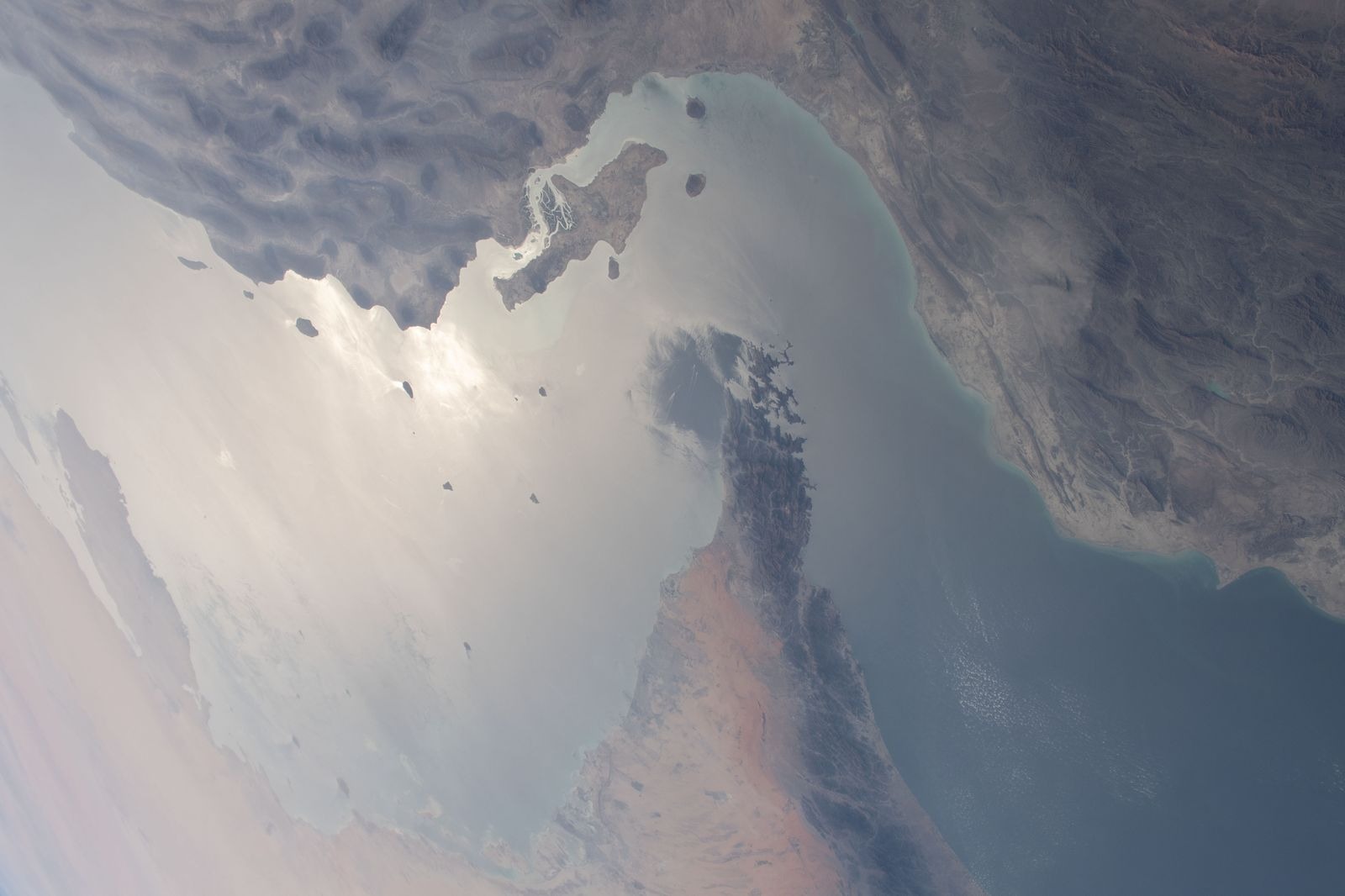
The first unknown is the one Birol named himself: the Strait of Hormuz. It has been closed once; as he put it, "it can be closed again." Before the war it carried roughly a fifth of the world's oil and liquefied natural gas. A second closure would convert a tight market into a broken one instantly, and no reserve release can substitute for a functioning chokepoint.
The second is escalation. Birol warned of overlapping crises in the Middle East and said he could not exclude that IEA governments would "look at the other options" if crises piled up. The US-Iran conflict is unresolved, Iran is signaling preparation for another round of war, and Houthi attacks on Saudi energy facilities continue — not all of them independently confirmed. The direction of travel is toward pressure, not settlement.
The third is diesel itself. Attacks on Russian refineries have compounded the Middle East disruptions; seasonal demand increases and planned refinery maintenance could tighten supplies further. Birol cautions that judging the crisis by crude prices alone — which never reached the $200 a barrel some predicted — is "myopic." The real inflation engine runs on diesel.
This is not a story about barrels and benchmarks. It is a story about the price of everything that moves. Diesel is the fuel of trucks, tractors, trains and fishing boats — the invisible substrate of supply chains. When diesel prices double relative to pre-war levels, as Birol reports they have, the cost bleeds into food, manufactured goods and construction. The IEA's warning that diesel could stay tight well into next year is, in plain terms, a warning that the inflation shock has a second act.
For governments, the politics are immediate: fuel costs have entered the US midterm campaign; in importing countries across Asia, Africa and Latin America there is no election to blame — only the bill. For central banks, an energy-driven inflation pulse is the hardest kind to fight without hurting growth.
And for the climate agenda, Birol issued a second warning that deserves equal billing: the war has pushed climate change down the international policy agenda. "Climate change is sliding down in the international policy agenda despite the number, the frequency, and the intensity of extreme weather," he said. The crisis that proves the cost of fossil-fuel dependence is consuming the political oxygen needed to end it.
Geopolitically, the statement is a status report on a war that has become the organizing fact of the energy system. The US-Iran conflict, the Houthi campaign against Saudi Arabia, and the weaponisation of shipping have fused into what energy press has called the world's largest energy security threat in history. Birol's refusal to bless a 2027 recovery is, in effect, a judgment that none of these conflicts has a negotiated exit on the visible horizon.
Economically, the decisive shift is from crude to products. The 400-million-barrel release — 80% spent — is a finite instrument, and Birol's own arithmetic makes the point: "It's a big thing, 400 million barrels, but it's only 20 percent of the oil we have — 80 percent is in the pocket." Reserves are being husbanded for "the rainy days" — an admission that the agency expects rain.
Demographically, the pain concentrates where population growth is fastest: fuel-importing developing nations, where a diesel shock passes directly into food prices. Historically, the lesson of 1973, 1979 and 1990 was that supply shocks end with demand destruction or diplomacy; neither is yet in sight, and the climate constraint — real this time, as Birol lamented — narrows the easy paths. Structurally, the IEA was built for a world where the West imported and the Gulf exported; it now manages a crisis through that club's reserves while the largest importers — in Asia and the South — sit outside it.
First, the reserve cushion shrinks. Every barrel released from emergency stocks is a barrel unavailable for the next shock. If 2027 brings the overlapping crises Birol fears, the agency's second line of defense will be thinner than its first. Husbanding the remaining 20% "for the rainy days" is sound strategy; the worry is that the days are already rainy.
Second, the insurance market becomes the transmission mechanism. Tanker insurance for Hormuz transits has become a real-time barometer of war risk. Shippers who cannot insure cannot sail; the chokepoint can be effectively closed without a shot fired — by the underwriters' refusal alone.
Third, refining economics invert. When diesel commands crisis premiums and refinery capacity is maxed out, the margin structure of the entire downstream industry shifts. Refiners in safe jurisdictions print money; consumers everywhere pay.
Fourth, the climate slide compounds. The war proves the cost of fossil-fuel dependence while consuming the political capital to escape it. Every quarter the crisis lasts, emergency fossil spending outbids transition investment — and wins.
Marker one: the strait. Watch tanker traffic and insurance pricing through Hormuz, and the Kpler flow data the market now tracks weekly. Any renewed attack on shipping resets the entire outlook within hours.
Marker two: the diesel ledger. The IEA's next oil market reports and the delivery pace of the front-loaded diesel volumes will show whether the product crunch is easing or entrenching. If diesel futures keep climbing into winter, the "normalisation" debate is over.
Marker three: the diplomacy. The US-Iran conflict has no visible exit ramp; the Houthi campaign against Saudi Arabia continues; and attacks on Gulf energy infrastructure have become the war's signature move. A genuine de-escalation — a durable ceasefire, credible guarantees for shipping — is the only pathway to the normalisation Birol cannot see. Everything else is inventory management.
The Western lens Western coverage reads Birol's statement as reserve politics : the IEA signaling to markets and member governments at once — calm about the stockpile, alarm about the trend. Reuters framed the story around readiness for further releases; CNN around the price and the chokepoint. The Western preoccupation is inflation and electoral timing: can the world's coordinated stockpiles carry the market through winter without a second Hormuz shock forcing governments to spend reserves they may need for worse to come?
The Eastern lens A sweep of East Asian coverage — Singapore's CNA, Japan's NHK and Kyodo, the Straits Times, Nikkei — turned up no independent East-language reporting on this specific October 20 statement; the record shows the Reuters wire picked up by Western and Indian outlets. That absence is itself a signal: Asia, the world's largest oil-importing region, is reading the crisis through the wire. The Eastern interest is nonetheless the most exposed of all.
The Global South lens From the South, the story arrives as The Hindu carried it — a major developing-world daily reporting Birol's warning as an import-bill event. For India, Pakistan, much of Africa and Latin America, there are no strategic reserves to cushion the blow and no coordinated release mechanism to join: the IEA is a club of industrialised nations. A prolonged energy crisis is, from this vantage, a tax on development — paid at the diesel pump by farmers and truckers, priced into food imports, absorbed by governments with no fiscal room left.
Speaking at the Financial Times Energy Transition Summit in London on October 20, 2026, IEA Executive Director Fatih Birol said: 'I personally don't see any credible pathway that 2027 will be a year of normalisation.' He warned that several crises could overlap across the Middle East, keeping energy markets unsettled, and said the agency stands ready to coordinate further emergency oil releases if member governments request them.
In March 2026, IEA member countries committed a record 400 million barrels of crude and oil products from emergency reserves in response to the war in the Middle East. About 80% has been released so far, with the immediate priority on front-loading more than 20 million barrels of diesel as quickly as possible. Birol noted the released volume is only about 20% of members' total holdings: '80 percent is in the pocket,' kept for 'the rainy days.'
Crude grabs the headlines, but diesel moves the economy — trucks, tractors, trains and ships run on it. Global diesel markets could remain tight well into next year, according to the IEA's latest oil market report, and prices have hit record highs in many markets, roughly doubling from pre-war levels. Since diesel costs pass directly into food, goods and construction prices, tightness there is the main channel through which the energy crisis becomes an inflation crisis.
Birol says yes: 'The Strait of Hormuz was closed once, it can be closed again.' Before the war, the waterway carried about a fifth of the world's oil and natural gas. It has become heavily contested, with attacks on ships ramping up in recent weeks and Iran threatening to take control of tanker shipments through it. Insurance costs have already risen sharply — and underwriters, not just warships, can effectively close a chokepoint.
