In Istanbul, the E3 and R4 foreign ministers — joined by Italy — warned Washington that a renewed attack on Iran would expand the war and shake oil markets, hours after a US envoy said a strike could come 'this weekend'.
Published 23 October 2026 · 21:28 GMT
In Istanbul, the E3 and R4 foreign ministers — joined by Italy — warned Washington that a renewed attack on Iran would expand the war and shake oil markets, hours after a US envoy said a strike could come 'this weekend'. Eight foreign ministers — Britain, France and Germany (the E3), Türkiye, Saudi Arabia, Pakistan and Egypt (the R4), plus Italy — met in Istanbul on Friday, October 23, 2026, in what was described as the first collective meeting of the two groups.
On Friday, October 23, 2026, eight foreign ministers — the E3 (Britain, France, Germany), the R4 (Türkiye, Saudi Arabia, Pakistan, Egypt) and Italy — met in Istanbul and publicly warned that a renewed attack on Iran would expand the regional war, urging diplomacy and restraint on both sides.
Whether Washington is actually about to strike — US envoy Tom Barrack said a weekend strike was 'absolutely' possible, while President Trump said he knew nothing about it, having earlier pledged no attack before the November 3 midterms.
The 'parameters' the ministers say they discussed (no text was published); whether the US or Israel will heed the call; how Tehran reads the initiative; whether the eight will reconvene.
At an Istanbul hotel on Friday, October 23, 2026, the foreign ministers of eight countries delivered a message aimed squarely at Washington: do not strike Iran again. The E3 — Britain, France and Germany — met the R4 group of Türkiye, Saudi Arabia, Pakistan and Egypt, plus Italy, for what Al Jazeera's correspondent called a first-of-its-kind attempt to set the parameters of the region's conflicts and sketch possible exits. Al Jazeera (Oct 23, 2026)
Turkish Foreign Minister Hakan Fidan said none of the participating countries approved of another military intervention against Iran. "We are all in agreement that a new attack on Iran would expand the war in the region," he told reporters. "A military intervention on Iran is not in any way a solution. Nobody approves this at the moment." Reuters (Oct 23, 2026)
French Foreign Minister Jean-Noël Barrot was blunter: a renewed US-Iran escalation "would create nothing but losers and would undoubtedly have very serious consequences for hydrocarbon prices" — and the eight would now "call on both sides to exercise the utmost restraint, because we cannot afford another escalation in the region." Al Jazeera (Oct 23, 2026)
The timing was not accidental. Hours earlier, US ambassador to Türkiye Tom Barrack had told podcast host Mario Nawfal that Washington could "absolutely" strike Iran this weekend — while insisting any action would not be about regime change. Arab News (Oct 23, 2026)
We know the lineup. Britain's Ed Miliband, France's Jean-Noël Barrot and Germany's Johann Wadephul attended for the E3; Türkiye's Hakan Fidan hosted, with the Saudi, Pakistani and Egyptian foreign ministers completing the R4; Italy's Antonio Tajani rounded out the eight — the first collective meeting between the R4 and the E3, alongside Italy, according to Reuters. Reuters (Oct 23, 2026)
We know the substance. The ministers discussed the Iran war, Houthi attacks on Saudi Arabia, the war in Gaza, the fighting in Yemen and ending the Russia-Ukraine war. Tajani said the aim was "de-escalation to guarantee freedom of navigation," adding he did not believe "the problem can be solved from a purely military standpoint" and that dialogue must be promoted "in order to reopen Hormuz." Al Jazeera (Oct 23, 2026)
We know Ankara's framing. "We are not aware of any other platform that brings together countries with such different geographical and political backgrounds," Fidan said, arguing Türkiye "is well placed to play a constructive role." The talks also folded in the Mecca Joint Defence Agreement, the Türkiye-Pakistan-Saudi pact launched in August — informal and flexible, and open to Egypt, which has yet to decide whether to join. Al Jazeera (Oct 23, 2026)
We know the American counterpoint. Barrack, Washington's point man on Syria with no Iran portfolio, told Nawfal that Trump "is very clear. He's open and available and accessible to a deal and we've been at the table for months and months and months" — and that any strike would aim at "rebalancing," not regime change: "The problem with regime change always is, what's the day-two scenario?" The Korea Times (Oct 24, 2026)
We do not know what "parameters" the ministers actually agreed — no text, roadmap or deadline was published. We do not know whether Washington will heed the call, or whether it even reached the decision-makers, given the American envoy in Ankara was the same day floating a weekend strike on a podcast. We do not know how Tehran reads the initiative: genuine shield, or cover for a pause in which both sides rearm. And we do not know whether the eight will meet again, or whether Istanbul was a one-off.
Barrot put the economic argument first: hydrocarbons. A new round of strikes would, in his words, have "very serious consequences for hydrocarbon prices" — a warning that lands in a Europe already straining under energy costs and in the import-dependent economies of Asia. Analysts have warned that global oil reserves might cover only a month or two of a renewed US-Iran war, as Magna Bureau has previously reported. Al Jazeera (Oct 23, 2026)
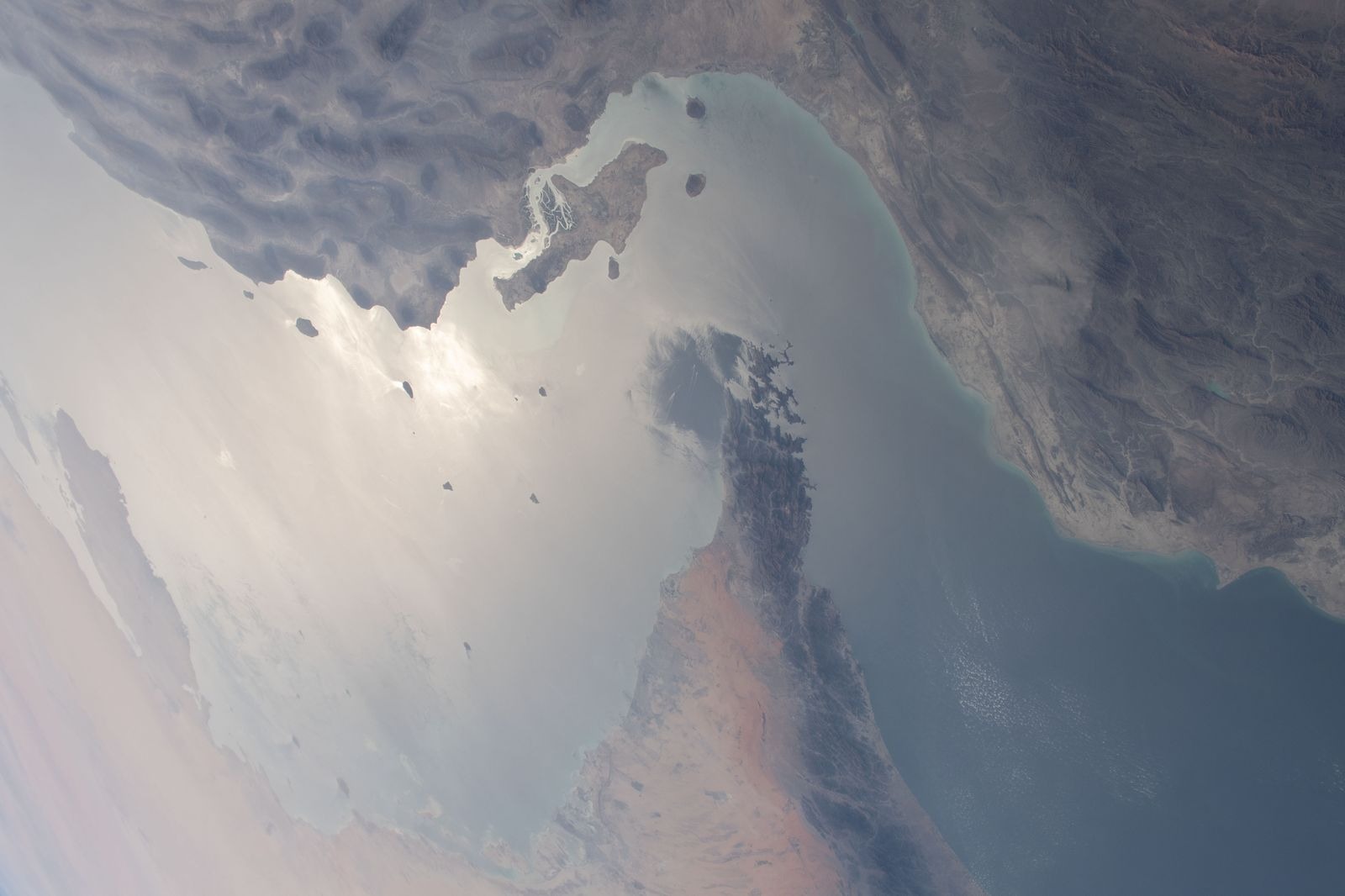
The Strait of Hormuz is the hinge. Tajani's call to "reopen Hormuz" admits that navigation through the waterway — the artery for a large share of the world's traded oil — is already degraded, and that "de-escalation to guarantee freedom of navigation" is now an explicit European objective.
Fidan's warning is geographic: a new attack "would expand the war in the region." With Houthi missiles already striking Saudi Arabia, and Gaza, Yemen and Ukraine on the same Istanbul agenda, the ministers treated the Iran war — whose course since February's strikes Magna Bureau has tracked — as one front of a wider unraveling, not a contained bilateral fight.
And the meeting matters because of who was not in the room: the United States and Israel. Eight allies and partners of Washington — three of Europe's biggest powers and the Gulf's anchor states — publicly told Washington no. That is the diplomatic equivalent of a guardrail being hammered into place.
They agreed on restraint — and on saying so in public, together. The E3+R4 format is new, and its message targets two audiences: Washington, which is weighing strikes, and Tehran, which is being told a diplomatic address still exists. Fidan's line that "nobody approves this at the moment" is deliberately absolute; it leaves no crack for a coalition of the willing.
Because the last rounds of this war taught the market the script: missiles fly, Hormuz narrows, insurance spikes, crude jumps. Barrot's "nothing but losers" is aimed at the European voter as much as at the White House — the bill for escalation arrives at the pump before the negotiating table.
Set against a busy weekend of signaling: Barrack's "absolutely" as deterrence aimed at Tehran; Trump's "I don't know anything about it," delivered in Florida, as deniability aimed at everyone else. Gulf News (Oct 23, 2026) Behind both sits the New York Times report, cited by Reuters, that the US and Israeli militaries have drawn up specific plans for renewed strikes after the November 3 midterms — targeting Iran's energy infrastructure, nuclear facilities and missile and drone arsenals. Reuters (Oct 23, 2026) Trump says the US will not attack before the midterms while "productive" talks continue, but on Friday he mused that America "could end it very quickly" — then asked whether to "finish it off or… let it wither." The Times of Israel (Oct 23, 2026)
Then the Israeli clock: Prime Minister Benjamin Netanyahu, facing elections on Tuesday, has repeatedly vowed to topple Iran's clerical state after two major bombing campaigns since last year — a posture Magna Bureau has covered as the region braces. Daily Sabah (Oct 23, 2026) Istanbul's eight are, in effect, trying to box in three decision-makers at once: Trump, Netanyahu, and Tehran.
First, the oil market's calm. Barrot's hydrocarbon warning is the French government saying the quiet part out loud: a strike on Iran's energy infrastructure — explicitly listed among the reported US-Israeli targets — would reprice every barrel on the planet.
Second, Gulf shipping. "De-escalation to guarantee freedom of navigation" is Tajani naming the wound: if Hormuz narrows further, the shock travels from Asian refineries to European pumps within days, and the insurance market — already on edge — does the rest.
Third, the region's fragile alignments. The Mecca pact — Türkiye, Pakistan, Saudi Arabia, with Egypt courted and President Abdel Fattah el-Sisi saying Cairo would "carry out any measure to protect" the kingdom — is the architecture of a region trying to insure itself. Al Jazeera (Oct 23, 2026) A new American strike would test whether that insurance is real or decorative.
Three dates frame the crisis. First, Tuesday: Israel's elections, with Netanyahu — who has vowed to topple Iran's clerical state — fighting for his political life. Second, November 3: the US midterms, after which reported US-Israeli strike plans could move from paper to runways. Third, the undeclared date: whether the US-Iran talks Trump calls "productive" produce anything before the shooting resumes.
The Istanbul eight have bet on diplomacy, and on eight capitals speaking at once slowing two war machines. The next move is not theirs — it belongs to Washington, Jerusalem and Tehran, in that order.
The Western lens: deterrence, deadlines, and the day-after problem In Western capitals the story is strike planning and presidential timelines: the Times' reporting on post-midterm plans, Barrack's weekend warning, Trump's public cooling of it — threat as leverage, deniability as policy. Reuters (Oct 23, 2026) Barrack's "day-two scenario" line is the tell — even the hawks argue about what comes after the bombs. In this lens, Istanbul is Europe trying to re-enter a war it has mostly watched from the sidelines.
The Eastern lens: the energy bill for a wider war For East Asia, the crisis is an energy bill. South Korea's press carried Barrack's warning prominently — for Seoul, Tokyo, New Delhi and Beijing, a strike that narrows Hormuz taxes their economies before it taxes Washington's. The Korea Times (Oct 24, 2026) The region's import-dependent giants run on Gulf crude; Barrot's hydrocarbon warning reads in Asian capitals as European confirmation of their own exposure.
The Southern lens: the region takes the pen Al Jazeera's correspondent in Istanbul frames the meeting as the region seizing the narrative: eight ministers, none of them American, setting terms for a war fought on their soil and seas. Al Jazeera (Oct 23, 2026) The Gulf press — Arab News, Gulf News, Daily Sabah — carries the strike warning as an existential threat to the Gulf's cities and shipping lanes, not a Washington policy debate. Arab News (Oct 23, 2026) Türkiye's Mecca defence pact and Fidan's claim that Ankara is "well placed to play a constructive role" mark an explicit bid: the Global South will not be a spectator in its own war.
Eight foreign ministers — the E3 (Britain, France, Germany), the R4 (Türkiye, Saudi Arabia, Pakistan, Egypt) and Italy — met in Istanbul in their first collective session. They publicly warned Washington that a renewed attack on Iran would expand the regional war, urging both sides to exercise the utmost restraint and return to diplomacy and dialogue.
Britain's Ed Miliband, France's Jean-Noël Barrot and Germany's Johann Wadephul attended for the E3; Türkiye's Hakan Fidan hosted, with the Saudi, Pakistani and Egyptian foreign ministers completing the R4; Italy's Antonio Tajani rounded out the eight. Reuters described it as the first collective meeting between the two groups.
Turkish Foreign Minister Hakan Fidan said a new attack would expand the war across the region, with no participating country approving another intervention. French Foreign Minister Jean-Noël Barrot warned it would create 'nothing but losers' and cause a serious shock to hydrocarbon prices, while Italy's Antonio Tajani stressed the need to guarantee freedom of navigation through Hormuz.
Tom Barrack, the US ambassador to Türkiye and Washington's point man on Syria, told podcast host Mario Nawfal that a US strike on Iran this weekend was 'absolutely' possible. He insisted any action would not aim at regime change but at 'rebalancing,' warning that 'the problem with regime change always is, what's the day-two scenario?'
President Trump has said the US would not attack before the November 3 midterms while 'productive' talks continue, and he publicly disowned Barrack's weekend timeline, saying he knew 'nothing about it.' But a New York Times report, cited by Reuters, says US and Israeli militaries have drawn up specific strike plans for after the midterms — so the pledge has an expiry date.
