AA to municipalities: come clean on every broken traffic light and streetlight
Days before South Africa's 4 November local elections, the Automobile Association wants every council to publish a register of broken signals and streetlights; fault numbers, repair dates, updated weekly. It is an election-week demand for honesty about an infrastructure crisis years in the making.
Published 29 October 2026 · 22:49 GMT
The summary
On 26–29 October 2026, the Automobile Association of South Africa, led by CEO Bobby Ramagwede, called on every municipality to publish a public register of broken traffic lights and streetlights, each fault carrying a reference number and a committed repair date. The call is timed for the local government elections of Wednesday 4 November 2026 and the end of October’s Transport Month: the AA wants the lists published now and updated weekly, with the most urgent repairs, routes to schools, polling stations and busy pedestrian corridors, finished first.
The three lenses
- WestIn the West, this reads as a governance and transparency story: civil society demanding open data from local authorities before an election; a sunshine-law tactic where disclosure substitutes for enforcement.
- EastIn the East, the emphasis would sit on infrastructure as a development instrument and state capacity: functioning signals as the visible surface of an administrative machine that must plan, contract and maintain at scale.
- Global SouthIn the Global South, this story's home ground, the frame is service delivery and dignity.
Key facts
- On 26–29 October 2026, the Automobile Association of South Africa, led by CEO Bobby Ramagwede, called on every municipality to publish a public register of broken traffic lights and streetlights, each fault carrying a reference number and a committed repair date. Daily Maverick (29 Oct 2026)
- The call is timed for the local government elections of Wednesday 4 November 2026 and the end of October’s Transport Month: the AA wants the lists published now and updated weekly, with the most urgent repairs — routes to schools, polling stations and busy pedestrian corridors — finished first. AA (26 Oct 2026)
- The crisis is documented in numbers: Johannesburg’s roads agency said in July 2026 that more than 300 traffic signals had been vandalised or stripped of cables; Ekurhuleni spent roughly R120 million on repairs in one financial year before replacing signals at high-risk intersections with stop signs. SA Gazebo Motor Journal (26 Oct 2026)
- In Nelson Mandela Bay, the metro’s political head for roads and transport conceded that newly repaired traffic lights are stripped of copper cables within weeks, and the municipality halted its streetlight repair project amid procurement irregularities — while a Special Investigating Unit probe implicated 21 officials. Daily Maverick (29 Oct 2026)
- Ramagwede told municipalities “we’re watching you” and admitted the AA cannot enforce compliance itself: “In the short run, no,” he said, promising instead to “single out delinquent municipalities” until councils respond. Daily Maverick (29 Oct 2026)
The list that would make every broken light visible
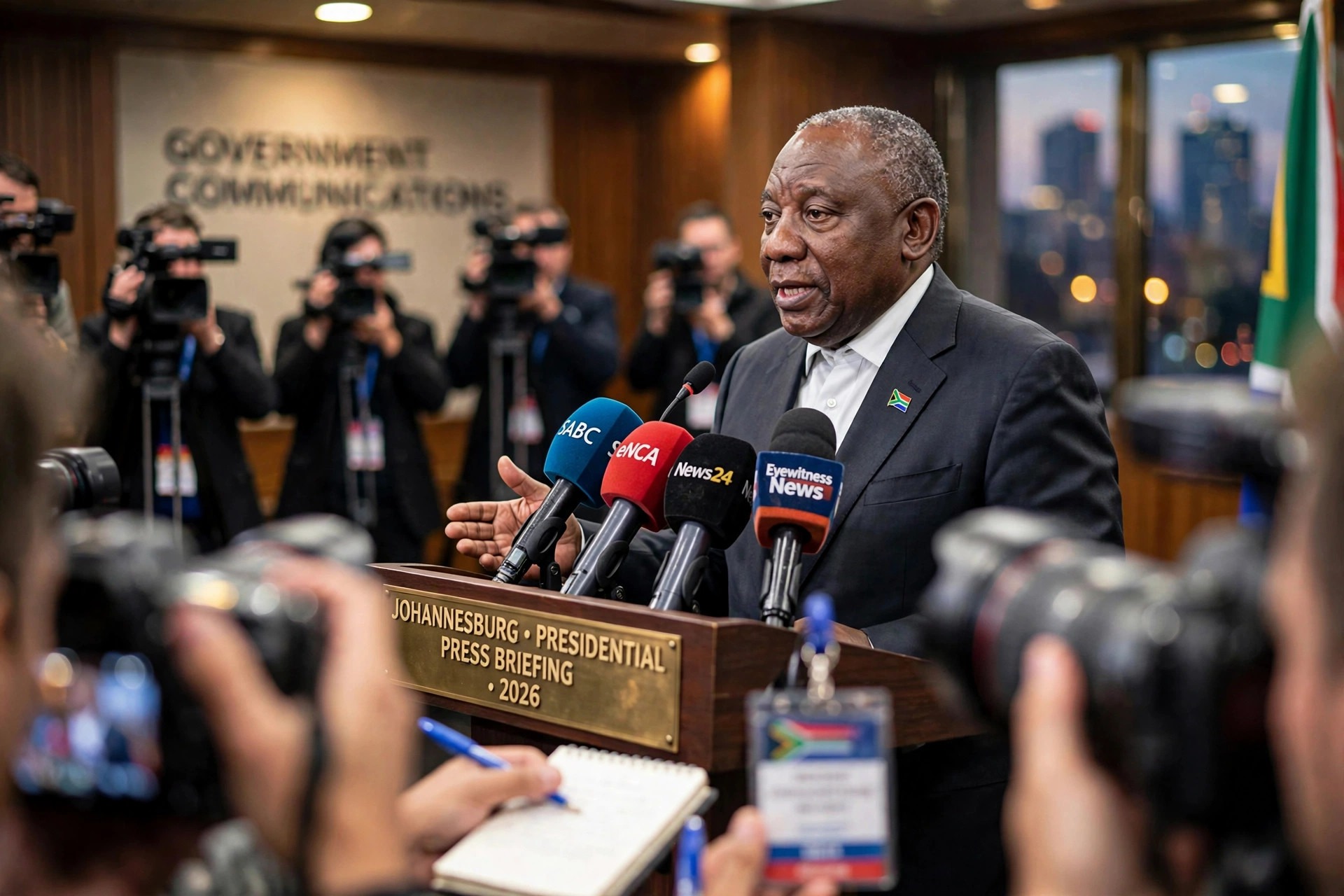
With local government elections six days away, the Automobile Association of South Africa has put a simple demand on the table: every municipality must publish a register of its broken traffic lights and streetlights, each fault with a reference number and an expected repair date, updated weekly.
AA chief executive Bobby Ramagwede framed the appeal as part of the organisation's shift from a motorist-only mindset to pedestrians and other vulnerable road users. “Step number one, give me a register of the sheer breadth of the problem at hand,” he said. “Don't skip, don't try to gloss over the numbers, because I need raw data.”
The ask is cheap and politically maximal. The AA wants urgent repairs — routes to schools, polling stations and busy walking corridors — done before Wednesday 4 November, when millions will walk to vote, many after dark. “When a traffic light dies, the driver waits. The person on foot takes the gamble,” Ramagwede said.
The scale of the outage, in the councils' own figures
The numbers drawn up this week outline a nationwide failure. In Johannesburg, the roads agency said in July 2026 that more than 300 traffic signals had been vandalised or stripped of cables; some, like those at Chadwick Avenue and 5th Street in Wynberg, had been out for over a year with “currently no date for repairs.” Streetlight repair times in the city have roughly doubled since the G20-era clean-up.
Ekurhuleni spent about R120 million on traffic-light repairs in one financial year before conceding defeat at the worst-hit intersections and replacing signals with stop signs, some possibly permanent. Gauteng province manages only 547 of its 4,500+ signalised intersections and has launched a 36-month repair programme. In Nelson Mandela Bay, cable thieves strip newly repaired signals within weeks, and the metro halted its streetlight project over price discrepancies and questionable contractor appointments — with a Special Investigating Unit probe implicating 21 municipal officials.
The timing is deliberate: Transport Month ends this week, petrol fell R1.50 a litre (diesel R3.00) on 21 October, and elections are six days out. The AA is striking while every mayor and councillor is campaigning.
Compliance, enforcement, and the true size of the dark
No municipality had published a fault register at the time of writing, and it is unknown whether any will before 4 November. The AA concedes it has no enforcement power: asked whether it could hold failing councils to account, Ramagwede said, “In the short run, no,” promising relentless public pressure instead — “I will make it someone's problem.”
Nobody knows the nationwide total of broken signals and streetlights, because no consolidated count exists — the very gap the register would fill. It is also unknown whether weekly updates would survive the week after the elections, or whether councils would publish honest figures.
Election day will be walked in the dark
Millions of South Africans will walk to polling stations on 4 November, some returning after dark. Political scientist Lebogang Tiego Legodi recalled that queues around Polokwane in 2024 ran so long some voted at midnight — in a city where parts have had no streetlights for over two years. “Will I make it home alive after casting my vote?” she asked.
Ramagwede frames it as mobility, not transport: “Mobility is not transport. It is the freedom to get to work, get your children to school, get home again and change your circumstances. Every dead intersection takes some of that freedom away, and it takes it first from the people who walk.” There is an economic ledger too: queues at dead intersections burn fuel at over R30 a litre in a strained economy where every rand counts, and the Johannesburg Roads Agency carries a maintenance backlog above R115 billion against a R1.8 billion annual budget.
What the outage reveals about municipal power in South Africa
Read through the 5D lens, this is not about traffic lights — it is about what municipal government can still do. Institutionally, the register is a test of whether councils retain the capacity to count what they own. Nelson Mandela Bay shows why: a streetlight project halted over price discrepancies, an SIU probe touching 21 officials, a transport chief warning that repeated repairs will be flagged by the National Treasury as audit risk. The copper theft is real, but so is the procurement rot — “irregular tender processes” and officials who “would rather steal than actually deliver on the mandate,” as Ramagwede put it.
Economically, a scrap-metal market makes every cable a target while budgets cannot absorb the losses; Ekurhuleni's R120 million bill, and its permanent downgrade of intersections to stop signs, is the fiscal verdict — a dynamic familiar in the strained South African economy. Demographically, the AA's pivot to the pedestrian is the sharpest edge: millions who cannot afford cars are the organisation's new centre of gravity, and they are the majority at many urban polling stations. Historically, the G20 precedent looms: when President Ramaphosa called Johannesburg a “dark city” before the November 2025 summit, the city fixed the VIP routes overnight. The AA's argument is that election week should produce the same urgency for ordinary commuters.
What happens after the lights are listed — or ignored
If councils ignore the demand, the AA will “single out delinquent municipalities” one by one — an election-week naming campaign. The first council to publish a genuine, weekly-updated register would gain a weapon its rivals could not answer.
If councils comply, the excuse of ignorance dies with the publication of the true number — and the next failure becomes a choice. Expect the copper-theft defence first (“thieves stripped them again”), accelerating the shift already visible in Ekurhuleni and Centurion: decommissioned signals, permanent stop signs, and eventually cable-free solar hardware that removes the scrap-metal incentive altogether. Economically, unrepaired intersections raise crash rates and burn fuel, costs the Centre for Risk Analysis says land on households — and investment rankings already shows how governance quality moves capital.
The real test is not whether a register appears before election day, but whether it is still updated in December — and whether the SIU's streetlight-tender probe ends in consequences or another audit file on a shelf.
Six days to election day, and the registers to watch
The immediate marker is 4 November: whether any municipality publishes a fault register before voters go to the polls, and whether the AA keeps its promise of weekly updates after Transport Month ends. The organisation says it will press councils through the festive season into 2027, escalating to provinces and national government if needed.
Watch Nelson Mandela Bay first: the halted streetlight project, the SIU investigation and the pending independent audit are the highest-stakes test of whether the procurement rot behind the dark streets gets confronted. Watch Johannesburg second: the city that fixed itself for the G20 now has streetlight repair times that have doubled, and its mayor cannot say when the problems will be resolved.
The three lenses
West Lens:
In the West, this reads as a governance and transparency story: civil society demanding open data from local authorities before an election; a sunshine-law tactic where disclosure substitutes for enforcement.
East Lens:
In the East, the emphasis would sit on infrastructure as a development instrument and state capacity: functioning signals as the visible surface of an administrative machine that must plan, contract and maintain at scale. The Nelson Mandela Bay procurement scandal is the disease; the dark intersections are its symptom.
South Lens:
In the Global South, this story's home ground, the frame is service delivery and dignity. The broken traffic light is South Africa's most photographed symbol of municipal collapse, from Jevon Dyer's trailer of dumped signals in Kariega to Johannesburg's “dark city” label. The AA asks the state to at least admit what it can see before asking for another vote.
The consensus
- What we agree on
- We agree: the Automobile Association of South Africa, through CEO Bobby Ramagwede, has called on every municipality to publish a public register of broken traffic lights and streetlights, each fault with a reference number and a repair date, updated weekly, with repairs prioritised on routes to schools, polling stations and pedestrian corridors before the 4 November 2026 local elections and the festive season.
- What we don't agree on
- We disagree: whether publishing a register is a meaningful step or a bureaucratic feint; the AA calls it a nearly costless first act of honesty that enables planning, while residents like Kariega's Jevon Dyer argue councils already know what is broken and an audit would just be another paid exercise; and whether municipalities should keep repairing lights that vandals strip within weeks, or abandon them as Nelson Mandela Bay's transport chief suggests.
- What we know
- What we know: the numbers the AA leans on; Johannesburg's agency reported more than 300 vandalised signals in July 2026, Ekurhuleni spent about R120 million on repairs in one financial year before downgrading intersections to stop signs, Gauteng's province manages only 547 of more than 4,500 signalised intersections with a 36-month repair programme, and petrol fell by R1.50 a litre (diesel R3.00) on 21 October.
- What we don't know yet
- What we do not know: whether a single municipality will actually publish a fault register before 4 November; how many traffic lights and streetlights are broken nationwide, since no consolidated figure exists; and what the Special Investigating Unit's probe into Nelson Mandela Bay's streetlight tenders, which implicated 21 officials, will conclude.
- What we expect
- What we expect: municipalities will mostly stall until after the elections, the AA will keep up public pressure and publish its own delinquency scoreboard in the words of its CEO, and the first councils to publish genuine registers will turn the demand into an election-week weapon against rivals who do not.
Questions, answered
What exactly is the Automobile Association asking municipalities to do?
The AA wants every municipality in South Africa to publish a public register of all broken traffic lights and streetlights, with a fault reference number and an expected repair date for each fault, and to update the lists every week. The most urgent repairs, routes to schools, polling stations and busy pedestrian corridors, should be completed before the 4 November 2026 local elections or the festive season.
Why is the AA making this demand now?
Three clocks are converging: South Africa's local government elections are on 4 November 2026, October's Transport Month is ending, and the festive season is approaching. AA CEO Bobby Ramagwede is explicit that the timing is deliberate: governments perform better close to elections, and voters walking to polling stations after dark need safe intersections now.
How bad is the broken traffic-light problem in South Africa?
In July 2026, Johannesburg's roads agency said more than 300 traffic signals had been vandalised or stripped of cables; Ekurhuleni spent about R120 million on repairs in one financial year before replacing signals with stop signs; Polokwane reported 21 broken intersections; and Gauteng's province manages only 547 of more than 4,500 signalised intersections. In Nelson Mandela Bay, newly repaired signals are stripped of copper cables within weeks.
Can the AA force municipalities to comply?
No; and Ramagwede admits it. Asked whether the organisation could hold failing councils to account, he said “In the short run, no.” The AA's strategy is public pressure instead: publishing its own scoreboard of compliant and delinquent municipalities, escalating to provincial and national government, and keeping voters' attention on the issue through the elections and the festive season.
Sources
- Daily Maverick (29 Oct 2026)
- AA (26 Oct 2026)
- SA Gazebo Motor Journal (26 Oct 2026)