 MAGNA BUREAU
The Wire
El Mansouri meets Morocco’s unions on Tuesday in first formal talks since taking office
The head of government will sit down with the UMT, CDT and UGTM in Rabat on 24 November, with purchasing power, wages and pensions at the top of the agenda; and the unions demanding a binding framework law for social dialogue.
Key points
- Fatima Ezzahra El Mansouri will meet the leaders of Morocco’s main trade unions in Rabat on Tuesday 24 November 2026 at 10 a.m., in her first formal talks with labour representatives since taking office. 1
- The UMT, the CDT and the UGTM are the three federations invited; El Mansouri sent formal invitations last week and the UMT confirmed it would attend. 2
- UMT leader Miloudi Moukharik will press for “genuine social dialogue”, a sliding wage scale, higher pensions and freedom of association, and against the recently adopted strike law. 1
- CDT representative Younes Firachine called for immediate wage increases and higher pensions, and for a framework law making social dialogue binding. 2
- Finance Minister Fouzi Lekjaa said gains from previous social dialogue rounds will cost MAD 50 billion in 2027. 2
ONE EVENT. THREE READINGS.
No Western outlet had covered the meeting at the time of writing, and that absence is itself the record: a Moroccan domestic negotiation, announced by the head of government’s office and reported by the Moroccan press, had not yet travelled beyond it.
The Western stake is nonetheless direct.
What this reading highlights: Morocco is the European Union’s southern neighbour and a partner on trade, migration and energy, and European capitals watch its social dialogue as closely as its budgets.
A government that can settle wages and prices with its unions is a government Europe can plan with.
No East Asian outlet had covered the meeting at the time of writing.
The story’s eastern relevance is indirect but real: Morocco has spent the decade building partnerships beyond Europe; as a manufacturing and renewables bridge, as a voice for African positions in global forums, and as a host for South-South cooperation.
What this reading highlights: Whether its new government can hold a durable settlement with its own workforce is part of the credibility that outward role rests on; a test watched in Beijing, New Delhi and Tokyo even when it is not reported there.
Moroccan outlets carry the story in full, in Arabic, French and English, and the southern reading centres on institutionalisation.
For the Global South, where wage and price shocks land hardest and where dialogue between governments and unions is often seasonal rather than binding, the framework-law demand is the story: a move from promises to enforceable process.
What this reading highlights: The meeting is also a regional first, the first woman to lead a Moroccan government sitting down with organised labour, and the tone she sets on Tuesday will be read far beyond Rabat.
Sources: Le360 (2), Hespress (2), North Africa Post (1)
Sources by lens: 0 West, 0 East, 5 Global South. See every source
THE POINT OF CONVERGENCE
On the dated record; the meeting is on Tuesday 24 November 2026 at 10 a.m. in Rabat; the UMT, the CDT and the UGTM are invited; it is El Mansouri’s first formal contact with labour leaders since taking office; and the unions’ published demands centre on purchasing power, wages, pensions and a binding framework for dialogue.
WHAT REMAINS CONTESTED
On whether Tuesday can deliver; the unions present it as the opening of a negotiation that must produce concrete results, while the government has framed it as a preparatory meeting; the record does not yet show which reading will hold.
The story
A Tuesday morning test for Morocco’s new government
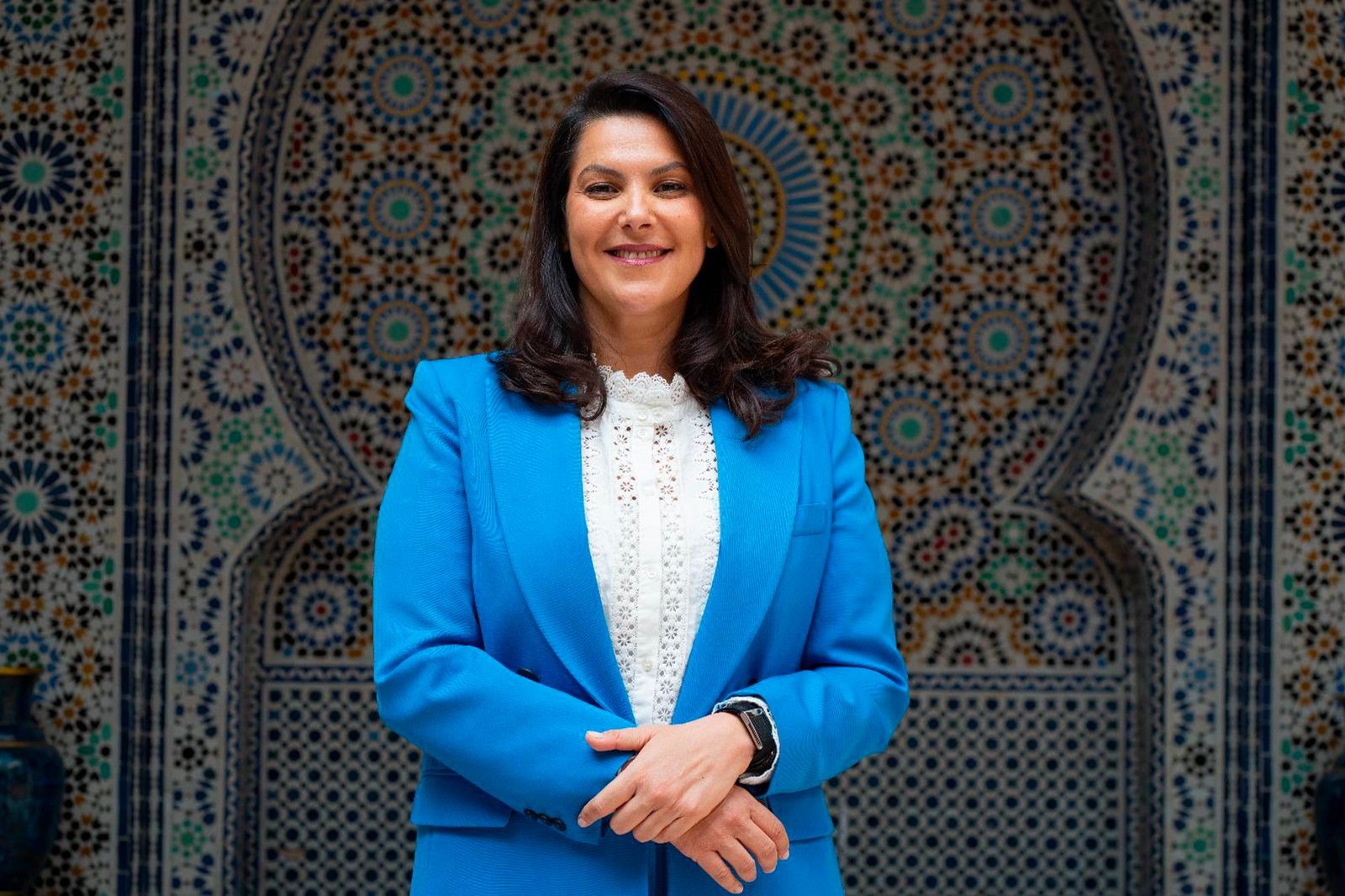
Fatima Ezzahra El Mansouri, Morocco’s head of government, will meet the leaders of the country’s main trade unions in Rabat on Tuesday 24 November, in her first formal talks with labour representatives since taking office. It is scheduled for 10 a.m. at the head of government’s office, Le360 reported on 22 November, citing union sources.
The three most representative federations will be at the table: the Moroccan Labor Union (UMT), the Democratic Confederation of Labor (CDT) and the General Union of Moroccan Workers (UGTM). El Mansouri sent the unions formal invitations last week, and the UMT confirmed it would attend, Hespress reported on 20 November.
The encounter is preparatory: it opens the next round of social dialogue, the structured negotiation between government, unions and employers that sets wages, pensions and working conditions, rather than closing it. But the unions arrive with detailed demands and a deadline of their own: the 2027 Finance Bill is moving through parliament, and they want measures on prices and pay to move faster than its gradual tax relief. El Mansouri, appointed by His Majesty King Mohammed VI on 29 September, is the first woman to lead a Moroccan government; which makes Tuesday her appointment a first test of the new administration’s method as well as its programme.
What the unions will put on the table
Purchasing power comes first. Miloudi Moukharik, secretary-general of the UMT, told Le360 his union would present its position on what he called “genuine social dialogue” covering all issues affecting workers, and would press for “immediate measures” to improve purchasing power as prices rise. He backs a sliding wage scale, calls pension levels too low, and will raise freedom of association and opposition to the recently adopted strike law. He said he hoped Tuesday’s meeting would produce “concrete results”.
The CDT’s priorities, set out by Younes Firachine, secretary-general of its National Education Union, run in the same direction with a sharper edge on timing. Households are struggling with soaring prices, he told Hespress on 22 November, and urgent measures are needed to curb inflation and improve workers’ incomes. Because the 2027 Finance Bill tax measures would arrive gradually, he called for immediate wage increases instead; and for higher pensions, including for retirees left out of the government’s current measures.
The second thread is continuity. Firachine called on the government to honour commitments from previous administrations, nationwide and sector-specific agreements, several still unimplemented, invoking institutional continuity, with employment statutes still outstanding in several sectors. He also raised restrictions on trade union freedoms, which he called a key issue, above all in the private sector.
The third thread is the law itself. The debate over the draft strike law remains unresolved, Firachine said, stressing that the International Court of Justice’s opinion on the matter should be taken into account before a final decision. On institutionalising social dialogue, he said a charter signed to give the process a formal framework has never been implemented, and identified a framework law, binding legislation rather than unenforced commitments, as the union’s main demand.
The scale of what is already committed gives the meeting its arithmetic. Fouzi Lekjaa, the finance minister, said gains from previous social dialogue rounds would cost MAD 50 billion in 2027. El Mansouri has already chaired two interministerial meetings on purchasing power, the second of them on Thursday 19 November, looking at ways to keep basic goods prices stable and protect households’ living standards, according to the North Africa Post
genuine social dialogue.
What can Tuesday actually settle?
Whether the meeting produces anything binding. It is billed as preparatory, and no agreement is expected to be signed; so the first unknown is what “concrete results” will mean: a timetable, a commitment to draft the framework law, or wage and pension measures ahead of the Finance Bill.
The second unknown is the strike law. The unions oppose the recently adopted law and want the debate reopened; the government has not said whether Tuesday will touch it, and Firachine’s reference to the International Court of Justice’s opinion shows the unions are reaching for arguments beyond the domestic arena.
The third unknown is money. The MAD 50 billion already committed for 2027 leaves limited room, and neither side has published a figure for what the unions’ new demands would cost. Until the government puts a number on the table, the gap between the unions’ call for immediate increases and the Finance Bill’s gradual relief cannot be measured.
Purchasing power is the government’s first promise
El Mansouri took office on 29 September 2026, appointed by His Majesty King Mohammed VI after her Authenticity and Modernity Party (PAM) won the 23 September elections with 97 seats. The first woman to hold the office, she leads a party that made purchasing power the centre of its programme, earmarking MAD 150 billion for a Purchasing Power Charter for 2027 to 2031.
That makes Tuesday more than a courtesy call. Social dialogue is the mechanism by which wage and pension decisions gain the consent of organised labour; a first meeting that ends in a calendar and a drafting commitment would show the new government can convert its central promise into process. A meeting that ends with only a photograph would hand the unions their first public grievance against an administration barely eight weeks old.
With MAD 50 billion already committed for 2027, every new commitment competes with the Finance Bill’s other priorities; and with households who have heard purchasing power promised by two governments in a row.
A first meeting judged on mechanisms, not mood
The unions’ complaint, read closely, is not about goodwill. It is about machinery. Moukharik’s “old seasonal dialogue”, Firachine’s unimplemented charter, unhonoured agreements; all point to the same diagnosis: Morocco’s social dialogue produces commitments that the state does not always keep. The framework law the CDT demands is an attempt to fix the machinery rather than the mood, by making agreements binding rather than a political favour.
That is why the preparatory label matters. A preparatory meeting, held before the next full round, is where the agenda and the calendar are set. The unions know this: they arrived with their demands published in advance, negotiating the terms of the negotiation in public.
The timing sharpens everything. The 2027 Finance Bill is the instrument that will carry whatever is agreed, and its gradual tax relief is precisely what the unions say is too slow. The government’s own economic pitch runs in the same direction; the MAD 2.5 billion push for home-grown artificial intelligence set out in parliament on 16 November is part of a programme that promises growth to pay for social gains. Tuesday will show whether the economic bet and the social settlement are being built together or in sequence.
The week around Tuesday
Tuesday does not end at 10 a.m. The same evening, El Mansouri meets the leaders of the governing majority in Rabat at 7 p.m., with rising fuel prices and a possible cap on oil distributors’ profit margins on the agenda, according to Le360. The two meetings bracket the same problem from its two sides: the social cost of prices in the morning, the political management of prices in the evening.
The week also carries the government’s earlier answers. In the days before the meeting it moved to curb food exports and raise social aid, measures reported on 13 November; the record is set out in our earlier report. The question Tuesday raises is whether decree and dialogue are converging or competing.
Beyond the week, the test is the Finance Bill itself. If the bill passes with the unions’ demands unaddressed, the next round opens with the same grievances, sharpened. If Tuesday produces a calendar and a drafting commitment, the debate will have something new to argue about: a mechanism, not just a sum.
What should we watch after Tuesday?
First, the statements. What the UMT, the CDT and the UGTM say as they leave will be the first verdict; and whether they speak of “concrete results” or of another round of waiting. Second, the paper: any joint statement, timetable for the next round, or commitment to draft the framework law. Third, the evening meeting with the majority leaders, and whether anything is announced on fuel prices or distributor margins.
Then the Finance Bill. The unions’ demand for immediate increases, against the bill’s gradual relief, is now a dated, public position; the bill’s progress will show whether it moves. The real test of Tuesday is simple: whether it produces a date. A calendar for the next round, a deadline for the framework law, a figure for wages; any of those would mean the meeting worked. A photograph alone would mean it did not.
What we agree on, and what remains open
Established
- On the dated record; the meeting is on Tuesday 24 November 2026 at 10 a.m. in Rabat.
- The UMT, the CDT and the UGTM are invited.
- It is El Mansouri’s first formal contact with labour leaders since taking office.
- The unions’ published demands centre on purchasing power, wages, pensions and a binding framework for dialogue.
Contested
- On whether Tuesday can deliver; the unions present it as the opening of a negotiation that must produce concrete results, while the government has framed it as a preparatory meeting.
- The record does not yet show which reading will hold.
Still open
- Whether the meeting yields a timetable, a framework-law commitment or wage and pension measures.
- What the government will offer on the strike law.
- Or how the unions will judge the outcome in public.
Questions, answered
On Tuesday 24 November 2026 at 10 a.m., at the head of government’s office in Rabat. The UMT, the CDT and the UGTM, the three most representative federations, are invited. It is her first formal meeting with labour leaders since she took office on 29 September, and it opens the next round of social dialogue rather than closing it.
Immediate measures on purchasing power as prices rise, including wage increases, the UMT backs a sliding wage scale that adjusts pay whenever prices rise, and higher pensions, especially for retirees above the threshold of current measures. They also want past agreements honoured, trade union freedoms protected, the strike law revisited, and a framework law making social dialogue binding.
The 2027 Finance Bill is moving through parliament, and its tax relief would arrive gradually; too slowly, the unions say. They want wage and pension measures now. With MAD 50 billion already committed for 2027 from past social dialogue rounds, the bill is where any new agreement must be funded, so Tuesday’s outcome will shape the budget debate directly.
Watch the unions’ statements as they leave, any joint statement or timetable for the next round, and the evening meeting with majority leaders on fuel prices. Then the Finance Bill’s progress: if it passes with the unions’ demands unaddressed, the next dialogue round opens with the same grievances, sharpened. A calendar or a drafting commitment would mean Tuesday worked.