The biodiversity summit opened in Yerevan to review the world's nature pledges — but nine days earlier Armenia inaugurated a contested gold mine, and critics say the host's own record is now on trial.
Published 24 October 2026 · 08:30 GMT
The biodiversity summit opened in Yerevan to review the world's nature pledges — but nine days earlier Armenia inaugurated a contested gold mine, and critics say the host's own record is now on trial. COP17, the 17th meeting of the parties to the UN Convention on Biological Diversity, opened in Yerevan on October 18, 2026, and runs until October 30 under the theme “Taking Action for Nature”. The summit is the first global review of the Kunming-Montreal Global Biodiversity Framework, adopted in 2022 with 23 targets for 2030; fewer than half of the assessed national targets are on track.
COP17 opened in Yerevan on October 18, 2026, runs until October 30, and is the first global review of the Kunming-Montreal framework's 23 targets for 2030; Armenia officially launched open-pit operations at the Amulsar gold mine on October 10, with Prime Minister Pashinyan attending the ceremony.
Whether hosting COP17 while opening Amulsar is a legitimate development choice or a contradiction that undermines the summit — the government calls the mine a success story and an investment win, critics call it greenwashing, and an Azerbaijani coalition goes further, alleging ecocide, a charge Yerevan contests.
The full scale of mining pollution and its health effects; whether Armenia will meet the Bern Convention's 2026 requirements; whether the “Yerevan Pathway” will carry binding finance; and whether Amulsar's biodiversity offset can compensate for destroyed habitats.
Last weekend, the 17th meeting of the Conference of the Parties to the Convention on Biological Diversity — COP17 — opened in Yerevan. It is the first time the summit has been hosted by a former Soviet republic, and the Armenian government has celebrated the occasion as a leadership moment. Held under the theme "Taking Action for Nature", the conference runs until October 30 and carries out the first global review of the Kunming-Montreal Global Biodiversity Framework, the 2022 pact that aims to halt and reverse nature loss by 2030.
Opening the conference, Prime Minister Nikol Pashinyan called on governments to "move from words to action", warning that only four years remain before the framework's 2030 deadline. Armenia holds the COP17 presidency through 2028, with Environment Minister Hambardzum Matevosyan serving as COP17 president. But the spotlight has not stayed on the negotiating halls: nine days before the summit opened, Armenia inaugurated the controversial Amulsar gold mine, and on Saturday an opinion piece in Al Jazeera argued that the host's own record raises serious questions about its suitability for the role.
What is established: COP17 formally opened on October 18, with negotiations running from October 19 to October 30. Its centrepiece is the first collective review of the Kunming-Montreal framework's 23 targets for 2030. A report launched before the summit, The State of Biodiversity Action, found that fewer than half of the national targets that could be assessed are on track, while nearly 90 percent of parties have set national targets.
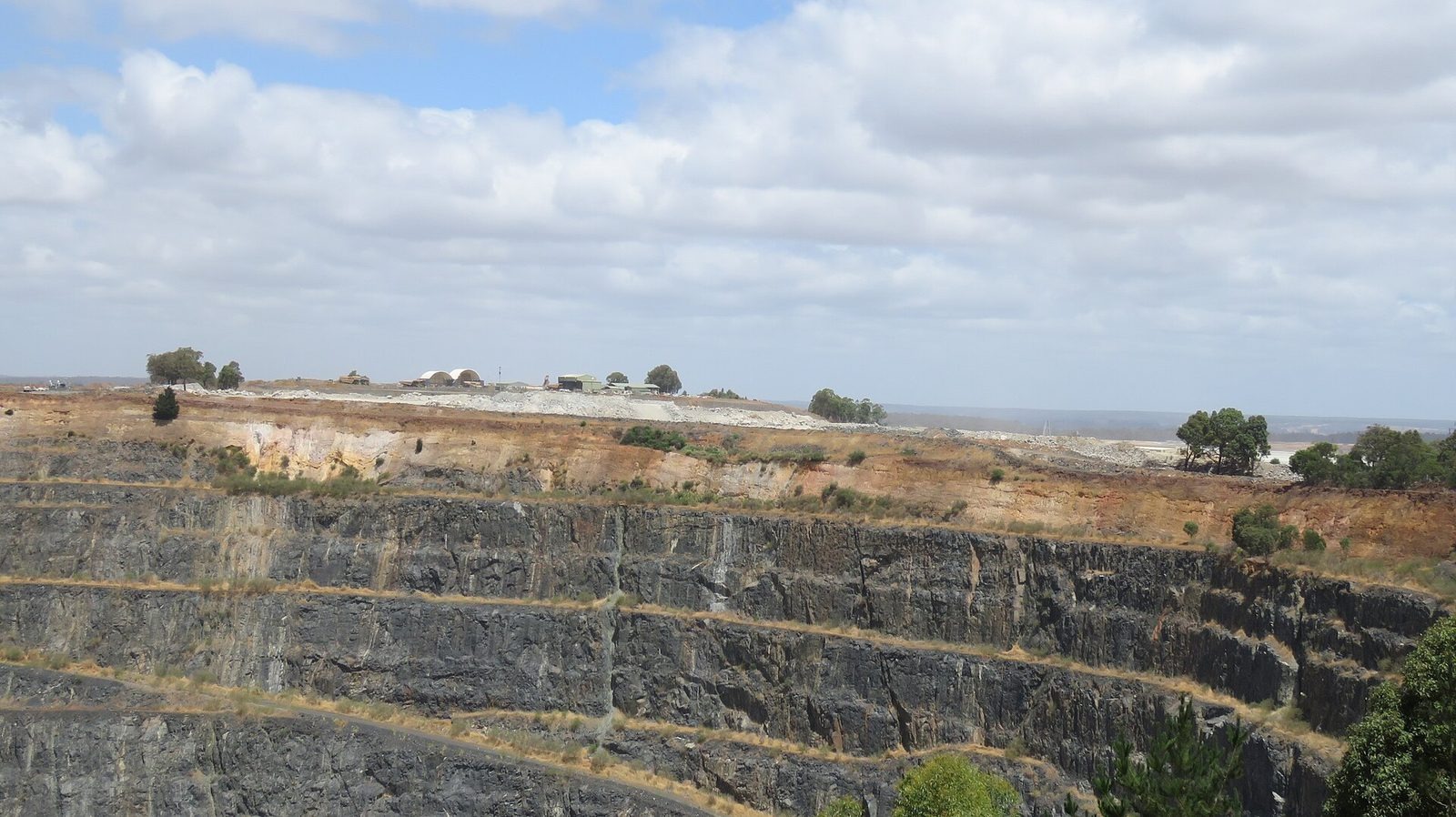
Also established: on October 10, 2026, Armenia officially launched open-pit mining at Amulsar, in the southeastern Vayots Dzor province, and smelted its first gold. Prime Minister Pashinyan attended the ceremony and witnessed the first gold pour, calling the project a "success story" for the country's investment climate. The mine is operated by Lydian Armenia, a subsidiary of Lydian Canada Ventures; the government holds a 12.5 percent stake. Total investment has topped $750 million, including a $150 million state-guaranteed loan. The mine is projected to produce roughly 210,000 ounces of gold a year, generate about $130 million annually in taxes, and employ 1,200 to 1,300 people.
The case against the host rests on figures cited in the Al Jazeera piece from Yale's 2026 Environmental Performance Index, where Armenia ranks 75th of 177 countries — 164th on waste management and 165th on wastewater treatment. Forests cover only 11.1 percent of the country, while fine-particle air pollution in Yerevan runs about five times the World Health Organization's recommended limit. Armenia's largest mines — the Zangezur, Agarak and Teghut copper-molybdenum operations — extract ore by open-pit methods, and the World Bank has identified mining as a significant source of pollution in the country. Copper's global producers face the same open-pit reckoning.
What remains unproven is the full scale of the damage. The Artsvanik tailings reservoir, holding millions of tonnes of mining waste, has been linked to heavy-metal contamination in nearby waterways, but no comprehensive public accounting of pollution loads or health effects has settled the question. Open-pit gold mining was licensed at Meghrasar, on land that originally overlapped with Arevik National Park, before the government reduced the park's boundaries in 2015 — the ecological cost of that redrawing is still disputed.
Also unresolved: whether the Bern Convention process will change anything in practice. In 2020, the convention's secretariat received a complaint over Amulsar from EcoLur, Armenian Forests, Green Armenia and the CEE Bankwatch Network, covering 1,946 hectares, three Emerald Network sites, three Important Bird Areas, a Ramsar wetland and 24 species listed as threatened or near-threatened. In 2026 the convention's Standing Committee set concrete requirements for Armenia's environment ministry — but compliance is not yet demonstrated, and the mine is already operating. And the summit's own outcome is open: governments are expected to finalise a "Yerevan Pathway", but whether it will carry binding finance commitments is undecided. Developed countries provide about $16 billion a year in biodiversity finance, short of the $20 billion target for 2025, while the Cali Fund has received just $6,000 against a $1 billion annual goal.
It matters because COP17 is the checkpoint, not the starting gun. With four years left to 2030, the framework's credibility depends on whether its review produces acceleration or alibis. A host that opens a contested open-pit gold mine days before presiding over the review hands every sceptical delegation a talking point — and every government behind on its own targets a precedent for treating scrutiny as optional. The question is not whether Armenia is the world's worst environmental performer; on the cited index, it is mid-table. The question is whether the country holding the gavel is visibly closing its own enforcement gap.
The stakes extend beyond Yerevan. Armenia is seeking closer relations with the European Union and distance from Moscow, and the EU–Armenia Strategic Agenda explicitly identifies stronger implementation of environmental impact assessment legislation, better waste management, and further action on air quality, water protection and industrial emissions. For the wider COP system, the Armenian case tests whether host accountability is a real norm or a courtesy nobody enforces.
Two things are happening at once. The first is a genuine diplomatic moment: a small country presiding over the first global review of the world's most ambitious nature pact, with a prime minister urging delegates to translate commitments into measurable results. Astrid Schomaker, the Convention on Biological Diversity's executive secretary, hopes COP17 will demonstrate that multilateralism works — and Armenia's presidency, running through 2028, gives it two years to shape implementation.
The second is the contradiction the critics keep pointing to. Pashinyan is not a bystander to the Amulsar story: he helped disrupt the project after Armenia's 2018 political transition, then reversed his stance to celebrate its launch as a national success. His government argues the economics — 1.5 to 2 percent of GDP, some $130 million a year in taxes, more than a thousand jobs in a province where work is scarce — and points to the state's own 12.5 percent stake as proof the public shares the upside. The Al Jazeera piece argues the other side of the ledger: Russian-linked investors hold a controlling stake in the Zangezur copper-molybdenum complex, Armenia's largest taxpayer in the first half of 2026, giving the government a powerful incentive to protect mining operations rather than regulate them. Both ledgers are real.
First, the offset precedent. Amulsar's environmental planning included a biodiversity offset programme meant to compensate for impacts that could not otherwise be mitigated, with European Bank for Reconstruction and Development financing earmarked for it. Independent analysis, including by Bankwatch, has questioned whether any offset can compensate for destroying Amulsar's habitats — a former WWF Armenia director warned that open-pit mining would completely destroy natural habitats there and that neither a new national park nor restoration could recreate the specific biodiversity at stake. If COP17 blesses offsets as a routine answer, the Amulsar model travels — and open-pit mining's global boom, from lithium to copper, makes that precedent worth more than one mountain.
Second, the transboundary file. The Azerbaijani coalition's statement centres on the Okhchuchay River, which it says has been turned into a "toxic, rust-colored chemical swamp" by waste from the Zangezur combine and the Kapan plant, and on ecological devastation in Garabagh and East Zangezur during Armenia's past occupation. Those are Azerbaijani advocacy claims, fiercely contested by Yerevan. Third, the finance gap: the $16 billion versus $20 billion shortfall, and the Cali Fund's $6,000, will define whether the "Yerevan Pathway" is a plan or a press release — and the Caribbean and Latin American bloc has already used the opening plenary to demand stronger financing for the Global South.
Three things matter. The first is the close of negotiations on October 30, when the "Yerevan Pathway" text will show whether governments agreed to accelerate implementation or merely to restate it. Watch the finance language.
The second is the Bern Convention's follow-up: whether Armenia's environment ministry meets the Standing Committee's 2026 requirements while Amulsar ramps up production. The third is domestic: whether the promised revenues — $130 million a year, 1,200-plus jobs — materialise in Vayots Dzor, and whether the Jermuk community's concerns get a hearing now that the cameras have moved on. COP17's presidency runs through 2028, so Armenia's record will be re-examined at every implementation meeting until then.
The Western lens: the mine as the test of the presidency Western coverage — the Heinrich Böll Foundation's Tbilisi office, the Ecological Society of America, the Global Forest Coalition — treats Amulsar as the story inside the story. The Böll analysis calls the October 10 opening, with Pashinyan displaying a gold bar produced through the full industrial cycle, "a direct blow to the entire COP17 process and to Armenia's standing as the country presiding over COP17". The shared Western anxiety: if a host can open a contested mine days before the summit and face no consequence, the review mechanism looks decorative.
The Eastern lens: the process, not the host Eastern coverage — led by China Daily — has centred on the machinery of multilateralism rather than the host's record. Its report notes Pashinyan declaring the conference open, executive secretary Astrid Schomaker expressing hope that COP17 would show multilateralism works, and China's ecology minister Huang Runqiu calling for greater financial, technological and capacity-building support for developing countries, particularly in the Global South. The tone is institutional; the host's contradictions are left for others to litigate.
The Southern lens: the host-country debate, in full Southern coverage carries the argument itself. Al Jazeera's opinion piece lays out the indictment — the rankings, the mines, the tailings, the Russian-linked investors — while Armenian outlets Hetq and CivilNet report the government's case: the $750 million invested, the 1,200-plus jobs, the $130 million a year. The Azerbaijani coalition's statement adds the sharpest edge, accusing Armenia of "double standards" and "greenwashing" over the Okhchuchay River — a claim Yerevan contests.
COP17 is the 17th meeting of the parties to the UN Convention on Biological Diversity, held in Yerevan from October 18 to 30, 2026. It conducts the first global review of the Kunming-Montreal framework, adopted in 2022 with 23 targets for 2030, including protecting 30 percent of land and seas. Delegates are expected to finalise a “Yerevan Pathway” to accelerate implementation.
Amulsar, in Armenia's Vayots Dzor province, faced a decade of environmental protests and financing setbacks before opening on October 10, 2026. Critics cite risks to water, biodiversity and the Jermuk resort area, a 2020 Bern Convention complaint covering 1,946 hectares and 24 threatened species, and doubts over whether biodiversity offsets can compensate for open-pit habitat destruction.
Prime Minister Pashinyan calls Amulsar a “success story” for Armenia's investment climate. The government points to more than $750 million invested, about 210,000 ounces of gold a year, roughly $130 million annually in taxes, 1,200 to 1,300 jobs, and its own 12.5 percent stake. It argues the revenues will fund roads, schools and local infrastructure in the region.
Armenia holds the COP17 presidency through 2028, so its record faces re-examination at implementation meetings. The Bern Convention's follow-up on its 2026 requirements continues, Amulsar ramps up production, and the finance debate — $16 billion provided against a $20 billion target — carries into the next round of biodiversity negotiations.
