Freeport's Q3 update puts Grasberg's mills at two-thirds of pre-disaster pace, its East Java smelter humming again — while Jakarta's scheduled takeover of the mine keeps ticking underneath.
Published 6 October 2026 · 18:00 GMT
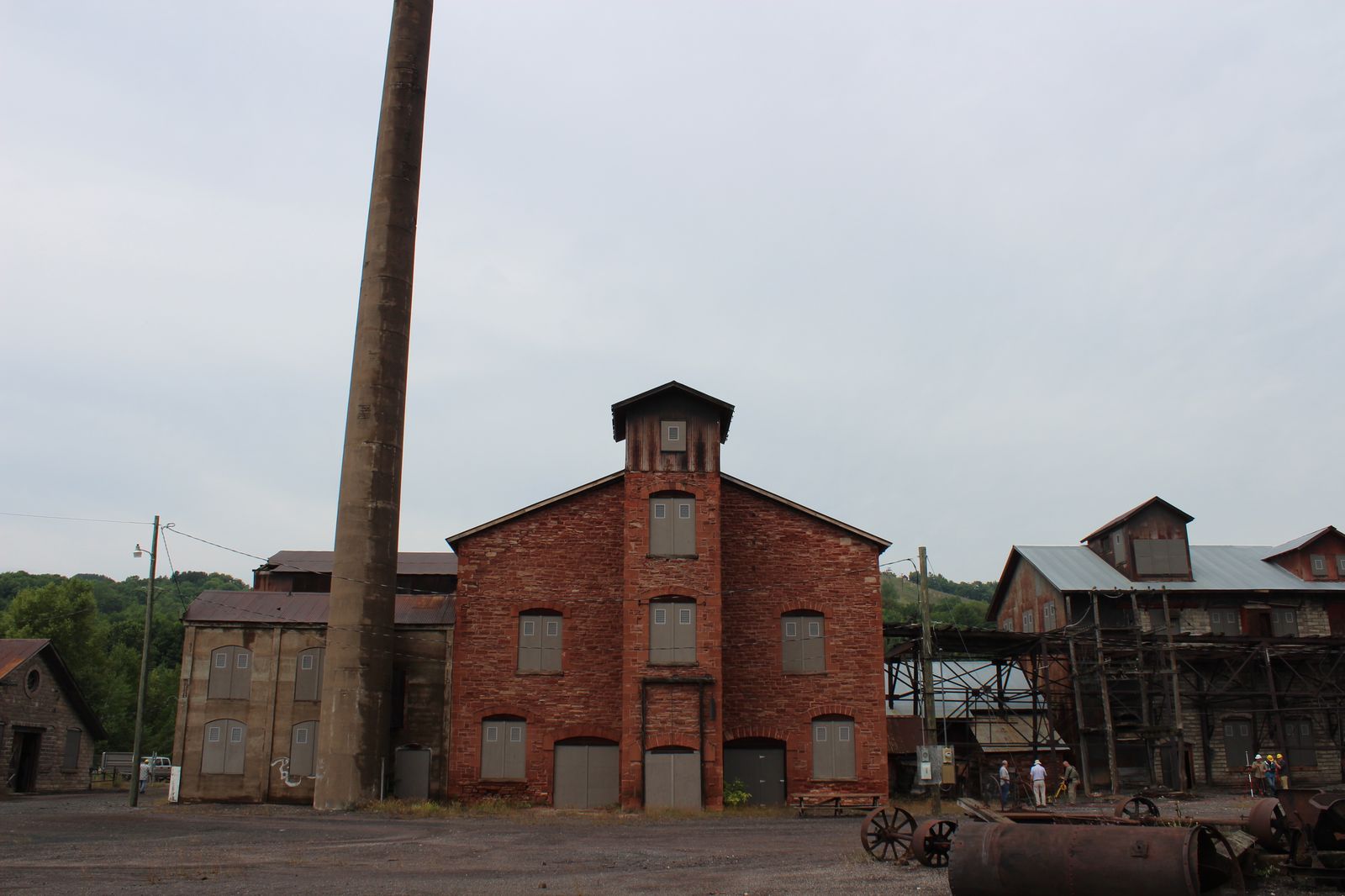
JAKARTA — For a year, the concentrate trucks from the highlands of Central Papua barely came. The silence at the far end of the supply line — the Grasberg minerals district, the richest copper-gold ground on earth — was the sound of a mine digging itself out of a disaster. This week the line is humming again. Freeport-McMoRan's third-quarter operating update, released October 2, puts the complex's mills at roughly 140,000 tonnes of ore a day — about two-thirds of their pre-incident pace — with the East Java smelter, idle since the September 2025 mud rush, back in production since late August. For Jakarta, the numbers land inside a larger negotiation: the February memorandum that trades decades of operating rights for a scheduled, paid-for transfer of control. Copper above $6.50 a pound is doing the rest of the talking.
The numbers first, because everything else is commentary. Consolidated third-quarter copper production came in at roughly 830 million pounds — about 376,500 tonnes, broadly in line with the company's July estimate — while consolidated gold output reached about 230,000 ounces. Copper sales are expected near 750 million pounds, tracking the July plan; gold sales, by contrast, will land near 100,000 ounces, because roughly 60,000 ounces of refined gold slipped into the fourth quarter. That timing quirk has a price: with fewer by-product credits, unit net cash costs are expected about 5% above the July estimate of $2.00 per pound.
Meanwhile the price line did the heavy lifting. Freeport expects its average realized copper price to exceed $6.50 a pound — a level that turns a production miss into a rounding error on revenue. Shares rose nearly 4% on October 2 to about $72, holding near $72.60 three days later. The market's read was plain: recovery on schedule, prices doing the rest.
Because of the size of the hole. Grasberg, in the highlands of Central Papua, is the world's second-largest copper mine and its largest gold mine — roughly 3 to 4% of global copper output. A third of it still offline is not a company problem; it is a market problem. Copper has endured a year of overlapping disruptions: flooding at Kamoa-Kakula in the Democratic Republic of Congo in May, an accident at Chile's El Teniente in July. ING's commodity team put it bluntly — the restart eases supply pressure on smelters facing feedstock shortages.
And demand is not waiting politely. China's refined copper output rose 8.9% year on year in October to 1.204 million tonnes on stronger ore purchases, while the electrification buildout — EVs, grids, data centers — keeps copper demand structurally hungry. That is why a 67% milling rate moves markets rather than filing as an engineering footnote: it measures, in tonnes per day, how fast the missing supply comes home.
Jakarta didn't seize the mine. It scheduled the takeover — fifteen years out, priced in copper.
The date that matters is September 8, 2025. An external mud rush — an estimated 800,000-tonne surge of mud from the former open pit, per the later technical review — swept the Grasberg Block Cave and killed seven workers. Freeport declared force majeure and shut the cave, which carries most of the complex's output. In late October 2025 the two unaffected underground mines, Big Gossan and the Deep Mill Level Zone, restarted; the Block Cave stayed dark while engineers reworked ground stability, drainage and the material-handling system.
The climb back has been deliberate, almost ostentatiously so. Production Blocks 2 and 3 restarted in the second quarter of 2026, with ramp-up beginning at the end of March. Material-handling upgrades finish in early 2027; Production Block 1S is targeted for mid-2027. The company still guides to about 80% of capacity by mid-2027 and full capacity near the end of 2027. Its investigation found the failure mode — accelerated ore removal from a narrow, clay-rich block creating a high-velocity flow channel — and, soberingly, that existing monitoring gave no precursory warning. Chief executive Kathleen Quirk has said the team is 'committed to restoring large-scale, low-cost production at Grasberg in a safe, efficient and responsible manner' — safety before speed.
Here is the thing about Indonesia's resource nationalism: it rarely arrives as a seizure. It arrives as a negotiation — and the February 18, 2026 memorandum of understanding with Freeport is the textbook case. PT Freeport Indonesia's special mining license will be extended for the life of the resource. Freeport-McMoRan keeps 48.76% through 2041, then hands 12% to government interests at no cost — reimbursed only at book value for post-2041 investments — and slides to about 37%. The state doesn't storm the mine; it schedules the majority.
The price of tenure came itemized: a new hospital and two medical education facilities for Papuan communities, higher exploration spending, and — the clause Jakarta cares about most — domestic downstreaming priority: refined copper, precious metals and sulfuric acid sold at home, with Freeport positioned to market refined copper to the United States on market terms should Washington need supply. Governance stays as it is. This is the Indonesian method, honed since the nickel export ban: the ore stays, the value is added at home, and the foreigner's share of the economics quietly shrinks on a published timetable.
Everything, because the doctrine is only as real as the furnaces. The East Java smelter — Manyar, in Gresik — restarted in late August 2026 and is ramping as planned. With the older PT Smelting refinery, the combined system can produce up to about 800,000 tonnes of copper cathode a year: concentrate mined in Papua refined in Java, not shipped raw on bulk carriers.
The chain was fragile while Grasberg was down, and Jakarta said so itself. Rizal Kasli, chair of the Indonesian Mining Experts Association's advisory board, warned that the production decline directly eroded concentrate supply to the Gresik smelters — an upstream accident wounding the downstream dream. While Manyar sat idle, PT Smelting took priority on the thin concentrate flow, and Freeport Indonesia even held inconclusive talks with Amman Mineral over concentrate supply. Chief executive Tony Wenas said in August that Manyar would restart as scheduled, with both smelters near 400,000 tonnes of cathode this year. The smelter is where Indonesia's industrial policy gets stress-tested — and this quarter, it passed.
Geopolitically, Grasberg is a three-way mirror. Washington gets an option on refined copper from an ally's soil just as China's smelters run hot and hungry; Beijing watches Indonesian concentrate policy as a preview of how Jakarta might one day treat nickel, bauxite and tin; Jakarta collects rent, hospitals and a growing equity slice while keeping American capital and know-how on site. Macroeconomically, $6.50 copper is the electrification trade made visible — every EV carries multiples of a combustion car's copper, and the grid behind it carries more. Demographically, the ledger is Papuan: the province hosting the country's richest mine and some of its poorest communities, now promised a hospital and medical schools — promises the memorandum wrote down because history taught Jakarta that unwritten ones curdle.
Historically, this is the playbook Jakarta has run for a decade: the 2014 raw-ore rules, the 2020 nickel ore ban that forced smelters onto Indonesian soil, the 2023 bauxite ban — and now copper concentrate squeezed, not banned, into domestic furnaces. Structurally, the technology story is the cave itself: block-cave mining is cheap, vast and unforgiving, and the September 2025 failure exposed the limits of cave-surface monitoring — a lesson geotechnical engineers everywhere must now absorb. None of this is new. The timing, as always with Jakarta, is the policy.
Plenty — and the company's own update lists the weather first. U.S. operations suffered localized flooding, power outages and strong winds; unusually dry conditions in Indonesia created milling challenges, limited so far but a reminder that tropical mining answers to the sky. Then the engineering calendar: material-handling upgrades run into early 2027, Block 1S is a mid-2027 target, and the final stretch to full capacity means more than a year of underground work in ground that has already killed seven people once. The review's finding — no precursory warning from existing systems — means the restart runs on redesigned surveillance yet to prove itself under stress.
And there is the money. Unit cash costs 5% above the $2.00-a-pound estimate is a timing story for now, but it shows how thin the margin is with a third of the mine missing: any ramp slippage, any further deferral of gold credits, lands directly on cost. The force majeure is lifted; its shadow — legal, financial, human — has not fully cleared the site.
Watch the calendar — Freeport has handed the market a dated checklist. The full Q3 financials will show whether $6.50-plus copper truly covered the cost creep. The Manyar ramp through Q4 will show whether the smelter chain holds under rising concentrate flow. Block 1S, targeted for mid-2027, is the next real engineering test; 80% of capacity by mid-2027 and full capacity by end-2027 are the numbers the stock is priced against.
Beneath the surface, two slower clocks tick. One is regulatory: the memorandum is signed, but the amended mining license — the actual legal instrument — still has to be issued, and Jakarta's bureaucracy has buried better deals in slower drawers. The other is the 2041 clock: fifteen years out, a free 12% transfer converting today's partnership into tomorrow's state-majority economics. Grasberg is back at two-thirds. The question was never whether the mine would recover — it is what Jakarta bought with the recovery. The answer, written down in February: time, metal, majority.
The Western financial press read the update as a de-risking event with a price chart attached. Dow Jones, TipRanks and the ING commodity desk all framed Grasberg as a supply line on a spreadsheet: 140,000 tonnes a day equals two-thirds of a 3–4% global copper share restored, copper above $6.50 a pound covers the 5% cost overrun, and the stock's 4% pop on October 2 is the market voting that the ramp schedule holds. The MoU barely registered as politics — it registered as tenure certainty, the thing that lets a discounted-cash-flow model run thirty years out.
What the Western lens underplays is the direction of travel in Jakarta's half of the deal. Coverage noted the 12% transfer to government interests in 2041 as a line item, not as what it is: a published timetable for the economics of the mine to pass into majority state hands. The Western reader got the copper; the sovereignty story was filed under 'regulatory.'
The Chinese metals press, led by Shanghai Metals Market's October 5 report, read the same numbers through the smelter's eyes. What matters in this telling is not Freeport's share price but the concentrate flow: 70,000 tonnes a day from the Block Cave, the East Java smelter ramping, and a combined 800,000 tonnes a year of cathode capacity — new refined copper entering a region where Chinese refineries ran 8.9% hotter in October and remain structurally hungry for feed. The recovery is, in this prism, one more upstream valve reopening for Asia's refining machine.
The eastern reading also hears the warning inside the MoU's downstreaming clause. Jakarta is keeping more value at home with every permit cycle — first nickel, then bauxite, now copper concentrate squeezed into domestic furnaces — and each step narrows the room for the old model of shipping raw Indonesian ore to foreign smelters. No Xinhua or CGTN English reporting on this week's update could be verified; the eastern lens here is carried by the metals trade press, which is where the signal actually lives.
In Jakarta, the story is not the stock price and not the smelter — it is the method. Indonesian coverage and mining-association commentary read the MoU as the mature form of the export-ban playbook: no seizure, no drama, just a signed schedule under which the foreigner's stake glides from 48.76% to about 37% while the hospital, the medical schools and the domestic refineries get built. The February deal is discussed in Jakarta the way other capitals discuss treaties — as the document that fixed the next thirty years. The Indonesian Mining Experts Association's warning about the 'domino effect' of the production shortfall on the Gresik smelters shows the domestic anxiety underneath: downstreaming is national pride, and an upstream accident wounds it directly.
The Global South press beyond Indonesia reads Grasberg as a template. Mining Weekly's reporting from Johannesburg tracked the Manyar restart as industrial policy in action — a developing economy converting geology into factories rather than royalties — and that is the reading that travels: from Lusaka to Lima, the question the update provokes is whether a scheduled, contractual path to majority control beats the expropriation cycle. Jakarta's answer, so far, is that patience is the sharpest form of nationalism.
Freeport-McMoRan produced about 830 million pounds of copper — roughly 376,500 tonnes — in Q3 2026, broadly in line with its July estimate, plus about 230,000 ounces of gold. Copper sales are expected near 750 million pounds, but gold sales will land near 100,000 ounces because roughly 60,000 ounces of refined gold sales were deferred into the fourth quarter, lifting unit cash costs about 5% above guidance.
Freeport targets about 80% of capacity by mid-2027 and full capacity approaching the end of 2027. The phased plan calls for material-handling upgrades to finish in early 2027, the restart of Production Block 1S around mid-2027, and possibly Production Block 1C by the end of 2027. In Q3 2026 the complex averaged about 140,000 tonnes of ore per day — roughly 67% of pre-incident milling rates.
On September 8, 2025, an external mud rush — an estimated 800,000-tonne surge of mud from the former open pit — swept into the Grasberg Block Cave underground mine, killing seven workers. Freeport declared force majeure and suspended the cave, which carries most of the complex's output. Two unaffected mines restarted in late October 2025; the Block Cave began a phased restart in the second quarter of 2026.
The February 2026 memorandum extends PT Freeport Indonesia's mining license for the life of the resource. Freeport keeps 48.76% through 2041, then about 37% after transferring 12% to government interests at no cost in 2041. In exchange Jakarta got downstreaming commitments — refined copper, precious metals and sulfuric acid sold domestically — plus a hospital and two medical schools for Papuan communities and higher exploration spending.
