EditionEnglish edition·Édition française
The Wire

The Ocean Is Changing Rapidly: Copernicus Warns the Polar Seas Are Being Remade

Arctic waters are warming eight times faster than the global ocean average. Sea ice is vanishing at a rate of one Spain per decade — and the Mediterranean just endured its worst marine heatwave on record.
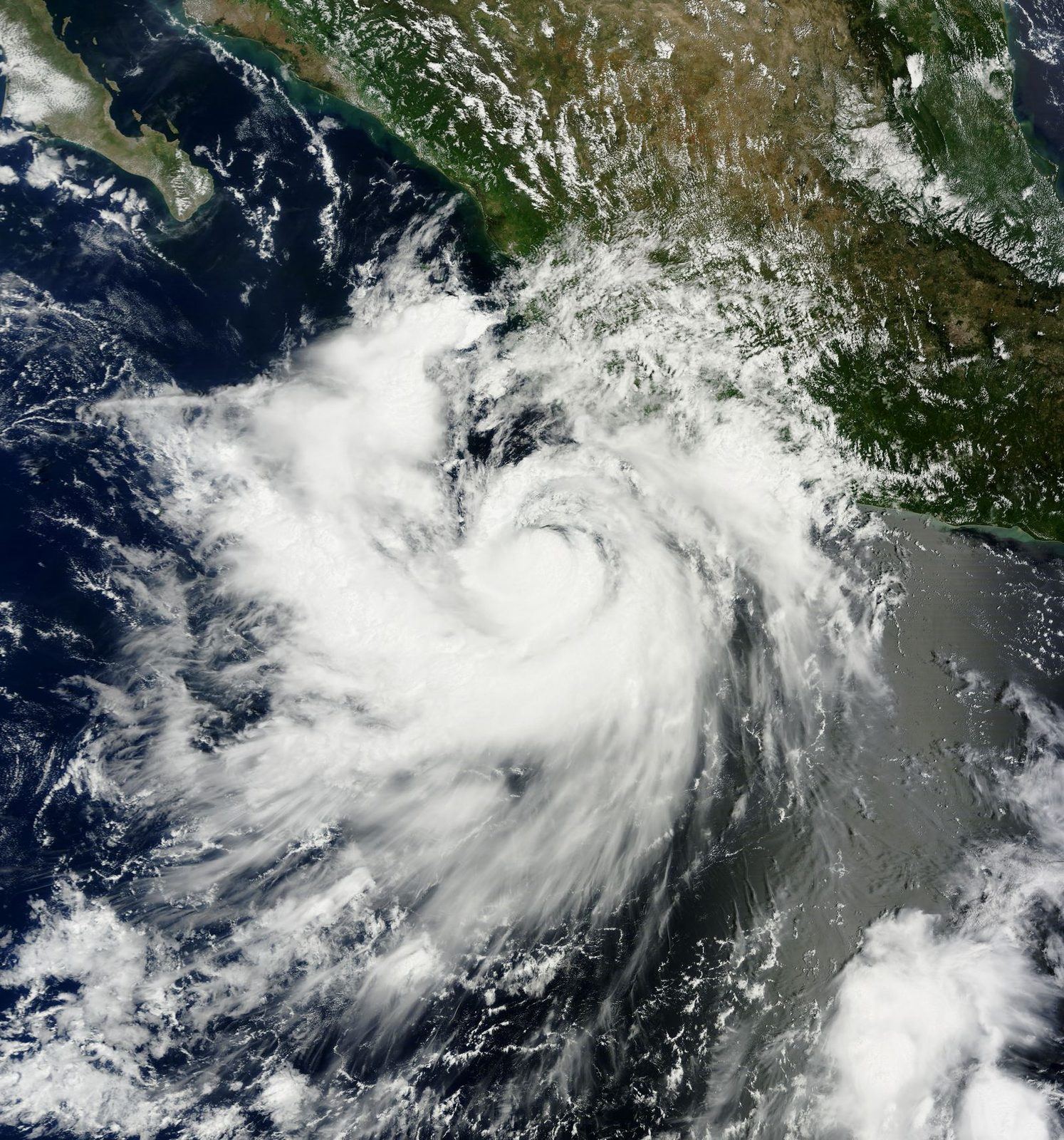
Hurricane Polo seen from space over the Pacific
Hurricane Polo seen from space. The Copernicus Ocean State Report warns the ocean is changing faster than at any point in the observational record.

Key facts

  • The Arctic's combined sea-surface and sea-ice temperature rose 4.2°C between 1982 and 2024 — about 1°C per decade, against a global ocean average of just 0.12°C per decade. Copernicus Ocean State Report, via AFP
  • In the Kara Sea north of Siberia, temperatures have climbed 6.7°C since 1982 — 1.68°C per decade, the sharpest regional warming on record. Copernicus Ocean State Report, via AFP
  • Arctic sea ice has shrunk by nearly 490,000 km² per decade since 1979 — losing an area the size of Spain every ten years; about 60% of Arctic coastal infrastructure is now vulnerable to erosion and sea-level rise. Copernicus Ocean State Report, via AFP
  • The Mediterranean and Black seas endured record-breaking marine heatwaves in 2024, with waters more than 4.6°C above normal; sea level has risen 4.2mm per year since 2012; Antarctic ice loss is threatening penguin populations. Copernicus Ocean State Report, via AFP ; Bulgarian Novinite

The message, in the words of the man who runs Europe's ocean observatory, is very clear: the ocean is changing rapidly. The tenth annual Copernicus Ocean State Report, published Wednesday by the EU's Copernicus Marine Service, says some of the most dramatic effects of global warming are unfolding at the poles — which hold around a fifth of the planet's ocean surface.

The Arctic is warming at a pace that dwarfs the global average. The combined sea-surface and sea-ice temperature of the Arctic rose 4.2°C between 1982 and 2024 — roughly 1°C per decade — against just 0.12°C per decade for the global ocean. In the Kara Sea, north of Siberia, the climb has been steeper still: 6.7°C since 1982, or 1.68°C per decade.

And the ice is keeping score. Arctic sea ice has shrunk by nearly half a million square kilometres per decade since 1979 — the equivalent of losing an area the size of Spain every ten years. As the ice retreats, Arctic coastlines stand exposed to wind and waves, worsening erosion and raising the stakes for coastal communities and the infrastructure they depend on. "The Arctic sea ice has been declining since the early '80s, leaving around 60 percent of coastal infrastructure vulnerable to erosion and sea level rise," Karina von Schuckmann, the report's director, told a media briefing.

Meanwhile, the warming is no longer a polar exclusive. The Mediterranean and Black seas suffered record-breaking marine heatwaves in 2024, with temperatures more than 4.6°C above normal. Marine ecosystems are shifting; waters are growing more acidic. And at the other end of the planet, ice loss in Antarctica is now threatening penguin populations on the frozen continent.

Step back, and the ledger is stark. Drawing on data stretching to 1960, the report shows average sea level rising by about 4.2mm per year since 2012. "The message is very clear," said Pierre Bahurel, director general of Mercator Ocean International, which runs the Copernicus Marine Service. "The ocean is changing rapidly." The consequences — for marine life, coastlines and communities — are already arriving, one heatwave at a time.

The consensus

What we agree on
The tenth Ocean State Report was published Wednesday by the EU Copernicus Marine Service (Mercator Ocean International); the poles hold ~20% of global ocean surface; the Arctic warming and ice-loss figures above; the 2024 Mediterranean/Black Sea marine heatwaves; sea level up 4.2mm per year since 2012.
What we disagree on
Not the measurements — the response: how fast is "too fast", and what adaptation and emissions policy the numbers demand. That argument is politics, not science.
What we know
The four-decade trend lines; the regional hotspots — Kara Sea, Mediterranean, Black Sea; the 60% infrastructure vulnerability figure; the two quotes above.
What we don't know yet
Where the retreat stops — and how much coastline, and whose, is reclaimed by the sea before it does.
What we expect
More records with the next report; mounting coastal-erosion pressure on Arctic communities; and these numbers carried into every climate negotiation this winter.

Sources

  • France 24 — climate change is increasingly reshaping the polar oceans; Arctic waters warming rapidly; sea ice shrinking; record heatwaves in the Mediterranean and Black seas West
  • AFP, via Muser Press and phys.org — 10th Copernicus Ocean State Report: 4.2°C Arctic warming since 1982; sea ice shrinking ~490,000 km² per decade; 60% of Arctic coastal infrastructure vulnerable; quotes from Pierre Bahurel and Karina von Schuckmann West
  • Bulgarian Novinite — Med and Black Sea record marine heatwaves in 2024 at +4.6°C above normal; sea level rising 4.2mm/year since 2012 West
Loading the discussion…