Chinese carmakers are moving from shipping cars to Europe to building entire production ecosystems inside the bloc, with factories and local partnerships multiplying, while Brussels answers with tariffs, quotas, and Made in Europe rules that may arrive too late to change the game.
Published 13 October 2026 · 23:53 GMT
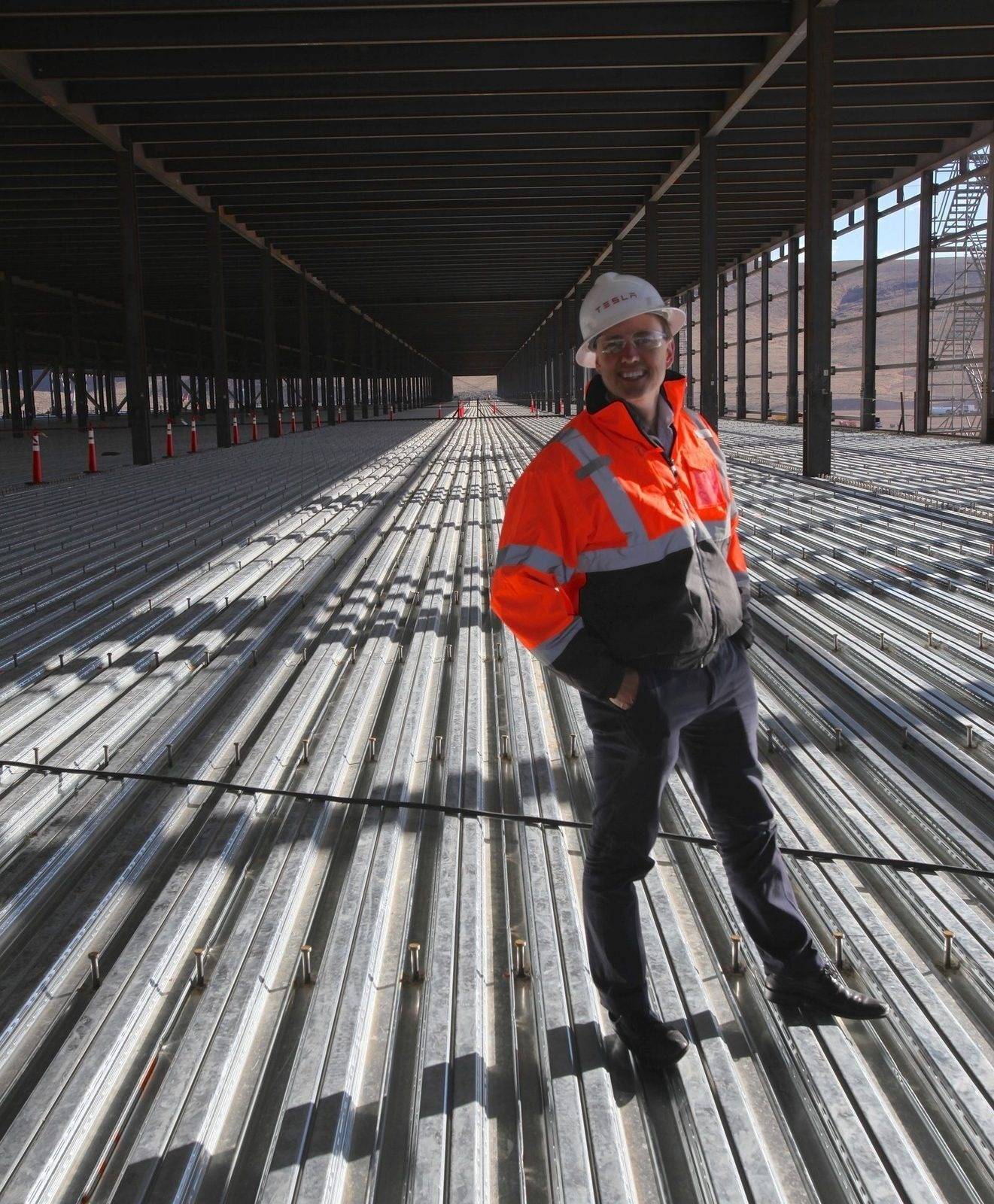
China's car industry has crossed a line in Europe. It is no longer mainly shipping finished cars into the bloc. It is building production capacity inside the bloc, bringing supply chains, partnerships, and entire production ecosystems with it. That was the picture presented by France 24's Business programme on 13 October, which reported that Chinese manufacturers are building up production capacity in Europe and boosting partnerships with local companies, even as Brussels tightens tariffs and writes new local-content rules.
The shift was on full display at the Paris Auto Show, where Chinese brands arrived in force. Alongside established names such as BYD and Chery, the show featured newer Chinese brands such as Aito, while the state-owned carmaker Changan launched two new brands, Nevo and Avatr. European carmakers answered with their own launches, including a retro electric version of the Citroen 2CV from Stellantis, aimed squarely at fending off Chinese competition.
The expert verdict on the programme was blunt. Philipp Seidel, automotive expert at Arthur D. Little, told France 24 that tariffs and quotas can buy time, but that European carmakers must improve their own competitiveness and must not become too dependent on Chinese suppliers.
The factory map is filling in quickly. In Hungary, BYD is building a plant reported to involve four billion euros of investment, aiming at 300,000 cars a year, with mass production expected to begin in the fourth quarter of 2026. In Austria, the supplier Magna already produces vehicles under contract for the Chinese EV maker Xpeng, and Xpeng's vice president Yeqing Zheng told Reuters that the volume there is not even sufficient for the company's needs, as it expects to keep growing by high double digits in Europe.
Xpeng now plans an additional European production line in partnership with a local manufacturer, either building a new plant or operating an existing one. Zheng said a decision on the new line will be made within months, and that production should start by the time the EU's Made in Europe rules take effect.
The partnership model is spreading. In July, China's Geely Auto said it will produce electric SUVs at a Ford factory in Spain. The Stellantis-led Leapmotor International joint venture, which sells Chinese-designed cars through European channels, said it will comply with any deal the EU and China reach. Its chief executive Danilo Annese said discussions were constantly under way with Stellantis over possible locations for future Leapmotor manufacturing sites in Europe, with a plant in Madrid among the options, alongside others outside Spain. The Paris show itself became a showcase of this rivalry, with European and Chinese makers launching products side by side.
For all the announcements, the decisive facts are still blank. No final decision has been made on where Xpeng's new line will be built, or with which partner. No final list exists for future Leapmotor sites. BYD's Hungarian timetable, reported as mass production in the fourth quarter of 2026, has yet to be proven on the production line. Announcements of capacity are not capacity, and the history of car plants is full of projects that slipped, shrank, or quietly disappeared.
Nor is it settled what the rules will finally require. The European Commission unveiled its Industrial Accelerator Act on 4 March, a Made in Europe proposal under which publicly funded or subsidised electric vehicles and plug-in hybrids would have to be assembled in the EU, with at least 70 percent of their non-battery components sourced locally. But the proposal still needs approval from the European Parliament and member states, and the electric vehicle rules would apply from around mid-2027, with the other provisions from 1 January 2029.
It is also unknown whether an EU-China deal to cap hybrid vehicle imports will close. The Leapmotor-Stellantis joint venture called such a cap an interesting alternative to tariffs, and said it will comply with whatever the two sides agree, but that details will need to be clarified in coming months. The talks over a hybrid import cap are one track among several, and the outcome will shape whether the shift to European production accelerates, slows, or simply changes form.
Because a tariff taxes a border crossing, and a factory inside the border does not cross it. When a Chinese car is built in Hungary, Spain, or Austria, the EU's duties on Chinese-made electric vehicles, imposed in October 2024, no longer apply to it in the same way. That is the simplest reason the production shift matters: it turns a trade barrier into a location decision, and location decisions are much harder for Brussels to control than imports.
The deeper stakes are jobs, technology, and dependence. A factory brings employment, supplier contracts, and training, which is why host countries compete for them. But it also raises the question Seidel put at the centre of the France 24 discussion: whether European carmakers, in sourcing batteries, software, and components from Chinese partners, become dependent on suppliers whose interests are set in Beijing.
The analytical core of this story is Seidel's warning: tariffs and quotas can buy time. They cannot, by themselves, create competitiveness. The history supports him. When Japanese carmakers faced trade barriers in the 1980s and 1990s, they built factories inside the protected markets, learned the local rules, and stayed. Localisation did not end the competition.
There is, however, a real difference this time. The contest is not only about assembly. It is about batteries, software, and the supply chains behind them, and Chinese firms lead in battery production and in the speed of product cycles. A European carmaker that buys Chinese batteries, licenses Chinese platforms, and shares showrooms with Chinese brands may survive the next five years while losing the capacity to design the five years after that. That is the dependence risk Seidel named, and it is the risk the Made in Europe rules are designed to limit, by requiring local content and screening large investments.
The rules themselves carry a tension. A 70 percent local-content requirement pushes Chinese firms deeper into the European production ecosystem, forcing them to share technology and buy more parts from European suppliers. That is the point. But the same rule raises costs, and if buyers can no longer claim subsidies for cars that miss the threshold, Chinese cars could lose the price advantage that made them dangerous. The carmakers are betting, with their factories, that they can live with it. The parallel negotiations over hybrid exports show how many tracks this contest now runs on.
The immediate winners are the host countries and their workers. A factory means construction jobs, assembly jobs, and supplier contracts, and a decade of production means training, tax revenue, and a place in the electric vehicle economy. Hungary, Spain, and Austria are the early names, and others will compete to join them. For consumers, local production can mean lower prices, shorter delivery times, and more choice, as Chinese brands fight European incumbents on their home ground.
The losers, if there are any, are harder to name. European carmakers that fail to close the competitiveness gap face a slow squeeze: market share lost at home, margins lost to price competition, and a supplier base that drifts toward Chinese standards. The European Union's own dilemma is sharper still.
There is also a British subplot. The EU has reportedly asked Britain to raise tariffs on Chinese cars to align levies and avoid routing around EU barriers, while Britain's prime minister has argued for trusted-partner status under the Made in Europe rules. The programme also opened with the latest IMF global growth forecast and its warning about rising debt, a reminder that the car fight sits inside a world economy growing at 3.1 percent with buffers wearing thin.
What comes next is a sequence of dated tests. Within months, Xpeng must choose a partner and a site for its new line. In the fourth quarter of 2026, BYD's Hungarian plant is expected to reach mass production, and the market will judge whether the timetable holds. In the coming months, the EU-China hybrid cap talks must produce details or stall. And through 2027, the Made in Europe rules must survive the European Parliament and member states. Each test will show whether Europe is shaping the production shift, or merely watching it.
Western coverage has framed the shift as a policy race. Brussels is trying to protect its car industry with tariffs, quotas, and Made in Europe rules, while Chinese firms move faster than the legislation. The European worry is that policymaking moves on a yearly timetable while Chinese firms can adjust production every month, and that by the time the rules bite, the factories will already be built, staffed, and selling.
Eastern coverage has framed the shift as adaptation under pressure. Chinese carmakers face a home market where sales fell 20 percent in the first half of 2026, and an American market effectively closed to them. Europe is the top priority because it is the market that is still open, and building there is presented as the logical answer to tariffs: if the door is barred to exports, walk through it as a local producer.
Southern coverage has asked who else gains. Chinese carmakers have spread capacity across Europe, Mexico, and Turkey, so no single measure can stop them, and the Global South watches the same pattern from the other side: battery materials mined in Africa and Latin America, assembly in middle-income states, and consumers everywhere offered cheaper electric cars. The prize is not only European factories, but a place in the supply chain that feeds them.
To get around tariffs and quotas on cars shipped from China, and to be closer to their most important open market. The EU imposed duties on Chinese-made electric vehicles in October 2024. Building inside the bloc avoids those duties, while home sales in China fell 20 percent in the first half of 2026 and the American market is effectively closed to Chinese cars.
A proposal unveiled on 4 March under the Industrial Accelerator Act. Publicly funded or subsidised electric vehicles and plug-in hybrids would have to be assembled in the EU, with at least 70 percent of their non-battery components sourced locally. It would also screen non-EU investments over 100 million euros in strategic industries. Parliament and member states must still approve it.
BYD is building a plant in Hungary reported at four billion euros and 300,000 cars a year. Xpeng cars are produced under contract by Magna in Austria, with a further line planned. Geely will build electric SUVs at a Ford factory in Spain, and the Stellantis-led Leapmotor joint venture is scouting sites for future European production.
Possibly, but not certainly. Local production can cut tariffs, shipping costs, and delivery times, and competition between Chinese and European brands puts pressure on prices. But Made in Europe local-content rules raise costs, and cars that miss the threshold may lose subsidies. Buyers are likely to see more choice before they see clearly lower prices.
