At 12:01 a.m. Tuesday, three presidential proclamations took effect banning Canadian alcohol, dairy products and motorcycles — the first outright import prohibitions of the trade war, resting on a Depression-era law no president has ever used this way.
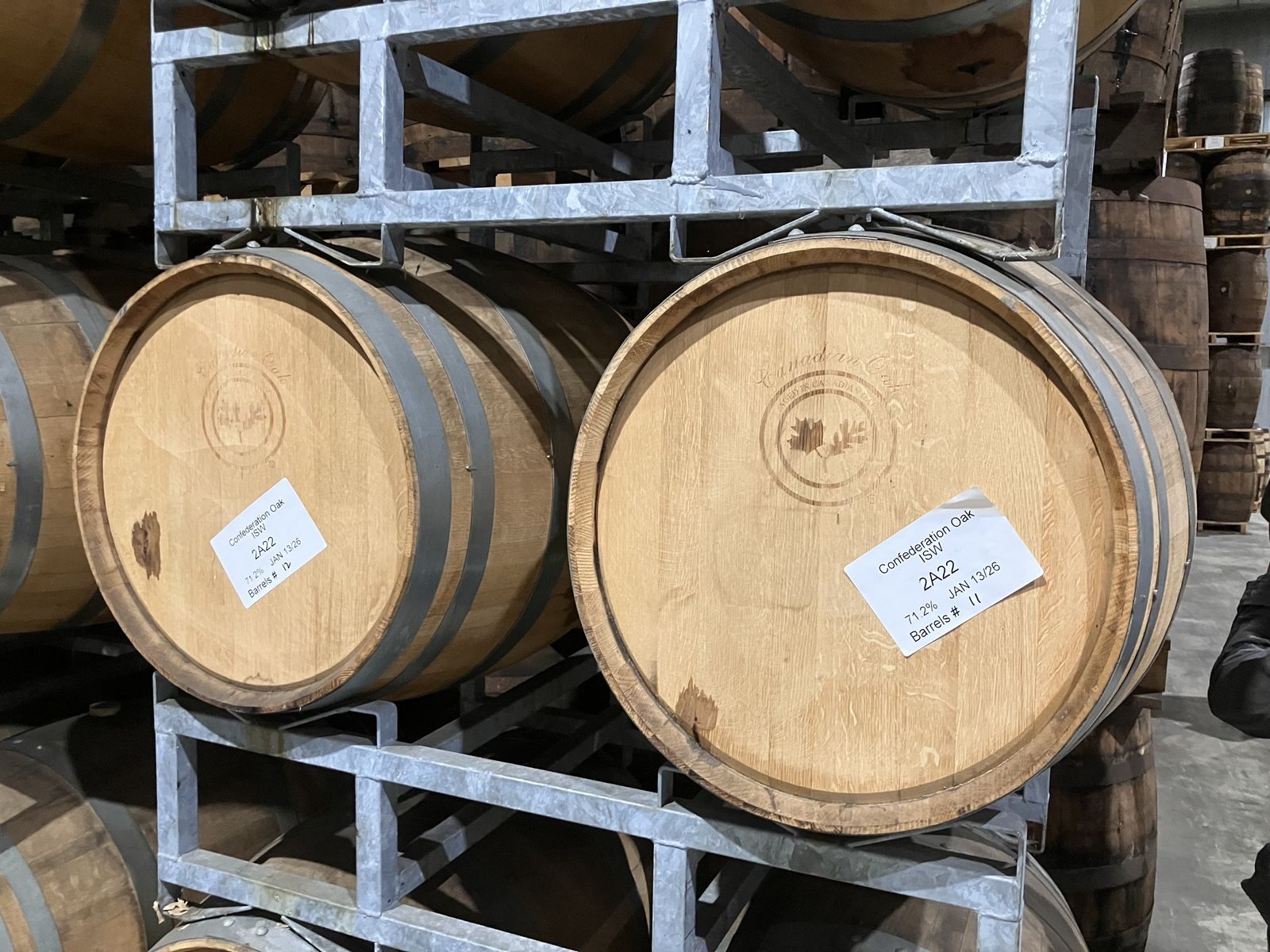
For eighteen months, the trade war between the United States and Canada has been fought with tariffs — taxes that raise prices but still let the goods through. At midnight on Tuesday, it became a different kind of war. The trucks carrying Canadian whisky, whey protein and motorcycles simply stopped being allowed in.
The mechanics are stark. Three presidential proclamations, signed September 8, became operative September 29. They invoke Section 338 of the Tariff Act of 1930 — the Smoot-Hawley law, the most infamous protectionist statute in American history — which lets a president block imports from countries deemed to discriminate against American commerce. No president has ever used it to impose an outright ban. Courts have never ruled on what the government must prove to meet its requirements.
The scale is deliberately surgical. About $1 billion in Canadian exports falls under the ban — a rounding error against $880 billion in annual two-way trade, but a hammer blow to the specific industries in its path. Canadian distillers lose the market that bought 93% of their liquor exports last year. Whey processors lose the protein-powder supply chain. Bombardier Recreational Products has confirmed its Can-Am Spyder and Canyon motorcycles are caught by the 800cc threshold.
The trucks carrying Canadian whisky simply stopped being allowed in.
On the ground, the ban is already producing confusion. A liquor store manager in Niagara Falls, New York — five miles from the border — told CNN he is baffled and worried: his shelves are full of Canadian whisky and his customers are Canadian. The proclamations carry 'packaged' limitations and bulk-container carve-outs, so lawyers are now parsing, bottle by bottle, what 'excluded from importation' actually means.
Ottawa is not waiting to find out. Canada answered dollar-for-dollar on September 8 with retaliatory surtaxes of 15%, 25% and 50% on roughly C$27.6 billion of American goods. Most provinces have stopped selling American liquor — a boycott that began in March 2025 and has now cratered US spirits exports to Canada by 70%, according to industry group DISCUS. The pain, as always in trade wars, is mutual.
The history here is hard to ignore. Smoot-Hawley is the law that deepened the Great Depression — the one Ben Stein's teacher droned on about in 'Ferris Bueller's Day Off.' For nearly a century it sat on the books as a cautionary tale. Its revival as a weapon of first resort, against America's closest ally and largest trading partner, is the kind of irony historians will underline.
The collateral damage may be the agreement itself. The USMCA — the trade pact Trump himself signed — is straining under the weight of measures its drafters never contemplated. Each escalation makes the pact's review harder and gives every other American trading partner a preview of what 'renegotiation' might mean.
What happens now is a race between three clocks: the courts, where trade lawyers expect challenges within weeks; the calendar, where Trump's 'three or four weeks' prediction meets Ottawa's vow to hold the line and diversify; and the economy, where $1 billion of banned goods is small — until the precedent spreads.
Western coverage — CNN, the BBC, the Wall Street Journal — treats the ban as a rule-of-law stress test. The narrative is institutional: a 1930 emergency statute, never tested this way, now doing the work of trade policy by proclamation. The Journal's framing is dry and devastating — the administration is betting that courts will bless a power no president has claimed in 96 years.
The Western lens also dwells on the chaos at the border. CNN's liquor-store interviews are not color; they are the story — a trade policy so abrupt that the people who must enforce it, shelf by shelf, learned the details from television. Competence, in this telling, is the first casualty.
Eastern coverage — Xinhua, TASS — reads the ban as Washington bullying its own ally, and draws the obvious moral. The argument: a superpower that treats Canada this way will treat anyone this way; the 'rules-based order' was always rules for others. Chinese state media frames Ottawa's retaliation as the dignified response of a sovereign state.
The Eastern lens lingers on the Smoot-Hawley irony with open satisfaction. The law that exported America's Depression to the world is back, this time aimed at America's best friend. In this reading, the United States is not defending its commerce — it is demonstrating why the rest of the world is building trade routes around it.
The Global South lens — Nigeria's Trumpet, India's business press — reads the story as a masterclass in what not to depend on. The lesson traveling through developing-world capitals: if Washington can ban Canadian whisky overnight, no supply chain anchored in the United States is safe. Diversification is no longer strategy; it is survival.
What stings, in the South's telling, is the asymmetry of pain. A $1 billion ban is 'symbolic' in Washington and existential in a Canadian distillery town. The developing world has lived this arithmetic for decades — the only novelty is watching it happen to a G7 ally.
