After nearly three decades on the championship calendar, the seaside track that carried Australian motorcycling's greatest moments hosts its final grand prix on Sunday — before MotoGP moves to a street circuit in Adelaide in 2027, with the title fight still hanging on two points.
Published 22 October 2026 · 08:59 GMT
After nearly three decades on the championship calendar, the seaside track that carried Australian motorcycling's greatest moments hosts its final grand prix on Sunday — before MotoGP moves to a street circuit in Adelaide in 2027, with the title fight still hanging on two points. On Sunday, 25 October 2026, Phillip Island hosts the final MotoGP Australian Grand Prix at the seaside circuit, closing a run on the world championship calendar that began in 1997.
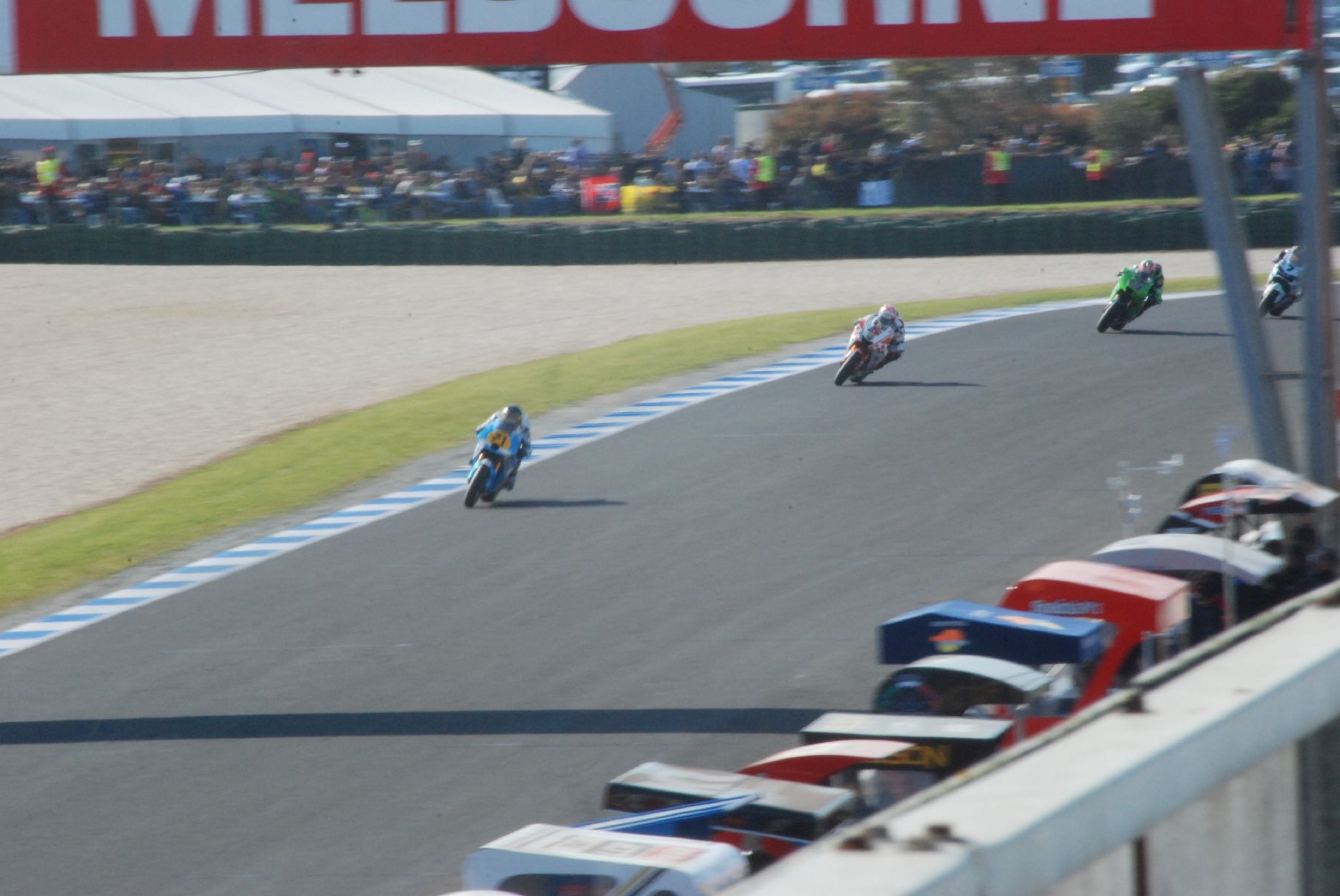
On Sunday, 25 October 2026, the lights go out on the Phillip Island Grand Prix Circuit for the last time in MotoGP. After nearly three decades as the championship's most romantic address, the seaside track south of Melbourne hosts its final Australian Grand Prix — and from next year, the race belongs to the streets of Adelaide. Emotions are running high, and nobody is hiding it. On Thursday, hundreds of local residents lined the roadsides to greet the riders as they rode across the San Remo bridge in a processional ride to the track. Ducati's Marc Marquez, a seven-time world champion who has won five races here including four MotoGP events, put it plainly: racing at Phillip Island for the last time will be emotional. “Phillip Island is an extraordinary circuit,” he said. “It is a track with a unique, breathtaking layout.” Home racer Jack Miller, eyeing the rain forecast, summed up the mood in four words: the island is giving itself “a proper send-off.”
Barring the two years lost to the COVID-19 pandemic, Phillip Island has been a fixture on the world championship calendar for 30 years — since 1997, following a first championship-counting visit in 1989 and a 1991–96 detour to Eastern Creek in Sydney. Millions of fans have passed through its gates, and the ledger of Australian moments written here is unmatched. Casey Stoner celebrated six wins in succession from 2007 to 2012, an unmatched reign of home dominance. Mick Doohan sealed his fifth and final world title with victory in the 1998 race. Wayne Gardner, the country's first premier-class world champion, won back-to-back in the grand prix's first two championship races in 1989–90. All three have corners named after them — Stoner, Doohan, Gardner, in that order along the fastest lap of the season. Valentino Rossi holds the outright record with eight wins across classes, and Honda leads the manufacturers with 39. The island's combination of high-speed corners and fickle weather has often produced drama, and the fans who crossed bass strait for it never forgot.
How does a street circuit change MotoGP? Nobody can answer yet, because no grand prix in the championship's history has ever been raced on a city-centre street circuit. Adelaide's proposed 4.195km, 18-corner layout is derived from the former Adelaide Formula 1 circuit, but a paper layout is not a racing circuit — the layout will be tested only when the first bikes roll in November 2027. The exact calendar slot is pencilled rather than confirmed, and the economics are not public: the value of the South Australian deal, the cost of redeveloping parklands, and the attendance guarantees all sit behind closed doors. Public opposition to the Adelaide redevelopment has already surfaced over tree felling and changes to parkland. Nor do we know what Phillip Island itself keeps: the circuit remains, but its calendar without MotoGP is unannounced, and the Victoria-state tourism machine that banked on October's tens of thousands of visitors has yet to show its hand. Finally, the rider market has questions of its own — including whether last year's winner Raul Fernandez, seventh in the standings, can defend his crown on the one track where he owns a victory.
Phillip Island mattered because riders said so — loudly, repeatedly, and across generations. The roll call of the farewell reads like a Hall of Fame: Marquez, Stoner, Doohan, Gardner, Rossi, and Francesco Bagnaia, who has never stood on the top step of the Phillip Island podium but whose third and second places in 2022 and 2023 were crucial to his title triumphs. “It holds an incredible charm, an extraordinary layout, and pure adrenaline,” Bagnaia said this week. For a championship increasingly built around manufactured spectacle, Phillip Island was the opposite: a natural amphitheatre where the fastest corner in the sport (turn 8, flat in sixth) meets weather that can change a race in minutes. Its departure closes a chapter in how Australian sport sells itself to the world. Australia has long paired sunlit coastline with world-class events — a formula visible from the country's resources boom to its tourism pitch — and MotoGP at the island was its most elegant expression. What moves to Adelaide in 2027 is not just a race but a ritual.
The end of the Phillip Island era is a story about money wearing a helmet. The 2026 race marked the expiry of a long-term contract with the Victorian state government, and Dorna — the championship's organiser — pushed to move the event to Albert Park, the Formula 1 circuit in central Melbourne. Victoria said no, and South Australia stepped into the vacuum with a deal for the race's first street circuit. Underneath the statements sit two colliding forces. One is state-versus-state competition for major events, an Australian specialty: South Australia saw a marquee property fall into play and moved fast. The other is Dorna's own commercial model, which increasingly favours urban festivals over far-flung circuits. Phillip Island was, in Reuters' phrase, “a far-flung track with ageing facilities long overdue for an upgrade,” and Casey Stoner told the Herald Sun that local organisers “had not tried hard enough” to build the festival atmosphere around it. This is the pattern racing keeps repeating worldwide — see the Formula 1 scramble for new street-circuit markets: heritage bends to the highest bidder, and the bidder is usually a city. Whether Adelaide's gamble pays will be decided not by nostalgia but by turnstiles.
The second-order effects start with the local economy. Phillip Island's October visitor surge — was built on a fixture that no longer exists. For Victoria, the loss is double-edged: the state keeps the Formula 1 Grand Prix at Albert Park every autumn but loses the spring motorcycle carnival that opened its event calendar. For Australia, the map changes: from 2027 the country hosts two grand prix in two formats — Formula 1 on a permanent Melbourne circuit and MotoGP on Adelaide streets, a rare double that puts the nation's motorsport portfolio among the world's most diverse. The deeper shift is in how the championship stages itself. A city-centre street circuit brings MotoGP into the downtown arena for the first time — closer to sponsors, celebrities and cameras, further from the wide-open natural tracks that defined its post-war century. If Adelaide works, expect the model exported: every promoter of a “far-flung” circuit from Jerez to Motegi will read the island's fate as a warning. The Australian factbook keeps the receipts on the before picture.
Three races inside the race. First, the championship: Jorge Martin leads Marc Marquez by two points with five rounds remaining, and the final island weekend lands at the exact moment the title fight is tightest. Marco Bezzecchi, fresh from winning in Indonesia and 44 points behind Marquez, is the spoiler with momentum. Second, the personal ledger: Marquez has five Phillip Island wins; Bagnaia has never won here despite two title-winning podiums; and Raul Fernandez returns as defending champion, who seized last year's race when both Marquez and Martin missed it through injury. Third, the weather: after a week of sunshine, rain is forecast for Saturday qualifying, and a storm may even disrupt Sunday's race. Miller, the home racer, is not complaining — a decent wet-weather performer, he sees a final gift: “Phillip Island's giving itself a proper send-off. I'm not angry about that.” When the chequered flag falls on Sunday, the paddock packs for a street circuit nobody has ridden — and an island keeps its corners, its wind, and its memories.
The West: a bidding war with a romance subplot Western coverage reads Phillip Island as commerce, not just sentiment. Reuters framed the move as a contract expiry met by competing governments: Dorna's Albert Park push, Victoria's refusal, South Australia's swoop. Australian outlets add the self-reckoning: Stoner's “dropped the ball” verdict on the Victorian government, and the frank assessment of ageing facilities at a far-flung track.
The East: the fans' track, reported at a distance Eastern outlets — CNA and the Straits Times in Singapore, Free Malaysia Today — carried the story through the wire, and their framing is the paddock's framing: the riders' beloved circuit, the two-point title gap, the sheer emotion of the weekend. For Asia's audience, Phillip Island was never far-flung — it was the southern anchor of a regional racing season, and the farewell lands as a personal loss. The East's question is practical: what does Adelaide, a street circuit nobody has raced, offer the Asian leg of the calendar?
The Global South: a cathedral for the colonised speedway Global South coverage — Kuwait Times and the Express Tribune via AFP, SuperSport in South Africa — reads the farewell through the riders who are not from the sport's European heartland. The AFP telling leads with Marquez and Martin, but its emotional register is Bagnaia's unfulfilled dream and Fernandez's tears. For the South's fans, Phillip Island's legend was always borrowed from Australia: Wayne Gardner's back-to-back, Stoner's six, Rossi's eight — a European-dominated record book written on southern soil.
The 2026 race marked the end of a long-term contract with the Victorian state government. MotoGP organiser Dorna pushed to move the race to Melbourne's Albert Park, Victoria declined, and South Australia stepped in with a six-year deal for a street circuit in Adelaide from 2027. Ageing facilities at the far-flung island track sealed the deal.
The race moves to Adelaide from 2027 on MotoGP's first-ever street circuit — a 4.195km, 18-corner layout based on the former Adelaide Formula 1 circuit. The six-year agreement with the South Australian government was announced on 19 February 2026 and runs to 2032, with the first race scheduled for November 2027.
Valentino Rossi holds the outright record with eight wins across classes at the Australian Grand Prix. Among Australians, Casey Stoner is unmatched with six consecutive MotoGP victories from 2007 to 2012, while Mick Doohan won three times and Wayne Gardner twice. Track sections are named for Stoner, Doohan and Gardner.
Aprilia rider Jorge Martin leads Ducati's Marc Marquez by two points, with five rounds remaining after this weekend. Marco Bezzecchi, who won the last race in Indonesia, is third, 44 points behind Marquez. Defending Australian GP champion Raul Fernandez sits seventh in the standings.
