Flames swallowed the Kehlsteinhaus — the Alpine retreat known as the Eagle's Nest — late on Friday, as around 200 firefighters fought difficult terrain and Bavarian police detained a man near the scene while a criminal investigation into the blaze got under way.
Published 24 October 2026 · 05:13 GMT
Flames swallowed the Kehlsteinhaus — the Alpine retreat known as the Eagle's Nest — late on Friday, as around 200 firefighters fought difficult terrain and Bavarian police detained a man near the scene while a criminal investigation into the blaze got under way. At 21:15 local time on Friday, October 23, 2026, a fire alarm reached dispatchers in Traunstein from the Kehlsteinhaus above Berchtesgaden; arriving crews found the building engulfed in flames.
On the evening of Friday, October 23, 2026, a fire broke out at the Kehlsteinhaus — Hitler's Eagle's Nest — above Berchtesgaden; the alarm reached Traunstein at 21:15 local time, around 200 emergency personnel fought the blaze at the 1,834-metre site through difficult terrain, a suspect was detained during the night, no injuries were reported, and a criminal police investigation is ongoing.
How firmly to read the arson signal — a police spokesperson told the newspaper BILD that arson was suspected and that a motorcyclist was arrested on the road to the scene, while the official police statements say only that a criminal investigation is under way to determine whether the detained person is connected to the fire; the arrest is confirmed, the evidentiary link is not.
The cause of the fire; whether the detained man had any connection to it or what his motive was; who he is and why he was on the mountain that night; the extent of the damage to the listed structure; and whether the Kehlsteinhaus can be restored.
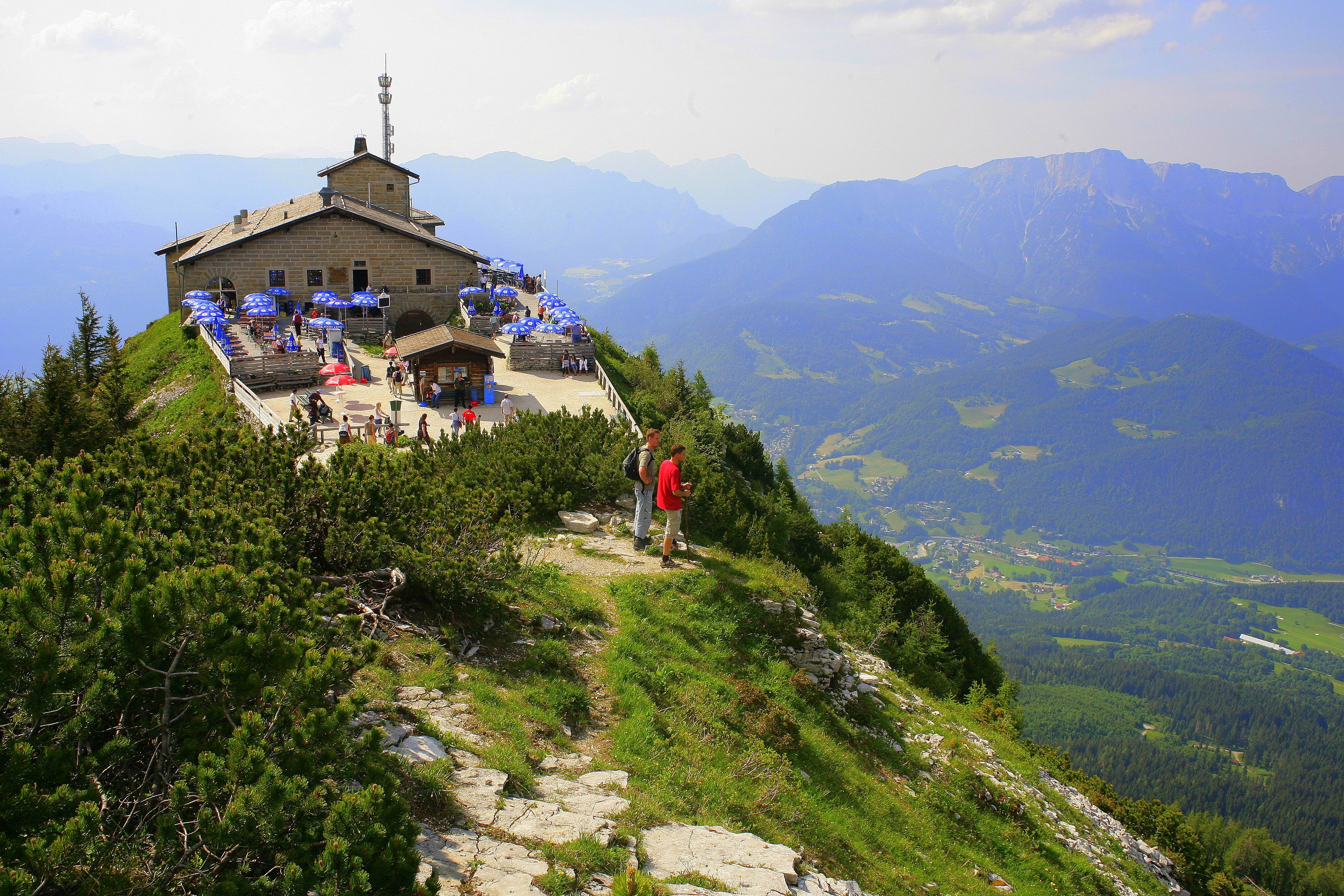
At 21:15 local time on Friday, October 23, 2026, dispatchers in Traunstein received a fire alarm from the Kehlsteinhaus, the stone retreat perched on the Kehlstein peak above Berchtesgaden in southern Bavaria. When the first crews reached the remote 1,834-metre site, the building was already engulfed in flames.
Difficult terrain and the exposed mountaintop location hampered the operation for hours. Police said the area could only be entered with respiratory protective equipment, and the blaze was still burning early on Saturday morning. About 200 emergency personnel were deployed to the mountain.
During the response, police detained a suspect. German tabloid BILD, citing a police spokesperson, reported that officers heading to the scene encountered a motorcyclist, alerted the fire brigade following behind them, and stopped and arrested the man. The spokesperson told BILD that arson was suspected. Police said a criminal investigation was under way to determine whether the detained man is connected to the fire, and there was no immediate word of a motive.
No injuries were reported, and the initial information indicated that nobody was inside the building when the fire broke out. The Kehlsteinhaus — Adolf Hitler's former Alpine retreat, known as the Eagle's Nest — has stood as a tourist destination and memorial site since the war, owned by the Free State of Bavaria.
The alarm reached Traunstein dispatchers at 21:15 (19:15 GMT) on Friday, October 23, 2026, and responding crews found the structure "completely ablaze," police spokeswoman Lisa Maier told reporters. Roughly 200 firefighters and emergency personnel were committed to the operation around Berchtesgaden.
The blaze broke out in one of the most exposed historic buildings in Europe. The Kehlsteinhaus sits near the Austrian border on the Kehlstein summit; arriving crews faced severe access difficulties, and police said the mountain could only be entered with respiratory protective equipment.
A suspect was detained during the night. Police said they are investigating whether the person, detained close to the scene, was connected to the fire, and that a criminal police investigation is ongoing. A police spokesperson told the newspaper BILD that arson was suspected; officers encountered a motorcyclist on the road to the scene and arrested him, though it remains unclear whether he was involved in starting the blaze.
There were no reports of injuries. Authorities believed nobody was inside the building when the fire started, and emergency services remained on the scene into the early hours of Saturday. The exact cause of the fire has not been established.
The central open question is the cause of the fire — and, inseparable from it, the role, if any, of the detained man. A police spokesperson told BILD that arson was suspected, but the official police line is more cautious: a criminal investigation is under way to determine whether the suspect is connected to the blaze at all. Arrest is not accusation.
No motive has been named. There was no immediate word from police about who the detained person is, why he was on the mountain at that hour, or whether the fire began inside the building or was set from outside.
Police have said only that the man was detained close to the scene. BILD's account — a motorcyclist encountered by officers en route, then arrested — has not been confirmed in an official police statement, and the evidentiary link between the man and the ignition point remains the core of the investigation.
The extent of the damage is also unknown. The Kehlsteinhaus is a listed historical monument; early Saturday the fire was still burning, and whether the stone structure can be saved — or how much of the interior survived — will only become clear once forensic teams can enter safely.
The Kehlsteinhaus is not an ordinary building. Completed by the Nazis in 1938 as a prestigious teahouse and guest house for Adolf Hitler, it was a part-time seat of government where commanders met to plan the invasion of the Soviet Union in 1941. It escaped destruction in 1945 and has operated as a mountain inn since 1952, drawing hundreds of thousands of visitors a year — including school groups brought to confront the machinery of the Nazi regime.
Its official website describes it as "also a cautionary reminder of the abysses of the inhumane Nazi dictatorship" — a deliberate civic instrument, not a nostalgic shrine. That makes a suspected arson on this particular building land differently: it is an attack, if arson is confirmed, on a site Germany consecrated to remembrance.
The fire also tests the machinery of German Erinnerungskultur — the culture of remembrance that turned Nazi sites into classrooms. How Bavaria responds to the damage — restore, repurpose, or preserve the ruin — will become part of the site's next chapter, and the question is already implicit in how Europe treats politically charged criminal cases as tests of the state.
Germany's approach to its difficult heritage rests on a bargain: preserve the places, strip them of mystique. The Kehlsteinhaus was spared in 1945 precisely so it could be demystified — turned into a restaurant and exhibition where the Alpine grandeur is confronted, not admired. A fire that may have been deliberately set attacks that bargain at its symbolic heart.
That is why the arson-suspicion detail matters so much, and why investigators will be careful. The police spokesperson's remark to BILD — "arson is suspected" — travelled worldwide within hours, but the official record says only that a criminal investigation is under way. The distance between those two formulations is where speculation rushes in, and where German authorities have every incentive to be exact: a politically motivated arson and a drifter's accident demand entirely different civic responses.
The pattern is well established: memory sites are among the most heavily monitored properties in the country, and incidents at them — vandalism, graffiti, now possibly fire — are treated as barometers of the political climate. Investigations in France into politically charged violence show how quickly a single incident at a symbolic site becomes a national conversation. Bavaria now faces that same moment with one of the continent's most photographed ruins-in-waiting.
There is also the forensic reality: a 1938 stone building at 1,834 metres, with narrow access and a history of renovations, will test investigators. Determining ignition points in a still-smouldering Alpine structure takes time — and time is the commodity the news cycle will not grant.
Before any of the symbolism, this was a feat of logistics. Two hundred emergency personnel fought a blaze on a peak reachable only by a single winding road, in darkness, with smoke so thick that crews needed breathing apparatus. The Kehlsteinhaus's inaccessibility — the reason the Nazis prized it, the reason tourists line up for the brass elevator — is also what nearly made it unsaveable.
The fire will force a hard conversation about protecting Germany's elevated heritage. If the cause proves to be arson, the security posture at remembrance sites will have to be rebuilt around a new threat model. If it proves accidental — an electrical fault in an eighty-eight-year-old building — then the question becomes maintenance and fire suppression in historic Alpine structures, a quieter but costlier reckoning.
There is a heritage dimension too. The site is one of Bavaria's most visited monuments, and its exhibition work has been a model of how to handle uncomfortable history. Even a partial loss would reverberate through the global effort to preserve difficult heritage, where the physical site is the argument itself.
The criminal police investigation is ongoing, and the immediate next steps are procedural: forensic teams enter once the site is safe, establish the point of origin, and determine whether accelerants were used. The detained suspect's status — held, released, or charged — will clarify in the coming days, and police will have to say, on the record, what the man was doing on the Kehlstein that night.
Watch for an official damage assessment from the Free State of Bavaria, which owns the building. Whether the structure is restorable — and what restoration of a Nazi-era monument even means in 2026 — will be decided in consultation with heritage authorities and, inevitably, in public debate.
The site's own custodians will also have to decide how to tell this story to visitors. If arson is confirmed, the fire becomes part of the monument's meaning — another layer in the building's long history as a contested place.
The Western lens: precision, procedure, and the arson question Western coverage, led by the BBC and Reuters, is procedural and cautious: the timeline (21:15 alarm), the scale (200 personnel), the suspect's detention, and the careful distinction between a spokesperson's arson remark to BILD and the official "criminal investigation" formulation. The frame is the machinery of the state responding to an attack on a memorial — and the anxiety is about motive: who burns a remembrance site, and why.
The Eastern lens: the mountain's history, told plainly Eastern coverage — India's Times of India and Times Now, Singapore's The Straits Times — carries the same wire facts but leads with the building's biography: built 1937–38 as Hitler's teahouse, inn since 1952, owned by Bavaria. The Eastern framing treats the fire as a world-heritage event first and a German domestic incident second, with the BILD-sourced detail — the motorcyclist, the arson suspicion — as the human drama at the centre.
The Southern lens: silence in the verification window No independent Global South outlet — no Al Jazeera, no African or Latin American newsroom — had carried original reporting on the Kehlsteinhaus fire within this verification window. The story travelled through the Western wire and Eastern republication alone. That absence is itself a signal: a European memory-site fire, however symbolic in Berlin or Berchtesgaden, does not yet register as a story the Global South tells itself.
At 21:15 local time on Friday, October 23, 2026, a fire broke out at the Kehlsteinhaus — the Alpine retreat known as Hitler's Eagle's Nest — above Berchtesgaden in Bavaria. Around 200 firefighters battled the blaze at the 1,834-metre site through difficult terrain. Bavarian police detained a suspect during the night, and a criminal investigation into the fire is under way.
It is too early to say. A police spokesperson told the German newspaper BILD that arson was suspected and that a motorcyclist was arrested on the road to the scene. But official police statements say only that a criminal investigation is under way to determine whether the detained person is connected to the fire at all. The cause has not been established.
The Kehlsteinhaus was completed by the Nazis in 1938 as a prestigious teahouse and guest house for Adolf Hitler — a part-time seat of government where the 1941 invasion of the USSR was planned. It escaped destruction in 1945, became a mountain inn in 1952, and is owned by the Free State of Bavaria as a listed monument — a site deliberately kept as a cautionary reminder of the Nazi dictatorship.
No injuries were reported, and authorities believed nobody was inside the building when the fire broke out. Emergency services remained on the scene into the early hours of Saturday, and the fire was still burning. The extent of the damage to the listed stone structure will only become clear once forensic teams can safely enter the site.
