France 24's Across Africa put its cameras on Cédric Kouamé this week — the Ivorian DJ crisscrossing the country to rescue 20th-century African vinyl from oblivion. His Baoulecore archive in Abidjan holds thousands of records; his ambition is bigger still: an official national centre for the country's historical archives.
Published 23 October 2026 · 11:14 GMT
France 24's Across Africa put its cameras on Cédric Kouamé this week — the Ivorian DJ crisscrossing the country to rescue 20th-century African vinyl from oblivion. His Baoulecore archive in Abidjan holds thousands of records; his ambition is bigger still: an official national centre for the country's historical archives. France 24's weekly magazine Across Africa devoted its lead segment this week to Ivorian DJ Cédric Kouamé, who travels across Côte d'Ivoire collecting old vinyl records before restoring them.
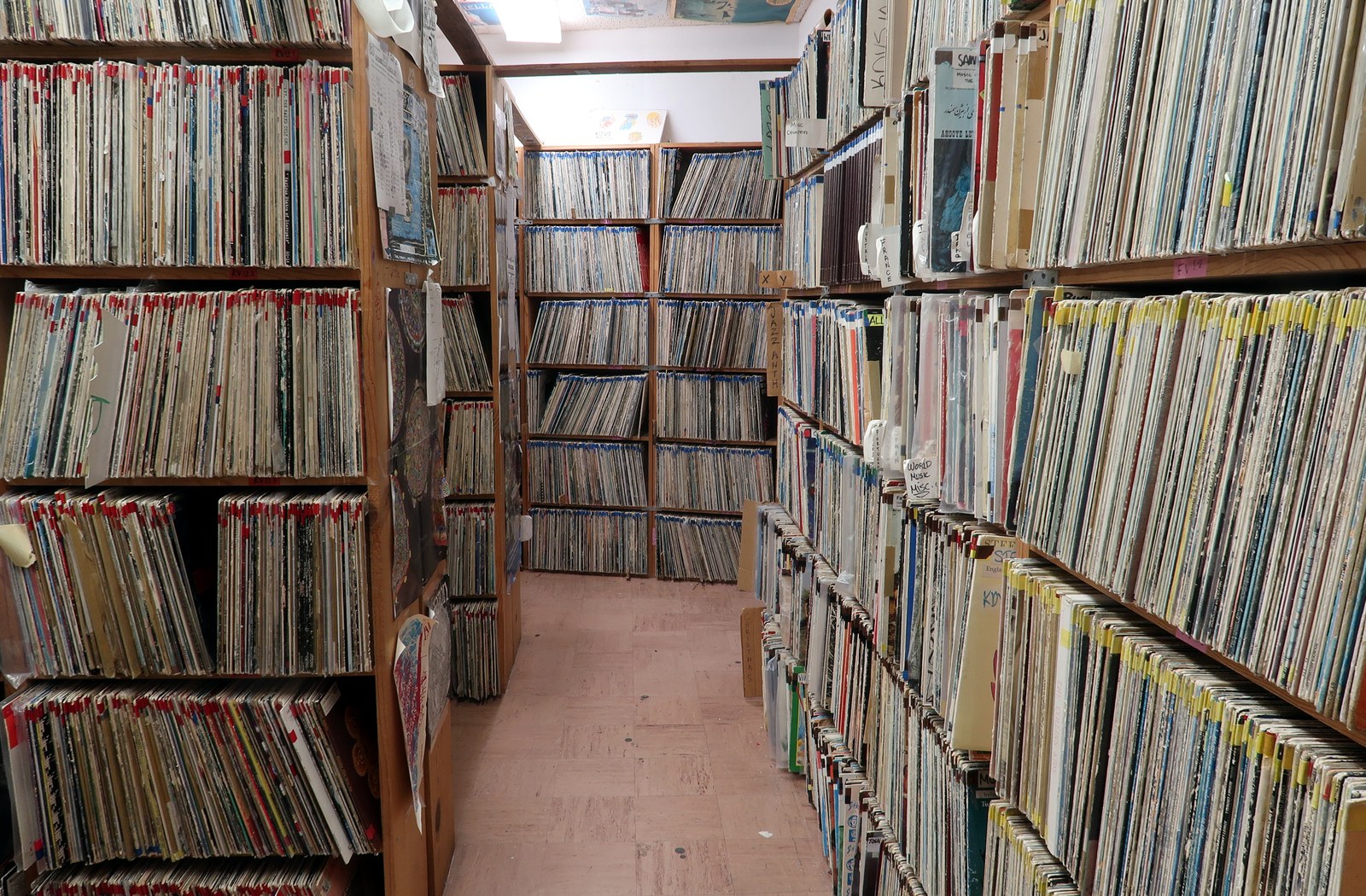
Abidjan, October 23 — Some hunts are for animals, some for treasure. Cédric Kouamé's is for sound. The Ivorian DJ spends his days crisscrossing Côte d'Ivoire in search of old vinyl records — the 20th-century pressings that carried Ivorian rumba, ziglibithy and the early electric experiments of West African pop — and then sets about restoring them, one fragile disc at a time. This week his one-man rescue mission got the international spotlight: France 24's weekly magazine Across Africa devoted its lead segment to the vinyl hunter, following him as he digs forgotten tracks and argues that his country's musical past deserves better than the dustbin.
The segment, titled 'Ivorian DJ digs forgotten tracks, on the hunt for great classics' and issued on October 20, follows Kouamé as he travels the country collecting old records before restoring them. His ambition, as the channel's reporting team notes, goes beyond the crates: he wants to bring national attention to his passion and establish an official centre dedicated to the country's historical archives — a permanent home for the sounds he is pulling back from oblivion.
The episode is a triptych of African memory. Its second segment returns to Cameroon, ten years after the country's worst railway disaster: on October 21, 2016, a Camrail intercity train derailed near Eséka on the Yaoundé–Douala line, killing 79 people and injuring more than 500. A decade on, survivors and families are still fighting for justice — convictions handed down in 2018 remain under an appeal that has never been heard, and some compensation has never been paid. The final segment closes in São Tomé and Príncipe, where the islands' rich volcanic soils produce some of the world's most distinctive vanilla. Three stories, one thread: what Africa remembers, and what it risks losing. For the country's profile, see our Côte d'Ivoire country page.
Kouamé's hunt has a headquarters. In 2023 he founded Baoulecore, a living archive and cultural hub on the edge of Cocovico market in Abidjan — part record store, part memory vault. Vinyl, cassettes, zines, faded photographs and rare books line its shelves: fragments, as the African culture outlet OkayAfrica described them in an independent 2025 profile, of lives and stories refusing to fade. DJs, writers, artists and the merely curious come to dig, to experiment, to connect.
The scale of the salvage is striking. According to 2025 reporting, the collection holds roughly 3,000 vinyl records and some 2,000 cassettes — most of them forgotten or discarded. Kouamé scours the country, buying up collections from elderly Ivorians and their families, and broadcasts appeals on local radio. 'The chain of transmission has been broken,' he told reporters — a line that has become the mission statement of the whole enterprise.
The philosophy behind it is blunt. Much of African history has been transmitted orally, Kouamé argues, and that has bred confusion over the years; books, cassettes and vinyl are, in his account, mediums that host the lives of those who came before us. Records are tangible, he says — the music and the memories are not, which is precisely why the objects matter. The French outlet Brut Afrique captured the same spirit on video, filming Kouamé and his partner Élise opening Baoulécore's doors on thousands of vinyls and cassettes retracing the history of Ivorian music: a cultural centre, in their words, dedicated to safeguarding the classics that marked the country.
We do not know whether Kouamé's official centre will ever exist. The ambition is public — a national institution for the country's historical archives — but no funding, no site and no institutional partner has been announced. Whether the Ivorian state, a private foundation or an international cultural body picks up the project is the open question on which everything else hangs.
We do not know the true scale of what has already vanished. Côte d'Ivoire has no comprehensive national inventory of its recorded musical heritage; without a baseline, every estimate of the losses is a guess. Tropical humidity is merciless to vinyl and tape, and each rainy season quietly erases what the collectors have not yet reached.
We do not know the restoration arithmetic either: how many of the thousands of discs gathered so far have actually been cleaned, digitized and made listenable again, versus how many sit waiting in crates. And in Cameroon, the parallel memory fight grinds on — the Eséka appeal unheard, the missing compensation unpaid, and at least one body, that of the Yaoundé notary Dorette Dissakè, never recovered.
It matters because the gap Kouamé is filling is a national one. Côte d'Ivoire never built the formal archives — for music, film or photography — that would have preserved its post-independence cultural explosion as a matter of course. The 1960s and 1970s 'miracle' years produced a flood of sound; the institutions to keep it did not follow. What survives does so by accident, in attics and market stalls, or by the stubbornness of collectors.
It matters because music in Côte d'Ivoire was never decoration. Ivorian popular music carried politics, migration, urbanization and the whole noisy project of becoming a nation — the social fabric rendered audible. Lose the records and you lose the minutes of the meeting: how Abidjan sounded while it was becoming Abidjan.
And it matters because the demand is real and young. Across Abidjan, a retro movement is pulling the past back into the present — vinyl listening parties, thrifted fashion, the Instagram-based Archives Ivoire project curating music history for a new generation. The archivists are not only saving the past from the old; they are handing it to the young, who are remixing it. A heritage nobody wants is a museum piece. This one has a dance floor. Our Côte d'Ivoire profile tracks the country's cultural and economic currents.
Geopolitics. Archives are sovereignty by other means. The power to keep — and to frame — a nation's past is the power to narrate its present. When Ivorian heritage is preserved by an Ivorian collector in Abidjan rather than a European museum, the centre of narrative gravity shifts. France 24's cameras are welcome witnesses; the point is that the story is no longer waiting to be discovered by outsiders.
Economics. Heritage is an asset class now. Restored catalogues feed reissues, sampling and sync licensing; a national archive anchors cultural tourism and the creative industries. The global vinyl resurgence — years of double-digit growth — means the medium Kouamé is saving is also the medium the market suddenly wants again.
Demographics. The retro wave is youth-led. Abidjan's under-30s, raised on streaming, are reaching for the tactile past their parents discarded — a pattern visible from Lagos to Dakar. The generation gap runs in reverse here: the young are the conservatives of memory.
History. West Africa has lost sound before. Guinea's Syliphone label — some 160 state-produced vinyl discs, a whole national orchestra system — saw its archives partially destroyed in the violence that followed the Sékou Touré era, and it took funded archival missions to reconstruct the catalogue. Kouamé's private hunt is the mirror image: the rescue starting from below, before the state arrives — if it arrives.
Technology. The paradox of the streaming age is amnesia through abundance: everything available, nothing kept. A vinyl record cannot be silently delisted. In a digital-first world, Kouamé insists on the tactile — on parts of our lives and history that we can hold, touch and feel. The medium is the memory.
First-order: records are saved. Second-order: they start working. Expect Ivorian producers to sample the rescued catalogue the way hip-hop mined American soul — a new generation of Ivorian pop built on loops of its grandparents' dance floors. Expect reissue labels to come calling, and with them the old fight over who owns a recording when the label died decades ago and the artist's family never saw a royalty statement.
There is a thornier second order. An 'official centre' backed by the state would be a triumph of recognition — and a risk of capture. National archives consecrate; they also edit. The community spirit of Baoulecore, a place built for diggers and the curious, could harden into an institution with opening hours and a gift shop. The history of African cultural institutions counsels vigilance: preservation and control are twins.
And there is the Eséka mirror. Two kinds of memory work aired in the same episode: one joyful, one unbearable. Kouamé fights to keep the music; the families of Eséka fight to keep the truth — about a train that ran at 96 km/h where 40 was the limit, about an appeal unheard for eight years, about compensation that never arrived. A country that cannot keep its records will struggle to keep its reckonings. The hunt for heritage and the hunt for justice are the same hunt.
Watch three things. First, the centre: whether Kouamé's call for an official archive finds an institutional answer — and on whose terms. A state-backed centre, a private foundation or a hybrid will each tell a different story about who Ivorian heritage belongs to. Second, the crates: the Abidjan retro movement is accelerating, and each listening party is also a sourcing network — the young are finding records the old threw away. Third, the courts: in Cameroon, the Eséka appeal remains unheard and the victims' lawyers say some payments are still outstanding (our Cameroon profile follows the story). Memory, like justice, is a long game. The needle is down; the record is turning. For the Gulf of Guinea's island economies, see our São Tomé and Príncipe profile.
The Western record — France 24's Across Africa magazine and the diaspora outlet OkayAfrica — frames Kouamé as a discoverable hero: the vinyl hunter on a quest, the adventure of the dig. It is affectionate and genuine, and it carries the old grammar of the European gaze: Africa's heritage as something to be found, spotlighted, celebrated from outside. The reporting is solid; the frame is the safari — even when the safari is for records.
The East Asian information environment has not registered this story at all. Searches across the English-language circuits of CNA, The Hindu, NHK and Kyodo return nothing on Kouamé or Baoulecore — no wire pickup, no regional echo. That silence is itself data: without a wire-service version of the story, a niche African culture feature does not travel east.
The Global South lens is where the story lives. This is Africans archiving Africa: Kouamé's hunt, the Archives Ivoire project, the vinyl listening parties of Abidjan's youth — a continent refusing to outsource its memory. The South Africa-based Music in Africa network documents the same fight at continental scale, from Guinea's reconstructed Syliphone catalogue to today's endangered tapes.
An Ivorian DJ and record collector on a mission to rescue Côte d'Ivoire's musical past. He travels the country gathering old vinyl records — many forgotten or discarded — and restores them. In 2023 he founded Baoulecore, a living archive and cultural hub in Abidjan. France 24's Across Africa featured his 'heritage hunt' this week, and he is campaigning for an official national centre for the country's historical archives.
A living archive and cultural hub founded in 2023 by Cédric Kouamé on the edge of Cocovico market in Abidjan. It holds vinyl, cassettes, zines, faded photographs and rare books — thousands of items tracing Ivorian music history. Part record store, part memory vault, it is a meeting place for DJs, writers, artists and the curious, built to keep heritage alive and build community around it.
The country never built formal national archives for its recorded music, so the post-independence boom years survive only by accident — in attics, market stalls and private collections. Tropical humidity destroys vinyl and tape, and the chain of transmission between generations is broken. Kouamé argues that oral history alone has bred confusion, and that physical media are needed to host the lives of those who came before.
Cameroon's worst railway disaster. On October 21, 2016, an overloaded Camrail intercity train travelling from Yaoundé to Douala derailed near Eséka, killing 79 people and injuring more than 500. Investigators found it was running at 96 km/h in a 40 km/h zone. In 2018 Camrail and 11 employees were convicted, but the company appealed — and ten years on, the appeal has still not been heard.
