
The Child Mines of the Battery Age
Three-quarters of the world's cobalt comes from one country. Two companies take most of it; children dig the rest — some as young as seven, for a dollar a day. Your electric car runs on this. The moral ledger of the green transition.
Key findings
- The Democratic Republic of Congo produced an estimated 76% of the world's mined cobalt in 2024 — roughly 220,000 of 290,000 tonnes — and holds about 55% of global reserves. USGS Mineral Commodity Summaries 2025
- CMOC of China is the world's largest cobalt producer, with 114,165 tonnes in 2024 — nearly four of every ten tonnes of Congolese output. CMOC company reporting, 2025
- Glencore of Switzerland, the second-largest producer, lifted its 2025 guidance above 42,000 tonnes from its Mutanda and Kamoto operations. Glencore H1 2025 production report
- UNICEF estimated in 2014 that about 40,000 children worked in mines across southern DRC, many in cobalt. Amnesty International's 2016 investigation documented children as young as seven working 12-hour days for one to two dollars. UNICEF 2014; Amnesty International, "This Is What We Die For", Jan 2016
- Kinshasa weaponized the supply. A full export ban in February 2025 was replaced by a quota system in October 2025 and a concentrate ban in August 2026; prices rose from roughly $21,500 to over $57,000 a tonne — a gain of more than 160%. Reuters, Apr 2026; INN/Bloomberg via ARECOMS, 2026
- Ninety-nine percent of cobalt is a byproduct of copper or nickel mining — producers cannot turn the cobalt tap without turning the copper tap. Cobalt Institute
- China is the world's leading cobalt refiner, with most of its feed imported from the DRC and Indonesia. USGS Mineral Commodity Summaries 2025
Your phone is a small Congolese mine.
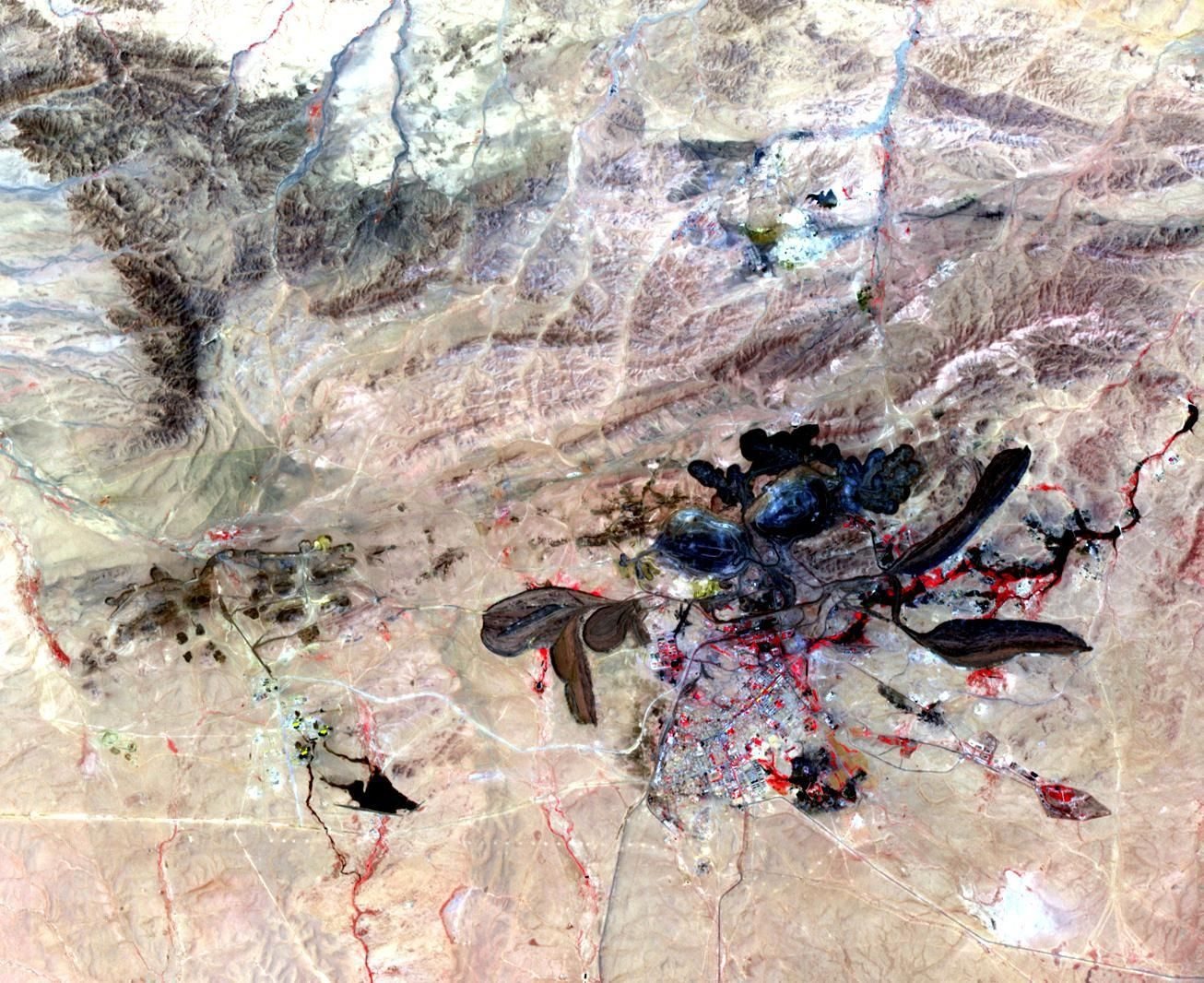
Every rechargeable battery you own — the phone in your hand, the laptop on your desk, the electric car in your driveway — holds a fragment of the Democratic Republic of Congo. Not metaphorically. Cobalt is the element that keeps lithium-ion cathodes from melting down, and three of every four tonnes of it are pulled from the red soil of two Congolese provinces, Lualaba and Haut-Katanga. There is no battery age without Kolwezi. There is no green transition without the men — and the children — who dig it.
This investigation traces the metal from the tunnels to the term sheet: the one-country monopoly, the two corporate giants who dominate it, the children who work the margins, and the government that has learned to switch the whole thing off at will.
One country, three-quarters of the world
The numbers admit no ambiguity. The US Geological Survey's 2025 commodity summary — the industry's bible — puts the DRC at an estimated 76% of world cobalt mine production in 2024, a record year, with Indonesia a distant second at 10%. The country's reserves, roughly 55% of the global total, give it about 27 years of production at current rates. What Saudi Arabia is to oil, the DRC is to cobalt — except Saudi Arabia never mined with children.
Chart 1 · Monopoly
Three-quarters of the world's cobalt is Congolese
Share of world cobalt mine production, 2024 · USGS Mineral Commodity Summaries 2025
The concentration is structural, not accidental. Cobalt is almost never mined for itself: 99% of global output is a byproduct of copper or nickel extraction, according to the Cobalt Institute. The DRC's copper belt — the second-largest copper producer on earth, behind only Peru — bleeds cobalt as a matter of geology. Turn off the copper, and the cobalt vanishes; turn up the copper, and cobalt floods the market whether anyone asked for it or not. This is why oversupply arrived so fast, and why the crash that followed was so violent.
The two kings of the belt
Inside the Congolese monopoly sit two thrones. The first belongs to CMOC — China Molybdenum, the world's largest cobalt producer. Its two DRC mines, Tenke Fungurume (bought from Freeport-McMoRan in 2016 for $2.65 billion) and Kisanfu, produced 114,165 tonnes in 2024. In the first half of 2025 — during a national export embargo — CMOC still produced 61,073 tonnes, up 13% year-on-year. The company's target for 2025 was 100,000 to 120,000 tonnes. Behind CMOC stands another name: CATL, the world's largest battery manufacturer, holds a significant shareholding, completing a vertical chain from Congolese pit to Chinese battery to the world's EVs.
The second throne belongs to Glencore, the Swiss commodities giant under chief executive Gary Nagle. Its Mutanda and Kamoto Copper Company operations produced 17,700 tonnes in the first half of 2025 — up 23% — and the firm guided full-year 2025 output above 42,000 tonnes, higher than its initial forecast. In the first quarter of 2026, though, Glencore's cobalt output fell 39% year-on-year to 5,800 tonnes as the quota regime bit — the company postponed final processing to avoid costs while export limits restricted sales.
Chart 2 · The two kings
Two companies, nearly half the world's cobalt
Cobalt production, tonnes · CMOC and Glencore, 2024–2025 company reporting
Refining completes the pyramid. The USGS notes that China is the world's leading producer of refined cobalt, and most of its feed is partially refined cobalt imported from Congo and Indonesia. The ore is Congolese; the metal is Chinese; the margin sits in between. This is the supply chain the West's "critical minerals" strategies are all written against — and the one they keep failing to escape, because the mine gate is in Kolwezi.
The children in the pit
Here the ledger turns moral. The DRC government's own estimates, cited by Amnesty International, put artisanal miners at 20% of the country's cobalt exports — some 110,000 to 150,000 people. In 2014, UNICEF estimated that about 40,000 boys and girls were working in mines across southern DRC, many of them in cobalt. In January 2016, Amnesty International and Afrewatch published "This Is What We Die For," documenting children as young as seven working 12-hour days, carrying heavy loads, for one to two dollars a day — without protective equipment, in hand-dug tunnels with no supports, breathing cobalt dust linked to fatal respiratory disease. Between September 2014 and December 2015 alone, the media reported fatal accidents involving more than 80 artisanal miners; the true figure, Amnesty wrote, "is likely to be far higher as many accidents go unrecorded and bodies are left buried underground."
The Bureau prints this with the caveats the record demands. The 40,000 figure is from 2014. Field researchers note that child labor in the pits has fallen sharply — the Congolese government's 2017 national strategy targeted it, and industry sourcing programs have pushed formalization; one minerals-programme specialist told Mining Technology that direct child mining is now rare, with children more often seen washing ore than digging it. The Bureau could not independently verify current numbers; the mines are remote, the workforce informal, and nobody counts precisely. What is certain is the historical record: the battery age was built, in part, on children's backs, and the companies at the top of the chain spent years unable to say exactly which pits their cobalt came from.
Kinshasa learns the switch
The newest entry in the ledger is geopolitical. In February 2025, with benchmark prices below $10 a pound — a multi-decade low, crushed by the very oversupply CMOC's expansion had created — President Félix Tshisekedi's government suspended all cobalt exports. The ban was extended through the summer, then replaced in October 2025 with a quota system: 18,125 tonnes permitted for the rest of 2025, an annual cap of 96,600 tonnes for 2026 and 2027 — roughly half of 2024's volumes — with 9,600 tonnes a year routed directly into a state strategic reserve. Unused quotas are clawed back mid-year by the regulator, ARECOMS. In August 2026, a further decree banned exports of copper and cobalt concentrates outright.
The price effect was spectacular. Cobalt metal rose from about $21,500 a tonne to roughly $57,320 — a gain of more than 160% — and Glencore, in its April 2026 production report, said it expected exports to "normalise" only in line with the remaining 2026 quotas. Kinshasa had discovered what Riyadh knew in 1973: when you hold three-quarters of the world supply of something the rich world needs, the export valve is a weapon. The quotas now run to at least the end of 2027.
Chart 3 · The weapon
Ban the exports, triple the price
Cobalt metal price, $/tonne · Feb 2025 export ban to early 2026
The green transition has a red ledger. Every clean mile was dug in the dirt of Kolwezi.
Where the record agrees — and where it argues
The consensus ledger below is the Bureau's hater-proofing. Everything printed above survived it; the disagreements are printed too.
- Agreement: the DRC produced ~76% of world mined cobalt in 2024 (USGS MCS 2025); Indonesia 10%; China leads refining.
- Agreement: CMOC is the largest producer (114,165 t in 2024); Glencore second (~42,000 t guided for 2025).
- Agreement: the February 2025 ban and October 2025 quota regime drove prices up more than 160%; quotas capped at 96,600 t/year for 2026–27.
- Agreement: UNICEF's 2014 estimate of ~40,000 children in southern DRC mines; Amnesty's 2016 documentation of child labor, ages as young as seven.
- Dispute: the current extent of child labor in cobalt pits — industry and field researchers say it has fallen sharply since 2016; no reliable recent census exists, and the Bureau could not verify present-day numbers.
- Dispute: whether the quota system is market stabilization or resource nationalism — Kinshasa calls it price defense; buyers call it a cartel valve.
- Dispute: cobalt-free battery chemistries (LFP and beyond) — if they keep spreading, the DRC's leverage has an expiry date nobody can fix.
How this investigation was built
The Bureau's rule: every figure carries its source, and where sources disagree, both are printed.
- Production and reserves from the USGS Mineral Commodity Summaries 2025 (cobalt chapter, data year 2024) and the Cobalt Institute.
- Company figures from CMOC and Glencore production reports, H1 2025 and Q1 2026, via industry reporting (Ecofin Agency, Reuters).
- The quota regime from ARECOMS directives via Bloomberg/Investing News (2026) and Reuters (30 Apr 2026).
- Child labor from UNICEF (2014 estimate), Amnesty International and Afrewatch, "This Is What We Die For" (Jan 2016), and the Mining Technology review of subsequent formalization efforts.
- Price series from industry reporting on cobalt metal (OCBc1), Feb 2025–Apr 2026.
This correspondent writes from Beijing — the country that refines most of this metal — and names her own side's role in the chain plainly. The ledger does not care whose flag flies over the mine.