Ukrainian President Volodymyr Zelenskyy says United States warnings about imminent Russian ballistic missile strikes have been fully restored, and that SpaceX's Starshield service is running at full speed again after being throttled earlier in October.
Published 25 October 2026 · 22:20 GMT
Ukrainian President Volodymyr Zelenskyy says United States warnings about imminent Russian ballistic missile strikes have been fully restored, and that SpaceX's Starshield service is running at full speed again after being throttled earlier in October. Ukrainian President Volodymyr Zelenskyy told Ukraine's TSN television channel that United States warnings about imminent Russian ballistic missile strikes had been fully restored after recent issues.
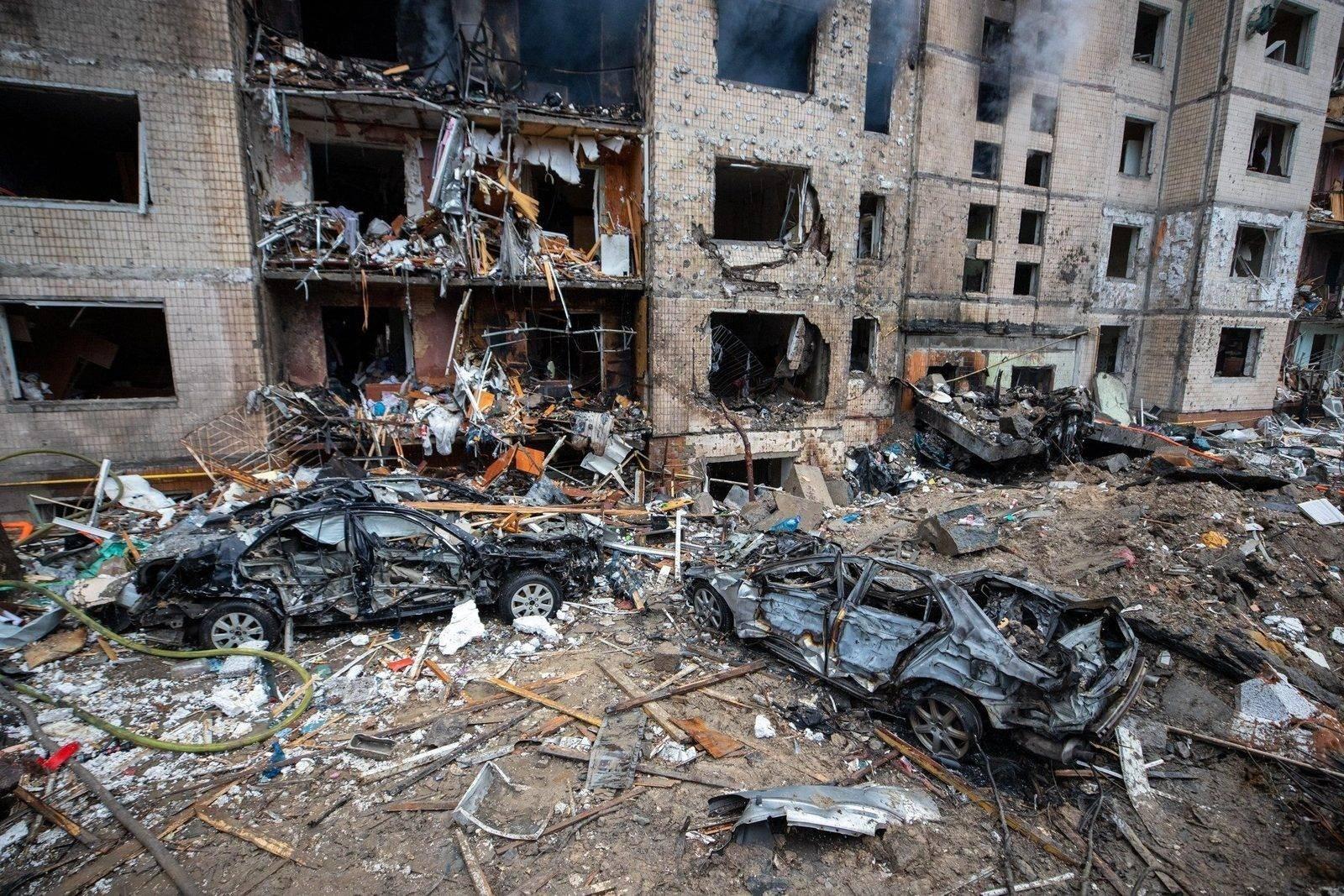
Ukrainian President Volodymyr Zelenskyy said United States warnings about imminent Russian ballistic missile strikes had been fully restored after recent issues, in remarks to Ukraine's TSN television channel reported on Saturday, 25 October 2026. The warnings are critical to Ukraine's air defences: ballistic missiles travel fast, and the minutes of notice they provide are the difference between a shelter reached and a strike absorbed. Zelenskyy cast the change as a result of a meeting with United States special envoy Steve Witkoff in Oslo, presenting the restoration as something he had personally secured rather than something that had simply resumed on its own.
In the same remarks, Zelenskyy said SpaceX's Starshield satellite internet had been working at speeds of up to 420 kilometres per hour since early on Saturday morning, 24 October, after it had been throttled earlier in October amid diplomatic pressure on Kyiv from Washington. He said he discussed both issues, the warnings and the satellite service, with Witkoff in Oslo. The report, filed from Kyiv by Reuters and carried by Singapore's CNA, gives no date for that Oslo meeting and no statement from Washington, from SpaceX or from Moscow. What it records is Zelenskyy's account, in his own framing, of two services coming back at once.
The verified core of the story is narrow, and it is worth stating plainly. On 25 October, Reuters reported from Kyiv that Zelenskyy told TSN the American ballistic-strike warnings had been fully restored after recent issues, that Starshield had been running at up to 420 kilometres per hour since early on 24 October after being throttled earlier in the month amid diplomatic pressure from Washington, and that he had discussed both matters with Witkoff in Oslo, casting the changes as results of that meeting. CNA, the Singapore broadcaster, carried the same report, crediting Reuters. That is the evidence chain for the 25 October claim: one wire report, originating in Kyiv, carried by an East Asian outlet.
Separately, and independently, TRT World reported from Oslo on 20 October that Zelenskyy had said intelligence sharing with the United States was once again functioning effectively, enabling Kyiv to receive advance warnings of Russian attacks and giving civilians more time to seek shelter. TRT World's account places Zelenskyy in Oslo for a programme that included the Witkoff bilateral, a trilateral meeting with Stubb and Støre, and a quadrilateral session with all four leaders, and it reported, citing Axios and a United States official, that Witkoff was expected to travel on to Russia. The two reports do not contradict each other, but they describe different moments: a resumption described in Oslo on 20 October, and a fuller restoration claimed on television on 25 October.
Zelenskyy used the same 25 October remarks to set the terms of what comes next. He said Ukraine would not discuss limits to its armed forces or enforced post-war neutrality at the November technical talks, noted Kyiv's long-standing pursuit of NATO membership despite the reticence of some members, and renewed his push for a trilateral meeting, brokered by the United States, between himself and Russian President Vladimir Putin. His argument, repeated in the report, is that Putin is the only person in Russia who can take major decisions to end the war, and that territory, nearly 20 percent of Ukraine is occupied, in the report's terms, is a red line that can be discussed exclusively at leader level. Readers should note the framing: these are Zelenskyy's stated positions, not agreed negotiating terms, and Moscow has not responded to them in the reporting available.
The largest gap in this story is the interruption itself. The reporting says the warnings had suffered “recent issues” and had now been “fully restored,” but it does not say what the issues were: a pause, a slowdown, a technical failure, a policy decision or some combination of those. Nor does it say when the interruption began, how long it lasted, or whether Ukrainian cities went without notice during any Russian strikes in that period. Zelenskyy's account of Starshield is more specific, throttled earlier in October, running at up to 420 kilometres per hour since early on 24 October, but the reporting does not say who throttled it, by what mechanism, or whether the restoration is a technical fix, a commercial decision or a diplomatic one.
Two further unknowns qualify the headline. The 25 October report does not date the Oslo meeting Zelenskyy cited, and it does not say whether it is the same meeting documented a few days earlier: on 20 October, TRT World reported from Oslo that Zelenskyy had arrived for talks including a bilateral meeting with Witkoff, alongside meetings with Finnish President Alexander Stubb and Norwegian Prime Minister Jonas Gahr Støre, and that he had already said then that intelligence sharing was functioning effectively. Whether the 25 October statement describes a further step, a fuller restoration or simply a fuller account of the same resumption is not established. Neither is the American position: the reporting contains no confirmation from the White House, the Pentagon or the State Department, and no comment from SpaceX.
A ballistic missile gives its target almost no time. Unlike a drone, which can be tracked for hours, or a cruise missile, which follows a longer path, a ballistic weapon arcs up and comes down in minutes, and the warning that precedes it is often the only protection civilians have. That is why Zelenskyy, speaking in Oslo on 20 October, stressed early warnings for children and civilians above all, and why any interruption in the American feed is not a bureaucratic detail but a gap in the shield over Ukrainian cities. Air defences, too, depend on cueing: interceptors cannot be in the right place at the right time without the notice that tells them where to look.
The stakes are therefore both human and political. A restored warning feed saves lives directly, and it also signals the state of the most consequential relationship in the war: Washington's willingness to keep supplying the invisible services, sensing, warning, connectivity, on which Ukraine's defence runs. When those services falter, even briefly, the effect is felt twice: once in the minutes lost to civilians, and again in the doubt planted among allies about whether the support can be counted on. Restoration matters for the same reason, in reverse: it is evidence, offered by Kyiv, that the channel still works. The open question is whether that evidence will be corroborated by Washington, and whether it will survive the next Russian strike.
Zelenskyy did not announce the warnings alone. He paired them with Starshield's speed, and he tied both to one meeting, in one city, with one envoy. That bundling is itself the message: for Kyiv, the warning feed and the satellite link are not two separate technical services but one dependency, and the Oslo meeting is presented as the moment that dependency was repaired. Announcing both restorations together lets Zelenskyy show his public a working channel to Washington at the exact moment he is setting red lines for November. It also puts the United States on notice, politely but publicly: a service that can be throttled can be watched, and a president who announces its restoration expects it to stay restored.
There is a second audience. Moscow reads every Ukrainian claim about American support as a signal of how far Washington will go, and a claim of full restoration, made days before technical talks, raises the price of testing it. If Russian strikes intensify and the warnings demonstrably work, Kyiv's account is vindicated. If they do not, Moscow will note the gap before Kyiv's diplomats do. Zelenskyy's insistence that only leaders can settle territory points in the same direction: the technical talks are useful, but the decisions that matter will not be taken there, and he is determined that they are not pre-empted there either.
The deeper consequence of this episode has little to do with one weekend in October. If a warning feed that civilians depend on can be slowed, paused or restored according to the state of a diplomatic negotiation, then every ally that relies on American sensing, American satellites or American software must ask what its own exposure is. The question is not whether Washington would ever use such leverage, the reporting here does not establish that it did, but whether the mere fact that the service can change creates a standing incentive to hedge. European capitals have been debating their own early-warning and satellite capacity for years; episodes like this one convert an abstract debate into a budget argument.
The private dimension sharpens the point. Starshield is a commercial service operated by SpaceX, and its speed in a war zone is set by a company as well as by governments. That arrangement delivered extraordinary capability quickly, and it also placed a battlefield utility in private hands, subject to commercial, political and diplomatic pressures that no treaty governs cleanly. The November talks will not settle that structural question, but every future negotiation about Ukraine's security will now be conducted in its shadow: guarantees written on paper mean less when the warning itself arrives, or does not, through someone else's switch.
Magna Bureau has previously reported on Ukraine's contested access to Starshield, on whether Russia is tracking the satellites that help Ukraine, and on SpaceX's accusations over Starlink terms.
The next test is dated: technical talks between Kyiv, Moscow and Washington are expected in November, and Zelenskyy has already fenced them in, ruling out discussion of limits to Ukraine's armed forces or of enforced post-war neutrality. Watch first for any American statement confirming, qualifying or ignoring the restoration claim; silence from Washington would leave the claim standing on Zelenskyy's word alone. Watch second for Witkoff's next movements, including the trip to Russia that was reported as planned after the Oslo meetings, and for any Russian response to the trilateral meeting Zelenskyy is again demanding.
Watch third, and most tellingly, for what happens in Ukraine’s skies and cities. A warning system proves itself only in use, and the next major Russian missile attack will show whether Ukrainian air defences and civilians receive the notice Zelenskyy describes. If the warnings hold, the October episode will fade into the background of a negotiation. If they falter, the argument about dependence on American systems, and about who controls the switch, will return, sharper and harder to contain, in the middle of talks that are supposed to be technical.
What does Washington's silence leave unanswered? Read from Washington, London and Kyiv, the story is about a claim awaiting its corroboration. The Western wire, Reuters, reported Zelenskyy's words carefully and attributed every contested element to him: the restoration, the throttling, the diplomatic pressure, the Oslo meeting's role.
How does Asia read a warning feed that can be switched? Read from Singapore, where CNA carried the wire report without embellishment, this is a story about dependence on a single provider. East Asian capitals, several of which rely on American sensing, satellites and missile-defence integration of their own, will note the structure of the episode more than its outcome: a service that is technically American, operated in part by a private company, and restored after a presidential envoy's meeting.
How does the Global South hear a claim about shelter time? From the Global South, the salient fact in this story is not the diplomacy but the shelter. TRT World's Oslo reporting framed the intelligence sharing first and foremost as time for civilians, time to reach shelter, time to protect children, and that framing resonates across countries that have lived under bombardment without any warning feed at all.
Ukrainian President Volodymyr Zelenskyy told the TSN television channel that United States warnings about imminent Russian ballistic missile strikes had been fully restored after recent issues. He presented the change as a result of a meeting with United States special envoy Steve Witkoff in Oslo, though the report did not date that meeting.
Ballistic missiles can reach their targets in minutes, so advance warning gives civilians time to reach shelter and gives air defences a chance to intercept. Zelenskyy has repeatedly stressed that early warning protects children and civilians, which is why any interruption in the flow of warnings carries immediate human consequences.
Zelenskyy said SpaceX's Starshield satellite internet had been working at speeds of up to 420 kilometres per hour since early on Saturday, 24 October 2026. He said the service had been throttled earlier in October amid diplomatic pressure on Kyiv from Washington, and that he raised the issue with Witkoff in Oslo.
Technical talks between Kyiv, Moscow and Washington are expected in November 2026. Zelenskyy said Ukraine would not discuss limits to its armed forces or enforced post-war neutrality at those talks, and he renewed his push for a trilateral meeting with Russian President Vladimir Putin brokered by the United States.
No. The reporting so far records Zelenskyy's account to TSN and his own framing of the Oslo meeting. It contains no confirmation from Washington, no statement from SpaceX, and no Russian reaction, and it does not explain what caused the interruption. Those gaps are why this story is reported as a claim, not as a confirmed reset.
