 MAGNA BUREAU
The Wire
Europe still has no agreed seat at the Ukraine talks, as Brussels accuses Moscow of stalling and Kyiv plans a Berlin meeting
EU foreign ministers accused Russia of dragging out the talks while striking power plants as winter closes in. Moscow says European participation was never agreed. After a difficult day of team-level talks, Ukraine, the United States and Europe agreed to meet in Berlin.
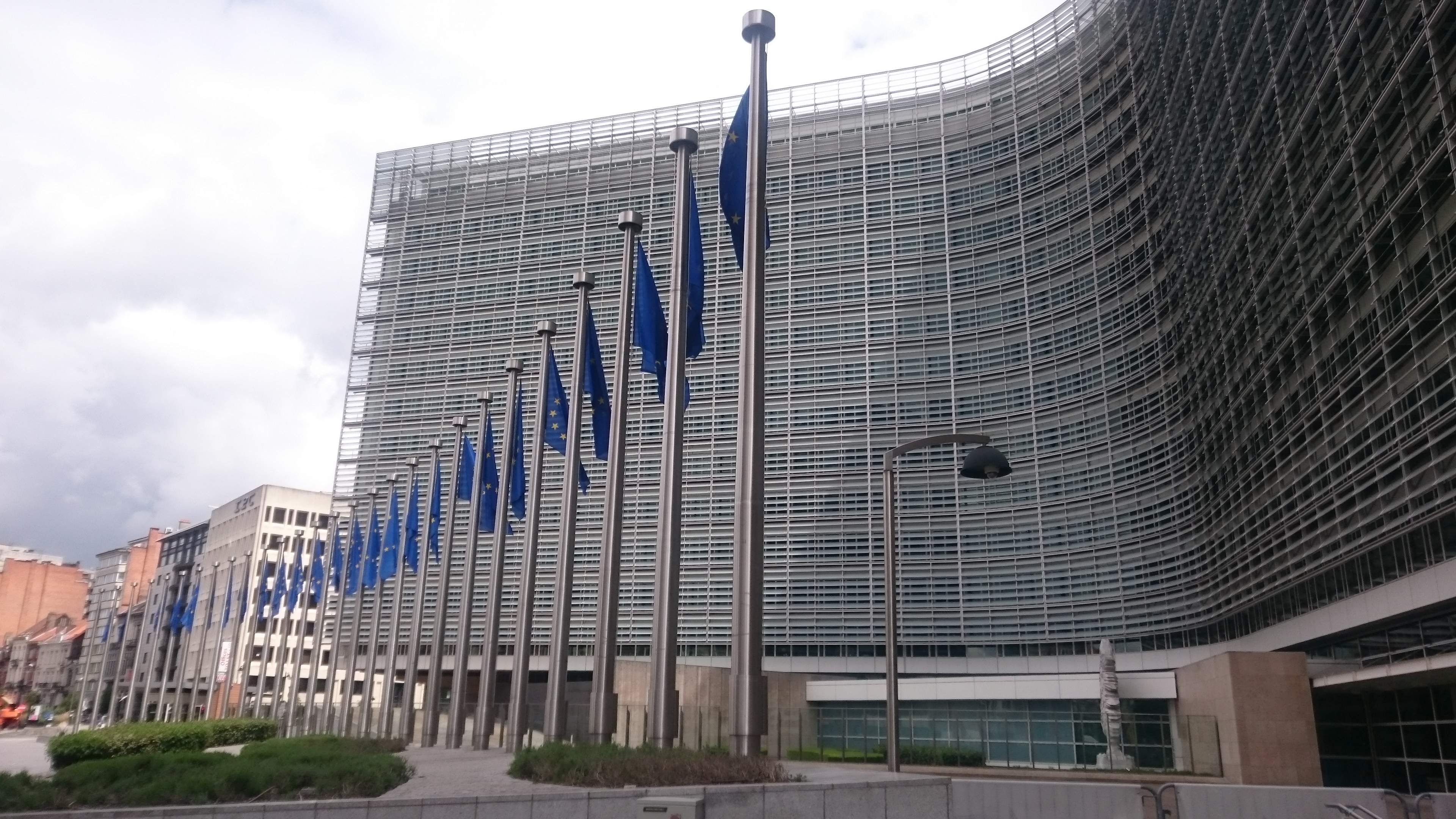
Key points
- On Monday 16 November 2026, European Union foreign ministers met in Brussels and accused Russia of dragging out the Ukraine peace talks while bombing power plants and other infrastructure as winter closes in; their priority is a ceasefire first, then a real peace agreement. Associated Press via The Hindu; Reuters, 16 Nov 2026
- Kremlin aide Yuri Ushakov said on 16 November that Russia had not agreed to European participation in the next round of talks, which will be held in the existing trilateral format; no date has been agreed. Reuters, 16 Nov 2026
- President Volodymyr Zelenskyy said Ukrainian, American and European negotiating teams held talks on 16 November; the discussion was difficult, but they agreed to meet in Berlin as part of the Coalition of the Willing. Ukrainska Pravda; Kyiv Post, 16 Nov 2026
- The European Union approved 145 new sanctions designations on 16 November, including the chief executive of Russian online retailer Wildberries and the St Petersburg oil terminal; a wider package is being finalised. Reuters, 16 Nov 2026
- European Union leaders agreed in Dublin on 13 November that Europe’s team for the talks would be the E5, the United Kingdom, France, Germany, Italy and Poland, plus the European Union’s institutions. Reuters; Associated Press, 13 Nov 2026
ONE EVENT. THREE READINGS.
The story reads as a test of whether the continent that pays for Ukraine’s defence gets a say in its peace.
The Associated Press account from Brussels frames Russia as the aggressor dragging out talks while striking civilian infrastructure, and Reuters stresses the ministers’ refusal to discuss a new security architecture before a ceasefire.
What this reading highlights: The Western lens is united on the sequence, ceasefire first, architecture later, and divided only on how much pressure is enough.
Sources: Reuters (1), Ukrainska Pravda (2), Kyiv Post (1), Le Monde (1), The New Voice of Ukraine (1)
The same day reads differently.
Izvestia, reporting Ushakov’s words directly, presents Europe’s admission as conditional and premature: a seat must be earned with a clear signal, and the security architecture must be discussed before Ukraine’s fate is settled.
What this reading highlights: The Straits Times, carrying Reuters, records the same denial from Singapore.
The Eastern lens sees a Russia that has not moved, a Europe that has organised itself, and a negotiation whose format is itself the negotiation.
Sources: The Hindu (1), The Straits Times (1), Izvestia (1)
The story is about who decides the terms of a war fought on someone else’s soil.
Al Jazeera’s Inside Story, which framed the day’s question, treats the division inside the European Union as the story itself; a continent arguing over its diplomatic strategy while its neighbour is bombed.
What this reading highlights: For the South, the test is whether the table widens before the next winter’s damage is done.
Sources: Al Jazeera (1)
Sources by lens: 6 West, 3 East, 1 Global South. See every source
THE POINT OF CONVERGENCE
On Monday 16 November 2026, European Union foreign ministers met in Brussels and accused Russia of dragging out the Ukraine peace talks while bombing power plants and other infrastructure as winter closes in; the Kremlin’s aide Yuri Ushakov said the same day that Russia had not agreed to European participation in the next round; and President Volodymyr Zelenskyy said Ukrainian, American and European teams had held talks that day and agreed to meet in Berlin as part of the Coalition of the Willing.
WHAT REMAINS CONTESTED
On whether Europe’s seat at the table is settled. The American envoys said after meeting Vladimir Putin in Moscow on 12 November that Europe would join the next round, and Zelenskyy said all sides had accepted it; the Kremlin says no such agreement exists and that the next round will be trilateral. The two sides also disagree on sequencing: Brussels demands a ceasefire before any discussion of a new European security architecture, while Moscow wants the architecture discussed first.
The story
What Monday changed in the fight for a seat at the table
Europe spent Monday 16 November 2026 fighting on two fronts at once: in Brussels, its foreign ministers accused Russia of using peace talks as cover for bombing Ukraine’s power plants as winter closes in; and in Moscow, the Kremlin said Europe’s place at the next round of talks had never been agreed at all. By evening, the day’s team-level talks between Ukraine, the United States and Europe had produced one concrete result, an agreement to meet in Berlin as part of the Coalition of the Willing, but no agreement on the question dominating the diplomacy: whether Europe will be in the room when Russia sits down again.
The day’s other two developments pulled in opposite directions. In Moscow, presidential aide Yuri Ushakov contradicted the American envoys who had said Europe would join the next round, insisting the talks would continue in their three-way format and that expanding it had “not been agreed with us”. In Kyiv, President Volodymyr Zelenskyy said the discussion had been difficult, but that Europe had taken part in full for the first time and that the teams would meet in Berlin to work out joint steps. That team was settled in Dublin on Friday 13 November, when EU leaders agreed that five countries would speak for Europe alongside the EU institutions, after a week in which the envoy question dominated the Dublin summits.
Brussels’ charge sheet, and the Kremlin’s answer
What happened in Brussels is not in dispute. EU foreign ministers met on Monday, accused Russia of stalling, and restated the sequence Europe insists on: ceasefire first, then negotiations on anything else. The bloc’s foreign policy chief, Kaja Kallas, put it bluntly before chairing the meeting: “Let’s not blur the picture right now. What we need to see is a ceasefire. We don’t see it at the moment. We see that Russia is really escalating.”
The ministers also rejected the Russian demand at the centre of the dispute: a new security framework for Europe. Washington had encouraged Ukraine and its backers to consider the idea after last week’s talks in Abu Dhabi. Europe reads it as a trap; an attempt to weaken NATO by pushing the alliance back to where it stood before the Czech Republic, Hungary and Poland joined in 1999. Kallas called the demand “really absurd”; Germany’s Johann Wadephul said Europe already had a security architecture and needed respect for it, not a new one; Lithuania’s Kęstutis Budrys said Russia had broken past agreements and could not be trusted.
On sanctions, France’s Jean-Noël Barrot said the EU had approved 145 new designations on Monday, and Irish Foreign Minister Helen McEntee, whose country holds the EU’s rotating presidency, said a wider package was being finalised, aimed at “the financial mechanism by which Russia is waging this war”. Paris will also host a conference on 4 December with Britain on Russia’s shadow fleet.
Moscow’s answer came from Ushakov, the Kremlin aide who handles the talks file: the next round would be held “in a trilateral format”, no date had been agreed, and “a great deal would have to be done” before Europe could join. Europe, he said, must first give “a clear signal” about what it wants and what constructive contribution it can make.
not been agreed with us.
What is still undecided about the next round?
The most basic facts of the next round remain unsettled. No date has been fixed, and no venue has been agreed; the Russian side has spoken of Abu Dhabi again, while the European side has confirmed no place. Whether the round will be trilateral or expanded is itself the dispute: the American envoys said after meeting Vladimir Putin in Moscow on 12 November that Europe would take part, and Zelenskyy said all sides had accepted it, but the Kremlin has now said twice that no such agreement exists.
Nor is it clear what Europe would be asked to do if admitted. The Europeans concede they cannot act as mediators, as Ukraine’s biggest backers, they are a party to the outcome, not a neutral broker. Their role, in their own account, is narrower: security arrangements, reconstruction, and Ukraine’s future. Only Ukraine itself can decide matters involving its sovereignty. But Moscow’s price of admission, a “clear signal” about Europe’s intentions; has no agreed definition, and no European capital has spelled out what it would contain.
The only tangible progress so far has been prisoner exchanges, including the large-scale swap agreed in Abu Dhabi last week.
Why a seat at the table decides whose security is negotiated
The argument over a chair is not protocol. It decides whose security gets negotiated, and in what order. If the talks stay trilateral, Russia, Ukraine and the United States, then the future of Europe’s own security architecture is discussed by two parties and one mediator, while the continent whose troops, borders and energy grids are at stake waits outside. That is why Dublin mattered, and why Brussels spent Monday insisting the architecture question cannot be settled over Europe’s head.
The stakes are also immediate and physical. Russia’s campaign against power plants is designed to make the coming winter unbearable for civilians, and each week without a ceasefire adds to the damage. Zelenskyy said on Monday evening that Ukraine had intelligence of major Russian strikes planned for that night and the following day. For Kyiv, the diplomacy is not abstract: it is the difference between a winter with power and one without.
Can Europe force its way into the room?
Europe’s leverage is real but indirect. It is Ukraine’s biggest backer, it writes the sanctions that bite Russia’s war economy, and it will pay for most of any reconstruction. What it cannot do is compel Moscow to admit it to a negotiation Moscow treats as its own to shape. The Kremlin’s conditions are designed to keep that leverage at arm’s length: Europe must first prove it can contribute constructively, while the definition of constructive is left to Moscow.
That is why the Berlin meeting matters more than it looks. For the first time, Europe’s full negotiating team sat in the same discussion as the Ukrainian and American teams, the five countries, the Commission, the Council and a NATO representative, and the result was a decision to meet again in Berlin to fix joint positions. It is not a seat at the table with Russia. It is the next best thing: a European position agreed in advance, so that when the door does open, Europe arrives with one voice rather than five.
There is also a harder question Europe has avoided answering in public: what it would concede if admitted. Washington has already put the hardest question to Kyiv; Zelenskyy said on 13 November that the United States had asked for the first time whether Ukraine would withdraw from the Donbas if it joined NATO, a proposal reported in detail at the time. Europe’s red lines on territory and security guarantees have yet to be tested in a room with Russia present, and the Dublin team was built so that test, when it comes, is faced together.
What happens if the door stays shut
If Moscow keeps the format trilateral, the likeliest outcome is more of the same: rounds of talks that produce prisoner exchanges and little else, while the war grinds on and the winter campaign against Ukraine’s energy grid continues. The American envoys have mediated for just over a year without a lasting ceasefire, and nothing in Monday’s statements suggests the next round will break that pattern.
A second consequence would fall on the transatlantic relationship: if Washington were seen to trade European security for a deal with Moscow, the coalition sustaining Ukraine, more than 30 countries, would face its sharpest internal test since the war began.
The third consequence is the one Moscow may welcome least. A Europe kept outside the talks has every incentive to keep raising the economic cost; more sanctions, more pressure on the shadow fleet, more support for Kyiv’s long-range strikes. Putin told the American envoys at the Kremlin there would be no compromise on Ukraine; the European answer, delivered in Brussels on Monday, is that there will be no new security architecture without a ceasefire first. The two positions do not meet, and the space between them is where the war continues.
What to watch before Berlin
Three dates frame the coming days. The Coalition of the Willing meets in Berlin; Germany, France and Britain had already said they would host a coalition summit there on Thursday 19 November, and Zelenskyy said the teams would meet in the city to work out joint steps, though he gave no date of his own. The wider sanctions package being finalised in Brussels will be discussed later this week, and Paris hosts its conference on the shadow fleet on 4 December. The next trilateral round, wherever it is held, has no date yet; the question of whether Europe joins it will be answered there, or not at all.
What we agree on, and what remains open
Established
- On Monday 16 November 2026, European Union foreign ministers met in Brussels and accused Russia of dragging out the Ukraine peace talks while bombing power plants and other infrastructure as winter closes in.
- The Kremlin’s aide Yuri Ushakov said the same day that Russia had not agreed to European participation in the next round.
- President Volodymyr Zelenskyy said Ukrainian, American and European teams had held talks that day and agreed to meet in Berlin as part of the Coalition of the Willing.
Contested
- On whether Europe’s seat at the table is settled. The American envoys said after meeting Vladimir Putin in Moscow on 12 November that Europe would join the next round, and Zelenskyy said all sides had accepted it.
- The Kremlin says no such agreement exists and that the next round will be trilateral. The two sides also disagree on sequencing: Brussels demands a ceasefire before any discussion of a new European security architecture, while Moscow wants the architecture discussed first.
Still open
- The date or venue of the next round of talks.
- Whether Moscow will admit Europe to it.
- What the Berlin meeting of the Coalition of the Willing will produce.
- What the “clear signal” the Kremlin demands from Europe would contain.
- Or how close any ceasefire is, after more than a year of American mediation without one.
What to watch
Questions, answered
Europe will be represented by five countries, the United Kingdom, France, Germany, Italy and Poland, together with the European Commission, the European Council and, expectedly, NATO. EU leaders agreed the format, known as E5 plus EU, at an informal summit in Dublin on 13 November 2026. The five are the leading military powers of the Coalition of the Willing, the group of more than 30 countries backing Ukraine.
No. Kremlin aide Yuri Ushakov said on 16 November 2026 that European participation in the next round had not been agreed with Moscow, and that the round would be held in the existing trilateral format of Russia, Ukraine and the United States. He said a great deal would have to be done first, possibly including more than one further trilateral round, and that Europe must give a clear signal about what constructive contribution it can make.
EU foreign ministers argue that discussing a new European security architecture while Russia keeps bombing would reward the aggression and let Moscow use the talks as cover for its winter campaign against power plants. Foreign policy chief Kaja Kallas said on 16 November that no ceasefire was visible and Russia was really escalating. Ministers also say Russia has broken past agreements, so no architecture discussion can precede a halt in the fighting.
Ukraine, the United States and Europe agreed on 16 November to meet in Berlin as part of the Coalition of the Willing to work out joint steps, after a difficult day of team-level talks. Germany, France and Britain had already said they would host a coalition summit in Berlin on Thursday 19 November. The date of the next trilateral round with Russia is still not agreed, and neither is its venue.