“We were fodder”: how a Botswana architect was lured into Russia’s war
A trained architect answered a pop-up ad for a driving job in Poland. Months later he was walking toward Ukrainian guns in a Russian uniform; one of thousands of Africans caught in a recruitment pipeline the United Nations now calls human trafficking.
Published 8 November 2026 · 22:14 GMT
The summary
October 2025: Andrew, a trained architect from Botswana, clicks a pop-up ad offering a driving job in Poland, with a $20,000 settling payment and a $3,000 monthly salary. September 2026: Andrew tells his story at a prisoner-of-war facility outside Lviv, where he is held after surrendering to Ukrainian troops.
The three lenses
- WestThe Western lens sees a trafficking network and a manpower crisis.
- EastNo East Asian outlet has published its own account of this story, and the Eastern lens is, for now, an absence in the coverage.
- Global SouthThe Southern lens owns this story.
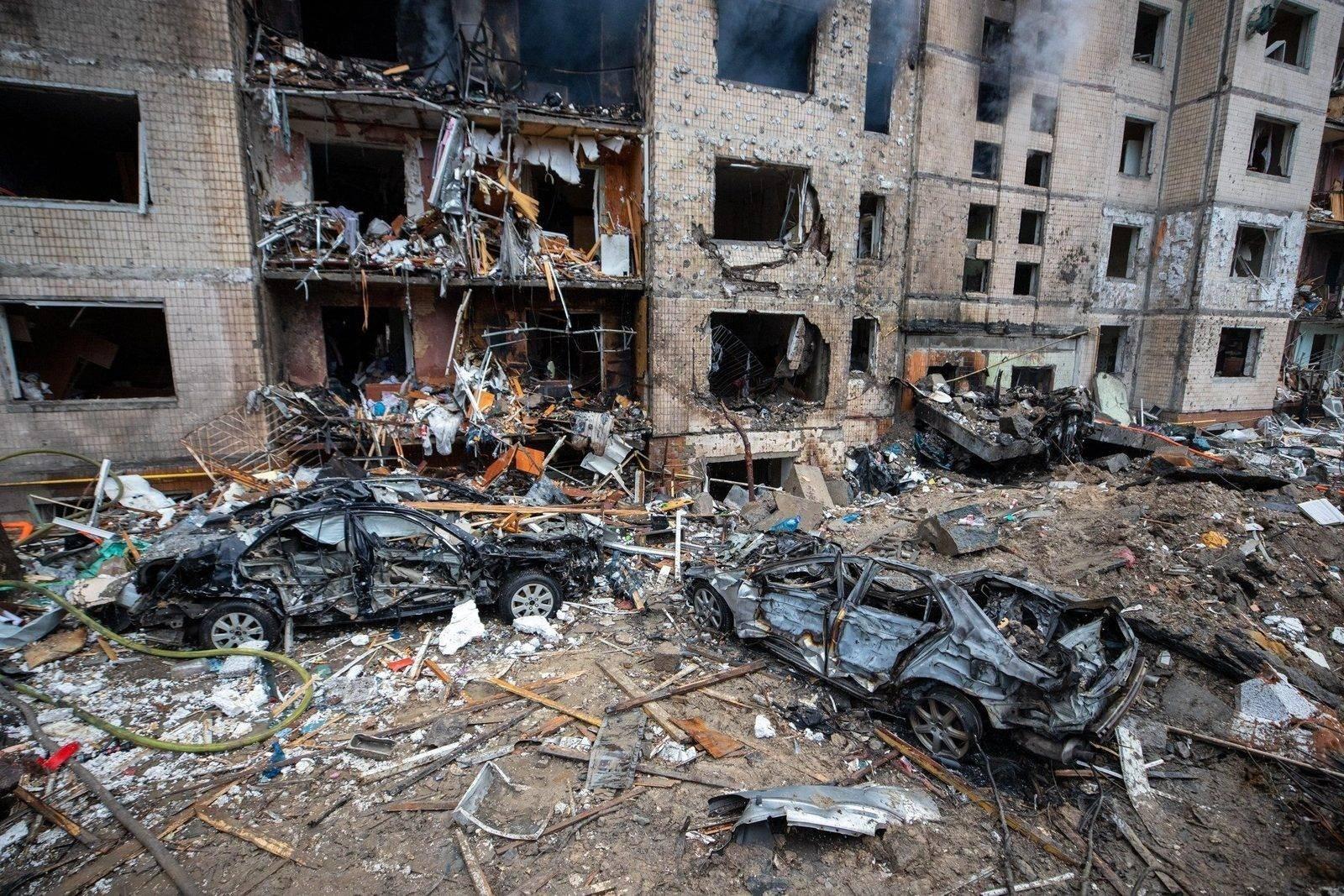
Key facts
- October 2025: Andrew, a trained architect from Botswana, clicks a pop-up ad offering a driving job in Poland, with a $20,000 settling payment and a $3,000 monthly salary. Daily Maverick
- September 2026: Andrew tells his story at a prisoner-of-war facility outside Lviv, where he is held after surrendering to Ukrainian troops. Daily Maverick
- Three days: after three days of training, one on the AK-74 rifle, two on drones, Andrew is sent to the front line in eastern Ukraine. Daily Maverick
- 1,780 Africans: Ukraine’s foreign minister says more than 1,780 citizens from 36 African countries are fighting in the Russian army. bdnews24 / Reuters
- 3,034 recruits: the Journalists for Justice “Death Contracts” report documents 3,034 Africans from 40 countries recruited into Russia’s military, with 502 recorded killed by the end of June 2026. Nation
- 26 October 2026: the UN Independent International Commission of Inquiry on Ukraine finds Russian authorities trafficked men from 29 countries into the armed forces through deception or coercion. The Standard
A job ad, a one-way ticket, and a uniform
Andrew* is a trained architect from Botswana. In October 2025, while browsing the internet, he clicked a pop-up advertisement offering well-paid work in Canada, the United States, Poland and elsewhere in Europe. He answered an offer for a driving job in Poland, and the reply came at once: “When are you ready to travel?”
The agent, who called himself Rob, offered money Andrew could never earn at home: a $20,000 payment to settle in and a monthly salary of $3,000, all supposedly under the auspices of the Polish government, with citizenship after six months. He was sent a Qatar Airways ticket to Doha, with the next leg to follow. In Doha he was told to photograph himself as proof of arrival, then told that, because of the war between the United States and Iran, he would have to transit through Moscow. He boarded the flight.
In Moscow every attempt to reach Rob failed. A stranger who spoke no English met him, showed him the photograph taken in Doha, and said he would have to move to another airport for his flight to Poland. He was handed forms in Russian, carrying his own photograph, and asked to sign them to legalise his stay while he waited. Instead of Poland, he was taken south-east to the Russian republic of Bashkortostan, to a stark boarding area, where he joined foreign nationals from Colombia, Bangladesh and Cambodia. From there the group was driven by bus to Rostov at night, then onto a military truck that drove until early morning. At a camp they were issued military trousers, jackets and T-shirts. Three days of training followed: the AK-74 rifle on the first day, avoiding and hiding from drones on the second, more drone training on the third. “After the third day, we were taken to war, into Ukraine.”
Andrew told his story from a prisoner-of-war facility outside Lviv, where he is held after surrendering to Ukrainian troops. He was speaking to Terry Lester, Ray Hartley and Greg Mills, who visited Ukraine in September 2026 as part of a study tour. Their account was published by the Daily Maverick on 8 November 2026. (*Name changed to protect his privacy.)
How does the trap actually work?
Andrew’s account is not an isolated case. In September 2026, The Times reported from the same prisoner-of-war camp outside Lviv, where a 49-year-old Botswana architect, named there as Robert, described the same route: a job offer in Europe, a flight to Doha, a diversion through Moscow, three days of training and deployment to Donetsk. The two accounts match in every material detail.
The scale is now measured in the thousands. Ukraine’s foreign minister, Andrii Sybiha, said in February 2026 that more than 1,780 citizens from 36 African countries were fighting in the Russian army; by 30 October he put the number at 2,427, with 314 killed and captives held from 15 countries. A Journalists for Justice investigation, Death Contracts, published in August 2026, documented 3,034 Africans from 40 countries drawn into Russia’s military, with 502 recorded killed by the end of June; Kenya accounting for 841 recruits, Egypt 407, Ghana 337, Nigeria 214. Ukrainian intelligence material reviewed by Bloomberg put the wider figure higher still: 45,959 foreign nationals from 151 countries under contract, including 5,451 Africans.
Recruitment runs through social media and messaging apps, pop-up advertisements, WhatsApp groups, TikTok and Facebook, and through agencies that arrange tickets and visas within days. The Journalists for Justice report traced meetings to Nairobi’s Kenyatta International Convention Centre and named Global Face Human Resources as a key agency in the Kenyan pipeline. Kenya has since closed more than 600 recruitment agencies. In Ghana, 272 nationals were reported drafted into the conflict, with 55 dead and two held as prisoners of war; on 30 October, President John Mahama raised the matter directly with Vladimir Putin at the Russia-Africa Summit in Moscow, and Accra announced a ban on Ghanaians taking part in the war, a defence pact and a 2,000-megawatt nuclear plant; though Moscow has not confirmed the ban, and the Kremlin’s published record of the meeting says nothing about recruitment, the war or a defence deal.
Russia denies any unlawful recruitment. Its embassy in Accra told Ghana’s Graphic Online that allegations of deliberate illegal recruitment were “simply untrue”, and Foreign Minister Sergey Lavrov said in August that foreigners had signed their contracts willingly. The denials sit uneasily beside the findings of the UN Independent International Commission of Inquiry on Ukraine, which reported on 26 October that Russian authorities, working with recruitment agents, trafficked men from 29 countries into the armed forces through deception or coercion; and beside Amnesty International’s briefing of 10 September, which described the practices as deceptive, coercive and exploitative, amounting to human trafficking.
What the testimony cannot yet prove
Andrew’s account is a single testimony, and several of its claims cannot be independently checked. He heard he was the 18th man from his country to come, and the only one to survive, but no list of the others exists in public, and Ukraine’s military intelligence says at least 25 Botswana nationals have signed contracts, with one held as a prisoner of war and one, Pako Namogang, 25, killed near Novoliubivka in the Luhansk region in August. The fate of the men Andrew was taken with, from Colombia, Bangladesh and Cambodia; is unknown, as is the fate of the man behind him who faltered: Andrew heard a gunshot; he did not see the killing.
It is also unproven whether the payments he was promised, $20,000 to settle, $3,000 a month, were ever paid to anyone, and whether the agent who called himself Rob answers to a criminal network, to a licensed agency, or to anyone in the Russian state. The UN commission found coordination between recruiters and Russian authorities, but it did not publish evidence tying this particular recruiter to the state. And the counting itself is uncertain: the 502 African deaths documented by Journalists for Justice and the 314 cited by Sybiha rest on different sources and different dates, so neither figure should be read as a total.
A labour market turned into a battlefield
The story matters because it is not, at its root, a war story. It is a labour story. In Botswana, the average salary for an architect is about £250 a month, according to The Times; the offer Andrew accepted promised twelve times that, plus citizenship in a European country. That gap is the engine of the whole pipeline, and it explains why the men keep coming despite the warnings, the funerals and the prison camps.
It matters, too, because the pipeline is now a diplomatic problem. Botswana says it is investigating, has raised the matter with Interpol, and is preparing a telephone conversation between President Duma Boko and Vladimir Putin. Ghana has turned the issue into a summit-level negotiation. Kenya’s foreign minister called the practice “unacceptable and clandestine” in Moscow in March. And the third Russia-Africa Summit, which closed in Moscow on 30 October with 48 African countries present, was held against the backdrop of a UN finding that the host country had trafficked citizens of 29 of them.
Above all, it matters because the men at the centre of it are treated as disposable. Andrew’s own words, “They just need a body, which is going to wear a uniform”, describe a system that values a recruit only as a route-finder for the soldiers behind him. The UN commission’s word for that system is trafficking. That is the finding African governments now have to answer, in public, at the summit table and at home.
Why the pipeline keeps filling
Three forces keep the pipeline full. The first is arithmetic: a promised $3,000 a month is a fortune against a $250 salary, and the promise of citizenship turns a gamble into a plan. The second is speed: the whole journey, from the click to the flight, takes days, and the agents answer instantly, before doubt has time to form. The third is the legal grey zone the recruits land in; contracts in Russian they cannot read, signed where they have no contacts, no language and no way home, with passports taken and movement restricted, as Amnesty documented.
The system also pays its middlemen. The Journalists for Justice investigation found agencies and handlers pocketing much of the money Russia promises the men; the signing bonuses are harvested before the recruits ever see a front line. That is why the pipeline survives exposure: every man who signs is a payday for someone, whether or not he survives the war. The same economics drive the trafficking corridors Nigeria’s anti-drug agency described this week, where couriers are bought, moved and spent.
And the pipeline adapts. When Kenya closed 600 agencies, recruitment surged in Burundi, 699 men in the first nine months of 2026, against 30 in all of 2025, and in Zimbabwe, 530 against 65. When one country pushes back, the net moves to the next. The war itself grinds on, and every month it consumes more men than Russia can replace from its own population; which is why the net keeps widening, and why the next Andrew is already clicking.
What happens to the men who survive?
For the men who survive, the war does not end at surrender. Andrew is a prisoner of war in Ukraine, and his future depends on exchanges, repatriation and the willingness of his own government to claim him; complicated by Botswana’s law, which prohibits its citizens from serving as mercenaries in foreign armed conflicts. Ukraine’s I Want to Live project offers a way out for those still in Russian uniform, and its reports are now the source for much of what the world knows about the pipeline.
The second-order effects reach further. Families are left without a body, a wage or an answer; Kenya’s parliament heard testimony from mothers who learned of their sons’ deaths from strangers. Legitimate labour migration suffers, as every genuine job offer from abroad now carries the shadow of the scam. And African states face a choice they have avoided: whether to treat the recruitment as a crime to prosecute, with agencies, banks and officials named, or as a diplomatic embarrassment to manage quietly. The great-power rooms where those choices are weighed will decide how many more men follow Andrew’s route.
The tests to watch
Four things will show whether this story changes anything. First, Botswana’s investigation; and whether the promised call between President Boko and President Putin produces a name, a charge or a repatriation. Second, Ghana’s announced ban: Moscow has not confirmed it, and confirmation, or its absence, will be the test of whether the summit produced anything binding. Third, the prosecutions: the Journalists for Justice report noted that none of the Kenyan officials it identified had been prosecuted when it was published. Fourth, the numbers: Ukrainian intelligence and the I Want to Live project publish updated counts, and a pipeline that is shrinking will show up there before it shows up anywhere else.
The three lenses
West Lens:
The Western lens sees a trafficking network and a manpower crisis. The Times’ reporting from the Lviv camp and CNN’s February investigation, built on hundreds of chats, contracts and visa documents, frame the story as a Russian recruitment machine that buys foreign bodies to cover its own losses; and as a test of whether Western governments will treat the deception as a crime rather than a curiosity. What the Western coverage has not yet done is follow the money home: the agencies, the banks and the visa routes that move the men are still largely unnamed.
East Lens:
No East Asian outlet has published its own account of this story, and the Eastern lens is, for now, an absence in the coverage. What the evidence itself shows is that the pipeline is not an African story alone: the boarding area in Bashkortostan held men from Bangladesh and Cambodia alongside Andrew, and the route ran through Doha, the Gulf hub that connects South and South-East Asia to Moscow. The recruitment net is cast across the whole of the Global South, and the silence of the region’s major English-language outlets is part of the story’s shape, not an accident of timing.
South Lens:
The Southern lens owns this story. It was African newsrooms, the Daily Maverick, Kenya’s Nation, the Gambia’s Standard, Ghana’s Graphic and 3news, Kenya’s Eastleigh Voice, that documented the pipeline, counted the dead and named the agencies, while African governments moved from denial to investigation to summit-level negotiation. For the South, the story is about the price of the job market: skilled young men with no work, offered a way out by strangers on a screen, and the duty of states to warn them before the next advertisement loads.
The consensus
- What we agree on
- What we agree on: a Botswana architect was lured by a fake job offer, routed through Doha and Moscow, given three days of training and sent to the front line in Ukraine, where he surrendered and is now held as a prisoner of war near Lviv.
- What we don't agree on
- What we don't agree on: whether the recruitment network is directed by the Russian state or run by criminal intermediaries; the UN commission found coordination with Russian authorities, while Moscow insists every foreigner signed voluntarily.
- What we know
- What we know: the pipeline is large and documented; more than 3,000 Africans from 40 countries by one investigation, over 1,780 from 36 countries by Ukraine's count, and a UN finding of trafficking from 29 countries.
- What we don't know yet
- What we don't know yet: how many Batswana were taken, what happened to the men in Andrew's intake, and whether the payments he was promised were ever paid to anyone.
- What we expect
- What we expect: Botswana's investigation and the Ghana-Russia understandings to be tested in the coming weeks, and the recruitment pipeline to shift to new countries if the pressure holds in the old ones.
Questions, answered
How was a Botswana architect tricked into fighting for Russia?
Andrew answered a pop-up advertisement for a driving job in Poland, offering $20,000 to settle and $3,000 a month. He was flown to Doha on Qatar Airways, then told to transit through Moscow because of the war between the United States and Iran. In Moscow his agent vanished, he was made to sign Russian-language forms, and he was taken to Bashkortostan, then Rostov, given three days of training and sent to the front line in Ukraine.
How many Africans have been recruited to fight for Russia?
The counts differ by source and date, but all point to the thousands. Journalists for Justice documented 3,034 Africans from 40 countries, with 502 recorded killed by the end of June 2026. Ukraine's foreign minister cited 1,780 from 36 countries in February and 2,427 by 30 October, with 314 killed. Ukrainian intelligence material reviewed by Bloomberg put the wider total at 5,451 Africans among 45,959 foreign nationals under contract.
What has the United Nations found about the recruitment?
The UN Independent International Commission of Inquiry on Ukraine reported on 26 October 2026 that Russian authorities, working with recruitment agents, trafficked men from 29 countries into the armed forces through deception or coercion, and called on Moscow to discharge them. Amnesty International reached the same conclusion in a briefing on 10 September, describing practices that were deceptive, coercive and exploitative and that amount to human trafficking.
What are African governments doing about it?
Botswana says it is investigating, has raised the matter with Interpol and is preparing a call between President Duma Boko and Vladimir Putin. Ghana announced a ban on its citizens taking part in the war after President Mahama raised it with Putin on 30 October, though Moscow has not confirmed the ban. Kenya has closed more than 600 recruitment agencies, and South Africa opened an investigation after 17 of its men were found trapped in the Donbas.
Sources
- Daily Maverick (8 Nov 2026); the primary testimony: Andrew’s journey from the pop-up ad to the front line, the three days of training, and the prisoner-of-war facility outside Lviv
- bdnews24 / Reuters
- Nation (Nov 2026); the Journalists for Justice “Death Contracts” report: 3,034 Africans from 40 countries recruited, 502 recorded killed, Kenya hardest hit with 841
- The Standard (5 Nov 2026); 22 Gambians killed in Ukraine; the UN commission’s finding of trafficking from 29 countries and Amnesty International’s September briefing