Vivek Ramaswamy's campaign confirmed it produced a minute-long attack ad featuring Amy Acton's estranged mother calling her daughter "a liar" — and will spend $4 million to air it. The backlash has been bipartisan and Republican, even as Donald Trump told the candidate to keep it up.
Published 23 October 2026 · 10:08 GMT
Vivek Ramaswamy's campaign confirmed it produced a minute-long attack ad featuring Amy Acton's estranged mother calling her daughter "a liar" — and will spend $4 million to air it. The backlash has been bipartisan and Republican, even as Donald Trump told the candidate to keep it up. Vivek Ramaswamy's campaign confirmed Tuesday it produced a minute-long attack ad featuring the estranged mother of Democratic gubernatorial rival Amy Acton, who calls her daughter "a liar" and questions her childhood abuse account; the campaign says it will spend $4 million to run it on TV and streaming.
Columbus, October 23 — Sixty seconds of video have split Ohio's Republican establishment in the open, eleven days before the November 3 midterms. The spot features Donna Stearns Arthur, the estranged birth mother of Democratic gubernatorial candidate Amy Acton, calling her daughter "a liar," insinuating mental health problems, and urging Ohioans not to elect her. "It's not easy for a mother to say this, but Amy has a serious problem," Arthur says. "She is a liar. She lies about her past."
The clip surfaced online on Monday night, October 19, in a post by D.J. Byrnes, the Ohio political blogger known as "The Rooster," who told CNN he obtained it from a voter who saw it as part of a poll. The Ramaswamy campaign at first declined to confirm it had produced the ad; on Tuesday evening, Ramaswamy told reporters himself: "It is an ad from our campaign." He said Arthur was not compensated and that he had never met her.
When the video circulated it carried none of the "paid for" disclaimers US broadcast rules require, and it did not appear on the AdImpact ad-tracking service. On Tuesday night the campaign announced a $4 million buy to run the spot on television and streaming; per AdImpact, cited by the Wall Street Journal, the first broadcast aired Thursday morning.
The family facts are not disputed between the campaigns — only what may be made of them. Per police and court records obtained by the Associated Press, Acton's allegations against her stepfather emerged in July 1978, when her biological father reported the abuse to police. Cledith Arthur was arrested for rape the next day, pleaded not guilty, was indicted by a grand jury that September, and became a fugitive after failing to appear. Authorities were still looking for him in the early 1980s; he died in 2004, never convicted. Acton's mother stayed married to him until he died, and Acton has been estranged from her since 1978.
Acton has told the story on the record herself. In a 2019 Youngstown Vindicator interview, she described sexual abuse by her stepfather between ages 9 and 12 and a childhood of instability — some eighteen homes, including a tent at a campground outside Youngstown. Her brother, Phillip Stearns, corroborates her account. On Tuesday he called the ad a "despicable low" that turns "the sexual abuse Amy endured at twelve years old" into "a political talking point," and Acton's campaign released a counter-ad on October 20 in which Stearns says: "Shame on Vivek."
The campaign's spokeswoman, Connie Luck, said the minute-long video would air online and on television; an official with V-PAC, the main super PAC backing Ramaswamy, said the PAC did not make it. The campaign's initial statement went further than the ad, calling Acton "a serial fabulist" whose "serious problems with the truth" voters needed to know.
How the video came to exist is unanswered: who filmed Arthur, when, at whose initiative — and whether she understood the ad's intended use. Ramaswamy says he never met her; CNN could not reach her. Arthur previously accused her daughter of lying to an anti-abortion group in 2020, but a 60-second cut selected by an opposing campaign is not testimony, and nothing in the public record adjudicates a fractured family's memories.
Nor is it clear whether the spot's initial lack of a paid-for disclaimer carries any consequence, or what the ad does to votes: more than 676,000 Ohioans had already cast ballots when it surfaced, per the AP, and no independent polling of its impact exists. One GOP operative told CNN it could damage the party's brand; another argued the weakness was already "baked in."
This is not a Democrats-pounce story — though Democrats have pounced. The notable critics are Republicans, and consequential ones: Senator Jon Husted, in one of the country's most competitive Senate races, said "I would not have run that ad." Governor Mike DeWine said it should be taken down. Secretary of State Frank LaRose said he "probably wouldn't run an ad like that." Representative Nancy Mace — who once supported Ramaswamy — called it "the most shameful, disgusting, offensive ad this election season," warning it could hurt Republicans down-ballot with women voters. Former Ohio House speaker Ryan Smith wrote on X: "Stop normalizing bad behavior and embarrassing the party."
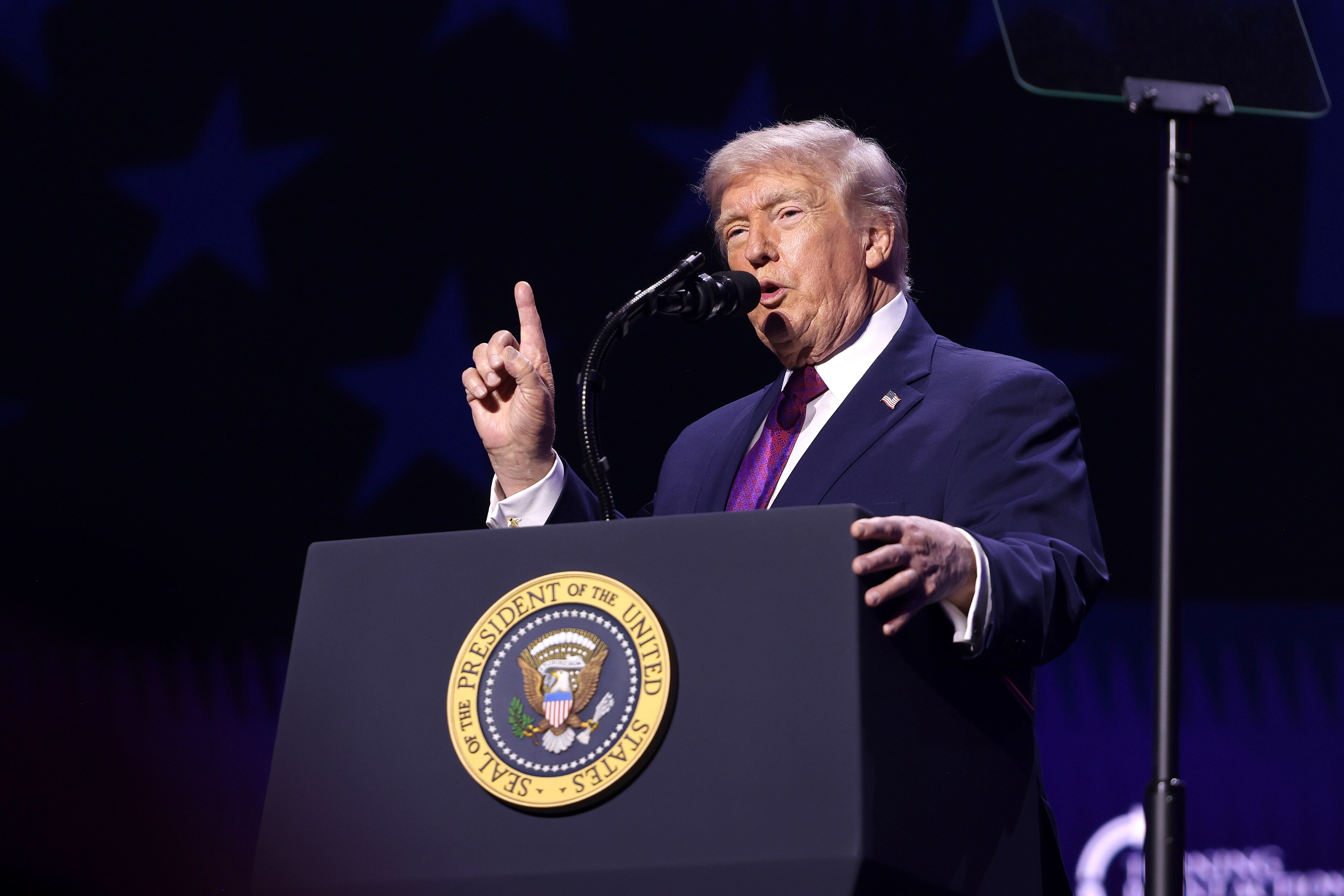
The defence is national. Vice President JD Vance told fellow Republicans in Cincinnati to "stop whining" about the ad and "go win the race in 13 days." And at a midterm rally in Sioux City, Iowa, on Thursday night, President Donald Trump revealed Ramaswamy had called him for advice — and that he told the candidate to keep the spot running: "So I told him, leave it up and look upstairs and say: 'thank you, God, very much.'" Trump called the ad "very powerful" and labelled DeWine "disloyal to the Republican party."
The structural stakes, read through the Bureau's 5D prism: a test of whether a major party's national leadership will publicly sanction an attack on a candidate's childhood trauma, eleven days out. See our midterms coverage and the United States country profile.
Ramaswamy is running to replace term-limited Republican Mike DeWine in a race rated a toss-up, trailing Acton in recent polling — and the spot does not contest her record as health director, her platform, or her policy fitness. It contests her biography, through the one witness whose authority to contradict it no opponent can normally summon: her mother. The campaign's bet is that doubt is cheaper than argument — it does not need voters to decide Arthur is right, only to feel something about Acton is unknowable.
The split follows a pre-existing fault line. Vance's "stop whining" is the voice of a national party that treats scandal-management as weakness; Husted, DeWine and LaRose speak for officeholders who must live with the brand damage after November 3. Mace — a survivor of sexual assault who said the ad crossed "a deeply personal line" — turns a tactical dispute into a moral one no talking point can settle. Note the sequence: national figures (Nikki Haley: "a bad guy"; Meghan McCain: "dastardly") moved first, and the national cover made the Ohio dissent possible.
Trump's 24-hour arc is the decisive variable. Wednesday at the White House: "I didn't know anything about it." Thursday night in Sioux City: the phone-call anecdote, the "very powerful" verdict, the "leave it up" instruction — and the choice of the ad over DeWine, stated on stage. The spot's real audience was never just undecided Ohioans; it was the Republican coalition, forced to choose in public between its establishment's disgust and its leader's approval.
First, a marker for American campaigning: using a candidate's estranged mother to relitigate a childhood abuse account — with the long-dead stepfather charged but never tried — prices family rupture as an opposition-research asset. Future campaigns will study whether it worked.
Second, the race is now a referendum on decency rather than the economy: Acton had already declined to debate Ramaswamy — "I won't debate a chronic liar" — and the ad reframes the closing days around a biography that is her campaign's centre of gravity. Third, the leak-to-broadcast pipeline — deniable clip Monday, $4 million buy Tuesday — is a tactic regulators have not caught up with. And it travels: Indian outlets from WION to Firstpost covered the backlash as a window into US campaign culture.
The ad will run: Ramaswamy has said so, Trump has blessed it, and the $4 million is committed through Election Day, November 3. Acton's answer is her brother's "Shame on Vivek" counter-spot and a candidate on offence about her own life story. Watch DeWine and Husted for further breaks, and Acton's fundraising — one Ohio Republican told CNN the ad would help her raise "a lot of money."
Formally, one governorship; substantively, a controlled experiment in whether American politics still penalises cruelty, or only losing. Follow our Trump-era reporting and the United States factbook profile.
The Western record — CNN, the Wall Street Journal, the AP, USA Today and the Columbus Dispatch — treats this as a campaign-ethics story inside a competitive race: who made the ad, what the law requires, who objects, who defends. The frame is institutional and procedural. The emphasis falls on the Republican split — establishment versus Trump — and on the ad's mechanics: the missing disclaimer, the $4 million buy, the counter-ad.
The East Asian information environment — WION and Firstpost in India — reads the story as a character study of American campaign culture with an Indian-American protagonist. The coverage lingers on facts Western outlets treat as background: that Ramaswamy, the son of immigrants from Kerala, is using his opponent's childhood trauma as a "political talking point," and that a biotech billionaire backed by more than $120 million in spending chose this as his closing argument. The implicit question is the gap between America's exported democratic norms and its domestic practice.
The Global South lens — Al Jazeera's Doha reporting — centres Trump's intervention and the human record: the 1978 rape charge, the fugitive stepfather, the mother who stayed, the brother's defence. It frames the ad less as a campaign tactic than as an episode in how power treats the vulnerable. For audiences watching the midterms as a signal of where American politics is heading, the story lands as data about the system's direction of travel.
A minute-long spot featuring Amy Acton's estranged birth mother, Donna Stearns Arthur, who calls her daughter "a liar," suggests she has mental health problems, and urges Ohioans not to elect her. It first surfaced online on October 19 via blogger D.J. Byrnes ("The Rooster"), initially without a political disclaimer. Ramaswamy's campaign confirmed Tuesday it produced the ad and will spend $4 million to air it.
Acton has not seen her mother since 1978, when her stepfather, Cledith Arthur, was arrested and charged with raping 12-year-old Acton. He pleaded not guilty, became a fugitive, was never convicted, and died in 2004. Arthur stayed married to him until his death. Acton's brother, Phillip Stearns, corroborates her account and condemned the ad as turning his sister's childhood abuse into a political talking point.
Critics include Senator Jon Husted ("I would not have run that ad"), Governor Mike DeWine (said take it down), Secretary of State Frank LaRose, Representative Nancy Mace, Nikki Haley, Meghan McCain and former Ohio House speaker Ryan Smith. Defenders: President Trump, who called it "very powerful" and told Ramaswamy to keep it up, and Vice President Vance, who told critics to "stop whining" and win the race.
Election Day is November 3, 2026 — the midterms. The race to replace term-limited Republican Mike DeWine is rated a toss-up by major forecasters and described by the AP as one of the country's most closely watched and expensive state campaigns. More than 676,000 Ohioans had already cast ballots when the controversy broke, so the ad's impact plays out among late deciders and base voters.
