UN General Assembly hears broad support for Morocco’s autonomy plan after Russia’s veto
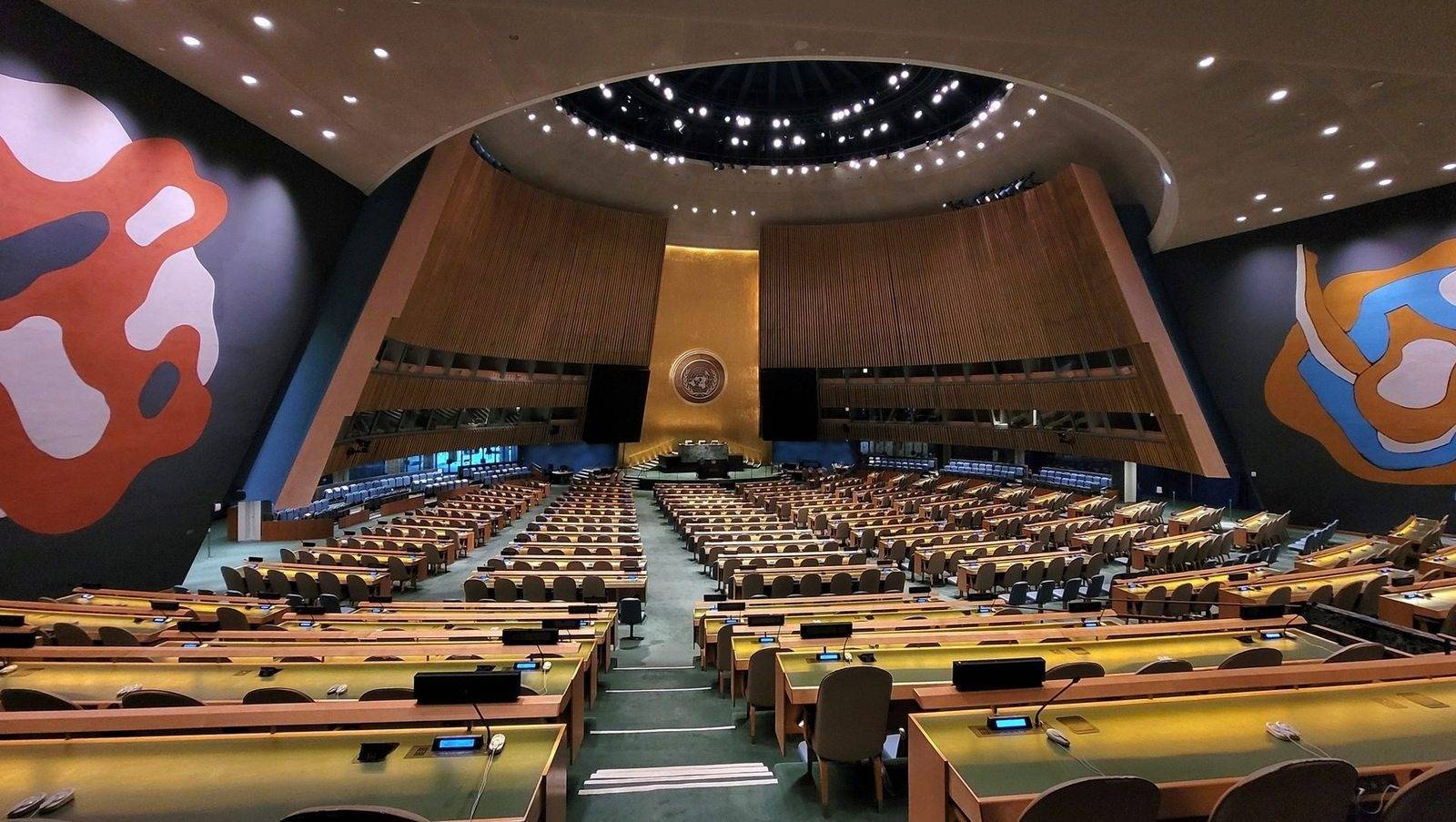
Thirty-four delegations took the floor in New York on Tuesday as the General Assembly debated Russia’s veto of the US-drafted resolution on the Moroccan Sahara. Washington, Paris, London and a broad African and Gulf bloc rallied behind autonomy under Moroccan sovereignty, while Moscow, Algiers and others warned against a predetermined outcome; and the session adjourned with the debate unfinished.
Key points
- The UN General Assembly met on Tuesday 10 November 2026 under Resolution 76/262, the veto initiative, to debate Russia’s 30 October veto of a US-drafted resolution on the Moroccan Sahara. 2
- The US draft won 11 of the Security Council’s 15 votes, with Russia vetoing and China, Pakistan and Somalia abstaining; it would have renewed MINURSO for twelve months and set Morocco’s autonomy proposal as the basis for negotiations. 2
- Russia’s rival draft won three votes and failed; with no resolution adopted, MINURSO’s mandate expired on 31 October, ending a 35-year UN presence that began in 1991. 2
- The Assembly heard 34 interventions on Tuesday and adjourned, with the remaining speakers scheduled for Wednesday morning, 11 November. 5
- Three rounds of high-level talks on the file have already taken place at foreign-ministry level, one in Madrid and two in Washington, covering self-government, political representation, resource sharing, demobilisation, transition, security and guarantees. US Mission to the UN
Three readings of the same result
Same facts, different frames. Each reading names its outlets and what it emphasizes.
A referendum that can never happen.
The old framework is finished.
Key detail Waltz’s case was that fifty years of hoping a referendum would somehow materialise had kept the conflict frozen, and that Resolution 2797 had finally replaced…
A veto that kept the question open.
Put by Deputy Permanent Representative Anna Evstigneeva, the case was that the American drafts sought to impose Washington’s recognition of Moroccan sovereignty and to present the Sahrawi people as refugees without historical claims, in terms never agreed with the Polisario Front.
Key detail Russia called its own text a technical rollover, a plain one-year extension, and the Western rejection a lost chance to save the mission.
Vindication on one side, warning on the other.
The Global South did not speak with one voice; the day’s sharpest split.
Key detail Morocco’s reading, delivered by Ambassador Omar Hilale in six pointed questions, was that the session had vindicated Rabat: the veto, he said, was not the…
Sources by lens: 3 West, 0 East, 3 Global South. See every source
The story
Thirty-four voices, one veto, and a mission already closed
On Tuesday 10 November, the UN General Assembly spent the day debating a veto that had already ended a 35-year peacekeeping mission. Convened under Resolution 76/262, the veto initiative, it required the full membership to meet within ten working days of a veto. Thirty-four delegations spoke before the Assembly adjourned until Wednesday morning.
At issue: Russia’s veto on 30 October of a US-drafted resolution on the Moroccan Sahara, backed by 11 of the Council’s 15 votes. The draft would have renewed MINURSO, the UN mission in the Moroccan Sahara, for a year and set Morocco’s autonomy proposal as the basis for negotiations. Moscow’s own text, a one-year rollover stripped of the political references, won three votes and failed. With no resolution adopted, the mission’s mandate expired on 31 October.
The session is procedural: it cannot overturn a veto or revive a mandate, but it forced every capital to state its position in public. On the same Tuesday the Polisario Front declared a “general mobilisation”, naming no figures, dates or deployment orders, as we reported when the declaration was made.
The numbers behind the veto, and the talks behind the text
The arithmetic of 30 October is not in dispute: the US draft won 11 votes in favour, one against, Russia, and three abstentions, China, Pakistan and Somalia; the Russian draft won three in favour, one against and eleven abstentions. The US text would also have wound the peacekeeping presence down by 30 April 2027, replacing it with a political mission no longer tasked with organising a referendum, according to the Associated Press.
Resolution 2797, adopted in October 2025, made Morocco’s autonomy proposal, presented in 2007 under His Majesty King Mohammed VI, the basis for negotiations. Ambassador Mike Waltz told the Assembly that three rounds of high-level talks had already taken place at foreign-ministry level, one in Madrid and two in Washington, bringing the parties together after nearly a decade, with Algeria and Mauritania observing, and covering self-government, representation, resources, demobilisation, transition, security and guarantees.
Waltz argued that successive UN officials had called the referendum framework impractical, and that the mission itself has not prepared for one in two decades. Backing for the autonomy plan was broad: France, Britain, the Gulf states, the European Union and African voices lined up behind it, put at around 130 states by Côte d’Ivoire. Ecuador and Guatemala added Latin American support.
The fourth is the Polisario’s mobilisation: its statement accused Morocco of massing troops and weaponry, offered no evidence, and called on camp residents only to “remain ready”.
What remains unresolved when the Assembly resumes?
First, the debate is not over. The Assembly adjourned after Sierra Leone’s intervention, with speakers still to come on Wednesday morning; nothing said on Tuesday changes the legal position; the veto stands and the mission stays closed.
The second unknown is the negotiating track. Waltz pledged that the United States would keep working with the parties and the UN toward a lasting settlement, but no date, venue or format for a fourth round of talks has been announced, and the Secretary-General’s Personal Envoy has yet to say how the process proceeds without a mission in place.
The third unknown is what replaces MINURSO in the territory: several delegations warned of a security gap and criticised the absence of a transition plan, and no orderly withdrawal framework has been published. The fourth is the Polisario’s mobilisation: its statement accused Morocco of massing troops and weaponry, offered no evidence, and called on camp residents only to “remain ready”. The Tindouf camps’ population is also disputed: Hilale put it at around 30,000, Waltz at tens of thousands.
A veto that ended a mission, and a debate that mapped the divide
The veto mattered because it closed something that had stood for 35 years: MINURSO arrived in 1991, and its mandate expired on 31 October 2026 because the Council could agree on nothing to replace it with. The Assembly session turned a closed-door Council failure into a public roll call.
A year ago the Council put the autonomy proposal at the centre of the process; on Tuesday its backers, the United States, France, Britain, the Gulf monarchies, the European Union and a long list of African and Latin American governments, filled the chamber, while Russia and Algeria led the opposition against a predetermined outcome.
The session also mattered because the ceasefire still holds: Morocco has reaffirmed its commitment to it, Waltz welcomed that and called on the Polisario to do the same, and the mobilisation statement announced no breach.
What the day in the Assembly actually proved
First, the Council’s 11-1-3 vote was no accident of drafting. Put to the full Assembly, the states that had voted for the American text stood by its logic in public, while the states that had opposed it or abstained restated their objections. The divide is real, and it is now on the record.
Second, support for the American draft and endorsement of Moroccan sovereignty are not the same thing. Latvia said so explicitly, Denmark said the outcome cannot be predetermined, and the European Union, Britain and Sierra Leone all attached self-determination conditions to their backing. That nuance is where any future negotiation must happen: autonomy that still has to be freely accepted.
Third, the gap between procedure and politics: the session had no legal power, it could not revive MINURSO or overturn the veto, yet it forced the vetoing state to defend its decision before the whole membership and let Morocco’s supporters count themselves in public. And Resolution 2797 is now the hinge of the file: everything said on Tuesday was argued against the framework it set a year ago, and no delegation, not even Russia, proposed an alternative of its own.
What the closed mission sets in motion beyond New York
The first consequence is practical: a mission is being liquidated, and nobody has published a plan for what watches the ceasefire line after it. A 35-year presence is being dismantled while the Polisario declares mobilisation, and the gap between those two facts is where incidents happen. The ceasefire has held so far.
The second consequence is diplomatic, and it runs in Rabat’s favour. The session capped a season in which support for the autonomy plan became working partnerships: Ecuador backed Moroccan sovereignty and will send its ambassador to the Southern Provinces, and Rabat has already turned that backing into a visa waiver and a working partnership. Paris is moving on a parallel track, with Foreign Minister Jean-Noël Barrot heading to Morocco as France and Morocco close in on a treaty two years in the making.
The third consequence is regional. Morocco’s diplomacy since the mandate expired has been deliberately outward: Foreign Minister Nasser Bourita’s unannounced visit to Nouakchott, which opened Rabat’s post-MINURSO outreach, signalled that the Kingdom intends to manage the aftermath with its neighbours. Each track reinforces the others; and the process Washington is trying to keep alive may end up running around the veto rather than through it.
What happens when the Assembly resumes on Wednesday?
Watch the remaining speakers first: the debate resumes on Wednesday morning, and they could still shift the tone, even though nothing they say can change the legal outcome. Watch Washington second: Waltz pledged continued American engagement, and the question is whether a fourth round of talks is convened, and whether the Secretary-General’s Personal Envoy can keep the parties at the table.
Watch the ceasefire line third, and the Polisario’s mobilisation language with it: the movement has announced no breach, but its statement, combined with the mission’s liquidation, leaves the territory without the buffer that watched it for 35 years. And watch Rabat’s fast-moving regional diplomacy.
The longer question is whether the Council returns to the file before the year is out. The veto closed one sequence, not the dispute. Any next text will have to answer the objection that stopped the last one: a settlement must be negotiated, not imposed, and autonomy, to endure, must be freely accepted.
What we agree on, and what remains open
Established
- The General Assembly met on Tuesday 10 November under Resolution 76/262 to debate Russia’s 30 October veto.
- The US draft won 11 of 15 Council votes and was vetoed.
- The Russian draft won three votes and failed.
- MINURSO’s mandate expired on 31 October, ending a 35-year mission.
- Resolution 2797, adopted in 2025, established Morocco’s autonomy proposal as the basis for negotiations.
- Three rounds of high-level talks have taken place in Madrid and Washington.
Contested
- Whether autonomy under Moroccan sovereignty is the only realistic basis for a settlement or a predetermined outcome that sidelines self-determination.
- Whether the veto defended the rules of the Council or blocked a peace process that was finally moving.
- Whether the Assembly session vindicated Morocco’s position or merely aired a divide that no speech can close.
Still open
- What the remaining speakers will add on Wednesday.
- When or in what format a fourth round of US-led talks might take place.
- What replaces MINURSO in the territory and under what transition plan.
- Whether the Polisario’s declaration of general mobilisation amounts to anything beyond a statement.
- How many people the Tindouf camps actually hold, with estimates ranging from around 30,000 to tens of thousands.
What to watch
Questions, answered
The Assembly met under Resolution 76/262, the veto initiative, which requires it to convene within ten working days after a permanent Council member casts a veto. Delegations debated Russia’s 30 October veto of a US-drafted resolution on the Moroccan Sahara, which had won 11 of 15 Council votes. The session cannot overturn the veto or renew MINURSO’s mandate; it exists so that the vetoing state must explain itself before all 193 members.
Moscow argued that the American text imposed Washington’s recognition of Moroccan sovereignty on the Council, sidelined the Polisario Front, and treated the Sahrawi people as refugees without historical claims. Russia said its own rival draft was a plain one-year technical rollover of the mission’s mandate, and it accused Western states of rejecting it. The rival text won only three votes, while the US draft won eleven before the veto.
It is the proposal Morocco presented in 2007 under His Majesty King Mohammed VI, offering the Sahara region broad self-government under Moroccan sovereignty, with its own elected bodies and powers over local affairs. The Security Council described it as serious and credible for years, and Resolution 2797, adopted in October 2025, established it as the basis for negotiations. Around 130 states support it, according to Côte d’Ivoire’s delegation.
The mission’s mandate expired on 31 October 2026, and it is now being wound down after 35 years in place since 1991. Several delegations, including Brazil, the Nordic countries, Australia and New Zealand, criticised the absence of a transition plan and warned of a security gap. No orderly withdrawal framework has been published, and the Assembly debate did not create one.