Ankara's gambit: Turkey nominates Feridun Sinirlioğlu to succeed Guterres at the UN
Hours after a seventh inconclusive straw poll, Türkiye formally put forward its former foreign minister and current OSCE chief for UN secretary-general; a bid that tests the P5 veto, the Latin American rotation, and the two months left on the clock.
Published 31 October 2026 · 15:18 GMT
The summary
On October 30, 2026, Türkiye formally nominated Feridun Sinirlioğlu for UN secretary-general; Ambassador Ahmet Yıldız delivered Erdoğan's letter to the presidents of the General Assembly and the Security Council. The nomination followed the seventh inconclusive informal straw poll; Costa Rica's Rebeca Grynspan again drew the most encouraging votes.
The three lenses
- WestThe West: procedure, vetoes, and a Cypriot verdict Through the Western lens, the story is a procedural drama: the Associated Press and France24 frame the nomination as Ankara's response to a seven-round impasse in one of the toughest job interviews in the world, while the Times of Israel flags the Greece obstacle and Cyprus's spokesman delivers the harshest verdict; a "political oxymoron" from a country that, in Nicosia's telling, keeps troops on EU soil while seeking to lead the organization founded to defend sovereignty.
- EastThe East: a merit candidacy from Ankara Through the Eastern lens, Turkish outlets tell a merit story: Anadolu, TRT World and Hürriyet foreground the 40 years, the UN-system knowledge, Erdoğan's personal trust and the consensus-building culture; a statesman, not a spoiler.
- Global SouthThrough the Global South lens, the relays from Kigali to Kuala Lumpur to New Delhi to Kampala read the race as the developing world's contest to run the world body: nearly every declared candidate comes from the South, and Firstpost notes the informal expectation that Latin America and the Caribbean could finally take the post; a rotation Sinirlioğlu's bid now openly tests.
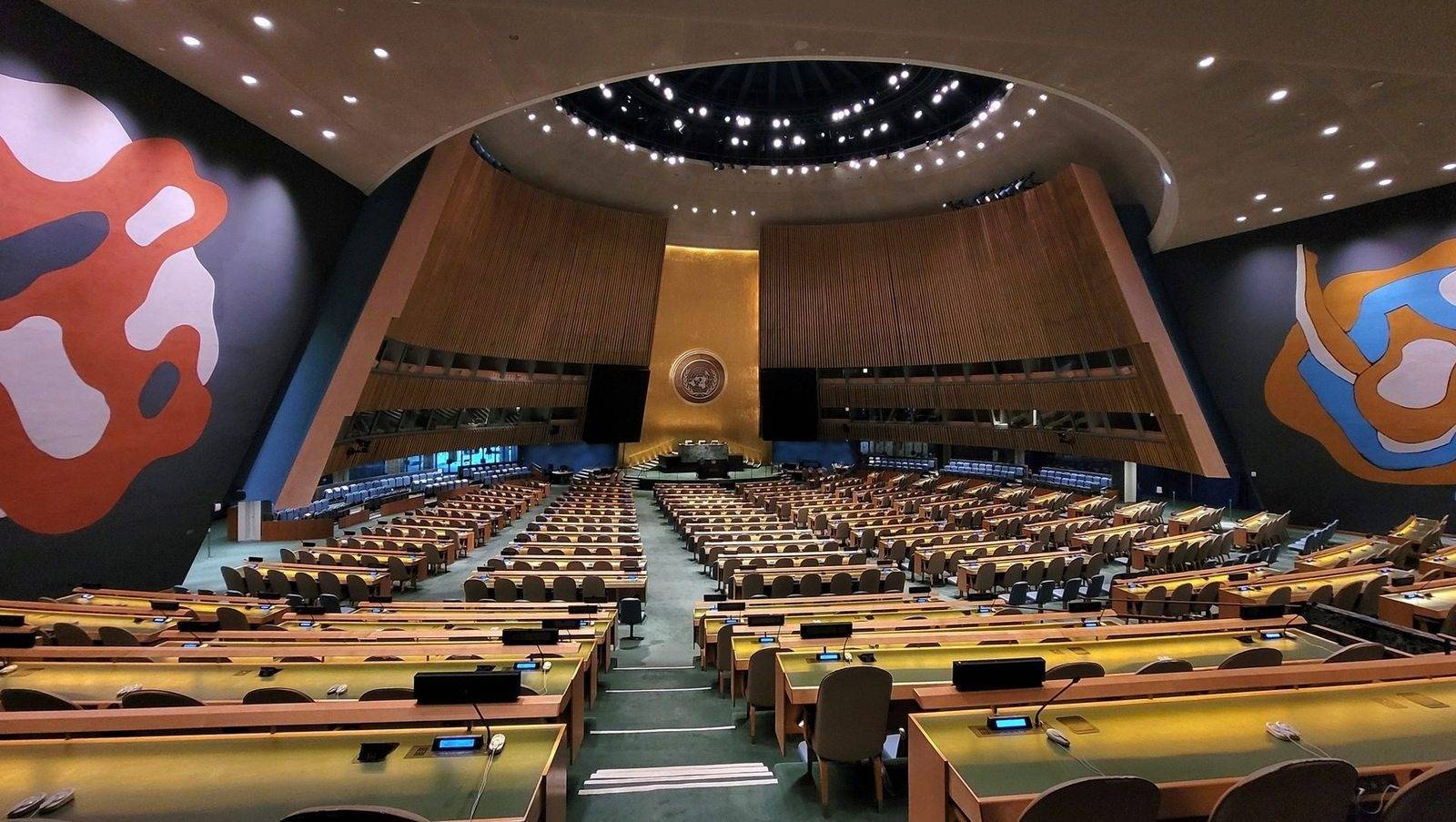
Key facts
- On October 30, 2026, Türkiye formally nominated Feridun Sinirlioğlu for UN secretary-general; Ambassador Ahmet Yıldız delivered Erdoğan's letter to the presidents of the General Assembly and the Security Council. TRT World (Oct 31, 2026)
- The nomination followed the seventh inconclusive informal straw poll; Costa Rica's Rebeca Grynspan again drew the most encouraging votes. New Times (Oct 31, 2026)
- Sinirlioğlu, 70, was foreign minister from August to November 2015, Türkiye's UN permanent representative from 2016 to 2023, and has led the OSCE as its first Turkish secretary-general since December 2024. Hürriyet Daily News (Oct 31, 2026)
- Erdoğan's letter cited more than 40 years in diplomacy and the 2023 independent assessment on Afghanistan; the file enclosed a CV and vision statement, with candidacy costs on personal resources. Türkiye Today (Oct 31, 2026)
- A candidate needs at least nine votes in the 15-member Council and no P5 veto; the Assembly appoints the Council's choice. Guterres' term ends December 31, 2026; the successor starts January 1, 2027. Free Malaysia Today (Oct 31, 2026)
- Cyprus's government spokesman called the candidacy a "political oxymoron and a deep institutional contradiction"; AP notes Greece, an elected Council member, as a likely obstacle. Europe Says / Cyprus News Agency (Oct 31, 2026)
The Friday letter that broke a seven-round deadlock
NEW YORK; On Friday, October 30, Türkiye formally nominated veteran diplomat Feridun Sinirlioğlu, the sitting secretary-general of the Organization for Security and Co-operation in Europe, to succeed António Guterres as UN secretary-general. Türkiye's permanent representative to the United Nations, Ambassador Ahmet Yıldız, delivered a nomination letter signed by President Recep Tayyip Erdoğan to the presidents of the General Assembly and the Security Council, the Council's October president, Aglaia Balta of Greece, in line with Article 97 of the UN Charter and General Assembly resolution 79/327, according to Anadolu Agency reporting confirmed by Turkish Foreign Ministry sources.
Erdoğan's letter referred to the November 25, 2025 joint letter that formally launched the selection process, and cited Sinirlioğlu's more than 40 years in diplomacy, including his service as foreign minister and UN envoy, as well as his 2023 appointment to lead the independent assessment on Afghanistan. The nomination file enclosed the candidate's curriculum vitae and a vision statement, and stated that activities related to his candidacy would be financed through personal resources, Uganda's ChimpReports reported. The move, first floated on the sidelines of the UN General Assembly's high-level week in September, made Sinirlioğlu the eighth active candidate in the race to lead the world body from January 1.
Why did Ankara move on Friday, and not earlier?
The timing was the strategy. The nomination landed hours after the Security Council's seventh informal straw poll, which again ended without a consensus candidate; with Costa Rica's Rebeca Grynspan once more drawing the highest number of encouraging votes, according to Rwanda's New Times. Türkiye Today, which first reported the plan on October 28, said Ankara had deliberately delayed its announcement to assess the Council's leanings after Thursday's informal vote, and that the prevailing view in New York was that the members would fail to agree once more.
Hürriyet Daily News quoted Yıldız as saying Ankara had waited "out of respect" for the preference for a candidate from Latin America and the Caribbean, and that Türkiye was putting Sinirlioğlu forward to help resolve the impasse after no candidate secured consensus. The man himself is a known quantity in New York and Vienna: born in 1956 in the Black Sea city of Giresun, he joined the Turkish Foreign Ministry in 1982, served as ambassador to Israel from 2002 to 2007, twice as ministry undersecretary, as foreign minister from August to November 2015 in the interim election government, and as Türkiye's permanent representative to the UN from 2016 to 2023. In December 2024 he became secretary-general of the 57-member OSCE, the first Turkish national to hold the post, on a three-year mandate running to December 2027. He is 70.
What the secret ballots hide; and who is really still in the race
The straw-poll arithmetic stays hidden. The seventh poll used ballots that did not distinguish votes cast by the five permanent members from those of the ten elected members, New Times reported, and the permanent members do not disclose their preferences. That secrecy feeds the second unknown: the true size of the field. TRT World and New Times call Sinirlioğlu the eighth active candidate, and the Associated Press counts "seven other candidates", but the published rosters do not match. Free Malaysia Today's list of eight declared names excludes Sinirlioğlu while including Senegal's Macky Sall and Chile's Michelle Bachelet; New Times' list of his seven rivals includes the UAE's Lana Zaki Nusseibeh, nominated on October 21, instead of Sall and Bachelet. Whether those differences reflect withdrawals or incomplete counting is unconfirmed.
Nor is it known whether the OSCE's 57 participating states would release their secretary-general a year into a three-year mandate, what Sinirlioğlu's enclosed vision statement actually promises, or how Greece, currently an elected Council member, will position itself on a Turkish candidacy.
Two months to choose the world's top diplomat
Guterres' second five-year term ends on December 31, 2026, and his successor is scheduled to take office on January 1, 2027, for five years. The mechanism is fixed: the 15-member Security Council recommends a candidate, at least nine affirmative votes, and no veto from the United States, Russia, China, France or the United Kingdom, and the 193-member General Assembly appoints, a step treated as a formality once the Council agrees.
A candidacy backed personally by Erdoğan also lands as a statement. The Turkish president has spent years campaigning for Security Council reform under the slogan "the world is bigger than five," and his diplomacy has consistently sought a seat at tables the P5 traditionally reserve for themselves. With the Council's veto arithmetic on full display this very week, the nomination forces every permanent member to show, in the next straw polls, whether its objection to the current field is about the candidates; or about the power to choose them.
What is Ankara actually bidding for?
Ankara's official line is that the bid is about merit and deadlock, not rivalry. A Turkish official told Türkiye Today that the country was "not positioning ourselves against one or several candidates," and Yıldız framed the nomination as a contribution to breaking the impasse. But the subtext is a classic Erdoğan play: position Türkiye as the bridge the P5 cannot do without. Türkiye Today reported that Ankara delayed its announcement precisely to assess the straw-poll results, then positioned the 70-year-old as a viable alternative outside the traditional regional rotation; betting, in the outlet's words, on Erdoğan's "unique diplomatic access" to both US President Donald Trump and Russian President Vladimir Putin, the two veto-holders whose agreement any candidate needs.
Erdoğan discussed the UN chief election with French President Emmanuel Macron on Tuesday, Firstpost reported, and Sinirlioğlu himself carries a quiet credential few rivals can match: in 2023 Guterres personally appointed him to lead the independent assessment on Afghanistan mandated by the Council. The counter-pressure is equally legible. Cyprus government spokesman Konstantinos Letymbiotis told the Cyprus News Agency the candidacy was a "political oxymoron and a deep institutional contradiction," citing Türkiye's 52-year military presence in northern Cyprus, and the Associated Press noted the likely obstacle of Greece, one of the Council's ten elected members. The bid's real test is whether Erdoğan's bridge framing can survive both vetoes and neighbors.
How does an OSCE chief's move shake two institutions at once?
If Sinirlioğlu moved to New York, the OSCE would lose its secretary-general barely a year into a three-year mandate; and the timing would be awkward. The 57-member organization, which works on security, conflict prevention and human rights across Europe and Central Asia, has only just stabilized under its first Turkish leader, elected at the 31st Ministerial Council in Malta last December. A leadership contest there would reopen the same consensus machinery that deadlocked over his own appointment for months.
For Türkiye, the second-order effect is reputational either way: a credible candidacy that falls to a veto lets Ankara say the system, not the candidate, failed, fresh ammunition for the "world is bigger than five" campaign, while even a short-lived run raises the profile of Turkish multilateralism at a moment when the country is positioning itself as mediator from the Black Sea to the Middle East. And for the race itself, the entry of a heavyweight from outside the Latin American and Caribbean rotation breaks the informal assumption that the next chief would come from that region, potentially forcing the Latin American candidates' backers to consolidate behind one name rather than split their votes.
When will the Council decide; and what breaks a seven-round stalemate?
The calendar is now the enemy of ambiguity. More informal straw polls are expected through November, and at some point the Council is expected to switch to colored ballots that distinguish permanent-member votes from elected members'; the moment when hidden vetoes become legible. Grynspan keeps the lead, but Türkiye Today described it as "fragile," and Sinirlioğlu's entry gives undecided members a new place to park their votes.
Watch three things: whether Ankara converts Erdoğan's conversations with the P5 capitals into actual encourage votes; whether Cyprus's and Greece's opposition hardens into an organized block or stays rhetorical; and whether the Latin American candidates consolidate or keep splitting the rotation vote. With the January 1 start date fixed and the Assembly's appointment a formality once the Council agrees, the real deadline is a Council consensus in December; or the world body begins 2027 negotiating its own leadership in public.
The three lenses
West Lens:
The West: procedure, vetoes, and a Cypriot verdict Through the Western lens, the story is a procedural drama: the Associated Press and France24 frame the nomination as Ankara's response to a seven-round impasse in one of the toughest job interviews in the world, while the Times of Israel flags the Greece obstacle and Cyprus's spokesman delivers the harshest verdict; a "political oxymoron" from a country that, in Nicosia's telling, keeps troops on EU soil while seeking to lead the organization founded to defend sovereignty.
East Lens:
The East: a merit candidacy from Ankara Through the Eastern lens, Turkish outlets tell a merit story: Anadolu, TRT World and Hürriyet foreground the 40 years, the UN-system knowledge, Erdoğan's personal trust and the consensus-building culture; a statesman, not a spoiler.
South Lens:
Through the Global South lens, the relays from Kigali to Kuala Lumpur to New Delhi to Kampala read the race as the developing world's contest to run the world body: nearly every declared candidate comes from the South, and Firstpost notes the informal expectation that Latin America and the Caribbean could finally take the post; a rotation Sinirlioğlu's bid now openly tests.
The consensus
- What we agree on
- We agree: the verified core is not in dispute, on Friday, October 30, Türkiye formally nominated Feridun Sinirlioğlu, 70, for UN secretary-general, with Erdoğan's letter transmitted by Ambassador Ahmet Yıldız to the presidents of the General Assembly and the Security Council under Article 97 and GA resolution 79/327; the move followed a seventh inconclusive straw poll; and the nominee's record, foreign minister in 2015, UN envoy 2016–2023, OSCE chief since December 2024; is confirmed across independent chains.
- What we don't agree on
- We disagree: on whether the bid is an impasse-breaking merit candidacy or a spoiler move against the Latin American rotation; Ankara says it waited "out of respect" for that preference, while critics read a power play; and on whether Cyprus's and Greece's opposition is principled defense of the UN Charter or regional score-settling.
- What we know
- We know: the checkable facts; the October 30 date; the November 25, 2025 joint letter that launched the process; the 9-vote, no-veto rule in the 15-member Council; the enclosed CV and vision statement, with campaign costs on personal resources; Guterres' term ending December 31, 2026 and the successor's five-year term starting January 1, 2027; Grynspan's lead across seven polls.
- What we don't know yet
- We do not know: the colored-ballot preferences of the P5, which never disclose; the exact size of the field, with published rosters disagreeing between eight and nine names; the contents of Sinirlioğlu's vision statement; and whether the OSCE's 57 states would release their secretary-general a year into his mandate.
- What we expect
- We expect: more straw polls through November, likely moving to colored ballots; intensified Turkish diplomacy toward the P5 capitals; pressure on the Latin American candidates to consolidate; and a Council decision by December, since the January 1 start date leaves no room for a second impasse.
Questions, answered
Who is Feridun Sinirlioğlu?
A 70-year-old Turkish career diplomat born in Giresun in 1956. He joined the Foreign Ministry in 1982, served as ambassador to Israel from 2002 to 2007, as foreign minister from August to November 2015, and as Türkiye's permanent representative to the UN from 2016 to 2023. In 2023 he led the UN's independent assessment on Afghanistan, and since December 2024 he has been secretary-general of the 57-member OSCE; the first Turk in the job.
How is the UN secretary-general actually chosen?
The 15-member Security Council recommends a candidate through secret straw polls: a nominee needs at least nine affirmative votes and no veto from any of the five permanent members; the US, Russia, China, France and the UK. The 193-member General Assembly then appoints the Council's choice, a step treated as a formality once the permanent members agree. The winner takes office on January 1 for a five-year term.
Why did Turkey wait until October to nominate him?
Ankara says it waited "out of respect" for the preference for a Latin American and Caribbean candidate, and only moved after the seventh informal straw poll on October 30 again failed to produce consensus. Turkish media report the decision was timed to the poll results: with no candidate able to clear the permanent members, Sinirlioğlu was positioned as a viable alternative outside the traditional regional rotation.
Who are the other candidates in the race?
Outlets count seven to eight others, and the rosters differ. Names consistently reported include Costa Rica's Rebeca Grynspan, the straw-poll frontrunner, IAEA chief Rafael Grossi of Argentina, Chile's Michelle Bachelet, Ecuador's María Fernanda Espinosa and Ivonne A-Baki, Guyana's Carolyn Rodrigues-Birkett, Uganda's Olara Otunnu, Senegal's Macky Sall, and the UAE's Lana Zaki Nusseibeh.
What are the biggest obstacles to his candidacy?
Two are structural: any of the five permanent members can veto him, and the informal expectation that the post rotates to Latin America and the Caribbean. Two are political: Cyprus called the bid a "political oxymoron" over Türkiye's presence in northern Cyprus, and Greece, currently an elected Council member, is seen as a likely obstacle. His OSCE mandate, running to December 2027, is a third, institutional one.
Sources
- TRT World (Oct 31, 2026)
- New Times (Oct 31, 2026)
- Hürriyet Daily News (Oct 31, 2026)
- Türkiye Today (Oct 31, 2026)
- Free Malaysia Today (Oct 31, 2026)
- Europe Says / Cyprus News Agency (Oct 31, 2026)