Ankara is preparing a temporary law to wind down 131 collapsed investment funds and pay interim compensation of up to 1 million lira per saver, while the central bank insists the $19 billion meltdown will not infect the wider economy.
Published 9 October 2026 · 06:00 GMT
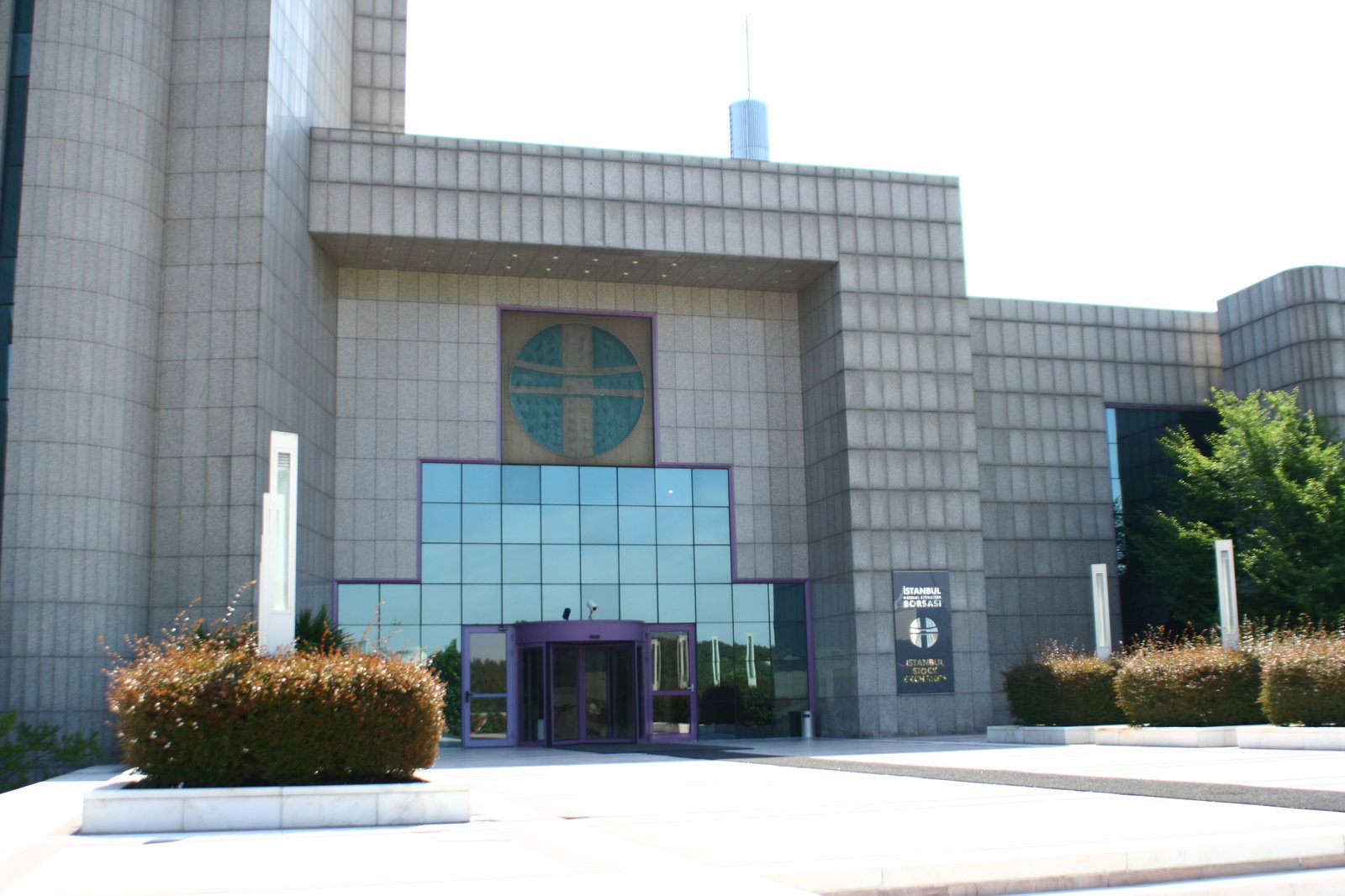
Ankara is about to legislate a rescue for half a million savers. An AK Party lawmaker said on Thursday that a temporary bill to liquidate the investment funds at the heart of Turkey's worst market scandal in nearly two decades will reach parliament within days, with interim payments of up to 1 million lira ($20,321) per investor targeted for October. The law would govern the winding down of 131 funds, holding more than $19 billion in assets, that the regulator ordered closed after suspected price manipulation of thinly traded stocks set off a September market rout.
On Thursday, the fund crisis that wiped out billions of dollars in Turkish household wealth moved from the courts and trading floors to parliament. A lawmaker from President Recep Tayyip Erdogan's ruling AK Party said the draft liquidation law should be submitted within days and reach the parliamentary committee stage before lawmakers begin debating the 2027 budget in the week starting October 19. The announcement was the political answer to a scandal that has already jailed 85 people, forced the regulator to liquidate 131 funds, and dragged Turkey's main stock index to its worst month since 2008. It also lands as central bankers gather in Istanbul for a two-day economic forum, with the Federal Reserve, the Bank of England and the BIS watching how Ankara contains the damage.
Half a million savers trusted what one investor called a state-supervised system. Now the state must prove her right.
It started, as bubbles usually do, with prices nobody was willing to pay. For roughly two years, asset managers including Pusula Portfoy and Tera Portfoy poured client money into the shares of small, thinly traded companies, bidding those shares up and reporting spectacular returns that drew in new investors, whose inflows financed the next round of buying, according to the Centre for Eastern Studies in Warsaw. On August 28, the Capital Markets Board (SPK) moved to curb the practice, limiting how much of a fund's assets could sit in individual companies. Fund managers started selling. There were no buyers at the quoted prices, share values collapsed, and investors demanded their money back. Forced sales of even liquid holdings to meet redemptions pushed the BIST 100 down more than 8 percent in the week ended September 18. The index finished September down 16.65 percent and ended the month more than 20 percent below its May 11 record, confirming a bear market. The smaller stocks were hit hardest: the index tracking Istanbul-listed companies outside the top 100, with 484 constituents, fell roughly 35 percent in September. Investigators now allege that some of the spectacular returns were manufactured outright, with investors' money used to inflate illiquid share prices. Read our earlier report on how the crisis erupted.
The bill aims to turn a disorderly collapse into an orderly payout. Under the proposal, amounts invested in and withdrawn from the funds would be adjusted for inflation, and interim payments of up to 1 million lira ($20,321) per investor would begin in October, the AK Party lawmaker said. Real estate is among the assets that could be sold to raise cash for those payments, and the legislation would spell out how such assets are liquidated and the proceeds distributed. It would also create a legal basis for extraordinary liquidation proceedings and include provisions to claw back losses from those found responsible. The timing is deliberate: the draft is expected to reach the committee stage before the week starting October 19, when parliament takes up the 2027 budget, suggesting the government wants the investor-compensation mechanism in place before the budget fight absorbs the political calendar. The bill follows the presidency's September 29 move to set up a fund coordination council chaired by the vice president to oversee the liquidations, with state lenders Isbank and Ziraat Bank administering the process, and the SPK's decision to stretch the liquidation window from three months to six.
Central bank governor Fatih Karahan spent Tuesday telling parliament that the fallout is containable. Responding to lawmakers at the Planning and Budget Commission, his first public comments since the turmoil began, he said data showed no risk of contagion to the broader financial system and that the bank would intervene again if needed. He named three channels through which the fund distress could spill over: household wealth, foreign exchange reserves, and indirect effects through the balance sheets of households and firms. On each, he argued the links were weak. Real-sector companies held only a limited share of the funds being liquidated, and most were large firms with strong liquidity positions, so he expected any impact on the real economy to be more limited. The money that fled the funds did not leave the country, Karahan said: outflows from money market and similar funds began after August 28, a substantial part moved into bank deposits, and total commercial and savings deposits rose by more than 800 billion lira in the same period. The lira's share of assets, including funds, held steady around 61 to 61.4 percent, and outflows had slowed in recent days. He summed up the stance in one sentence: "Our priority in terms of financial stability in the coming period will be to prevent the problem seen in the past from spreading to the broader market." Behind the calm stands an intervention that began September 17: repo funding lifted to 300 billion lira ($6.1 billion), banks' borrowing limits raised tenfold, collateral haircuts cut to 10 percent, a lower share of lira required reserves kept blocked, and accelerated bond purchases to stop the distress from spreading to money market funds outside the liquidation process and pressuring TLREF, the benchmark overnight lira rate. Our analysis of the rate outlook showed how high the stakes are: September inflation fell to 29.7 percent, opening the door to rate cuts, and the central bank is determined not to let a fund scandal contaminate that disinflation path.
The investigation has moved faster than the payouts. Justice ministry figures put the probe at 217 suspects, 85 of them jailed, for alleged market manipulation involving 26 Borsa Istanbul-listed stocks, money transfers and accounts linked to unusually large gains. Among those detained: Pusula Holding chairman Serdar Turhan, Tera Yatirim Holding chairman Emre Tezmen and three fund administrators. Investigators say they traced $40 million in transfers to Switzerland-linked accounts, including $15 million from Turhan's own account and $25 million from an account belonging to Pusula Portfoy executive Muhammed Yariz. Tera Portfoy has said investors tried to withdraw about 300 billion lira ($6.15 billion) in a short period, a demand it argued would not be easy for any financial institution to meet, and that it paid some investors between September 16 and 18 before restrictions and blocks imposed by the authorities halted further repayments. The politically explosive case is that of Fatma Betul Sayan Kaya, the deputy chair of the ruling AK Party, whom the opposition accused of selling shares worth about $44 million shortly before the scandal broke. She resigned from her post on September 26. The allegation, and her resignation, feed suspicions that people close to the ruling party exited the market ahead of the slump, and will test the authorities' willingness to investigate their own political camp as thoroughly as the fund managers.
Geopolitics: the scandal is a confidence shock arriving at a delicate moment. Turkey has spent three years selling a restoration story to foreign investors: a disinflation program, a managed lira, returning capital flows. The fund rout, and especially the political allegations around it, punctures that story, and index compilers MSCI and S&P Dow Jones had already raised concerns about the transparency of Turkey's equity market before the scandal broke. Macroeconomics: Karahan's calm is partly tactical. With September CPI at 29.7 percent, the first sub-30 print in almost five years, the central bank was lining up a rate cut it had been waiting for, and a financial-stability panic is the last thing that plan needs. Demographics and society: the human scale is 455,758 individual investors, savers, not speculators, many of whom trusted what one law graduate investor called a state-supervised system. Their compensation timeline is now a political asset ahead of the budget season. History: Turkey's equity market has crashed on political news before, the March 2025 selloff after the Istanbul mayor's jailing was the last, but this is the first crash of the disinflation era, and the first driven by fraud allegations inside the market machinery itself. Structure: the SPK's August 28 concentration limits are the beginning of a structural repair, and the draft law's extraordinary liquidation provisions may become the template for how Turkey handles fund failures. The 5D question is simple: does the crisis produce a market with rules, or a lesson in who escapes them?
First, the bill's text and timing: whether the draft reaches the committee stage before the October 19 budget week, and whether the 1 million lira interim payments actually start in October. Second, the asset sales: which real estate moves first, and what prices it fetches, since that sets the recovery rate for everyone. Third, the court cases: whether the probe's 217 suspects produce convictions or quietly shrink, and whether the $44 million share-sale allegation against the former AKP deputy chair leads anywhere. Fourth, the money: whether the fund outflows, which Karahan says have slowed, stay inside Turkish deposits or start leaking abroad. And fifth, the rate decision: with inflation at 29.7 percent and the market pricing a cut, watch whether the central bank moves this month and whether the fund scandal appears in its reasoning. Half a million savers are waiting for the state to make them whole. How fast, and how completely, will decide whether this was a fraud the state fixed or a fraud the state absorbed.
From Western dealing rooms, the Turkish fund scandal is a textbook emerging-market stress event: spectacular retail returns, thin liquidity, then a redemption run that forced the regulator to amputate. The mechanics are familiar from other markets; what unsettles foreign investors is the political overlay, the accusation that an AK Party deputy chair sold $44 million of shares before the crash and the wave of access restrictions on reporting in late September. For a country courting foreign capital back into lira assets, confidence is the asset under repair.
The Western institutional lens also sees a central bank doing the right things for the wrong week. Karahan's liquidity package, repo auctions, collateral relief, bond purchases, is orthodox crisis plumbing, and the 800 billion lira of deposits flowing back into banks suggests it worked. The risk is that the rate-cut door September's 29.7 percent CPI opened gets slammed shut if any whiff of political interference reaches the inflation fight.
No Eastern outlet has covered this story in English-language reporting; what follows is Bureau analysis. From Ankara's eastern neighborhood, the scandal reads as a domestic governance crisis rather than a market event. Russia and the Gulf states, both deep in Turkey's economic orbit, will note the speed of the criminal probe more than the market mechanics: 217 suspects in three weeks, including fund chiefs and a ruling-party deputy chair, signals that Erdogan is treating the scandal as an existential credibility threat ahead of the budget season, not a routine fraud.
Beijing's lens would focus on the capital-flow question. Chinese analysts watch Turkey as a middle-corridor node and a test case for emerging-market financial deepening, and the lesson drawn here is about sequencing: retail fund liberalization without market-maker depth in small caps creates the conditions for exactly this kind of manipulation-driven run. The 455,758 retail investors are, in this reading, the cost of letting asset managers scale faster than the market infrastructure beneath them.
For the Global South, the Turkish fund scandal is a warning about the fastest-growing layer of emerging-market finance: retail investment funds sold on past returns in markets too thin to absorb exits. From Lagos to Jakarta, regulators have watched the same film: spectacular yields draw in middle-class savers, concentrated positions in illiquid assets manufacture the yields, and the first redemption wave exposes the illusion. Turkey's case is notable for scale, $19 billion, and for the speed of the state response, but the pattern is universal.
There is also a southern lesson in how the story ends. The 1 million lira interim payments, the inflation adjustment of claims, the six-month liquidation window, all of it is the state stepping in as the insurer of last resort for financial products it supervised. The Global South's question is whether that insurance is real or political: will recovery rates survive the budget season, and will the fraud's politically connected beneficiaries face the same courts as the fund managers? The answer will travel far beyond Turkey.
A two-year buildup of fund money in thinly traded small-cap stocks, allegedly manipulated upward so funds could report high returns. When the Capital Markets Board limited fund concentration in single companies on August 28, managers sold into a market with no buyers, prices collapsed, investors demanded redemptions, and forced sales spread the rout across the BIST 100 in mid-September.
It creates a temporary legal framework for winding down the 131 funds, protects small investors first, adjusts invested and withdrawn amounts for inflation, targets interim payments of up to 1 million lira per investor starting in October, allows real estate sales to raise cash, and adds provisions to recover losses from those found responsible.
The justice ministry counts 217 suspects, 85 of them jailed, over alleged manipulation of 26 Borsa Istanbul-listed stocks and related money flows. Detained figures include Pusula Holding chairman Serdar Turhan and Tera Yatirim Holding chairman Emre Tezmen; investigators say $40 million moved through Switzerland-linked accounts.
Since September 17 it has raised repo funding to 300 billion lira, lifted banks' borrowing limits tenfold, cut collateral haircuts to 10 percent, freed blocked lira required reserves, and accelerated bond purchases to shield money market funds and the TLREF overnight rate. Governor Fatih Karahan insists there is no contagion risk to the financial system.
Their recovery rate. The funds held more than $19 billion when liquidations began; how much they get back depends on asset sale prices and clawbacks from those responsible. The October interim payments of up to 1 million lira are meant as first relief, but full recovery timelines are uncertain and inflation is eroding the real value of claims.
