'Too early to say' who was behind it, the Israeli PM tells Fox News — but Israel will find out 'very soon.' The co-pilot who allegedly stabbed his captain and sent FZ1073 into a 14,000-foot dive is under interrogation in Saudi Arabia.
“We'll get to the root of this attacker — whether he had accomplices, whether Iran was behind it.”
Benjamin Netanyahu, on Fox News' “Hannity” program, promised Israel would unravel the attempted downing of FlyDubai flight FZ1073 — and raised, unprompted, the question of Iranian involvement. “I think we'll find out very soon,” the prime minister said. But on the central question — who ordered it, if anyone — his answer was careful: “It's too early to say.”
The attacker, Netanyahu said, is now under interrogation in Saudi Arabia, where the crippled jet came down. “I think he'll be taken to the Emirates, where he comes from, or at least where he left, where he flew off from,” he told host Sean Hannity, adding that Israel would be “following and possibly also participating in this investigation.”
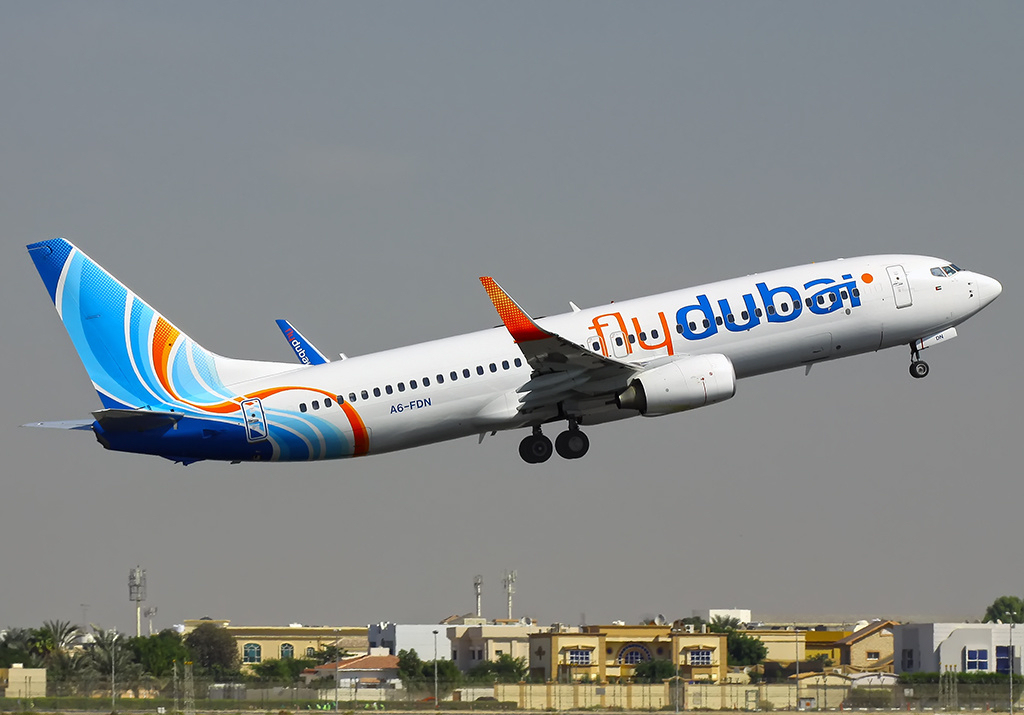
The facts of Wednesday morning are no longer in dispute. FZ1073, a Boeing 737 MAX 8 flying Dubai to Tel Aviv with mostly Israeli passengers aboard, was on its final corridor when the co-pilot allegedly stabbed the captain and tried to crash the aircraft. The jet plunged nearly 14,000 feet in under thirty seconds. Passengers and crew broke into the cockpit, overpowered the attacker — one passenger told Israel's Kan TV they restrained him with the cords of complimentary headphones — and, with a second pair of FlyDubai pilots traveling aboard, stabilized the aircraft and put it down in Tabuk, Saudi Arabia.
Both pilots were hospitalized. More than ten hours later, the passengers touched down at Ben Gurion Airport aboard a replacement aircraft — several calling their survival “a miracle.” Some had refused to board the replacement flight out of fear, according to passenger accounts. Israel's ambulance service said a 51-year-old man was hospitalized in mild condition with upper-body injuries.
In a video statement on Wednesday, Netanyahu had called the incident “extremely serious,” saying the plane “went into a spin and began to dive” as the attacker tried “to sabotage” its systems. Defence Minister Israel Katz went further, calling it a “jihadist terror attack.” Israeli security agencies are on high alert for “possible additional threats,” the prime minister's office said — and Israel is tightening checks on pilots flying into the country.
An Israeli official told Reuters the suspected attacker is an Omani national — a claim neither Oman nor any named authority has confirmed. FlyDubai says only that “an altercation occurred in the flight deck,” that the motives remain unknown, and has urged against “premature speculation.”
The West reads this as a terrorism case first and an aviation-security case second — and the machinery behaved accordingly. Jets scrambled, no clearance into Israeli airspace until the aircraft's contents were known, a police command center opened before the jet even landed: for a country shaped by the hijacking era, a distressed inbound Tel Aviv flight is the worst sentence in air defense. Netanyahu's Hannity appearance folded the incident into the Iran file in real time — “whether Iran was behind it” asked on American television, answered with a promise to find out “very soon.” The Western question is vetting: how an alleged attacker reached the right-hand seat of a Gulf carrier, and what that means for every screening regime built on the assumption that the threat boards as a passenger.
The East's reading is cooler and narrower: the corridor is the asset, and the corridor must keep flying. The Abraham Accords air bridge is as much a Gulf project as an Israeli one — FlyDubai's terse, careful statement (“refrain from premature speculation”) is the Emirates protecting its airline, its hub, and its normalization bet all at once. The Omani claim hangs unanswered over Muscat, the region's quiet mediator, and Oman's silence is itself the story in the Gulf press: an accusation aired through anonymous Israeli briefings, confirmed by no one in Riyadh, Abu Dhabi, or Muscat. The Eastern question is jurisdictional: the alleged crime happened in Jordanian airspace, the plane landed in Saudi Arabia, the airline is Emirati, the victims mostly Israeli. Who leads the investigation — and whose courts, if any, get the attacker — will be negotiated in capitals, not courtrooms.
The South's lens is the cabin, not the cockpit. Indian outlets carried this as breaking news all day, because the South flies the Gulf hubs: Dubai, Abu Dhabi, Doha are the world's busiest transfer points, and the workers, families, and students of the Global South are the people packed into those economy cabins. For them the story is not geopolitics but physics — a 14,000-foot fall, a knife, a door — and the question is whether the corridor they depend on stays safe and stays open. The passengers who broke down the door and the ones who cheered on the tarmac at Tabuk get the last word they earned. The South's interest is uncomplicated: the planes keep flying, and the motives can wait.
