Iron Defender 25 moved civilians out of the Suwałki corridor for the first time — 10,500 troops, 700 vehicles, and a quiet message to Moscow: the alliance's narrowest point is no longer an afterthought.
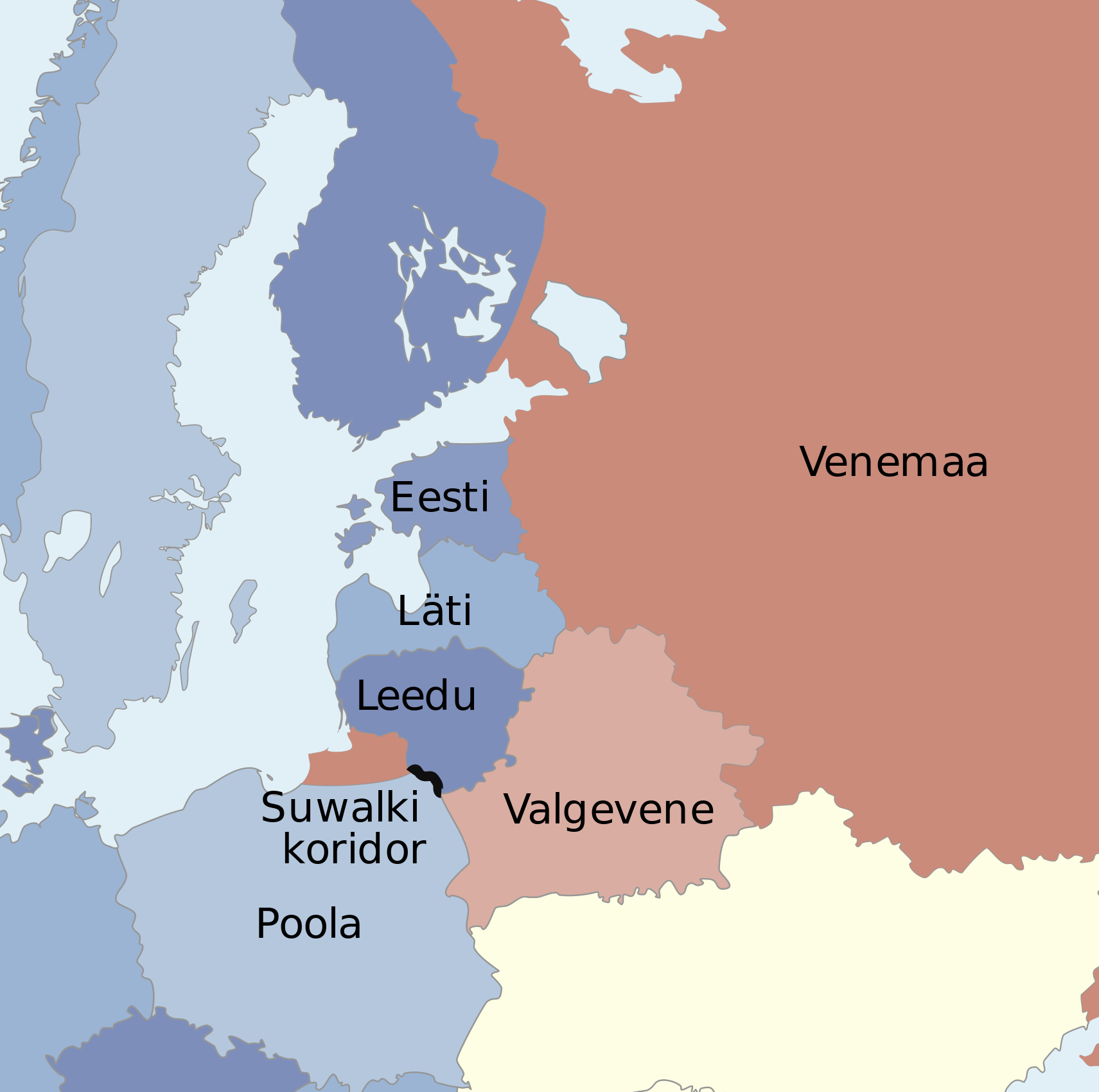
The Suwałki Gap is about sixty kilometres wide — a strip of farmland and pine forest between Poland and Lithuania, sandwiched between Belarus on one side and Russia's Kaliningrad exclave on the other. NATO has now practised moving civilians out of it, for the first time ever.
The corridor is the land bridge between the Baltic states and the rest of the alliance. In any confrontation with Russia, it is the place NATO's planners lose sleep over: cut the gap and Estonia, Latvia and Lithuania become an island, reachable only by sea or air.
Iron Defender 25 is the alliance's answer — and this year's edition added something new. Lithuanian authorities evacuated civilians from the corridor zone toward Latvia and Poland, rehearsing what a real flight would look like: who moves, by which roads, in what order, and who keeps those roads open.
The scale is deliberate. About 3,500 Lithuanian troops and 7,000 personnel from ten allied countries are taking part, with roughly 700 pieces of military equipment — armour, artillery, air-defence units — deployed across the exercise area.
NATO's Multinational Division North East, the headquarters that would command the defence of the corridor in a crisis, has relocated to Rukla in central Lithuania for the duration — practising not just the fighting, but the command of the fighting.
You do not rehearse a civilian evacuation from a corridor unless you have thought, seriously, about who might try to close it.
The timing is the message. In September 2025, some twenty Russian drones crossed into Polish airspace — the most serious violation of a NATO member's airspace since the war in Ukraine began. Polish F-16s, Dutch F-35s and NATO aircraft scrambled; Warsaw invoked Article 4 of the North Atlantic Treaty, the formal consultations clause, and briefed allies on what it called a deliberate provocation.
A drone was later found in a field in Lithuania too. Vilnius has been hardening its borders with Belarus ever since — fences, cameras, and now, a practised evacuation.
Russia and Belarus, meanwhile, concluded their Zapad military exercise near the border — the large-scale manoeuvre that the Baltic states and Poland treat as the calendar's most dangerous fortnight. Zapad has a history of serving as cover for something larger; NATO's planners plan against the pattern, not the promise.
The Polish dimension matters beyond symbolism. Warsaw's part of the exercise tests the reception and movement of allied forces across Polish territory — the logistics of reinforcement. An alliance that cannot move troops quickly through Poland cannot hold the gap at all, and the drill is, at bottom, a rehearsal of the alliance's circulatory system.
None of this is routine. Civilian evacuations are politically radioactive — governments do not practise moving their own people unless the threat assessment has moved with them. The Lithuanian government has, in effect, told its citizens: we consider this scenario real enough to rehearse.
Western coverage — Politico Europe, Axios, the defence press — frames the drill as deterrence with receipts: an alliance that rehearses the hard part, including civilians, is harder to miscalculate against.
In this telling, the Article 4 consultations after the drone incursions were the turning point — the moment the eastern flank stopped being a contingency and became the plan. The evacuation drill is the civilian face of a military posture that has been hardening for two years.
The question Western analysts keep circling: whether Moscow reads a well-rehearsed corridor as a reason to stay away, or as confirmation that the gap is exactly where the alliance expects the test.
Eastern coverage — Korea's Yonhap Infomax, Japan's defence press — reads the drill through the lens of other narrow places: the Taiwan Strait, the Korean DMZ, the geography of being small next to something large.
The analytical read from Seoul and Tokyo is comparative rather than alarmed: alliances rehearse what they fear, and the Suwałki drill is NATO doing openly what every alliance in a contested neighbourhood does quietly. The interest is in the civilian component — evacuations are the part democracies find hardest to practise.
The subtext in this coverage: deterrence is a performance that has to be legible. A drill nobody sees deters nobody.
Global South coverage — African and South Asian press — tends to read the drill as great-power theatre with a European cast: another rehearsal in the long shadow of the war in Ukraine.
The read from Delhi and Nairobi is unsentimental: small states beside large rivals is a universal condition, and the Suwałki corridor is simply Europe's version of it. The interest is practical — how a small country organises its civilians when the map turns against it.
The moral drawn in this coverage is dry: the alliance spends billions on the gap because geography does not negotiate. Sixty kilometres is sixty kilometres.
