After months adrift under American sanctions, crews from tankers anchored beyond Sri Lanka's waters came ashore through Galle on Saturday, were treated, and left: a humanitarian exception Colombo insists changes nothing about its position on the vessels.
Published 25 October 2026 · 17:33 GMT
After months adrift under American sanctions, crews from tankers anchored beyond Sri Lanka's waters came ashore through Galle on Saturday, were treated, and left: a humanitarian exception Colombo insists changes nothing about its position on the vessels. Around 40 Iranian sailors from United States-sanctioned oil tankers anchored just outside Sri Lanka's territorial waters received urgent medical treatment in Sri Lanka on Saturday, 24 October 2026. Sri Lankan authorities facilitated the transfer through the port of Galle, in the country's Southern Province, and the Iranian Embassy in Colombo bore all the expenses.
About 40 Iranian sailors from sanctioned tankers anchored off Galle came ashore in Sri Lanka on 24 October, received medical treatment arranged with the Iranian Embassy paying the costs, and then left the country.
The exact hour the sailors departed (Saturday morning, Saturday night and early Sunday are all reported), and the death toll of the March sinking of the frigate IRIS Dena, put at 84, 87 and 104 by different outlets.
What medical conditions the sailors suffered from, which ships they came from, or whether any further medical evacuations from the stranded fleet will follow.
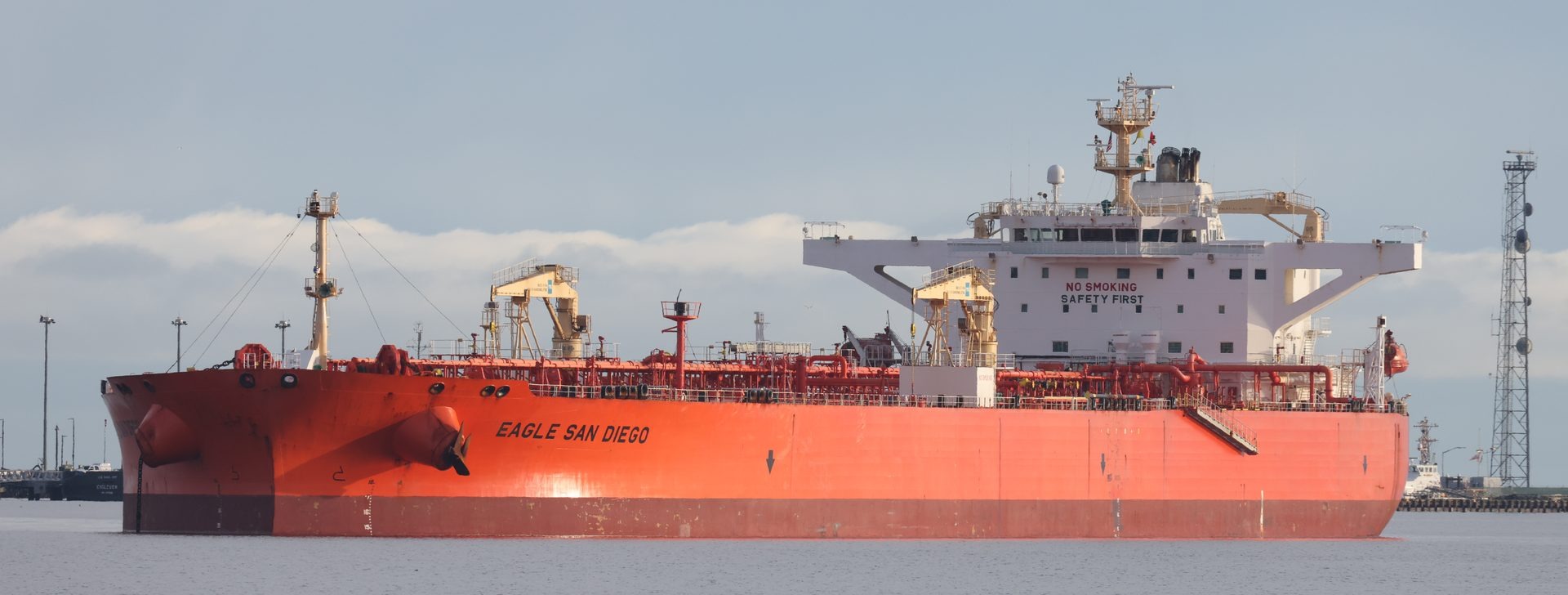
Around 40 Iranian sailors stranded aboard United States-sanctioned oil tankers anchored just outside Sri Lanka's territorial waters received urgent medical treatment in Sri Lanka on Saturday, 24 October 2026, the country's Foreign Ministry said. Sri Lankan authorities facilitated the transfer of the sailors from their vessels to the shore through the port of Galle, in the Southern Province, about 115 kilometres south of Colombo. A senior official at the Iranian Embassy in Colombo confirmed the development and said the sailors were taken from Galle to Colombo for medical attention before leaving Sri Lanka.
Foreign Ministry spokesman Thushara Rodrigo told The Hindu (Indian newspaper): "We coordinated the transfer alone as per our humanitarian obligations. The Iranian Embassy bore all the expenses." Foreign Minister Vijitha Herath confirmed the operation to Sri Lanka's Daily Mirror in similar terms: "We rescued 40 sailors, provided them with medical treatment and repatriated them." The Associated Press, citing Rodrigo, adds that the operation followed a distress call, that vessels arranged by the Iranian Embassy and local shipping agents carried the sailors ashore, and that Sri Lanka's ministry handled the immigration and institutional formalities.
First, the number and the place are consistent across every reporting chain: at least 40 sailors, brought ashore through Galle, from tankers anchored beyond Sri Lanka's 12-nautical-mile territorial limit. The Associated Press puts the anchorage at about 24 nautical miles off the coast; Agence France-Presse describes nearly a dozen empty Iranian tankers anchored close to Galle harbour. The Wall Street Journal, reporting in September, counted around 20 empty Iranian tankers stranded off Sri Lanka's south-west coast. The counts differ because they were taken weeks apart and count different stretches of water, not because the core fact is in doubt.
Second, the reason the sailors were stranded is not in dispute. The tankers have been unable to return to their home ports since the United States reimposed its blockade of the Strait of Hormuz in July, and Washington's secondary-sanctions pressure has deterred ports and suppliers across Asia from servicing them. Sri Lankan authorities have acknowledged that the crews reported shortages of food, water and fuel. Two weeks before this rescue, the government said it had no immediate plans to help the ships and would put its national interest first; that contrast is what makes Saturday's humanitarian exception, rather than any change of policy, the story.
The medical conditions that prompted the distress calls have not been disclosed by any source. No outlet names the ships the 40 sailors came from, and Rodrigo himself told the Associated Press he did not have details about which vessels they served on. Nor is it known whether the sailors were treated in Colombo hospitals, in Galle, or both. The Hindu reports treatment in Colombo, while the March precedent, when injured Iranian naval sailors were treated at a public hospital in the Galle district, points the other way.
Even the departure hour is reported differently: The Hindu says the sailors left on Saturday night, the Associated Press says early Sunday, and the Daily Mirror quotes the foreign minister saying they were repatriated on Saturday morning. The discrepancy is small: all agree the stay lasted hours, not days. Still, it is a reminder that this story is still being assembled from ministry statements rather than a single published record. What happens to the remaining crews, and whether further distress calls will be answered the same way, is entirely unconfirmed.
Because it sits exactly on the line Colombo has spent months drawing. Sri Lanka says the tankers are in international waters, where freedom of navigation applies, and that its decisions are taken strictly to protect its sovereignty, in Foreign Minister Herath's own formulation when he denied reports of American pressure last month. At the same time, the country has deployed reconnaissance aircraft and patrol boats to monitor the vessels, and it has refused to provision them. A state that both watches a fleet and refuses to feed it cannot treat a medical emergency as routine without explaining itself.
The transfer also matters as a precedent watched from two directions. Tehran watches whether its stranded citizens can reach care without their government having to plead publicly; Washington watches whether a humanitarian exception becomes a crack in the sanctions wall. That is why both sides of the operation were so carefully labelled: Colombo called it a humanitarian obligation, not assistance to sanctioned vessels, and the Iranian Embassy paid every cost, so no Sri Lankan public money touched a sanctioned operation. The wider war has already pushed its costs deep into Europe's streets and budgets; off Galle, its costs are measured in a crew's drinking water.
Colombo's choreography was precise, and that precision is the analysis. The transfer was coordinated by the Foreign Ministry, not the navy; the money came from the Iranian Embassy, not the Sri Lankan state; the sailors spent hours ashore, not days; and the justification was humanitarian obligation, a phrase that appears in every version of the statement. Each choice narrows the precedent: this was not the provisioning of a fleet, not the opening of a port to sanctioned vessels, and not a political statement about the war. It was the smallest act that answers a distress call.
That narrowness is also the risk. If the remaining crews keep sending distress calls, and shortages of food, water and fuel do not resolve themselves, Colombo will face the same decision again, and each repetition will make the "exception" look more like a policy. The government has already shown it can move: a month ago it said it would not extend assistance to the sanctioned vessels; on Saturday it extended assistance to their sailors. The distinction between vessel and crew is legally clean and politically useful, but it will be tested by the next call.
Nothing in Saturday's operation changes their position. The tankers remain anchored outside Sri Lanka's territorial waters, unable to return home while the Hormuz blockade holds, and still largely unprovisioned because suppliers fear secondary sanctions. Some Iranian merchant vessels have already moved east toward the Strait of Malacca and Singapore; a few remain near Sri Lankan waters. The fleet off Galle is, in that sense, the residue of a trade route that no longer works: ships whose cargoes cannot move and whose crews cannot easily go home.
The second-order question is what happens to those crews over months, not days. A one-off medical evacuation answers an emergency; it does not answer hunger, thirst or fuel for engines and generators. If conditions aboard deteriorate, the pressure on Colombo will grow from the humanitarian side, while the pressure from Washington will grow from the sanctions side. The Hormuz tanker war has already produced fires, sinkings and a sunken frigate; the slow version of the same conflict is a fleet quietly running out of supplies within sight of shore.
Three things. First, whether Sri Lanka publishes any fuller account, namely the names of the vessels, the medical conditions treated, or the hospitals used, or whether the ministry's brief statements remain the whole record. Second, whether another distress call comes from the same anchorage, and whether Colombo answers it the same way, which would turn an exception into a practice. Third, whether Washington reacts publicly: silence would suggest the exception is tolerable, while a warning would tell every other Asian port exactly where the line sits.
Beyond Galle, watch the Hormuz blockade itself, which is the cause of which this rescue is only a symptom. As long as Iranian tankers cannot pass, the stranded fleet will keep generating the same dilemma in one port after another. Saturday's 40 sailors are home, or on their way home; the ships they left behind are still waiting, and the sea has not changed its answer.
The Western lens: a sanctions regime meets its human edge Read from Washington and London, this is a story about the outer limit of economic warfare. The sanctions and the Hormuz blockade were designed to strand Iran's oil trade, and they have worked: tankers that once shuttled crude to transfer points off Malaysia now idle for months, their crews running short of basics. The Western reporting question is whether a medical evacuation, paid for by Tehran and executed by a third country, weakens that design, and the careful answer from Colombo, that it changes nothing about the vessels, is designed to keep that question closed.
The Eastern lens: Asia's ports are where sanctions bite Read from New Delhi and Singapore, this is a story about Asian states absorbing the consequences of a conflict they did not start. Sri Lanka did not sanction the tankers, did not blockade Hormuz, and did not invite the fleet to its coast. Yet the fleet is parked off Galle, and the distress calls come to Colombo.
The Southern lens: sovereignty claimed, humanity performed Read from Colombo and the Global South, this is a story about a small country insisting on its own script. Sri Lanka's own press leads with the foreign minister's confirmation and the repatriation, not with the sanctions logic. The Southern reading is that sovereignty is not only the right to refuse; it is also the right to decide, on humanitarian grounds, when to act.
They were Iranian merchant sailors serving aboard United States-sanctioned oil tankers anchored just outside Sri Lanka's territorial waters, near the port of Galle. Their individual ships have not been named, and the Foreign Ministry spokesman said he did not have details about which vessels they came from.
The tankers have been unable to return to Iran since the United States reimposed its blockade of the Strait of Hormuz in July 2026. American secondary sanctions have also deterred Asian ports and suppliers from servicing them, leaving crews short of food, water and fuel for months.
After distress calls about the crews' medical conditions, Sri Lanka's Foreign Ministry coordinated a ship-to-shore transfer through the port of Galle. The sailors received medical treatment, the Iranian Embassy bore all the expenses, and the sailors then left Sri Lanka after only hours ashore.
Colombo says no. The government frames the operation strictly as a humanitarian obligation to sailors in distress, not assistance to the sanctioned vessels themselves. It has stressed that its decisions protect Sri Lankan sovereignty and that no change of policy toward the fleet has taken place.
