After seven weeks without a major land strike, Washington is stacking the signals — asset movements, regional warnings, an envoy's "this weekend" remark — while Tehran answers with a threat to the Gulf's undersea cables.
Published 24 October 2026 · 03:12 GMT
After seven weeks without a major land strike, Washington is stacking the signals — asset movements, regional warnings, an envoy's "this weekend" remark — while Tehran answers with a threat to the Gulf's undersea cables. On October 24, 2026, the AFP news agency reported that the United States appears to be preparing to resume large-scale strikes against Iran, with Brookings' Suzanne Maloney saying she is "banking now on the likelihood of strikes shortly after the midterms" of November 3.
The United States is visibly signaling that major strikes against Iran could resume — through presidential threats, an envoy's "this weekend" remark, asset movements, regional warnings, and Israeli high-alert status — while Iran answers with detailed threats to Gulf undersea cables and proxy pressure, all confirmed by multiple independent outlets.
Whether the U.S. signals are coercive leverage for a deal or genuine strike preparation — the AFP reports carry both readings; and whether the war aim includes toppling Tehran's government, with Netanyahu publicly vowing regime change while U.S. envoy Barrack explicitly rules it out.
The timing or scale of any renewed campaign; what specific deal would satisfy Washington; how operational Iran's cable plans are; and whether the "this weekend" and post-midterm timelines reflect decisions already taken or pressure tactics still in play.
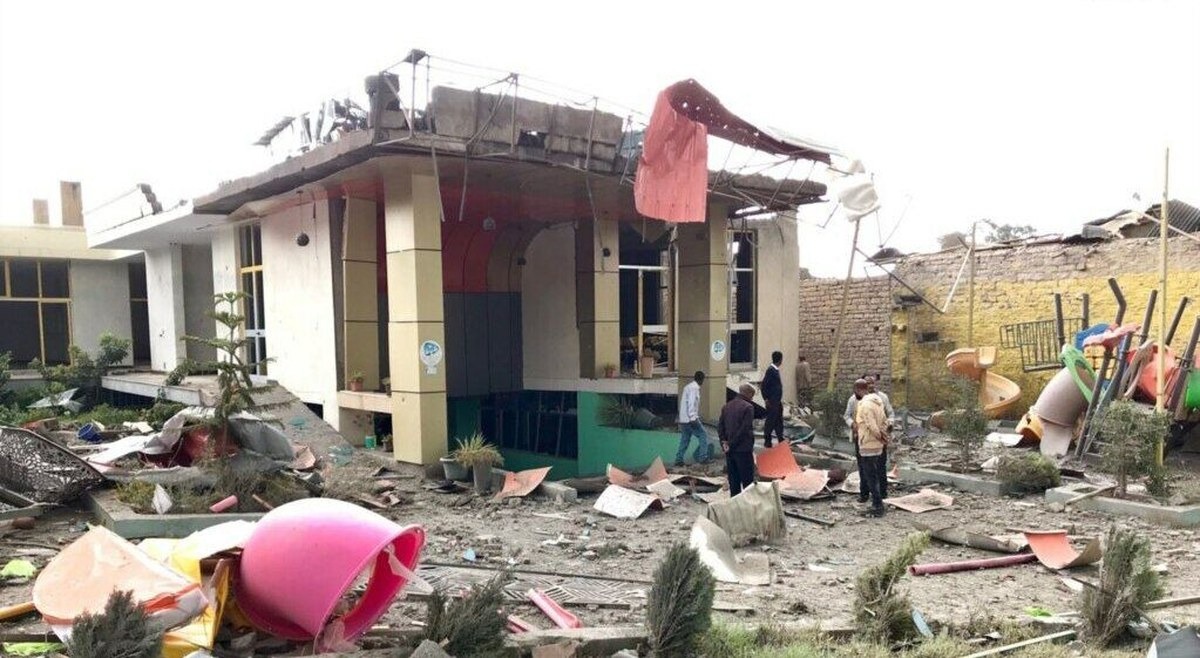
The United States appears to be preparing to resume large-scale strikes against Iran, according to experts and officials quoted by the AFP news agency in two reports carried by Asian outlets on October 24, 2026. Neither country has launched a major attack on land-based targets since early September, but "that may soon change," the Washington-datelined report states. Suzanne Maloney, director of the foreign policy program at the Brookings Institution, said she is "banking now on the likelihood of strikes shortly after the midterms," referring to the November 3 U.S. elections.
The day before, President Donald Trump said the United States "may do another little Epic Fury" — the name of the American operation launched against Iran in late February — if Tehran does not make a deal, giving no timing. Separately, U.S. envoy Tom Barrack, the ambassador to Turkey, told a podcast interviewer on October 23 that a strike could come "as soon as this weekend": "Could there be a strike this weekend? Absolutely."
The two U.S. signals sit in tension. Trump had earlier said publicly that he would not strike before the November 3 midterms, arguing it would not help his party at the polls. Barrack — who has no direct role on Iran policy — framed the threat as deal leverage, adding that the consequence for continued Iranian threats "won't be regime change," a direct counterpoint to Israeli Prime Minister Benjamin Netanyahu, who has repeatedly vowed to topple the clerical state in Tehran.
Maloney pointed to concrete indicators: additional U.S. military assets and troops moving to West Asia, warnings issued to Americans in the region, and high alert for Israeli forces. Trump himself "came out publicly and said that he wouldn't strike before the midterms," she noted — striking before the vote would not help Republicans, given the war's unpopularity at home over sharply higher fuel prices.
The current state of the conflict is an economic standoff at sea: a U.S. blockade of Iran's ports against Iranian pressure on the Strait of Hormuz — an arrangement Maloney called unsustainable, since it bleeds Iran while tying up large numbers of U.S. naval assets.
The original late-February operation opened the U.S.-Israeli war with strikes on Iranian targets; since early September, neither side has conducted major land attacks. A renewed campaign would most likely mean a return to land-based strikes — command networks, air defences, missile sites — rather than a continuation of the maritime campaign. Senior fellow Jason Campbell said there have "certainly been recent signs that renewed strikes may be in the offing," or that Washington is bracing for strikes by Iran or its Houthi allies in Yemen.
Tehran has its own asymmetric answer ready — the Bureau reported Iran's detailed plans to strike Gulf undersea cables in detail. Two senior Iranian security officials told Reuters that Iran has drawn up detailed plans to target undersea communications cables in the Gulf if the U.S. and Israel attack again. Yadollah Javani of the Islamic Revolutionary Guard Corps said Iran could target seven major internet cables beneath the Strait of Hormuz if Iranian infrastructure came under attack.
The regional escalation is already visible beyond Iran. Al Jazeera's live coverage reported that the Saudi-led coalition said its air defences downed a Houthi ballistic missile targeting Riyadh — a reminder that the war's perimeter runs from the Red Sea to the Gulf capitals.
We do not know the timing. Trump's "may do" phrasing is conditional and undated; Maloney's post-midterm expectation is an analyst's judgment, not a leak of orders; and Barrack's "this weekend" answer came from an envoy with no direct Iran portfolio, on a podcast, while visiting the Gulf.
We do not know what deal Trump means when he says Tehran must "make a deal" — or what threshold of Iranian behavior would avert a strike. The earlier negotiations, stalled for months, left the core demands — nuclear, missiles, regional proxies — unresolved.
We do not know how literal Iran's cable threat is. The officials told Reuters they would aim to prevent repairs after any attacks to prolong disruptions, but gave no details on method or location. It is deterrence, broadcast through a wire agency — a signal designed to raise the cost of a decision without revealing the hand.
We also do not know how unified Washington's message is. Barrack explicitly contradicted Netanyahu's regime-change vows, saying Trump is "not interested in regime change." Yet Netanyahu, facing elections on Tuesday, has "in recent days repeatedly vowed to topple the clerical state in Iran," per the Jerusalem-datelined AFP report — after two major Israeli bombing campaigns since last year. That is a fault line inside the coalition, not a settled war aim. Full context on the envoy's remark: our earlier coverage of Barrack's "this weekend" remark.
The reason this story matters has less to do with the choreography of threats than with the arithmetic of pain. The U.S. blockade is "creating greater pain for the Iranians," as Maloney put it, but it is also costing Washington: large numbers of American naval assets are tied up enforcing it, and the war's fuel-price shock is dragging on Trump's Republican Party ahead of the November 3 midterms.
Trump has tethered military timing to the electoral calendar in public: first by saying he would not strike before the midterms, then by allowing that strikes may follow if no deal is reached. That makes the election a de facto ceasefire clock — a fresh wave of strikes before the vote would spike fuel prices and punish the incumbent party; waiting risks letting the maritime standoff harden.
The second arithmetic is global. Brent crude hit $117.30 a barrel to build on four-year highs, according to Al Jazeera's live coverage, as markets price in a resumption of the war. And Iran's cable threat puts the world's digital plumbing in the crosshairs: undersea cables carry around 99% of global internet traffic, per the International Telecommunication Union, though a TeleGeography researcher cautioned that less than 1% of international bandwidth passes through the Strait of Hormuz — so the damage would fall hardest on the Gulf region itself.
Read through the Bureau's 5D lens, this is less a war about to restart than a negotiation being conducted at maximum volume. Every signal has two audiences.
The geopolitical dimension is the U.S.-Israel-Iran triangle and its wobbles. Barrack's insistence that regime change is off the table directly undercuts Netanyahu's public war aim — delivered while Netanyahu faces voters on Tuesday.
The economic dimension is the blockade-and-Hormuz standoff. Neither side can sustain the current pattern indefinitely: Iran is bleeding under the port blockade, while the United States is bleeding assets and political capital to enforce it. Maloney's "unsustainable" verdict means the standoff resolves by deal or by escalation.
The demographic and political dimension is the American voter. Fuel prices are the war's domestic front, and Trump's public tethering of strike timing to the midterms makes the electorate an involuntary participant in targeting decisions.
The historical pattern is the February playbook: "Epic Fury" began as a limited operation and became a war. Naming it again invokes what happened last time Tehran called the bluff.
The technological dimension is the cable threat — the 21st-century equivalent of mining a strait. Iran cannot match U.S. airpower, so it aims at infrastructure the global economy assumes is invulnerable: the doctrine of the weaker power, credible because it is cheap.
If the standoff breaks, the shockwaves will not stay between Washington and Tehran. The Houthi missile aimed at Riyadh — downed, per the Saudi-led coalition — shows the proxy layer is already live: a renewed U.S. campaign would likely be answered through Yemen, Iraq, and the Red Sea.
The Gulf monarchies sit in the crossfire of both arithmetics. They host the U.S. assets, buy the insurance on the shipping, and would absorb the internet and banking disruptions if cables are cut. Their quiet diplomacy — the months at the table that Barrack cited — is the one channel still functioning, and the one most exposed to being bypassed by a strike decision.
Asian importers are the silent stakeholders. India, China, Japan, and South Korea buy the oil that transits Hormuz; Singapore and Hong Kong route the finance. That is why this story leads Asian front pages: the East reads the threat as an energy and trade story first, a military story second. For European capitals, the question is whether diplomacy still has a lane — several foreign ministers have already urged de-escalation over new U.S. strikes.
Clock one: the weekend. Barrack's "this weekend? Absolutely" sets the shortest fuse — but from an envoy without an Iran brief, on a podcast. Treat it as a deliberate signal, not a countdown.
Clock two: November 3. The midterms are the public line Trump drew himself; Maloney expects strikes "shortly after" the vote if no deal materializes. Watch the asset movements and the warnings to Americans — indicators that cannot be faked cheaply.
Clock three: the deal track. Trump's condition is explicit: "if Tehran does not make a deal." Any verifiable movement — a meeting, an envoy, a concession — would defuse the timeline faster than any denial. Related reading: our earlier coverage of Barrack's "this weekend" remark; Iran's detailed plans to strike Gulf undersea cables.
The Western lens: infrastructure as the new front line Western reporting centers the Reuters exclusive: Iranian officials detailing plans to hit Gulf undersea cables, framed as a threat to global communications infrastructure. The Washington conversation — Maloney at Brookings — treats the question as one of timing and domestic cost: when after the midterms, and what the fuel-price hit will be. Regime-change ambiguity is noted, but the frame is Washington's leverage game.
The Eastern lens: energy, trade, and the cost of someone else's blockade It is Asian outlets carrying this story first — The Hindu and CNA with the two AFP reports. The East reads the standoff as an energy-security emergency: Brent at four-year highs, a blockade on Iran's ports, an Iranian grip on Hormuz, and the world's largest oil importers sitting downstream of every decision. The damage falls on Asia's cables and oil bills long before it touches Washington.
The Southern lens: the Gulf lives inside the crosshairs From Doha, Al Jazeera's live coverage keeps the camera where the missiles actually fly: a Houthi ballistic missile aimed at Riyadh, downed by Saudi-led air defences. The Southern lens sees a war in which Gulf capitals are not spectators but terrain — hosting U.S. assets, absorbing Iranian threats, and watching the undersea cables that carry their banking and commerce become bargaining chips. The question from the South is sovereignty: who decides when the region goes back to war, and at whose cost.
On Friday, October 23, 2026, Trump said the United States "may do another little Epic Fury" if Tehran does not make a deal. He gave no indication of timing. He had previously said publicly that he would not order strikes before the November 3 U.S. midterms, arguing it would not help Republicans at the polls. The conditional phrasing keeps the threat as leverage for the stalled negotiations.
It was the name of the U.S. military operation launched against Iran in late February 2026, which opened the U.S.-Israeli war with Tehran. Since early September, neither the United States nor Iran has conducted major attacks on land-based targets; the conflict has settled into a maritime and economic standoff — a U.S. blockade of Iranian ports and Iranian pressure on the Strait of Hormuz.
Analyst Suzanne Maloney of the Brookings Institution argues the war is unpopular at home because it has driven fuel prices sharply higher, which would punish Republicans at the polls. She expects strikes "shortly after the midterms" if no deal emerges. The electoral calendar has become a de facto ceasefire clock: escalation before November 3 carries a domestic political price Trump has publicly said he wants to avoid.
Two senior Iranian security officials told Reuters that Tehran has detailed plans to target undersea communications cables in the Gulf if the U.S. and Israel attack again, aiming to prevent repairs to prolong disruption. The IRGC's Yadollah Javani said Iran could hit seven major internet cables beneath the Strait of Hormuz. Analysts note the damage would fall hardest on the Gulf region itself, not the global internet.
The Saudi-led coalition said its air defences downed a Houthi ballistic missile targeting Riyadh, according to Al Jazeera's live coverage on October 24, 2026. The incident underscores that the war's perimeter already runs through Yemen and the Red Sea: any renewed U.S. campaign against Iran would likely be answered through proxies as well as directly.
Brent crude climbed to $117.30 a barrel, building on four-year highs, as markets priced in a potential resumption of the U.S.-Israeli war on Iran. The rally reflects fears over the Strait of Hormuz, through which a large share of the world's seaborne oil moves, and over the U.S. blockade of Iranian ports disrupting regional shipping and insurance.
