Goyal takes 140 chief executives to Cairo as India bets on Egypt and the Suez Canal
India’s commerce minister opens a two-day visit to Egypt on Sunday, co-chairing the seventh Joint Trade Committee with a delegation of more than 140 business leaders; and with the Suez Canal Economic Zone at the centre of the agenda.
Key points
- Commerce and Industry Minister Piyush Goyal begins a two-day visit to Egypt on Sunday 15 November 2026, and will co-chair the seventh session of the India–Egypt Joint Trade Committee with Egypt’s Minister of Investment and Foreign Trade, Mohamed Farid Saleh, in Cairo. The Hindu, 14 Nov 2026
- More than 140 chief executives and senior industry representatives are travelling with Goyal for the India–Egypt Joint Business Council meeting and the India–Egypt Business Forum. The Hindu, 14 Nov 2026
- Bilateral merchandise trade reached $5.04 billion in April–September 2026, up 64 per cent on the same period a year earlier; for the full financial year 2025–26 it stood at $6.5 billion. Commerce ministry via The Hindu, 14 Nov 2026; FIEO, 10 Nov 2026
- President Abdel Fattah el-Sisi called in September 2026 for bilateral trade to reach $12 billion, a target discussed when he met Prime Minister Narendra Modi in New Delhi on the sidelines of the BRICS summit. Egyptian Presidency via Diplomacy Beyond, Oct 2026
- More than 700 Indian companies are registered in Egypt, around 70 of them actively operating, with combined investments above $5.5 billion; the largest investor, TCI Sanmar, has put $1.6 billion into the country. FIEO, 10 Nov 2026; The Secretariat, 13 Nov 2026
Three readings of the same result
Same facts, different frames. Each reading names its outlets and what it emphasizes.
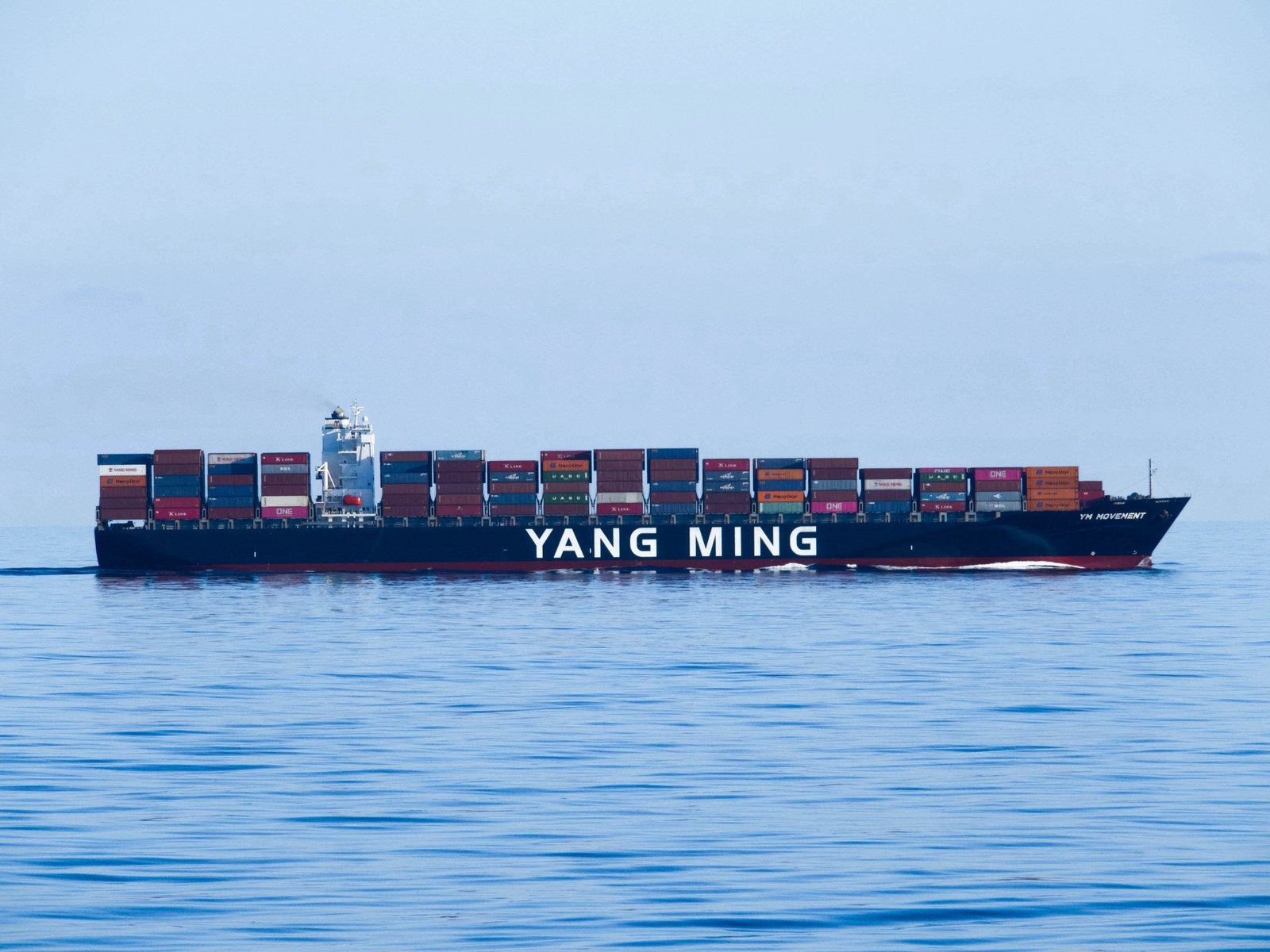
Western outlets had not carried the announcement when this article was filed, and that silence is itself the Western view of the story: in London and Washington, an India–Egypt trade visit is a secondary file, watched, when it is watched at all, through the shipping lane.
The question the West asks about the Suez Canal Economic Zone is whether Indian manufacturing there diversifies supply chains away from China or simply moves the same dependencies to a cheaper shore.
Key detail The visit’s significance, on that reading, will be measured in containers, not communiqués.
Indian coverage treats the visit as the moment the 2023 strategic partnership has to become commercial.
The Hindu and the Press Trust of India lead with the delegation and the Suez zone; the industry chambers, FIEO and FICCI, frame Egypt as a gateway to Africa, the Arab region and Europe, and stress that India is already Egypt’s fifth-largest source of imports.
Key detail The emphasis is on momentum: trade up 64 per cent, a committee raised to ministerial level, and a $12 billion target that both governments now…
The view from Cairo is the mirror image.
Egypt’s State Information Service reported in September that Industry Minister Khaled Hashem met India’s ambassador to prepare the visit, including a business forum and a tour of the Suez Canal Economic Zone; Egypt is courting the investment, not merely receiving it.
Key detail The Egyptian presidency’s account of the September Modi–El-Sisi meeting puts the emphasis on Egyptian terms: more Indian factories, more technology, more clean energy and cars…
Sources by lens: 0 West, 6 East, 2 Global South. See every source
The story
What is Goyal carrying to Cairo on Sunday?
India’s commerce and industry minister, Piyush Goyal, begins a two-day visit to Egypt on Sunday 15 November, carrying the largest Indian business delegation to visit Cairo in years and an agenda built around one place: the Suez Canal Economic Zone. The visit, announced by India’s commerce ministry on Saturday, is framed in New Delhi as the step that turns a strategic partnership declared in 2023 into factories, ports and contracts.
On Sunday in Cairo, Goyal will co-chair the seventh session of the India–Egypt Joint Trade Committee with Egypt’s minister of investment and foreign trade, Mohamed Farid Saleh. The committee has been elevated to ministerial level, a signal of the weight both governments attach to the meeting. More than 140 chief executives and senior industry representatives are travelling with Goyal for the Joint Business Council meeting and the India–Egypt Business Forum, alongside bilateral meetings with senior Egyptian ministers, the African Export-Import Bank, the Egyptian Junior Businessmen Association and the Egypt–India Startups Forum.
What do the numbers say about the partnership?
The commercial case for the visit is written in the trade figures. Bilateral merchandise trade reached $5.04 billion in the six months to September 2026, up 64 per cent on the same period a year earlier, according to the commerce ministry. For the full financial year 2025–26, trade stood at $6.5 billion, Indian exports of $3.9 billion against imports of $2.6 billion, up from $4.8 billion the year before. Both governments have set their sights higher: President Abdel Fattah el-Sisi called in September for trade to reach $12 billion, a target discussed when he met Prime Minister Narendra Modi in New Delhi on the sidelines of the BRICS summit.
The investment footprint is already substantial. More than 700 Indian companies are registered in Egypt, around 70 of them actively operating, with combined investments above $5.5 billion, according to the Federation of Indian Export Organisations. The largest, TCI Sanmar, has put $1.6 billion into the country; Alexandria Carbon Black, Dabur India, Flex Films and SCIB Paints are among the others. India is already Egypt’s fifth-largest source of imports. The agenda in Cairo runs from market access and non-tariff barriers to pharmaceuticals, textiles, fertilisers, renewable energy and green hydrogen; and, running through all of it, the Suez Canal Economic Zone, where Egypt offers Indian manufacturers a base with access to African, Arab and European markets under its free-trade agreements.
What has not been announced yet?
For all the scale of the delegation, nothing has been signed yet, and the visit is an announcement, not an outcome. No memorandum, investment pledge or trade-facilitation agreement has been published ahead of the meetings, and the ministry’s statement lists subjects for discussion, not decisions. Even the dates shifted in the run-up: the exporters’ federation put the visit at 14–15 November in its 10 November statement, while the ministry’s announcement on Saturday sets it at 15–16 November, and one Indian preview stretched it to 17 November. The discrepancy is small, but it is a reminder that the public record of this visit still rests on a single official statement, carried by two Indian wires, and that the Egyptian side has not published its own programme for the two days.
Why does a trade visit to Cairo matter beyond Egypt?
Cairo matters to New Delhi because Egypt is three markets at once. It is a domestic market of more than 110 million people, a manufacturing base inside the Suez Canal Economic Zone with a direct line to the shipping lane that carries a large share of world trade, and a gateway, through Egypt’s free-trade agreements, to Africa, the Arab world and parts of Europe. For Indian firms squeezed by tariffs and supply-chain politics elsewhere, that combination is the pitch: build in Egypt, sell on three continents.
The visit also matters because it is the economic half of a partnership both capitals have been assembling since June 2023, when Modi’s state visit to Cairo elevated the relationship to a strategic partnership. The political scaffolding has moved steadily since: the two leaders met again in New Delhi in September, on the sidelines of the BRICS summit, and the diary ahead is full; Egypt’s defence minister is due in Delhi and India’s foreign minister in Cairo in the coming months, with a possible Modi visit to Cairo next year to mark eighty years of diplomatic ties. Trade is where the partnership has to prove itself, and the $12 billion target is the number against which this visit will eventually be judged.
What does the 5D lens show behind the visit?
Geopolitics comes first, because the visit sits at the junction of three maps. Egypt straddles Africa, the Arab world and the Mediterranean; India is building its presence west of the Gulf, beyond the Gulf states where its commercial ties are already deep. The Suez Canal is the hinge: whoever manufactures beside it sells into three continents, and both governments know it. The timing matters too; the visit follows the September BRICS meeting of the two leaders, and it comes as Gulf states sign their own defence pacts and the great powers prepare to meet at APEC in Shenzhen, a reminder that middle powers are hedging with each other while the big tables are set elsewhere.
Economics is the engine: trade up 64 per cent in six months, a $12 billion target, and an Indian industrial base looking for tariff-proof ground. Demographics supplies the workforce and the market; Egypt’s 110 million people, India’s manufacturing labour. History explains the trust: a bilateral trade agreement dating to 1978, eighty years of diplomatic ties next year, and a strategic partnership declared in 2023. Technology is the newest layer, with green hydrogen, pharmaceuticals and a startups forum on the agenda, and a rupee settlement channel opened in June between the State Bank of India and Banque Misr. The five dimensions point the same way: this is a partnership being built to outlast the news cycle.
What changes if the Suez bet pays off?
If Indian factories take root in the Suez Canal Economic Zone, the second-order effects reach beyond the two capitals. Egypt would gain industrial jobs and export earnings at a moment when its economy needs both, and a stronger claim to be the workshop of the Mediterranean rather than merely its toll-keeper. India would gain a tariff-proof production base with preferential access to African and European markets; and a hedge against the day the Suez route itself is disrupted, as the Red Sea crisis showed it can be. The risk runs the other way too: a zone that fills with announcements and not factories would leave both governments with a partnership that photographs well and delivers little, and the $12 billion target would become the number that haunts the next visit.
What should readers watch on Sunday and Monday?
Three things will tell readers whether the visit delivered. First, the Joint Trade Committee itself: whether the two ministers announce anything concrete on non-tariff barriers, customs cooperation or market access, or merely agree to keep talking. Second, the Business Forum: whether any of the 140 chief executives signs an investment, a joint venture or a factory commitment in the Suez zone. Third, the language afterwards: whether Cairo and New Delhi repeat the $12 billion target with a date attached. The visit is one entry in a crowded Indian diplomatic diary; the Quad leaders are due to meet in Manila after a gap of more than two years; and the next test of the partnership will be the follow-up visits both sides have already announced.
What we agree on, and what remains open
Established
- Commerce Minister Piyush Goyal visits Egypt on 15–16 November 2026, co-chairs the seventh India–Egypt Joint Trade Committee with Mohamed Farid Saleh in Cairo, and travels with a delegation of more than 140 business leaders for the Joint Business Council and the Business Forum.
Contested
- On the timetable and the scale; advance previews put the visit at 14–15 November and even 14–17 November, while the ministry’s announcement sets it at 15–16 November.
- On whether the $12 billion trade target is a plan with a date or an ambition both governments repeat without one.
Still open
- Whether any agreement, memorandum or investment pledge will be signed during the two days, what the committee will decide on non-tariff barriers and customs cooperation, or the full itinerary of Goyal’s bilateral meetings, none of which has been published.
What to watch
Questions, answered
To convert the India–Egypt strategic partnership, declared in June 2023, into commercial results. Trade is growing fast, up 64 per cent in the six months to September 2026, and both governments have set a $12 billion target. The visit puts a ministerial committee, a business council and a forum of more than 140 chief executives behind that number in a single weekend.
It is the industrial zone Egypt has built around the canal, offering manufacturers a base beside one of the world’s busiest shipping lanes, with access to African, Arab and European markets through Egypt’s free-trade agreements. For Indian firms it promises a tariff-proof production site from which to sell on three continents, and Egypt is courting exactly that investment.
Bilateral merchandise trade reached $5.04 billion in April–September 2026, up 64 per cent year on year, and $6.5 billion for the full financial year 2025–26, with Indian exports of $3.9 billion and imports of $2.6 billion. India is Egypt’s fifth-largest source of imports, and more than 700 Indian companies are registered in Egypt.
It is the standing India–Egypt body that reviews trade and investment relations and works to widen the trade basket. Its seventh session, on Sunday in Cairo, has been elevated to ministerial level. It is expected to cover market access, non-tariff barriers, trade remedies, customs cooperation and sectors from pharmaceuticals to green hydrogen; but no decision has been announced in advance.