Islamabad’s airports authority issued a fresh NOTAM on Saturday keeping Indian-registered aircraft — and military flights — out of Pakistani airspace for another month, as the reciprocal closures imposed after the April 2025 Pahalgam attack grind toward their nineteenth month.
Published 18 October 2026 · 09:05 GMT
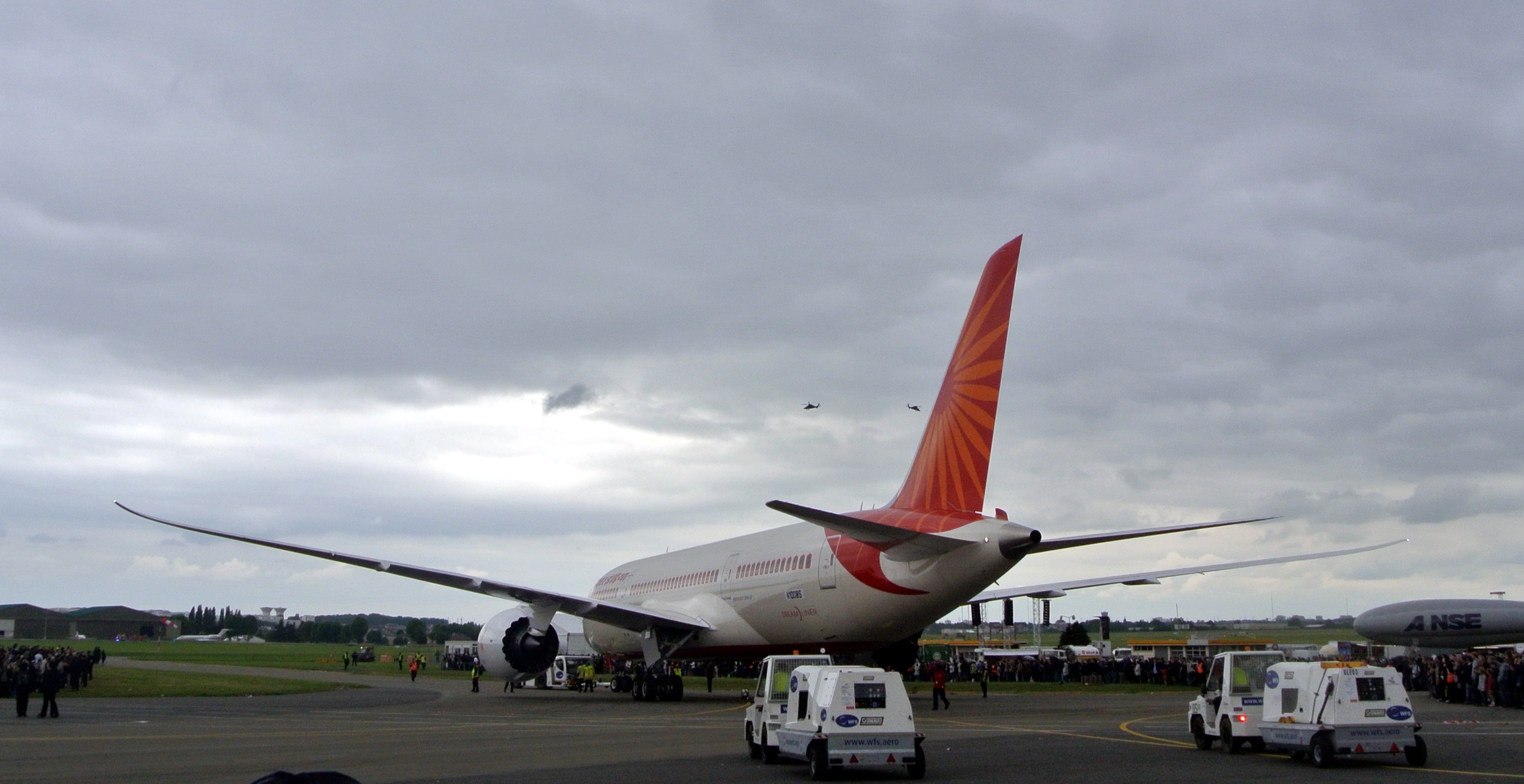
Pakistan has extended its ban on Indian aircraft using its airspace for another month. The Pakistan Airports Authority (PAA) announced on Saturday, 17 October, that the restriction — covering Indian-registered aircraft as well as aircraft owned, operated or leased by Indian airlines and operators, including military flights — will remain in force until 04:59 Pakistan time on 24 November 2026. The News (18 Oct 2026)
A PAA spokesperson confirmed that a fresh Notice to Airmen (NOTAM) had been issued to give the extension legal effect for aviation operators, and the authority published the announcement on its official X account: “Pakistan has extended its existing airspace restriction on Indian-registered aircraft and aircraft owned, operated or leased by Indian airlines/operators, including military flights, until 24 November 2026 (04:59 AM).” The News (18 Oct 2026)
The previous extension was due to expire on 24 October: one more month of a detour now a year and a half old. The closure applies across both the Karachi and Lahore flight information regions, the two air-traffic zones that cover Pakistan’s airspace. Bloom Pakistan (17 Oct 2026)
The ban dates to 23 April 2025. Pakistan closed its airspace to Indian aircraft the day after the Pahalgam attack in Jammu and Kashmir, in which 26 people — most of them tourists — were killed. India accused Pakistan of involvement in the attack, an allegation Islamabad firmly denied while calling for an independent and transparent investigation. The News (18 Oct 2026)
A week later, on 30 April 2025, India closed its own airspace to Pakistani airlines in response, and the two closures have mirrored each other ever since. Tensions then escalated sharply: India launched strikes on several Pakistani cities on 6 and 7 May 2025, and Pakistan retaliated with Operation Bunyanum Marsoos, targeting multiple Indian military installations. During the confrontation Pakistan said it had shot down eight Indian fighter aircraft, including three Rafale jets, along with dozens of drones. The hostilities lasted nearly 87 hours before the two nuclear-armed neighbours agreed to a US-brokered ceasefire on 10 May 2025. The News (18 Oct 2026)
The airspace, however, never reopened. The restriction has been extended month by month ever since — eighteen consecutive months — and this weekend’s renewal follows the established rhythm: announced only days before expiry, with no stated reason and no announced endgame. The Bureau’s Factbook entry on Pakistan and its entry on India track the underlying data of the rivalry.
The commercial damage has fallen overwhelmingly on Indian carriers. Flights between India and Europe, the Middle East and North America that once transited Pakistani airspace must now route around it — via Iran or Central Asia — adding between 30 minutes and three hours of flying time depending on the destination. Air India has estimated that the closure could affect its annual profit before tax by about $455 million. Bloom Pakistan (17 Oct 2026)
There is a wrinkle in the paperwork. The PAA’s own announcement — quoted verbatim by The News — says 24 November 2026 at 04:59, and The Hindu, Pakistan TV and Bloom Pakistan all report the same date. But Dunya News-based reporting puts the new deadline at 27 November. Dunya News (18 Oct 2026) The full NOTAM text has not been published in full, so the discrepancy cannot be resolved from public documents yet. For airlines filing flight plans, the difference is three days of routing; for the story, it is a reminder that even the administrative facts of this standoff travel through a fog of competing wires.
We also do not know what, if anything, would lead either side not to renew. The PAA’s announcements give no reasons, cite no review process and name no conditions for lifting the ban. India’s reciprocal closure is equally unexplained in public. And we do not know whether any back-channel discussion of normalisation exists: neither capital has acknowledged one, and the ban survived even the May 2025 ceasefire without so much as an announced pause for talks. Bloom Pakistan (17 Oct 2026)
Eighteen months in, the closure has stopped behaving like an emergency measure and started behaving like geography. Airlines no longer treat the detour as a temporary workaround; they build it into schedules, fuel planning and ticket pricing. For Indian aviation — the world’s fastest-growing major domestic market — the ban is a standing tax on every westbound long-haul flight, measured in hundreds of millions of dollars a year. Bloom Pakistan (17 Oct 2026)
The political signal matters as much as the money. Each monthly renewal is a small, low-cost way for Islamabad to keep pressure on New Delhi without firing a shot — and a monthly reminder from New Delhi, via its own reciprocal closure, that the pressure runs both ways. The rhythm has now outlasted the shooting: the May 2025 confrontation lasted 87 hours; the airspace standoff it left behind has lasted eighteen months and counting. The Pahalgam fallout is still shaping the region’s security debate, and the closed sky is its most durable monument.
There is precedent for how this ends — eventually. Pakistan imposed airspace restrictions on India during the 1999 Kargil conflict and again after the 2019 Pulwama crisis; both were eventually lifted when the political temperature dropped. Pakistan TV (17 Oct 2026) The question is what drops the temperature this time, and nothing in either capital’s public posture suggests an answer is near.
Because the ban is the cheapest leverage either capital owns. For Pakistan, closing the sky costs almost nothing — its own carriers barely overfly India — while imposing hundreds of millions of dollars in annual costs on Indian aviation and a permanent logistical headache on New Delhi’s westbound connectivity. It is coercion at the price of a NOTAM: no troops, no sanctions regime, no diplomacy required. Each renewal signals resolve to a domestic audience and friction to the neighbour, all without moving a single asset.
India’s reciprocal closure is the mirror image with a different logic. It costs Pakistan little in commercial terms, but it denies Islamabad the one thing it might want from normalisation — symmetry. As long as both skies are shut, neither side can be accused of conceding; the mutual closure is a stable equilibrium because unilateral reopening would read as weakness in both capitals. That is why the ban survived the ceasefire: the shooting stopped when the costs of shooting became unbearable, but the airspace costs are bearable — just unevenly distributed.
The deeper trap is the absence of an off-ramp. Past closures — 1999, 2019 — ended when the underlying crisis de-escalated through diplomacy. This time there is no diplomacy to point to: no talks, no back channel acknowledged, no conditions named. The NOTAM has become a habit, and habits in statecraft persist until something more expensive dislodges them. Pakistan TV (17 Oct 2026)
The detour is quietly redrawing South Asia’s aviation map. Indian carriers have spent eighteen months optimising around Pakistan — new routings, adjusted schedules, renegotiated fuel uplifts — which means the workaround would linger even if the ban lifted tomorrow.
Regionally, the closure keeps a slow pressure on the economics of Indian long-haul expansion at exactly the moment Indian carriers are ordering wide-bodies for Gulf and European growth. Every additional hour of fuel burn is margin surrendered to Gulf and European competitors who overfly the region freely. And diplomatically, the monthly renewal has become a metronome of non-rapprochement: as long as it ticks, no one in either capital has to explain why the relationship is not improving — the sky explains it.
Three things, none of them visible. First, a political decision in Islamabad that the leverage is worth more spent than held — unlikely while the ban costs Pakistan so little. Second, a reciprocal decision in New Delhi, since neither side will move first and be seen to blink. Third, a diplomatic container to hold the concession: past reopenings came wrapped in de-escalation packages, and there is no package on the table now.
Watch the week before the deadline. Every renewal in this eighteen-month series has been announced only days before expiry, so the run-up to late November is the only scheduled moment when the file is even open. Watch also for any shift in the broader relationship — a leaders’ meeting, a back-channel acknowledgement, a change in the Kashmir rhetoric — because the NOTAM has never moved on aviation logic alone. Until then, the sky stays shut, the detours stay filed, and the meter keeps running. Bloom Pakistan (17 Oct 2026)
Western outlets have not filed fresh copy on this renewal — a telling silence in itself. The Western lens has historically read the story through the aviation ledger: Reuters’ earlier reporting centred on Air India’s cost estimates and the rerouting burden, treating the ban as a commercial disruption nested inside a security crisis. That framing persists by default — no Western newsroom has found anything new enough in a routine monthly extension to justify a fresh dispatch, which is itself a measure of how normalised the closure has become in Western coverage.
No East Asian outlet — CNA, NHK, Kyodo — carried the extension this cycle either. The Eastern information environment tends to engage the India-Pakistan file only at moments of kinetic escalation; an administrative NOTAM renewal eighteen months into a standoff does not clear that bar. The documentary record here belongs instead to South Asia’s own press: Pakistan’s outlets own the primary documents (the PAA announcement, the NOTAM number), while India’s PTI wire owns the cross-border verification.
The Global South’s coverage starts from the tarmac, not the summit. The News (18 Oct 2026) Pakistan’s press — The News, Pakistan TV, Geo News — reports the extension as an administrative fact with a military edge: the explicit inclusion of military flights, the FIR designations, the PAA’s own wording. India’s PTI dispatch, carried by The Hindu, reads the same NOTAM as a cost story: longer routes, higher fuel burn, reciprocal pain.
The Pakistan Airports Authority said it had extended its existing airspace restriction on Indian-registered aircraft and aircraft owned, operated or leased by Indian airlines or operators, including military flights, until 24 November 2026 at 04:59 Pakistan time. A PAA spokesperson confirmed a fresh Notice to Airmen had been issued, and the authority published the announcement on its official X account on Saturday.
Continuously since 23 April 2025 — eighteen months. Pakistan imposed the closure the day after the Pahalgam attack in Jammu and Kashmir, in which 26 people, mostly tourists, were killed. India closed its own airspace to Pakistani airlines a week later, on 30 April 2025. Both restrictions have been renewed repeatedly ever since, and the current extension is the latest in that monthly rhythm.
Indian carriers bear the heaviest burden: westbound flights to Europe, the Middle East and North America must route around Pakistani airspace, adding flight time, fuel burn and crew costs. Air India has estimated the closure could reduce its annual profit before tax by about $455 million, and some long-haul journeys have been extended by up to three hours. Pakistani carriers are far less affected, since few of their routes overfly India.
Neither government has signalled any negotiation toward lifting the restrictions, and no timeline for normalisation has been put on the table. The ban survived the May 2025 military confrontation and the US-brokered ceasefire of 10 May 2025 without even a pause for discussion. Each renewal is announced only days before expiry, so the next decision point falls in the week before the new deadline — watch that window, and the broader state of India-Pakistan relations, for any change.
