Tehran’s Revolutionary Guard Corps Navy said Saturday that two supertankers, each carrying about two million barrels of crude, exploded and caught fire after hitting mines on routes Iran had not authorized — claims no independent source has confirmed.
Published 18 October 2026 · 02:13 GMT
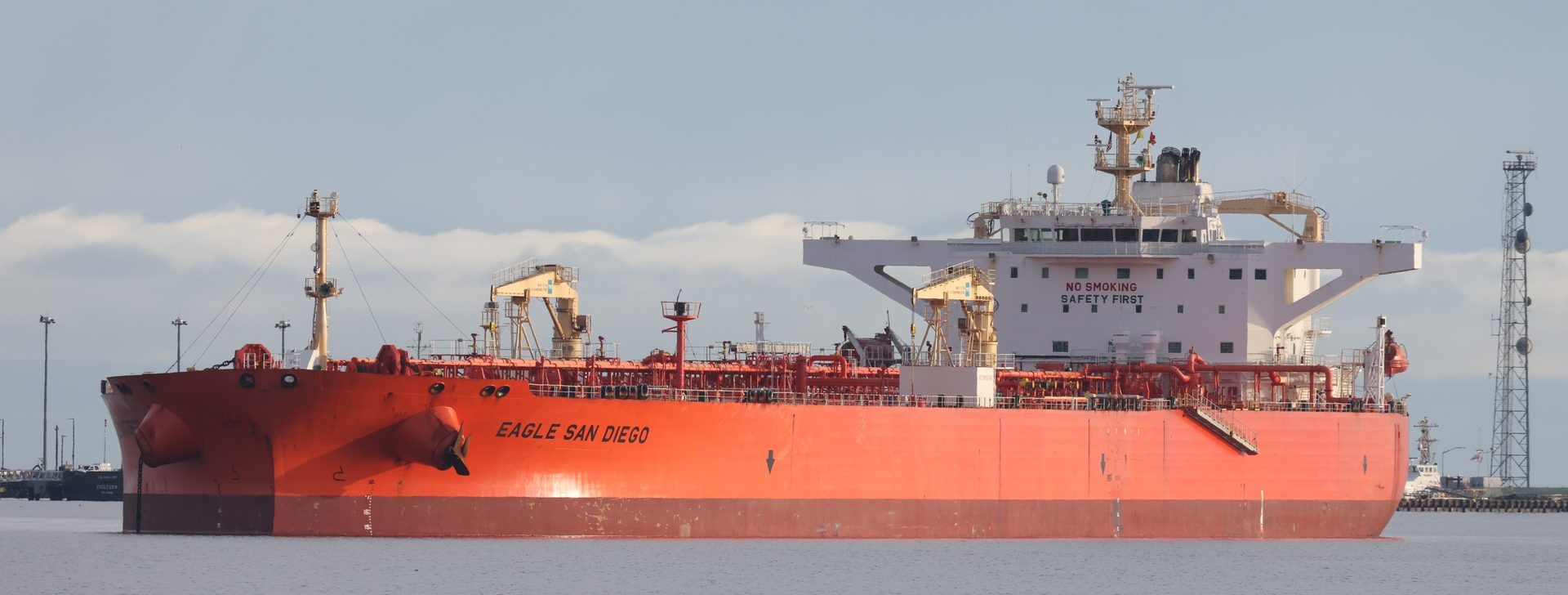
Iran's Islamic Revolutionary Guard Corps Navy said on Saturday that two oil tankers caught fire after striking naval mines while crossing the Strait of Hormuz, the waterway through which about one-fifth of the world's oil consumption flowed before the war. The announcement, carried by the official IRNA news agency and by the Guards' own Sepah News outlet, described the first tanker hitting a mine, triggering an explosion and a "fierce fire", and a second tanker striking a mine on Saturday morning that left it engulfed "in a massive blaze" and immobilized.
Each vessel was carrying about two million barrels of crude oil, according to Iranian state media. Both, the Guards said, had switched off their GPS, positioning and radar systems and were trying to transit through routes Tehran had not authorized, what the IRGC Navy called an "illegal" route. The second vessel's explosion, Sepah News reported, occurred in its engine room. No ship names, flags, crews or cargo origins were disclosed, and by Saturday evening no independent source had confirmed that the fires happened at all.
The claims arrive in a waterway already on a war footing. Since the US-Israeli war on Iran began in late February, Tehran has asserted control of the strait and demanded that every vessel seek its authorization before transiting, while Washington has imposed its own naval counter-blockade on Iranian oil exports, a standoff in which both sides now claim control of the strait. A week ago, a supertanker was left ablaze in the strait after a projectile strike, hours after US forces destroyed a cargo ship trying to run the American blockade.
The claim itself is well documented: announced by the IRGC Navy on Saturday, 17 October, through IRNA and Sepah News, it was relayed within hours by Al Jazeera, Reuters, India's IANS wire, The Jerusalem Post and Turkiye's Anadolu Agency. What all of them report is the same Iranian account: two tankers, roughly two million barrels of crude aboard each, running dark with navigation systems switched off, struck mines on unauthorized routes. Reuters, Al Jazeera and The Jerusalem Post each add the same caveat in their own words: there is no independent confirmation.
Several surrounding facts are firm. IRGC Navy commander Rear Admiral Ali Azmaei told state television on Tuesday that his forces control the Persian Gulf and the Strait of Hormuz "round the clock", that the Gulf of Oman is under Iranian navy supervision, and that any vessel deactivating its navigation systems would be considered "hostile" and face a "decisive response". On Wednesday, a 50,000-tonne container vessel hit a naval mine south of the strait with no casualties, according to the British navy-affiliated UKMTO; the IRGC said the ship, carrying more than 2,500 containers, sank. On Tuesday, US Central Command rejected Azmaei's control claim outright, the commander, it said, "has no navy", and said American forces had helped Gulf partners move more than 19 million barrels of crude through the waterway the previous day.
The week's ledger is grim either way. Iran's army said two tankers caught fire on Thursday and Friday in Tehran's "prohibited zone" in the Gulf of Oman; maritime monitors reported two tankers struck in Gulf waters off Saudi Arabia on Friday; and last Sunday six vessels were attacked in or near the strait, the most in a single day since the war began, according to security firm Vanguard, the International Maritime Organization and UKMTO. On Friday, President Masoud Pezeshkian reiterated that Iran does not seek nuclear weapons, dismissing contrary claims as a "lie".
Almost everything about the two tankers themselves. No name, no flag, no owner, no crew manifest and no casualty report has been published by any side. The origin and destination of the roughly four million barrels of crude supposedly aboard are unknown, a significant gap, since sanctioned, shadow-fleet and legitimate cargoes all transit these waters and the distinction matters for insurance, liability and diplomacy. The exact locations of the alleged strikes have not been given, nor has any satellite imagery or third-party sighting of the burning vessels surfaced.
Nor is it known who laid the mines, if mines were laid at all. Iran mines its own claimed enforcement zones; the United States has struck at Iranian mine-laying forces before; and deniable mine warfare is precisely the kind of operation each side accuses the other of. Whether Saturday's two fires are distinct incidents or the same events Iran's army described on Thursday and Friday in the Gulf of Oman is also unclear. And Tehran's most explosive charge, that the tankers moved "with US support", rests on no published evidence.
Because there is no substitute. Before the war, about one-fifth of global oil consumption and a large share of liquefied natural gas transited this 35-to-40-kilometre-wide corridor between Iran and Oman. Every incident in it, verified or not, reprices risk instantly: war-risk insurance premiums jump, freight rates follow, and crude and diesel benchmarks move on the rumor as much as on the fact. The G7's decision to release 100 million barrels from strategic reserves shows how seriously governments now take the threat of a sustained disruption.
The deeper significance is doctrinal. Two incompatible regimes now govern the same water: Iran's authorization regime, enforced by mines, missiles and the threat of seizure, and the American-led freedom-of-navigation regime, enforced by a counter-blockade and escorted convoys. Vessels that go dark, switching off their transponders to dodge one regime's paperwork, sail straight into the other's crosshairs. Mines are the perfect weapon for this grey zone: invisible, deniable, and able to close a strait without a single warship showing itself.
By separating three different questions. First: did two tankers burn on Saturday? On that, the honest answer is that only Iran says so, and Iran has cried mine before, American commanders have debunked several earlier IRGC mine claims this year. Second: is the waterway genuinely mined and dangerous? On that, the answer is yes and independently confirmed: UKMTO recorded a mine strike on a 50,000-tonne container vessel on Wednesday with no casualties, and last Sunday's six-vessel attack tally comes from Vanguard, the IMO and UKMTO, not from Tehran. Third: what is the claim for? The IRGC's statements function as enforcement notices, each "violating" vessel named and shamed is a warning to the next captain considering a dark transit, as the strait stays shut under Tehran's conditions.
The uncomfortable possibility is that both things are true at once: that mines did catch two shadow tankers, and that Tehran is embellishing the details. In a fog this thick, the only solid ground is the pattern: the strait is being contested mine by mine, claim by claim, and every vessel that switches off its transponder is gambling that invisibility is safer than paperwork. This week suggests it is not.
Expect the market's risk machinery to move first. War-risk premiums for Hormuz transits, already multiples of peacetime levels, will be repriced on Monday; some underwriters may simply withdraw cover for dark-running or sanctioned-cargo vessels, which would strand tonnage and tighten the market further. Freight rates for very large crude carriers on Gulf routes will follow. For importers, the arithmetic is brutal: rerouting around Africa adds weeks and cost, waiting adds demurrage, and sailing adds risk. Diesel markets, heading into the northern-hemisphere heating season, are the most exposed, which is why governments reached for strategic stocks. Note one quieter signal: the IRGC warned local fishermen to be careful after Wednesday's sinking, an admission that the minefields do not discriminate.
Five things to watch. First, UKMTO advisories: any new mine warning will confirm more than any press release. Second, Washington's response to this specific claim, silence, a denial, or satellite imagery. Third, whether Tehran names the vessels, which would let insurers, owners and flag states check the story. Fourth, independent casualty and environmental reporting: four million barrels of crude does not burn without a slick. Fifth, Monday's oil open: the market's verdict on Saturday's claims.
The Western wire framing is cautious to the point of skepticism. Reuters relays the IRGC claim in full, the two tankers, the two million barrels, the dark navigation, the unauthorized route, and then stops: "There was no independent confirmation of the reports." The context it chooses is economic: heightened tensions around a key oil shipping route, disruptions that "have boosted global energy prices and inflation", a surge of attacks over the past two weeks that Tehran links to the US blockade of its ports and tougher sanctions imposed last month. Australia's AAP carries the same dispatch.
East Asian coverage of the incident is thin: no standalone reporting from the region's major outlets appeared in the verification window. What exists comes relayed. India's IANS wire, citing Xinhua, carries the IRGC's Sepah News statement in its hardest form, the "huge" Saturday-morning explosion, the engine-room blast, the "illegal" route, the vessel brought to a halt.
The Global South tells the story with the most texture, and the most at stake. Al Jazeera, reporting from Doha, gives the fullest account: the "fierce fire" and the "massive blaze", the IRGC's charge that one tanker moved "with US support", and a satellite image from the EU's Copernicus Sentinel-2 of debris from the week's earlier sinking off Oman. India's IANS dwells on what the crisis means for New Delhi, which depends on Gulf crude and must now do energy diplomacy with Tehran and Washington simultaneously.
Iran’s Revolutionary Guard Corps Navy said two oil tankers, each carrying about two million barrels of crude, struck naval mines while crossing the strait on Saturday, 17 October. The first suffered an explosion and a ‘fierce fire’; the second was hit on Saturday morning, with the blast in its engine room leaving it immobilized and engulfed ‘in a massive blaze’. The claims were carried by the official IRNA news agency and the Guards’ Sepah News outlet.
The IRGC says both vessels had switched off their GPS, positioning and radar systems and were trying to transit through routes Iran had not authorized. One, Tehran claims, moved ‘with US support’. Since the war began in February, Iran has demanded that all ships seek its authorization before crossing the strait, and its naval commander has warned that vessels going dark will be treated as ‘hostile’.
No. Reuters, Al Jazeera and The Jerusalem Post each report the Iranian claim with the same caveat: there is no independent confirmation. No vessel names, flags, owners or casualty figures have been published, and no satellite imagery or third-party sighting of the burning tankers has surfaced. Separately, the British navy-affiliated UKMTO did confirm a mine strike on a 50,000-tonne container vessel on Wednesday, with no casualties.
About one-fifth of the world’s oil consumption transited the strait before the war, so every incident, verified or not, moves markets. Expect war-risk insurance premiums and freight rates to be repriced, with crude and diesel benchmarks reacting to the risk rather than the fact. The G7 has already released 100 million barrels from strategic reserves to cushion a sustained disruption of the waterway.
