Lieutenant General Aamer Raza, commander of Pakistan's National Strategic Command, used the passing-out parade at Kakul to answer India's defence minister — who had warned that any future terror attack from Pakistan would draw an even “stronger response”. Three days, three podiums, one nuclear shadow.
Published 17 October 2026 · 12:08 GMT
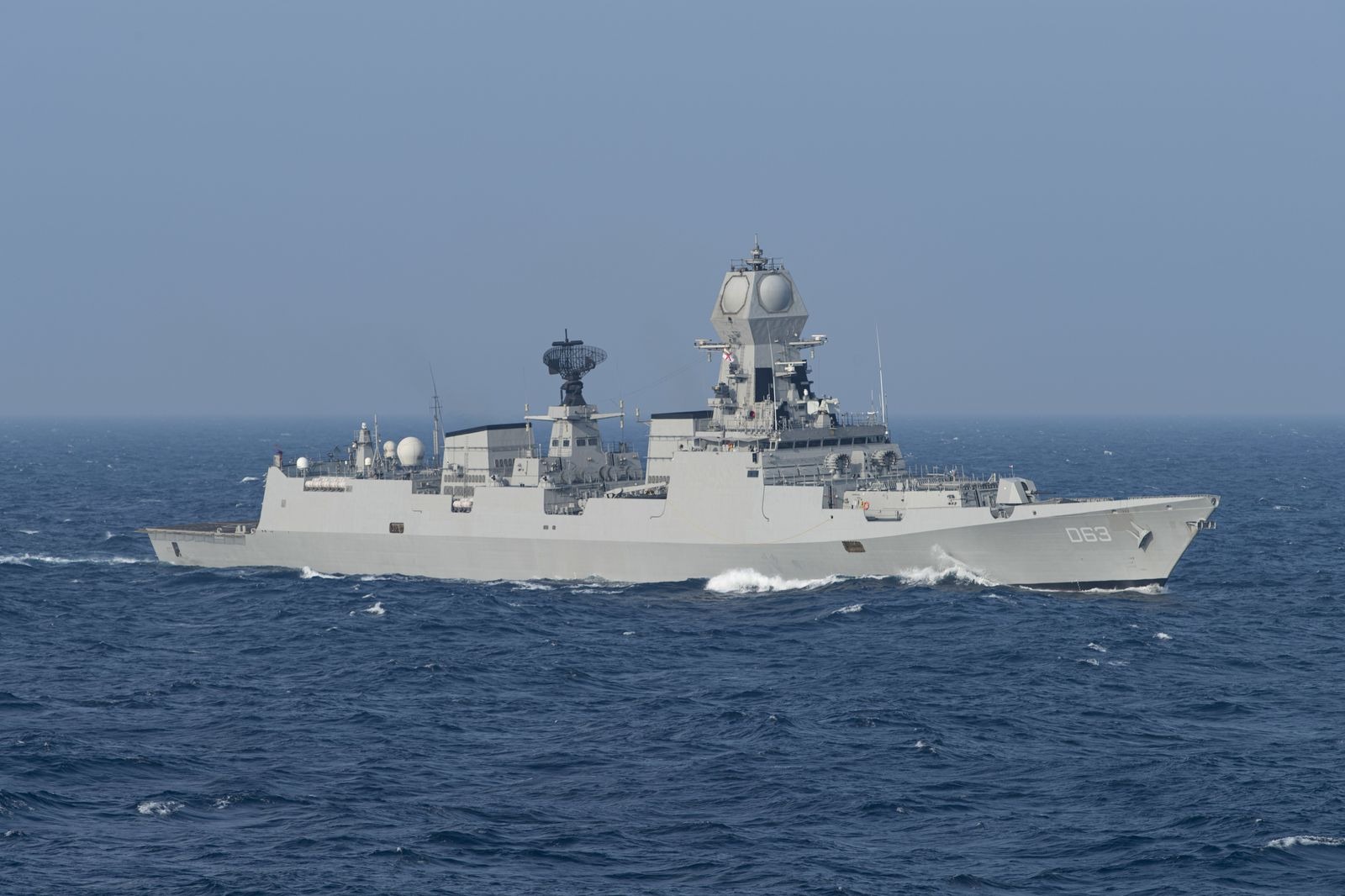
Three podiums, three days, one nuclear shadow. On Thursday, 15 October, India's Defence Minister Rajnath Singh told a defence conclave in New Delhi that any future terrorist act originating from Pakistan would draw an even “stronger response” — a decisive shift in Indian doctrine, built on Operation Sindoor, the Balakot airstrikes and the earlier surgical strikes. On Friday, Pakistan's Foreign Office answered: spokesperson Sajjad Haider Khan said Islamabad “rejects and condemns the provocative remarks”, called them “reckless”, and warned that any aggression would be met with a forceful response. On Saturday, 17 October, the reply came in uniform.
Lieutenant General Aamer Raza, Commander of Pakistan's National Strategic Command, chose the passing-out parade of the 154th Long Course at the Pakistan Military Academy in Kakul — the army's most ceremonial stage — to deliver the sharpest Pakistani answer yet. “To those who harbour hostile designs across our borders, our stance remains resolute and unambiguous. There is no space for conflict or war in a nuclearised environment,” he told the newly commissioned cadets, adding that “any miscalculation will be met with a response far beyond the imagination or calculation of the initiator.” Pakistan, he said, stood ready to “defend every inch” of its territory — but no adversary should mistake its commitment to peace for weakness. He did not name India directly. He did not need to.
The verified record, across Indian and Pakistani reporting, is consistent. Raza — “General” in The Hindu, “Lieutenant General” in the Pakistani press — spoke as chief guest at the PMA Kakul parade on Saturday, 17 October 2026. The core passages, carried by multiple independent newsrooms, are: “There is no space for conflict or war in a nuclearised environment”; “any miscalculation will be met with a response far beyond the imagination or calculation of the initiator”; the armed forces stand prepared to “defend every inch of our sacred motherland at all costs”; “We will neither tolerate cross-border aggression nor any violation of our sovereign borders”; and “let no adversary mistake our commitment to peace as weakness nor misinterpret our restraint as a lack of resolve.”
The speech ranged wider than deterrence. Raza described a “post-truth era” of hostile disinformation and narrative warfare aimed at driving a wedge between the Pakistani public and the armed forces, and argued that after the failure of India's Operation Sindoor, adversaries had shifted to proxy terrorism and sub-conventional warfare against Pakistan's social cohesion. He voiced support for the Kashmiri struggle under UN resolutions and solidarity with the Palestinian people, and warned of grey-zone and hybrid threats.
The parade supplied the pageantry: the Sword of Honour went to Academy Senior Under Officer Muhammad Junaid Jabbar, the President's Gold Medal to Syed Hassan Abbas, and the overseas gold medal to Bangladesh's Riyad Mahmood Khan — with cadets from eight friendly countries graduating alongside the Pakistanis, per the ISPR statement.
On the Indian side, Singh's 15 October record is equally firm: the 2016 Uri attack and the surgical strikes, Balakot and Operation Sindoor as proof of a proactive doctrine; Akash and BrahMos missiles on display; 90% ammunition self-reliance — 159 of 175 types made domestically; defence exports up from ₹686 crore in 2013–14 to over ₹38,000 crore in 2025–26. And the restraint note matters: no reporting on Raza's speech announced a new operation or alert change. This was signalling, not mobilisation.
What New Delhi will say next. As this article went to press, no Indian reply to Raza's speech had surfaced in the reporting reviewed — the exchange, for now, is one-directional. Whether either side has altered force posture, alert levels or deployment patterns along the Line of Control is not publicly confirmed by either capital. The full ISPR transcript of the Kakul address has not been published in full; beyond the quoted passages, the exact wording of the wider speech rests on newsroom accounts. The two capitals' competing claims about May 2025 — what Operation Sindoor achieved, what it cost, who prevailed — remain irreconcilable in open sources. And the deeper unknown: whether this three-day volley is deterrence routine between nuclear neighbours, or the rhetorical prelude to something harder.
Because the two loudest voices in South Asia are describing the same region in mutually exclusive terms — and both are nuclear-armed. Singh's doctrine — any terror attack from Pakistani soil an “act of war”, as he declared on 25 September — is deterrence by punishment: the next attack will cost more than the last. Raza's answer is deterrence by denial of escalation dominance: any punishment will be answered beyond the punisher's imagination, and the nuclear shadow makes the whole exchange existentially serious. When both sides claim the escalation ladder favours them, the ladder itself becomes the danger.
The stage matters as much as the script. A National Strategic Command commander — the officer responsible for the arsenal at the centre of the deterrent — does not address cadets at Kakul by accident. Parades are liturgy in the Pakistan Army, and placing this message inside the passing-out ritual guaranteed it would be carried, verbatim, across every Pakistani newsroom and into Delhi's morning briefs. It also follows a pattern: since the four-day clash of May 2025, public warnings have become the region's preferred pressure valve — but each cycle tests whether the calibration holds. For a region holding a fifth of humanity, that is not a rhetorical question. Related recent flashpoints include the India-Pakistan naval standoff covered by this newsroom.
Read through the 5D lens, the Kakul speech is doing at least four jobs at once. Geopolitically, it reasserts the oldest rule of the subcontinent: the nuclear shadow belongs to both capitals, and neither gets to monopolise escalation. Economically, the exchange spotlights the asymmetry Singh himself advertised — India's defence-industrial surge versus Pakistan's deterrence on a tighter budget — which is why Raza reached for the vocabulary of imagination and miscalculation rather than tonnage and rupees. Historically, the three-day sequence — conclave, Foreign Office, parade ground — replays a ritual both countries know by heart since 1998, when the tests made every subsequent exchange a shadow-boxing match under the same nuclear logic. Technologically, the subtext is the grey zone Raza named: narrative warfare, disinformation, proxy instruments — the admission that the next clash may be fought as much on screens as on ridgelines.
The sharpest analytical point is the choice of messenger. ISPR statements are routine; a National Strategic Command commander taking the parade dais is not. In deterrence theory, credibility is the currency, and Raza spent it deliberately: the man closest to the arsenal telling cadets — and, through them, Delhi — that miscalculation will be answered beyond imagination. Whether Delhi reads that as resolve or as bluster will set the temperature of the coming weeks. Deterrence works until the day it doesn't.
The second-order effects are already visible in the subplots each side chose to advertise. Singh's self-reliance figures — 159 of 175 ammunition types domestic, exports to 200 countries — are an industrial policy pitch wrapped in a warning: India's military message now comes with a made-in-India supply chain, a fact with consequences for arms markets from Southeast Asia to Africa. Pakistan's counter-pitch is diplomatic: the same Foreign Office briefing that condemned Singh also addressed talks with Afghanistan and a reported Russian readiness to mediate, positioning Islamabad as the party open to dialogue while Delhi talks punishment. For external capitals, the exchange is a reminder that South Asia's thermostat has no automatic setting; every degree is negotiated in public. And for the region's markets, the signal to watch is not the volume of the warnings but their specificity: dates, places and postures move prices; adjectives do not. India's parallel economic track — this week's India-US trade breakthrough — shows Delhi walking and chewing gum at once.
Watch four things. First, whether New Delhi answers Raza directly — a Defence Ministry or MEA response would extend the sequence; silence would suggest Delhi considers the point made. Second, the next Pakistani Foreign Office weekly briefing, where spokesperson Sajjad Haider Khan's language will show whether Islamabad is cooling or sustaining the rhetoric. Third, the Line of Control and the incident wire: rhetoric this loud makes any border incident instantly load-bearing, and both militaries know it. Fourth, the diplomatic calendar — Afghanistan talks, any Russian mediation chatter, and the multilateral meetings where the two foreign ministers might share a room. Pakistan's domestic front also bears watching amid the Khyber Pakhtunkhwa emergency. The base case remains rhetorical deterrence. The tail risk is that rituals, repeated often enough, start to feel like permission.
In this cycle, the Western information environment is notable for its silence: no Western wire service — Reuters, AP, BBC — independently carried the Raza-Singh exchange in the verification window, and the BBC and France 24 feeds in today's digest carried no Pakistan-India item. That absence is itself a finding. For now, this is a South Asian story told by South Asian newsrooms; the Western lens, when it engages, typically frames such exchanges through escalation management and the shared interest of Washington and Beijing in keeping the subcontinent's nuclear rivals talking rather than shooting.
The Indian telling, led by The Hindu's Islamabad-datelined report, presents Singh's remarks as counter-terrorism doctrine, not provocation: a defence minister telling a conclave that the era of absorbing attacks is over, with Operation Sindoor, Balakot and the surgical strikes as the receipts. Indian coverage emphasises the industrial subplot — 90% ammunition self-reliance, BrahMos and Akash on display, defence exports up fifty-fold in a decade — framing the warning as the voice of a state confident in its arsenal. In this reading, Raza's Kakul speech is the predictable Pakistani mirror: loud, ceremonial, aimed as much at Rawalpindi's domestic audience as at New Delhi.
The Pakistani telling — Dawn, The Diplomatic Insight, DNA News Agency, The Standard, Origin Pakistan — inverts the frame: Singh's remarks are the provocation, “reckless” and expressive of a “hegemonistic mindset”, and Raza's answer is defensive deterrence, the sovereign right of a state that has buried its soldiers in a two-decade war on terror. The emphasis falls on peace-not-weakness, on the Foreign Office's legalistic condemnation preceding the general's parade-ground address, and on the narrative-warfare theme — Pakistan presenting itself as the target of disinformation, not its author. Bangladesh's TBS News adds the regional echo, recalling Singh's September “act of war” doctrine as the context that made Raza's reply inevitable.
Lieutenant General Aamer Raza is the Commander of Pakistan's National Strategic Command, the formation responsible for the country's strategic arsenal. Styled “General” by some outlets, he delivered the 17 October warning as chief guest at the 154th PMA Long Course passing-out parade in Kakul. His rank and posting are why the speech mattered: not a spokesman reading a statement, but the officer closest to the deterrent speaking in uniform.
At a defence conclave in New Delhi, India's Defence Minister said any future terrorist act originating from Pakistan would draw an even “stronger response”, presenting it as a doctrinal shift built on Operation Sindoor, Balakot and the surgical strikes. He showcased Akash and BrahMos missile systems, claimed 90% self-reliance in ammunition, and cited defence exports above ₹38,000 crore. It followed his September declaration that any terror attack would be treated as an act of war.
Operation Sindoor was India's May 2025 military operation against Pakistan, launched weeks after the April 2025 Pahalgam terror attack in Jammu and Kashmir that killed 26 people. The two sides fought a four-day clash — the most serious India-Pakistan confrontation in years — before disengaging. Each capital claims the operation vindicated its doctrine: Delhi cites it as deterrence by punishment that worked; Islamabad calls it a failure that pushed India toward proxy and sub-conventional warfare. Neither version is independently adjudicable.
It is the strategic context in a phrase. India and Pakistan have both held nuclear weapons since the 1998 tests, so every conventional threat between them carries an existential shadow. When Raza says there is “no space for conflict or war in a nuclearised environment”, he invokes mutual deterrence: the arsenal makes war irrational, and any “miscalculation” risks catastrophe. It is at once a plea for restraint and the ultimate threat — which is why both capitals keep repeating it.
