A 95-year-old French chemist and a 76-year-old Japanese chemist cracked homochirality, the century-old riddle of one-handed molecules, and handed the pharmaceutical industry the tools behind modern drug manufacturing.
Published 7 October 2026 · 18:00 GMT
STOCKHOLM. A 95-year-old French chemist and a 76-year-old Japanese chemist have won the 2026 Nobel Prize in Chemistry for cracking one of science's oldest puzzles: how nature builds molecules with only one handedness. Henri B. Kagan and Kenso Soai were honoured on Wednesday for the discovery of non-linear effects and autocatalysis in asymmetric organic synthesis, work that taught chemists to produce single mirror-image molecules at will. Their tools underpin the modern manufacture of pharmaceuticals, from painkillers to Parkinson's drugs, and reopened the question of how life itself became one-handed. Soai learned the news while out shopping near his home. The committee had not yet reached Kagan when the prize was announced.
The Royal Swedish Academy of Sciences announced the prize on Wednesday morning in Stockholm, honouring the pair for the discovery of non-linear effects and autocatalysis in asymmetric organic synthesis. Kagan, 95, is affiliated with Université Paris-Sud in Orsay, France, where he is professor emeritus; Soai, 76, is professor emeritus at the Tokyo University of Science. They will share 12 million Swedish kronor, about 1.2 million dollars, and receive their medals from King Carl XVI Gustaf at a ceremony in Stockholm on December 10, the anniversary of Alfred Nobel's death, followed by the traditional banquet at Stockholm City Hall. It is the third Nobel announced this week, after Monday's medicine prize and Tuesday's physics prize. The literature and peace prizes follow on Thursday and Friday, with the economics prize on October 12.
For a century, chemists could not do what every living cell does by default. Now they can.
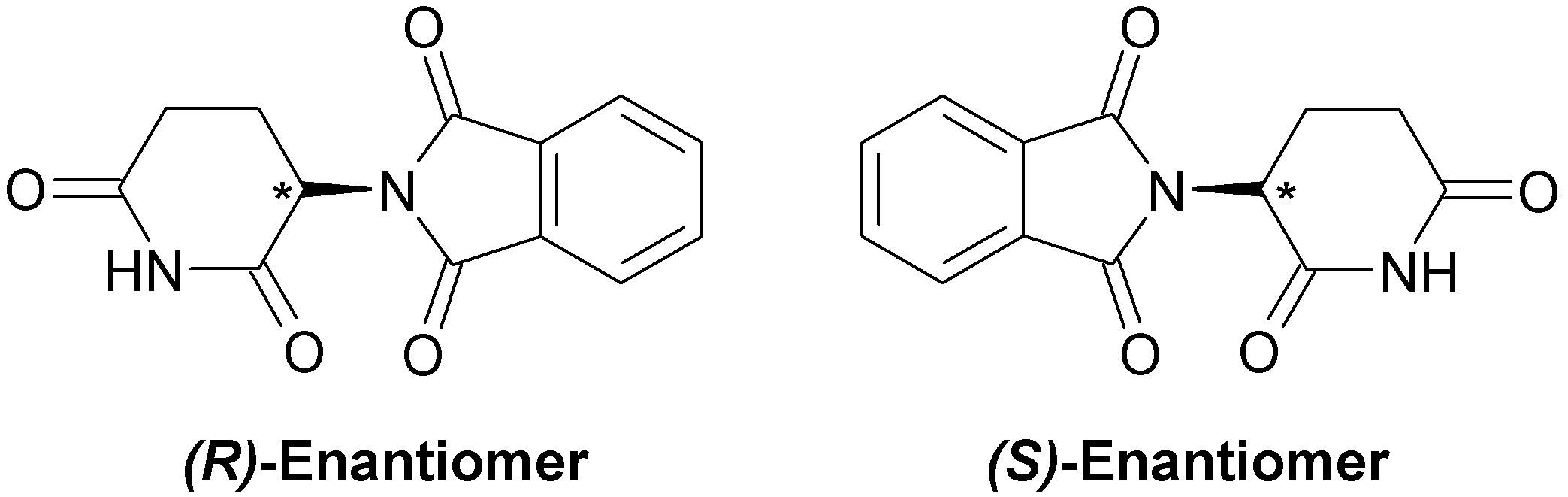
In the laboratory, chemists always got both hands at once. Every chemical reaction that could form two mirrored molecules produced them in equal proportions, a stubborn 50-50 mix. For scientists trying to make molecules that interact with living bodies, that was a serious handicap. "Many active drugs in pharmaceutical applications are chiral: one hand may have the desired therapeutic effect, while the other hand might have no effect, or in the worst case might even be harmful," Linke said. The difference is not academic. In the thalidomide scandal of the early 1960s, thousands of children were born with birth defects caused by a sedative; researchers later realised it was the active substance's mirror image that caused the harm.
"The left-handed version of the drug can have one effect, and the right-handed version can have another effect, and then we need methods for selectively preparing them," said Peter Somfai, a member of the Nobel Committee for Chemistry. "In developing such methods the findings of this year's laureates are important. They provided powerful tools for that."
His work consciously picked up a thread left by the 19th-century French chemist Louis Pasteur, who died a few years before the first Nobel Prizes were awarded in 1901. Pasteur had been studying tartaric acid, important in wine production, and noticed that bacteria only ferment one of its two forms, the one naturally found in grapes. With the other form there is no fermentation. That proved some substances occur in two forms with different, sometimes dangerous properties. Creating the right form on demand remained unsolved until Kagan and Soai produced their asymmetric reactions, an excess of one form where before there had been none.
"Other than life itself, no one had previously achieved this feat," the Nobel committee noted. That is the heart of the prize: for the first time, homochirality, previously seen only in living things, emerged spontaneously from a flask. Peter Somfai called it "probably the coolest experiment in organic chemistry," and the committee said the laureates had "provided a solution to a chemical mystery that is over a century old: how homochirality can emerge spontaneously. The chemical reactions they have developed are spectacular."
Beyond the factory floor, the prize reopens one of the deepest questions in science: how life's chemistry settled on a single handedness at all. The committee said the duo's research has given chemists fundamental new tools widely used in daily work and awakened fresh interest in the chemistry of life's origins. If a simple reaction can bootstrap itself from a near-equal mix to a single mirror image, the origin of biological one-handedness starts to look less like a miracle and more like chemistry.
In France, President Emmanuel Macron congratulated the laureates on X, calling the prize an immense honour for the country and "a recognition suited to a lifetime of research." The French Academy of Sciences, where Kagan is a member, also congratulated him. Reuters was unable to reach the 95-year-old laureate, the third-oldest person ever to receive a Nobel Prize, but his daughter Veronique Le Deunff said she was "very happy" and that "the creativity and originality of his work have opened up new avenues for research." The honour has a history: Kagan's work has long been seen as Nobel-worthy, and the then-French research minister complained to the Nobel Foundation in 2001 when Kagan was left out that year. The prize instead went to two American and one Japanese scientist for work in the same field. Stockholm has now corrected the omission.
The Western press treats this as a vindication of basic research with a direct line to industry. Coverage in CNN and New Scientist dwells on the practical payoff: the ability to choose which mirror image to make has become a daily tool of pharmaceutical manufacturing, without which many modern medicines would be harder, costlier or less safe to produce. The prize is framed as foundational chemistry finally getting its due, the kind of quiet laboratory work that underwrites trillion-dollar industries.
A second Western reading stresses the origins-of-life angle. Because homochirality was previously observed only in living systems, a reaction that bootstraps itself from a 50-50 mix to a single hand looks like a laboratory rehearsal of one of biology's deepest mysteries. Western commentators present the Soai reaction less as a manufacturing trick and more as a window onto how life's chemistry may have organised itself.
There is also a corrective tone in the French and European coverage: Kagan's 2001 snub is recalled as a long-standing grievance, and the 2026 prize reads as Stockholm belatedly repairing an injustice. The emphasis on Pasteur as the intellectual ancestor reinforces a national lineage, from 19th-century tartaric acid to 21st-century asymmetric catalysis.
In Japan, the prize is first of all a national story. The Mainichi Shimbun counts the laureates: Soai is the 31st individual Japanese Nobel winner and the tenth in chemistry, and his prize makes three consecutive years of Japanese honours after Shimon Sakaguchi and Susumu Kitagawa in 2025. Prime Minister Sanae Takaichi's personal phone call, and her line that she is proud as a Japanese, places the award squarely in the register of national prestige.
The Eastern reading also emphasises institutional continuity rather than the lone genius. Soai is presented as professor emeritus of the Tokyo University of Science, his discovery as the product of a university laboratory's long patience, from the first designs in 1995 to the 2003 breakthrough. The message to students is explicit: decades of unfashionable basic research can end at Stockholm.
There is a quieter geopolitical undertone. The coverage frames the prize as proof that Japanese basic science, pursued patiently in university laboratories, belongs at the centre of the global research system, not at its periphery.
From the Global South, the story reads as a pharmaceutical story first. Coverage such as that of Bangladesh's TBS News frames the prize around manufacturing: the ability to make single mirror-image molecules is what makes modern drug production safer and cheaper, and the thalidomide precedent is a reminder that getting handedness wrong has historically fallen hardest on ordinary patients. The question that follows is who captures the value of safer synthesis.
A second Southern reading is about access to the knowledge itself. Asymmetric synthesis is a tool, not a product, and tools diffuse. The prize rewards discoveries from 1986 and 2003 that are now textbook chemistry, available to any competent laboratory in Dhaka, Lagos or São Paulo. For Southern chemists, the Nobel is less a coronation of two men than a confirmation that the field they work in every day sits at the centre of world science.
There is also a note of caution. The drugs whose safety depends on this chemistry remain, in many cases, patented and priced beyond reach in much of the world. The science is universal; the medicines it enables are not yet.
Kagan discovered non-linear effects: in 1986 he showed that catalysts could tilt a chemical reaction to produce an excess of one mirror-image molecule rather than the usual 50-50 split. Soai went further with asymmetric autocatalysis: his 2003 Soai reaction makes one mirror-image form catalyse the production of more of itself, so a tiny initial imbalance snowballs until only one hand remains.
Many drugs are chiral, and the two mirror images can behave very differently in the body. Committee chair Heiner Linke put it plainly: one hand may heal, the other may do nothing or even harm. The thalidomide tragedy of the early 1960s, when the mirror image of a sedative caused birth defects, is the starkest warning. Makers of Japan's and France's pharmaceutical industries now rely on these tools daily.
Henri B. Kagan, 95, is a French chemist and professor emeritus at Université Paris-Sud in Orsay, building on a lineage that runs back to Louis Pasteur. Kenso Soai, 76, born in Hiroshima prefecture in 1950, is professor emeritus at the Tokyo University of Science. They are the 31st and a historic duo: Kagan is the third-oldest Nobel laureate ever, and Soai makes it three straight years of Japanese winners.
The two laureates share 12 million Swedish kronor, about 1.2 million dollars. They will receive their medals from King Carl XVI Gustaf at a ceremony in Stockholm on December 10, the anniversary of Alfred Nobel's death, followed by the traditional banquet at Stockholm City Hall. It is the week's third Nobel, after Monday's medicine prize and Tuesday's physics prize.
